
The Delicious Art of Disguise
Some savory dishes borrow the shapes, layers, glazes, and delicate decorations normally associated with dessert. A “cake” may contain salmon, a doughnut may be made from sushi rice, and an elegant panna cotta might taste like Parmesan. These culinary illusions prove that appearances can be deceiving—and delicious.
From traditional celebration foods to modern restaurant creations, these dishes transform familiar ingredients into playful surprises. They also offer another perspective on the unique traditional dishes found around the world.
Smörgåstårta
At first glance, Sweden’s smörgåstårta could easily pass for a lavishly decorated birthday cake. Its smooth coating resembles frosting, while cucumber ribbons, radish slices, herbs, eggs, and rolled salmon look like elaborate sugar decorations.
Cut into it, however, and you will find layers of bread separated by fillings such as shrimp, smoked salmon, ham, cheese, mayonnaise, and crème fraîche. This “sandwich cake” is traditionally served in slices at parties, graduations, birthdays, and other gatherings. Visit Sweden’s smörgåstårta guide describes it as a retro favorite that has enjoyed a revival.
Savory Cheesecake
A creamy wedge resting on a crumbly crust usually signals a sweet ending to dinner. Savory cheesecake keeps the familiar shape and texture but removes the sugar, replacing it with ingredients such as goat cheese, blue cheese, roasted peppers, herbs, smoked fish, or caramelized onions.
The crust may contain crackers, breadcrumbs, or crushed nuts rather than cookies. Served chilled or at room temperature, savory cheesecake works particularly well as an appetizer. A topping of tomato jam or balsamic onions can look remarkably like berry sauce until its tangy flavor gives the game away.
Meatloaf Cake
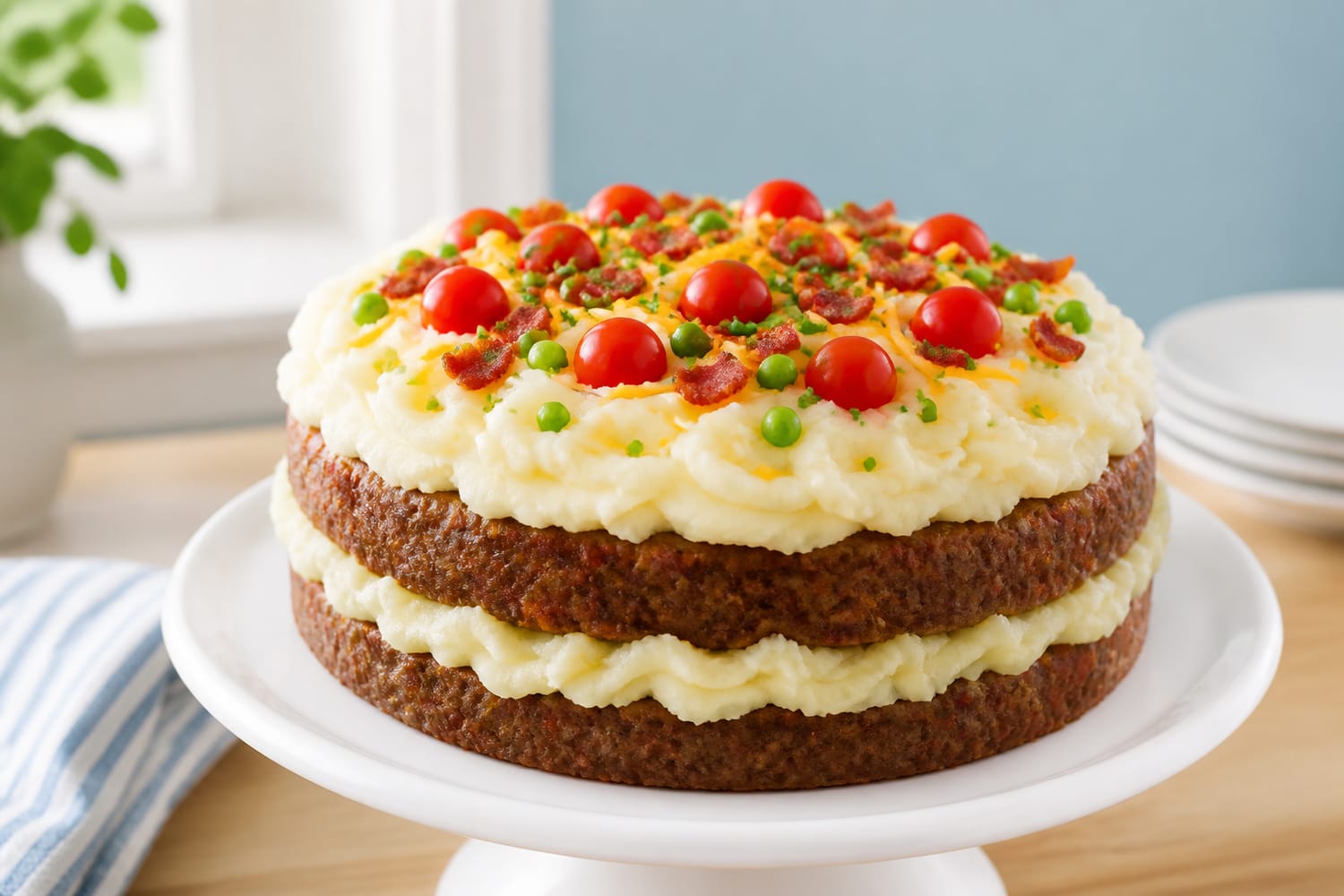
Few dishes embrace culinary trickery as enthusiastically as meatloaf cake. Ground beef or turkey forms the “sponge,” while smooth mashed potatoes stand in for buttercream. Some versions are built with multiple meatloaf layers separated by potato filling, then decorated with piped potato rosettes.
Cherry tomatoes, peas, chives, bacon, and shredded cheese provide colorful finishing touches. The finished creation looks ready for candles, but each slice delivers the comforting flavors of a classic family dinner. It is an especially memorable option for birthdays when the guest of honor prefers gravy to ganache.
Aspic
With its translucent body and suspended decorations, aspic can resemble an elaborate gelatin dessert. Instead of fruit and sweet syrup, however, it contains clarified meat, poultry, fish, or vegetable stock that has been chilled until firm.
Eggs, herbs, vegetables, seafood, and sliced meats can be arranged inside the mold, producing surprisingly ornate patterns. Aspic has a history stretching back centuries, long before brightly colored boxed gelatin became a household dessert. The Michelin Guide’s exploration of aspic highlights versions from several culinary traditions, including Korean jokpyeon.
Pea or Parmesan Panna Cotta
Panna cotta normally arrives as a delicate cream dessert, gently wobbling beneath fruit or caramel sauce. Savory versions use the same silky presentation while introducing flavors such as peas, Parmesan, cauliflower, mushrooms, or roasted peppers.
A pea panna cotta may be topped with herbs, pickled shallots, and Parmesan, creating a sophisticated starter disguised as dessert. Parmesan panna cotta pairs beautifully with tomatoes or balsamic glaze. The trick succeeds because diners expect sweetness from the molded shape, glossy surface, and creamy texture—right until the first salty, herbaceous spoonful.
Sushi Doughnuts
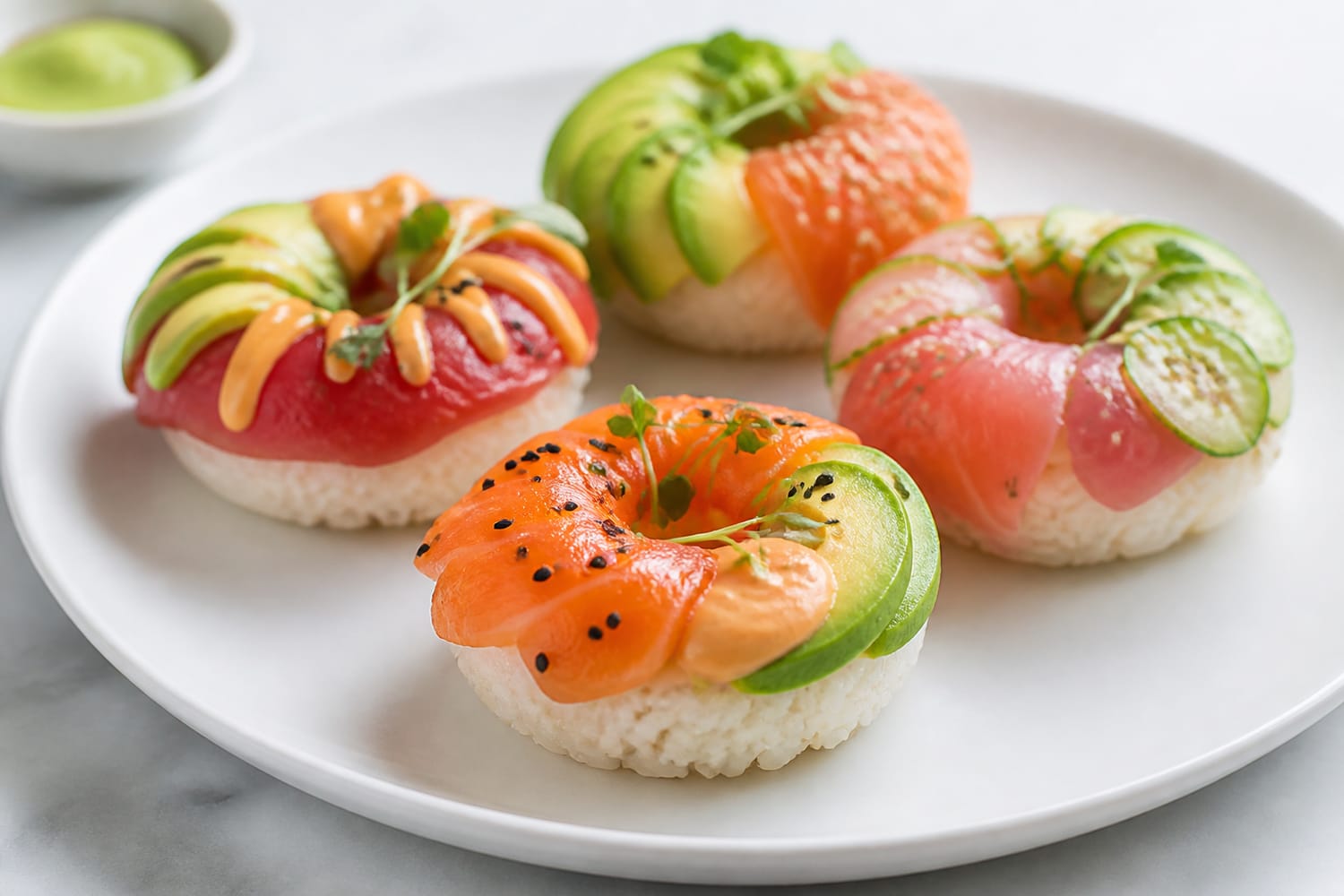
Sushi doughnuts contain no fried dough, glaze, or sprinkles. Their doughnut shape is created by pressing seasoned sushi rice into a ring mold. Slices of salmon, tuna, avocado, cucumber, and other toppings are then arranged across the surface.
Sesame seeds can resemble sprinkles, while spicy mayonnaise creates the appearance of decorative icing. The result is colorful, photogenic, and completely savory. Sushi doughnuts demonstrate how contemporary cooks can repackage familiar foods into the kind of playful presentation found at unusual dining experiences around the world.
Arancini Truffles
Small arancini can look like chocolate truffles or cake balls, especially when served in miniature paper cups. Beneath their crisp breadcrumb coating, however, they contain seasoned rice and fillings such as ragù, peas, mushrooms, cheese, or béchamel.
The name is connected to their resemblance to little oranges, although shapes and terminology vary across Sicily. Creative presentations can enhance the dessert illusion with finely grated cheese, dark crumbs, or a drizzle of sauce. Despite their confectionery appearance, arancini are satisfying snacks and a celebrated part of Sicilian food culture. Visit Sicily’s arancini overview explains the dish’s classic and modern fillings.
Potato Mille-Feuille
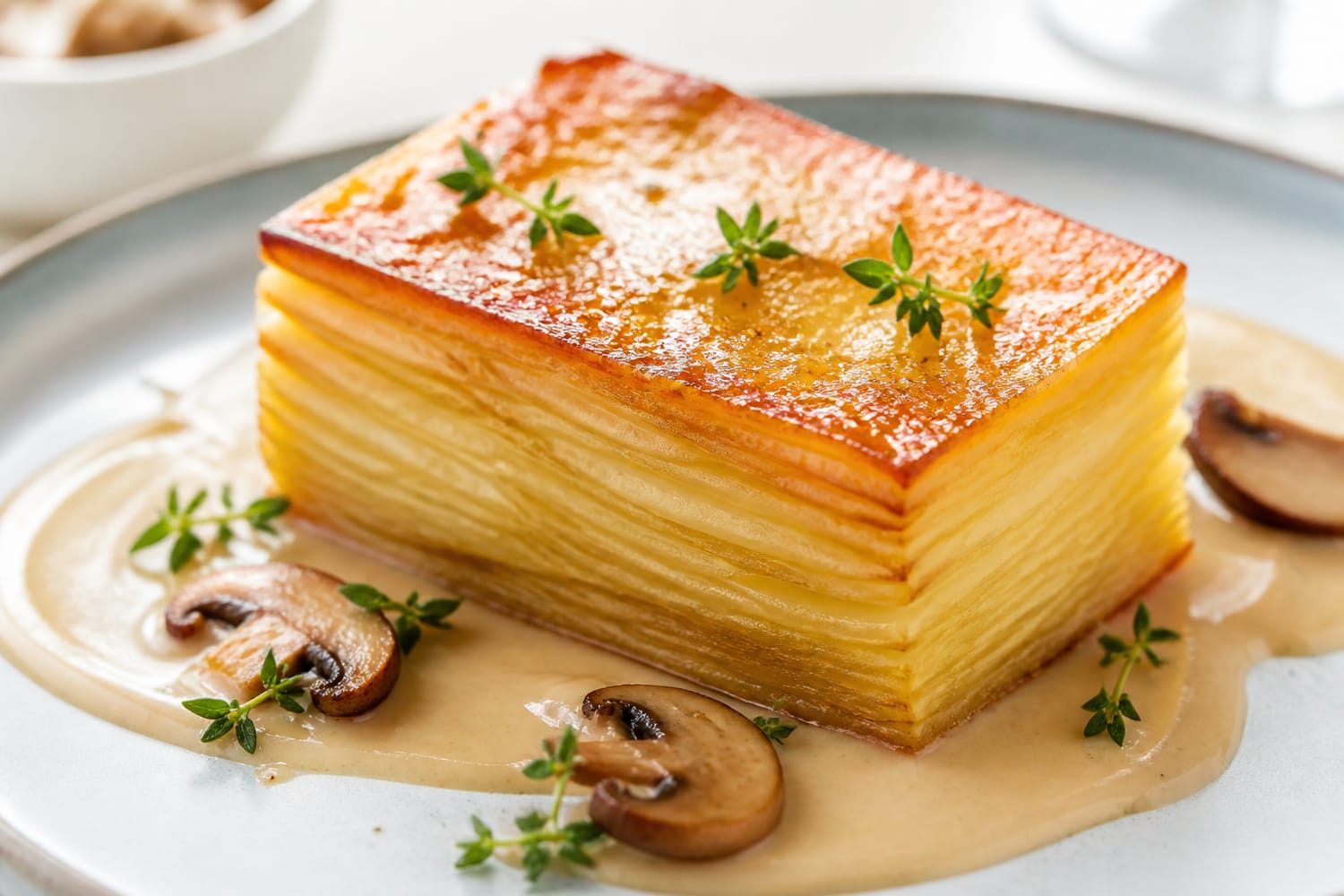
Traditional mille-feuille features thin pastry layers separated by cream. A savory potato mille-feuille recreates that dramatic striped appearance using paper-thin potato slices stacked with butter, cheese, herbs, or cream.
After baking, the stack is pressed, chilled, cut into precise rectangles, and crisped before serving. The golden exterior and tidy layers make it look like a pastry-shop creation. Inside, the texture moves from crunchy edges to a tender, rich center. Restaurants may serve it with mushrooms, beef, fish, or a glossy savory sauce that could easily be mistaken for caramel.
Tomato Tarte Tatin
Classic tarte Tatin is an upside-down French tart associated with caramelized apples. The tomato version looks just as glossy and jewel-like, but its filling consists of tomatoes cooked with herbs, vinegar, garlic, and olive oil beneath a pastry lid.
After baking, the tart is inverted to reveal the richly colored tomatoes. Depending on the recipe, goat cheese, mustard, olives, or onions may deepen the savory flavor. Its caramelized surface creates just enough sweetness to maintain the illusion, yet the tart remains suitable for lunch, dinner, or an appetizer spread.
Gougères
Gougères resemble small cream puffs or profiteroles, complete with golden shells and airy centers. Rather than being filled with pastry cream, these French choux puffs are flavored with cheese—traditionally Gruyère or a similar firm variety.
They may be served plain or filled with savory mixtures such as herbed cheese, mushroom mousse, or smoked salmon cream. Their light texture makes them ideal party food, and their elegant appearance fits comfortably beside more elaborate pastries. They are also a reminder that a journey through global street foods and portable snacks can uncover plenty of unexpected shapes and flavors.
Never Judge a Dish by Its Frosting
These savory illusions are more than visual jokes. They reveal how strongly shape, color, and presentation influence expectations before food even reaches the mouth. A ring suggests a doughnut, a layered slice suggests cake, and a gentle wobble suggests sweet panna cotta.
By borrowing the visual language of dessert, cooks can turn appetizers and main courses into memorable experiences. The next time something on the table looks covered in frosting, take a closer look—it might contain mashed potatoes, Parmesan, or smoked salmon instead.