
From Second Helpings to Culinary Icons
Some of the world’s best-known dishes began as clever ways to rescue stale bread, cold rice, cooked vegetables, and scraps of meat. Frugal cooks transformed yesterday’s food through frying, soaking, seasoning, and reheating. The results became so beloved that many are now prepared from scratch, appearing everywhere from family kitchens to fashionable restaurants.
Food history rarely identifies a single inventor, but these dishes demonstrate how necessity can inspire lasting traditions. They also fit naturally among Tour Trivia’s iconic dishes with surprisingly humble origins. As National Geographic’s exploration of the art of cooking with leftovers shows, yesterday’s scraps frequently become tomorrow’s specialties.
Pain Perdu, France
Its French name means “lost bread,” but pain perdu rescued bread rather than losing it. Cooks soaked stale slices in eggs and milk before frying them, turning a hard loaf into a tender meal with a golden crust.
Versions existed long before modern France, yet the French name perfectly captures the dish’s thrifty purpose. Today, French toast is frequently made with fresh brioche and covered with fruit, syrup, or powdered sugar. Beneath those luxurious toppings remains one of Europe’s simplest solutions to stale bread.
Fried Rice, China
Freshly steamed rice is soft and moist, but refrigerated rice becomes firmer and easier to separate in a hot wok. Chinese cooks discovered that leftover rice could be revived with oil, seasonings, eggs, vegetables, and small pieces of meat.
That adaptable technique generated countless regional variations and eventually traveled throughout Asia and beyond. Fried rice is now ordered as a destination dish rather than treated as a backup meal. However elaborate the recipe becomes, its underlying principle remains wonderfully economical: use what is available and waste nothing.
Chilaquiles, Mexico
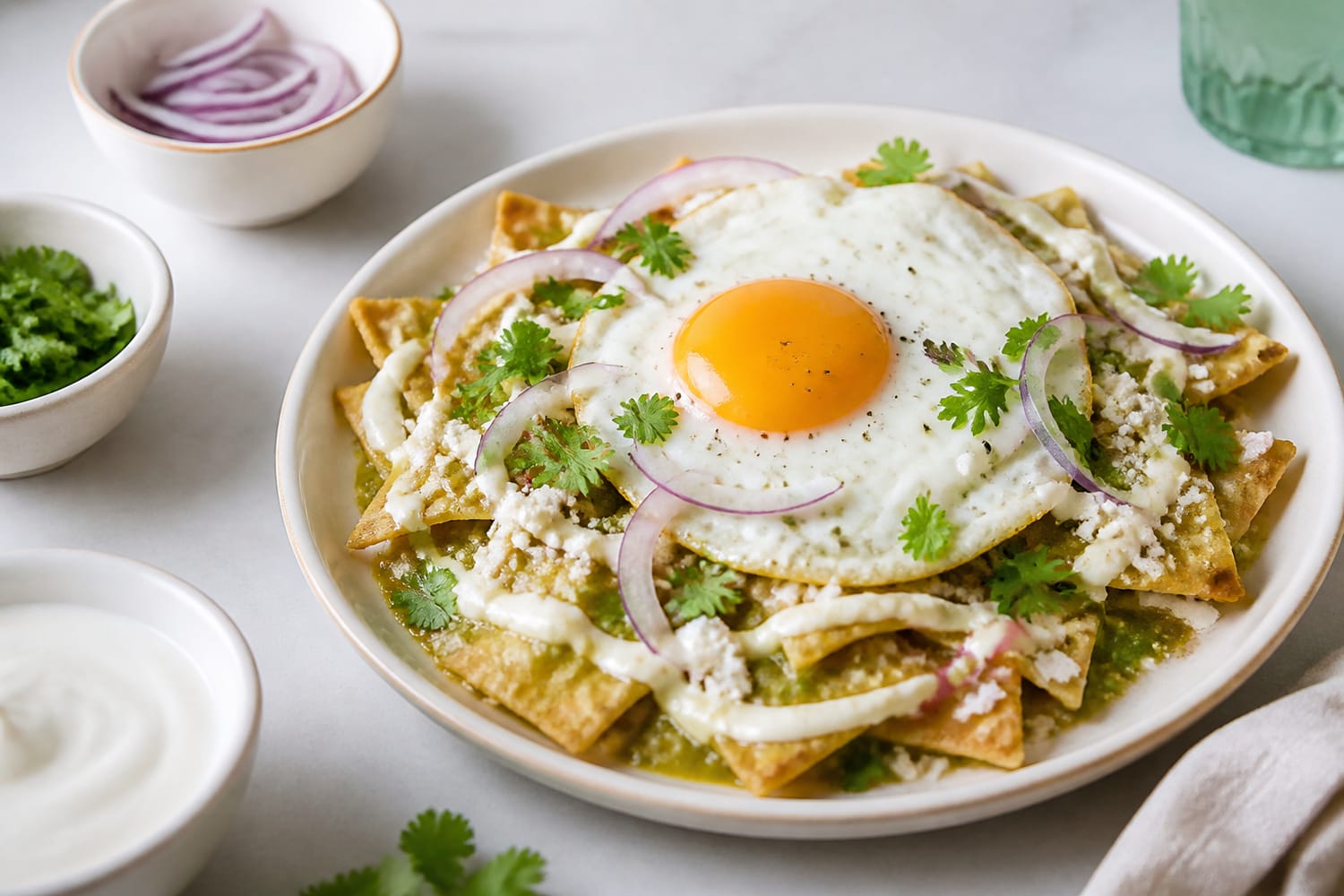
A stack of aging corn tortillas can quickly become a satisfying Mexican breakfast. Cut into pieces and fried or toasted, the tortillas are simmered in red or green salsa, then finished with ingredients such as crema, cheese, onion, eggs, or shredded chicken.
Chilaquiles vary considerably by region and household. Some are soft and sauce-soaked, while others retain a noticeable crunch. Once a practical method for extending the life of tortillas, the dish is now a breakfast-menu favorite and a flavorful introduction to Mexico’s diverse food culture.
Arancini, Italy
Sicily’s arancini turn cooked rice into crisp, portable treasures. The rice is shaped around fillings such as ragù, peas, or cheese, coated in breadcrumbs, and fried until the exterior becomes golden. Their rounded or conical shapes are often said to resemble oranges, inspiring a name connected with the Italian word arancia.
Using cooled rice makes practical sense because it holds its shape more easily. These filling snacks have become fixtures of Sicilian cafés and street-food counters, joining the many tempting bites featured in Tour Trivia’s journey through global street foods.
Bubble and Squeak, Britain
Few leftover dishes have a more entertaining name. Bubble and squeak traditionally combines cooked potatoes and cabbage, although carrots, Brussels sprouts, and other vegetables may join the pan. Everything is pressed together and fried until crisp at the edges.
The name supposedly evokes the bubbling and squeaking noises produced during cooking. Closely associated with using the remains of a roast dinner, the dish became a comforting British staple. Modern versions may be formed into tidy patties, but the most authentic spirit is gloriously flexible: whatever vegetables remain are invited.
Ribollita, Italy
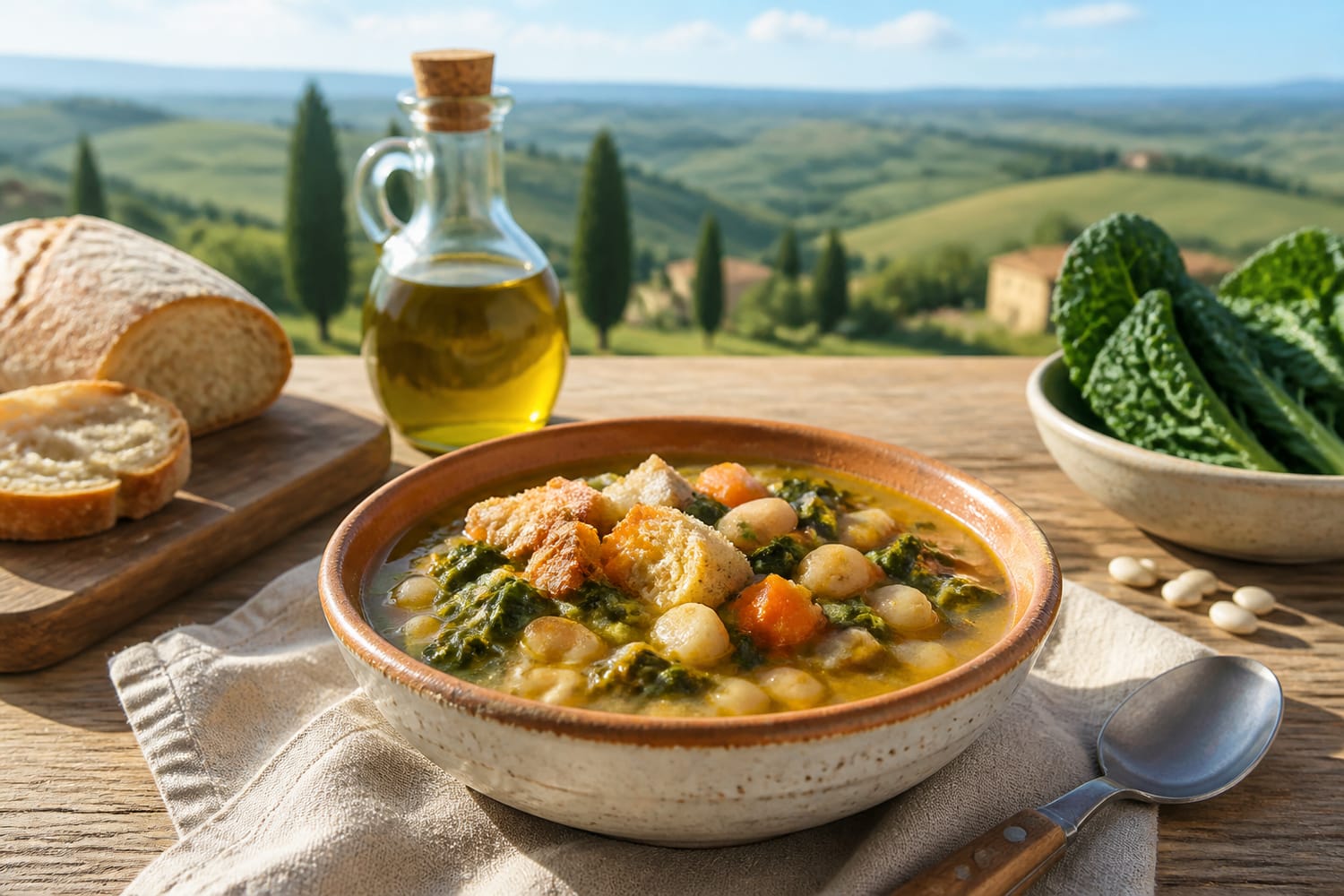
Tuscany’s ribollita proves that soup can improve the second time around. Its name means “reboiled,” reflecting the practice of reheating vegetable soup and thickening it with stale bread. Cannellini beans and dark Tuscan kale commonly provide the dish’s hearty character.
Born from cucina povera, or resourceful cooking with inexpensive ingredients, ribollita is now a celebrated regional specialty. Official tourism guides still emphasize that it often tastes better the following day. Travelers can learn more about this and other traditional dishes to taste in Tuscany.
Migas, Spain
The word migas means “crumbs,” an appropriately modest name for a remarkably satisfying dish. Spanish cooks moisten stale bread, break it into small pieces, and fry it with olive oil, garlic, and paprika. Depending on the region, chorizo, bacon, peppers, grapes, or fried eggs may complete the plate.
Especially associated with shepherds and rural communities, migas converted hard bread into an energy-rich meal. Spain’s tourism resources describe versions made with bread several days old, highlighting the recipe’s enduring practicality.
Pyttipanna, Sweden
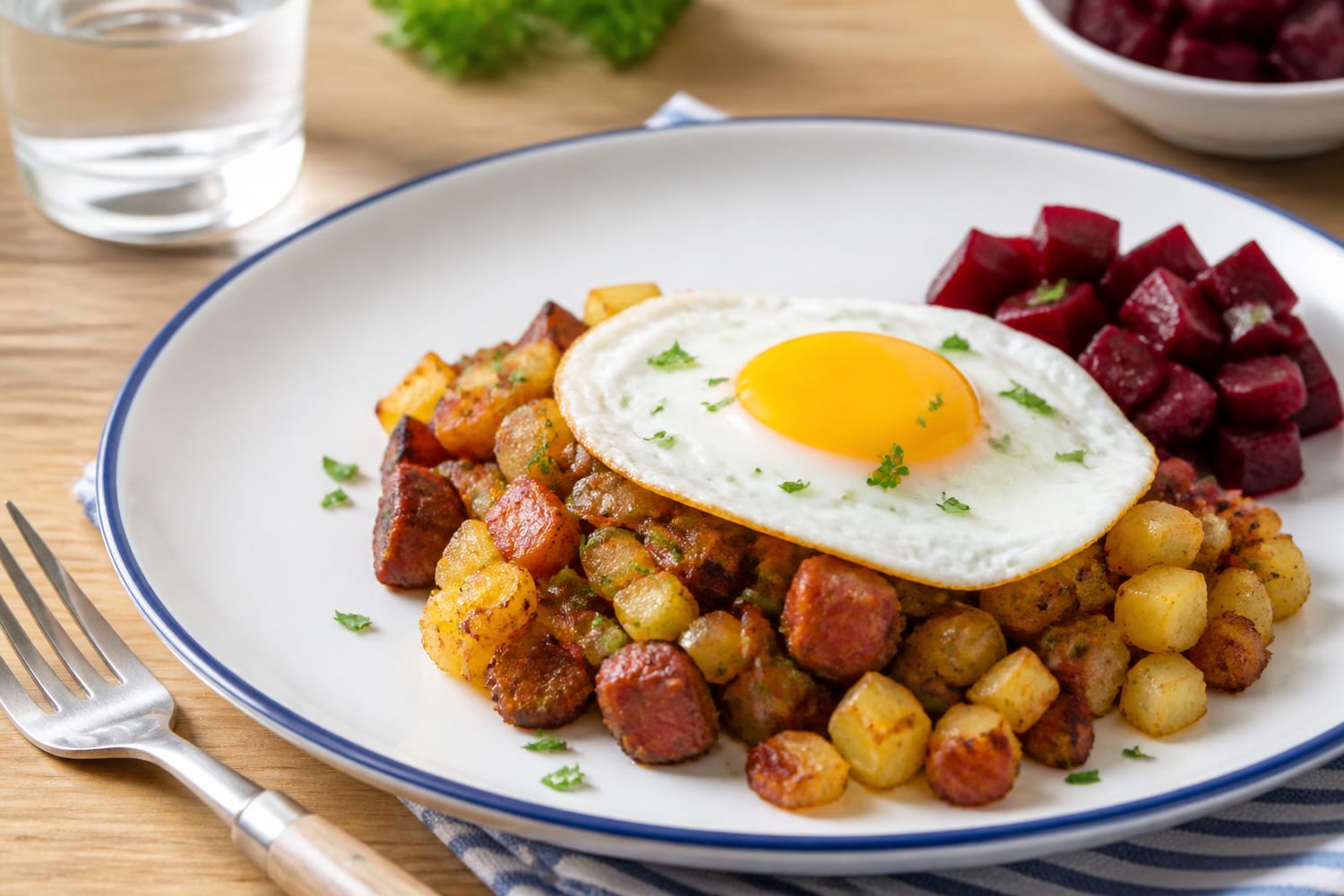
Pyttipanna roughly translates as “little pieces in a pan,” which describes both its appearance and its original method. Chopped potatoes, onions, and leftover meat are fried together, typically accompanied by pickled beetroot and a fried egg.
Once an informal midweek supper assembled from odds and ends, pyttipanna became popular enough to appear in restaurants and supermarket freezer sections across Sweden. It resembles hash, yet its familiar accompaniments give it a distinctly Swedish identity. The dish’s evolution from household leftovers to convenient national comfort food is part of its charm.
Bread Pudding, Britain
Bread pudding addresses an old kitchen problem: what can be done with a loaf too dry to serve? The answer is to soak it with milk or cream, enrich it with eggs and sweeteners, add spices or dried fruit, and bake everything into a soft dessert.
Frugal British cooks helped establish the tradition, but related puddings now appear around the world. Variations include Mexico’s capirotada and lavish versions made with croissants or panettone. What began as a way to save bread became the kind of warming dessert people deliberately allow bread to stale for.
Croquetas, Spain
Although the modern croquette has French roots, Spain turned croquetas into a tapas essential. Thick béchamel can bind small quantities of leftover roast chicken, ham, fish, or stew meat. The mixture is shaped, breaded, and fried, concealing a creamy center beneath a crisp shell.
Croquetas demonstrate how technique can make scraps feel luxurious. They are now produced in countless flavors, from traditional ham to mushrooms and cheese. Yet croquetas de cocido—made using meat from a previous stew—still reveal the dish’s talent for transforming leftovers into something eagerly anticipated.
The Delicious Value of Waste Not, Want Not
These favorites survived because they accomplished more than preventing waste. They created appealing contrasts: crisp coatings around soft rice, rich custard absorbed by dry bread, or browned potatoes enlivened by pickles. Resourcefulness produced flavors and textures worth preserving.
For travelers, such foods offer a direct connection to everyday history. Alongside grand banquets and ceremonial recipes, humble leftover dishes reveal how ordinary families cooked creatively. Exploring local delicacies wherever you travel may therefore uncover an inspiring truth: a country’s most comforting food can begin with what remained from yesterday.