
When Nature Becomes the Cookware
Across the world, cooks use leaves as more than rustic packaging. A well-chosen wrapper can trap steam, protect food from direct heat, hold fragile ingredients together, and add subtle grassy, smoky, or tea-like aromas. Some leaves become part of the meal; others are peeled away to reveal the dish inside.
Leaf cooking also tells a story about place. Communities have traditionally worked with plants growing nearby, turning corn husks, banana leaves, grape leaves, and other foliage into practical kitchen tools. The result is a collection of dishes that make exploring local delicacies around the world feel like opening a series of delicious presents.
Tamales in Mexico
Tamales begin with masa, a dough made from corn, spread onto a corn husk or banana leaf and folded around fillings such as pork, chicken, chiles, beans, or cheese. The bundles are then steamed until the masa becomes firm and tender.
The wrapper matters because it keeps the dough from falling apart while allowing steam to circulate. Corn husks lend a mild, earthy fragrance, while banana leaves produce flatter, moister tamales with a subtle vegetal aroma. Tamales are also an enduring part of Mexico’s colorful street-food culture.
Kenkey in Ghana
Kenkey is a sour, satisfying Ghanaian staple made from fermented corn dough. In Ga-style kenkey, portions are traditionally wrapped in corn husks before being boiled or steamed. Fante versions may instead use plantain leaves.
Fermentation creates the dish’s distinctive tang, but the wrapper shapes its final character. Corn husks help the dough retain its form and contribute a faint corn aroma, while plantain leaves offer different aromatic notes. Once unwrapped, kenkey is commonly served with fish, pepper sauce, or shito.
Fish Paturi in India
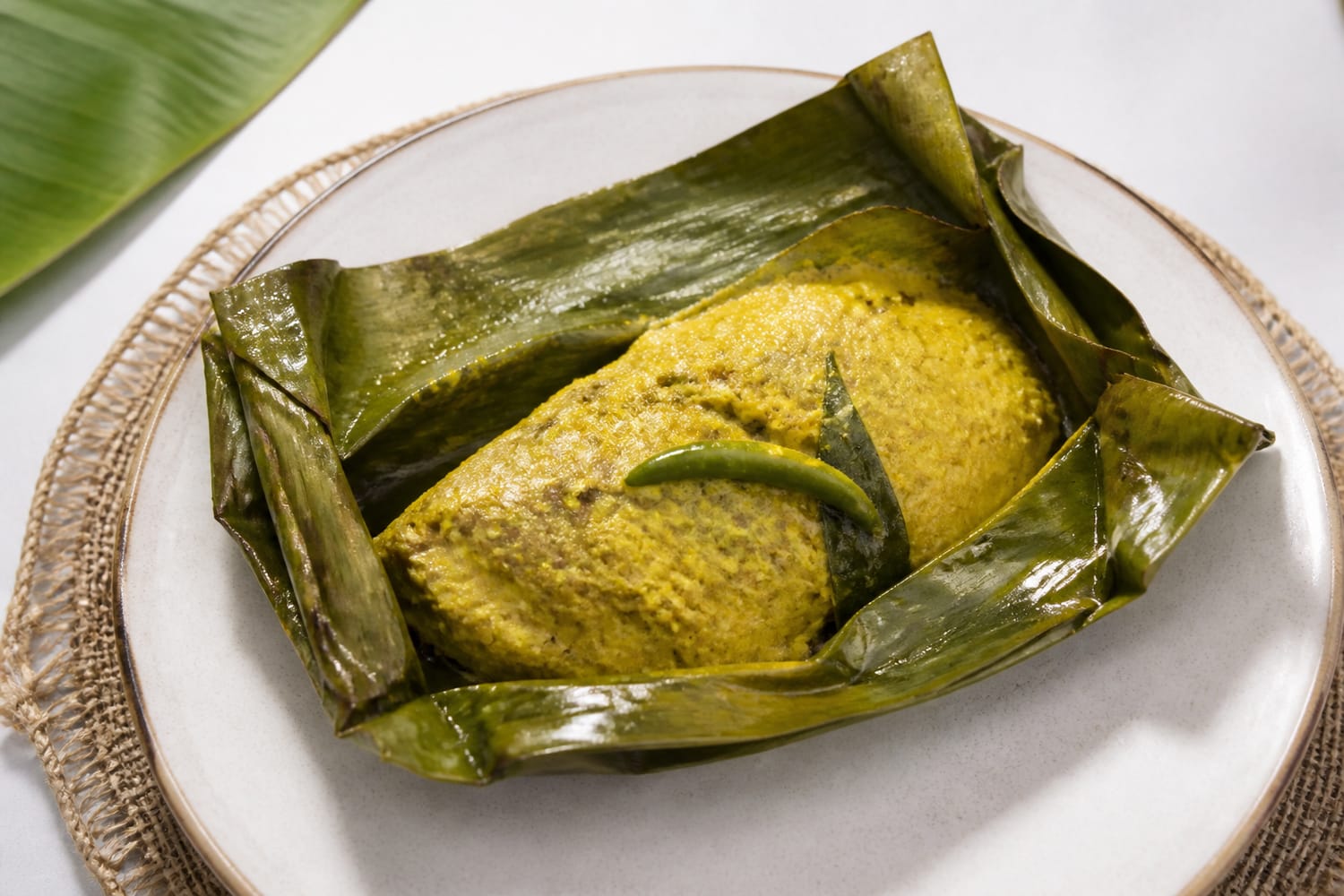
In Bengal, paturi is prepared by coating fish—often hilsa—in a lively mustard mixture before wrapping it in banana leaves. The packets may be steamed, pan-cooked, or grilled, depending on the recipe and household tradition.
The leaf creates a humid chamber that keeps the fish succulent while containing the pungent mustard oil, green chile, and spices. When grilled, the banana leaf develops charred patches that introduce another aromatic layer. Opening the parcel releases the concentrated fragrance before the first bite is taken.
Pepes in Indonesia
Pepes is an Indonesian technique in which fish, tofu, mushrooms, chicken, or other ingredients are seasoned with an aromatic spice paste and enclosed in banana leaves. The packet is generally steamed and may be finished over charcoal.
Because the leaf holds the seasonings tightly against the main ingredient, very little flavor escapes. Grilling the steamed parcel lightly chars the exterior and adds a toasted scent without exposing the filling directly to the fire. The banana leaf is discarded, but its aroma remains an essential part of the experience.
Suman in the Philippines
Suman refers to a broad family of Filipino rice cakes commonly made with glutinous rice and coconut milk. The mixture is wrapped in banana leaves, palm leaves, or other regional plant materials before being steamed or boiled.
These wrappers serve several purposes: They contain the sticky rice, make individual portions easy to carry, and contribute fragrance during cooking. Folding styles can also identify particular regional varieties. The National Museum of the Philippines’ guide to traditional food wrappings shows how closely these practical packages are connected to local identity.
Bánh Chưng in Vietnam
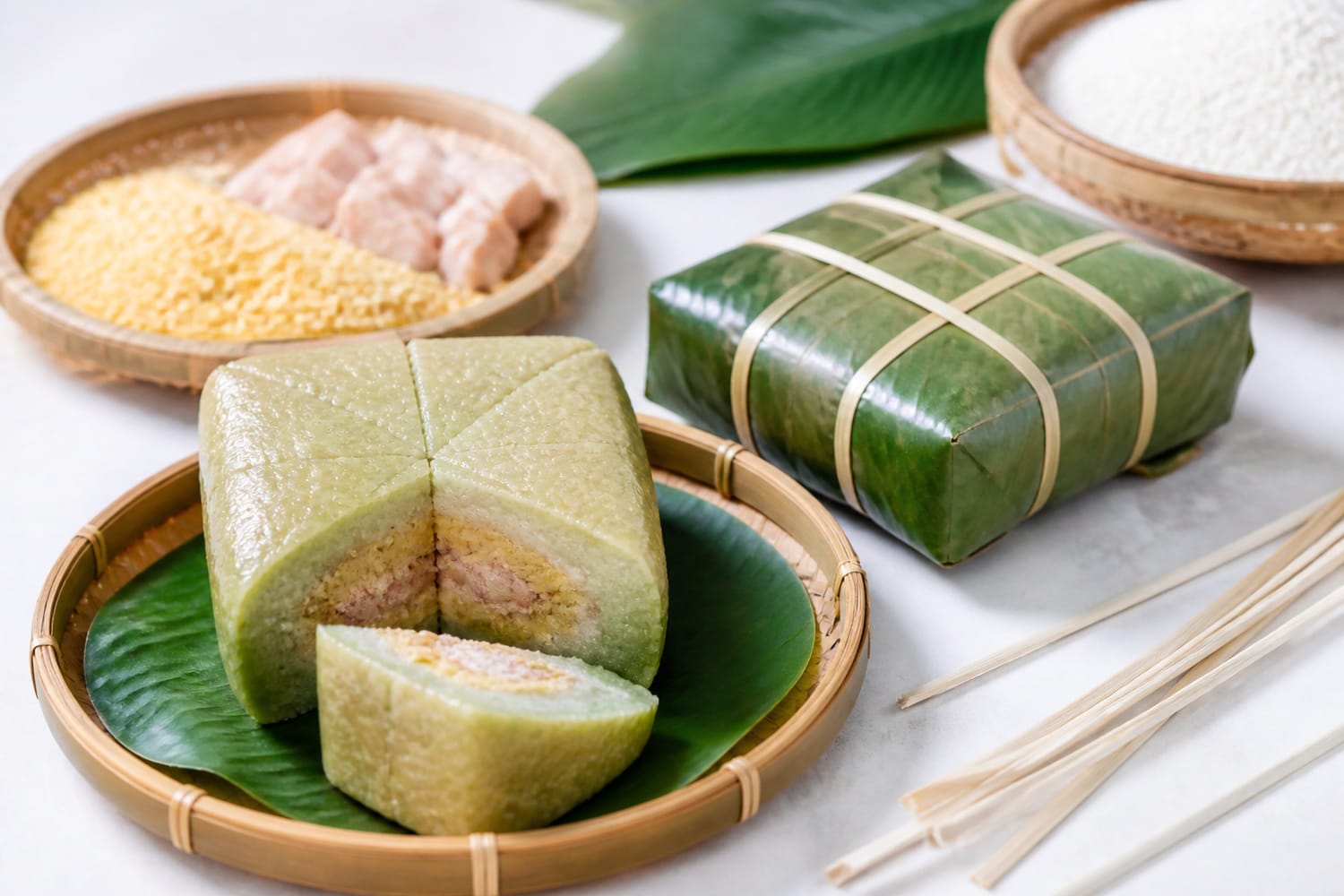
Bánh chưng is a square Vietnamese cake traditionally associated with Tết, the Lunar New Year. Glutinous rice surrounds mung beans and pork, and the substantial package is tied securely in leaves before being boiled for hours.
The wrapping is crucial to the cake’s famous shape. It keeps the layers compact, protects the rice during its long cooking time, and stains the exterior an appealing green. According to Vietnam Tourism’s introduction to Tết traditions, preparing these cakes is closely tied to family reunions and holiday celebrations.
Lo Mai Gai in Southern China
A favorite at Cantonese dim sum meals, lo mai gai combines glutinous rice with chicken, mushrooms, Chinese sausage, and sometimes dried shrimp or salted egg. The mixture is enclosed in a softened lotus leaf and steamed.
Lotus leaves are broad enough to hold a generous portion, but their aroma is the real attraction. Heat releases a warm, tea-like fragrance that penetrates the rice and complements the savory filling. The non-edible leaf also keeps the sticky grains neatly contained until the diner unfolds the parcel at the table.
Zongzi in China
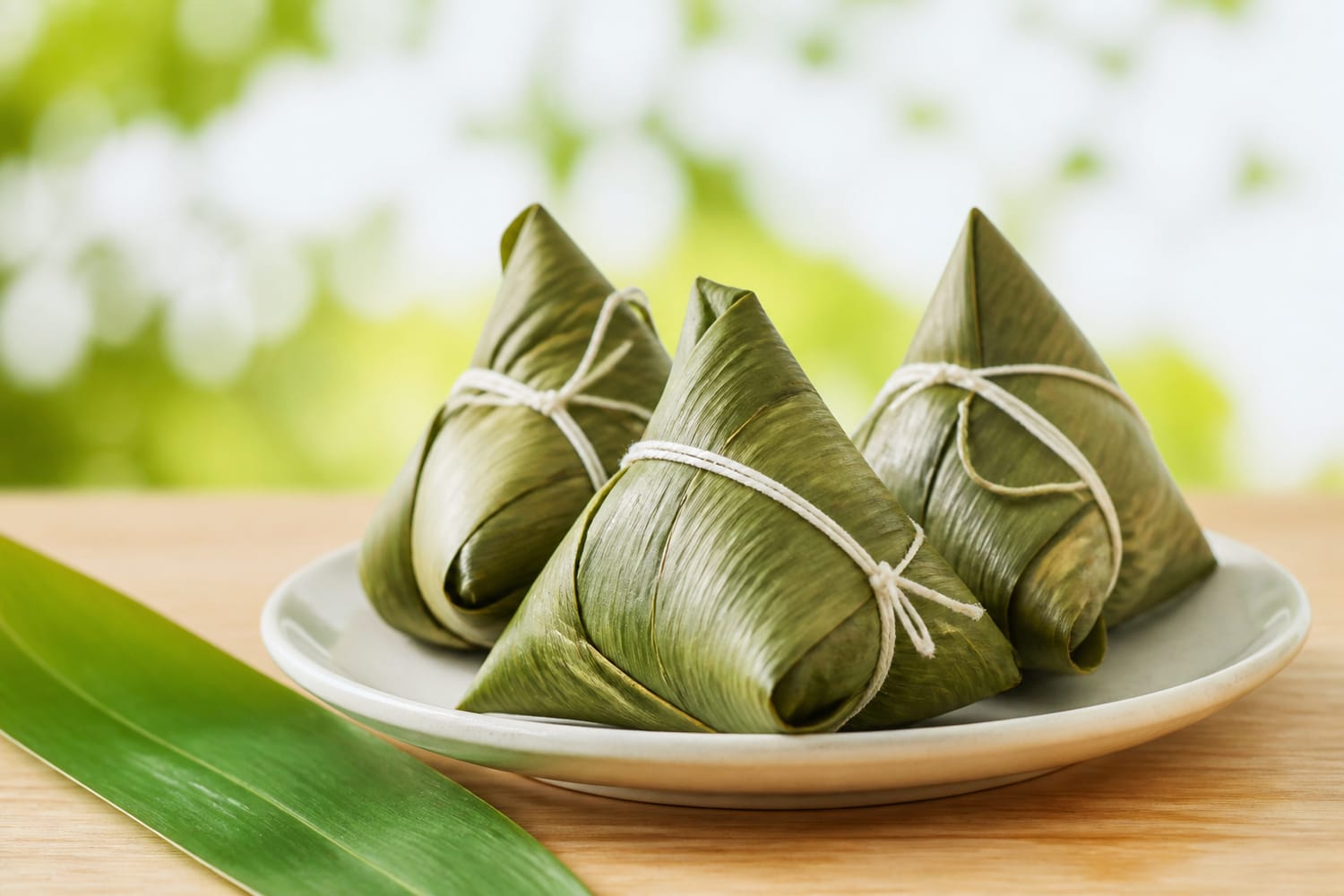
Zongzi are compact glutinous-rice dumplings most famously connected with the Dragon Boat Festival. Their fillings vary widely, from red bean paste and dates to pork belly, mushrooms, sausage, or salted egg yolk.
Bamboo or reed leaves are folded into cones or angular packets and tied before cooking. Their structure compresses the rice, helping it form the dumpling’s recognizable shape. The leaves also perfume the filling with a fresh, grassy aroma. Wrapping zongzi neatly requires considerable skill and is often a communal family activity.
Dolma Across the Mediterranean
Dolma appears in many forms across the Mediterranean, Balkans, Caucasus, and Middle East. One of the best-known versions features grape leaves rolled around rice, herbs, onions, and sometimes minced meat.
Unlike banana, bamboo, or lotus leaves, grape leaves are usually eaten with the filling. Their pleasantly tart taste balances rich meat and olive oil, while their tender but resilient texture keeps each roll intact during simmering. Variations such as Armenian yalanchi demonstrate how family recipes and food memories travel between generations and communities.
Laulau in Hawaii
Hawaiian laulau traditionally places pork, fish, or other fillings inside edible taro leaves, followed by an outer wrapping of ti leaves. The bundles are cooked slowly until the meat is tender and the taro leaves become soft.
Each layer performs a different task. Taro leaves contribute body and become part of the dish, while the tougher ti leaves form a protective exterior that is removed before eating. Together, they hold in moisture and create the gentle steaming environment responsible for laulau’s rich, comforting texture.
Why the Leaf Is Never Just Decoration
A leaf wrapper can function as a steamer, baking liner, serving vessel, flavoring agent, and portion container at the same time. Its waxy or fibrous surface reduces moisture loss, while its flexibility lets cooks secure foods too soft or delicate to cook uncovered.
Most importantly, leaves connect food to landscape and tradition. They reveal which plants were locally available, how cooks adapted to particular heat sources, and why certain aromas became inseparable from beloved recipes. As with many unique traditional dishes worth seeking out, the method is as meaningful as the ingredients. Unwrapping the finished parcel reveals not only a meal, but also a compact piece of culinary history.