
The World’s Oldest Slow Cooker
Across the world, cooks transform pits of earth, hot stones, glowing embers, and fresh leaves into remarkably effective ovens. Food sealed underground cooks slowly in trapped heat and steam, tenderizing meat, concentrating seasonings, and preserving moisture. The result is succulent, deeply aromatic food—and often a feast that brings an entire community together.
Earth ovens also create flavors that conventional ovens struggle to reproduce. Juices mingle, leaves release fragrant oils, and small amounts of smoke perfume the ingredients. For travelers, these dishes offer more than a memorable meal: They reveal how people have adapted their cooking to local landscapes, fuel sources, and celebrations.
Hāngī in New Zealand
A Māori hāngī begins with heated stones placed in a pit. Baskets of meat and vegetables are lowered onto them, covered with damp cloth or leaves, and buried so that heat and steam cannot escape. Traditional ingredients include fish and kūmara, while contemporary versions may feature lamb, pork, potatoes, pumpkin, and cabbage.
As this guide to traditional Māori hāngī cooking explains, the technique is still enjoyed throughout Aotearoa New Zealand. Hours of gentle steaming soften dense root vegetables and make tougher cuts of meat tender. The stones and fire contribute subtle roasted notes, but the defining quality is moisture: Everything emerges juicy, comforting, and infused with the aromas of the feast.
Kālua Pig in Hawaii
In Hawaii, an underground oven is called an imu, and cooking in it is known as kālua. A whole pig is traditionally salted, wrapped or covered with vegetation, placed over hot stones, and sealed beneath earth.
The leaves hold in steam while the long cooking time breaks the meat’s connective tissue into gelatin. That combination produces pork tender enough to pull apart by hand. Smoke from the fire adds depth without overwhelming the meat, while salt enhances its natural richness. Often associated with lūʻau gatherings, kālua pig demonstrates why food can transport travelers through culture.
Pachamanca in Peru
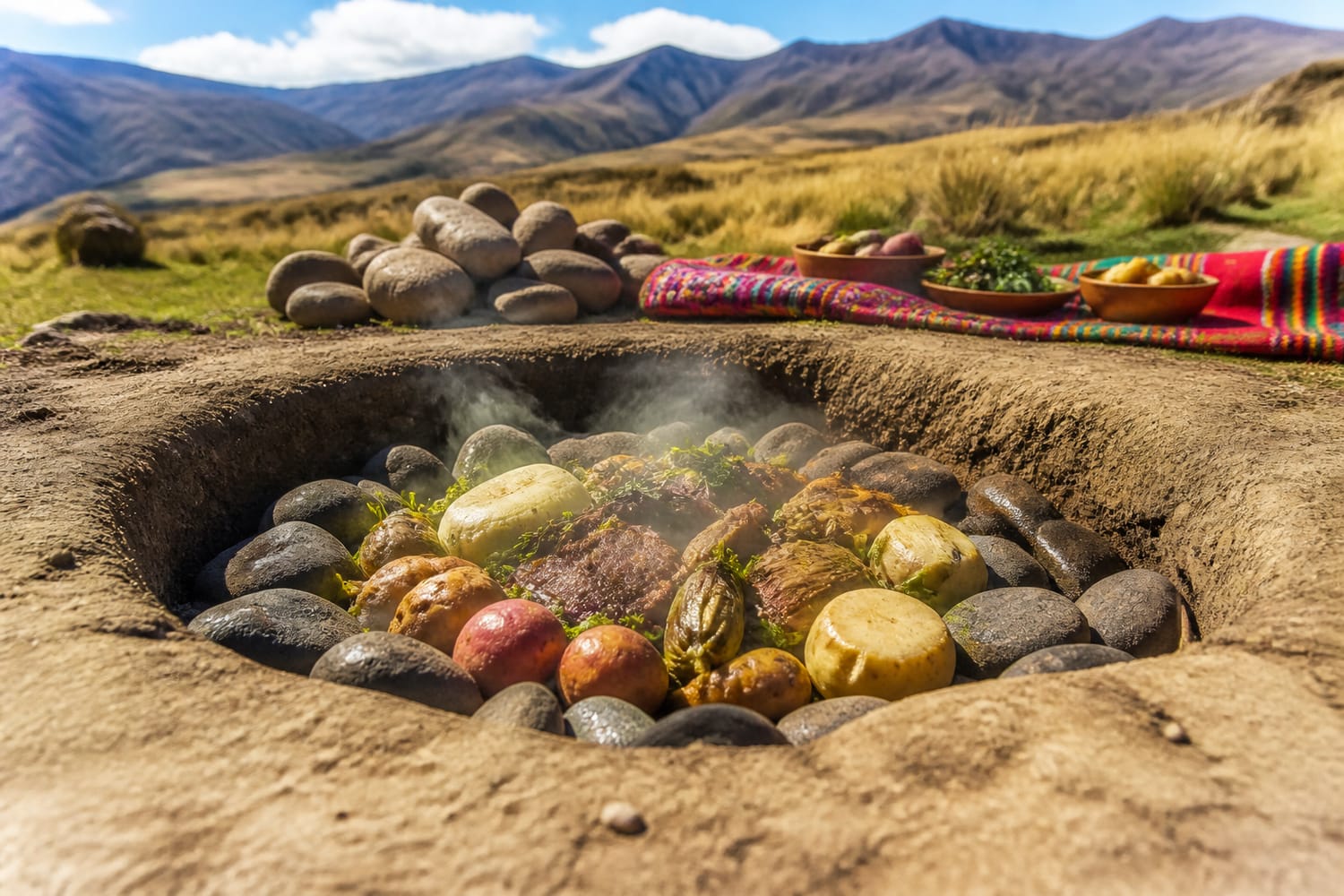
Pachamanca is an Andean banquet cooked on heated stones in an earthen pit. The name comes from Quechua words associated with earth and cooking pot—a fitting description for a meal in which the ground becomes the oven.
According to Peru’s official tourism guide to Andean cuisine, pachamanca can include marinated beef, lamb, pork, and guinea pig alongside potatoes, fava beans, and humitas. Herbs such as huacatay and chincho give the meat a distinctly Andean fragrance. Underground, those marinades penetrate slowly while the potatoes absorb savory juices, creating a feast that tastes earthy, herbal, and intensely satisfying.
Barbacoa in Mexico
Traditional Mexican barbacoa often involves slow-cooking lamb, goat, or beef in a covered pit. Depending on the region, the meat may be wrapped in maguey leaves and positioned above a pot that catches its flavorful drippings.
Maguey leaves protect the meat from direct heat while contributing vegetal aromas. Inside the sealed pit, collagen-rich cuts gradually soften until they become silky and succulent. The collected juices can also form a deeply flavored broth known as consomé. Served with warm tortillas, onion, cilantro, and salsa, barbacoa balances rich meat with bright, fresh accompaniments.
Cochinita Pibil in Mexico’s Yucatán Peninsula
Cochinita pibil is another Mexican underground-cooked specialty, but its flavor is entirely different from barbacoa. Pork is marinated with achiote, sour orange, and spices before being wrapped in banana leaves and traditionally cooked in a pib, or earth oven.
The acidic citrus helps season and soften the pork, while achiote gives it a vivid reddish color and peppery, earthy character. Banana leaves trap moisture and lend the meat a grassy fragrance. Slow cooking then transforms the marinade, pork fat, and juices into a concentrated sauce. Pickled red onions provide the ideal sharp contrast.
Curanto in Chile
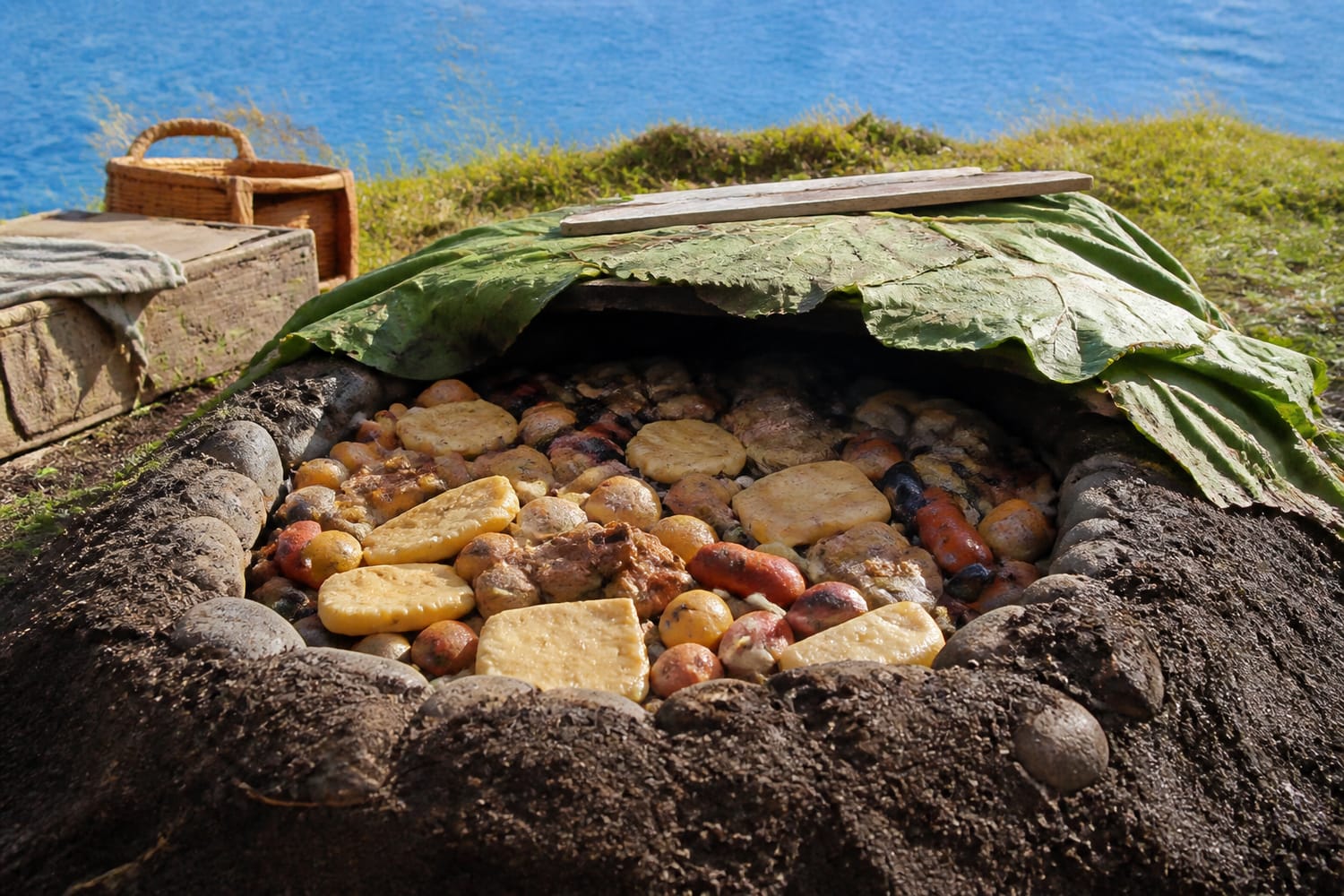
On the Chiloé archipelago, curanto turns local seafood, meat, potatoes, and dumplings into a layered underground feast. Hot stones line the bottom of a pit, followed by ingredients such as mussels, clams, sausages, pork, chicken, potatoes, milcao, and chapalele.
Large leaves cover the layers before the pit is sealed. As shellfish release briny liquid and meat renders its juices, steam circulates through the entire meal. The dumplings and potatoes soak up flavors from above and below, making curanto taste like a seafood bake, barbecue, and hearty stew combined.
Shuwa in Oman
Omani shuwa is built around patience. Meat—commonly lamb or goat—is coated in a powerful mixture of spices, wrapped securely, and lowered into a communal underground oven. It may cook for many hours, sometimes as part of preparations for major religious or family celebrations.
The extended cooking time gives spices such as cumin, coriander, cardamom, garlic, and chili an opportunity to penetrate deeply. Because the package is sealed, the meat effectively roasts and braises in its own juices. The result is exceptionally tender, aromatic meat with concentrated seasoning in every bite.
Zarb in Jordan
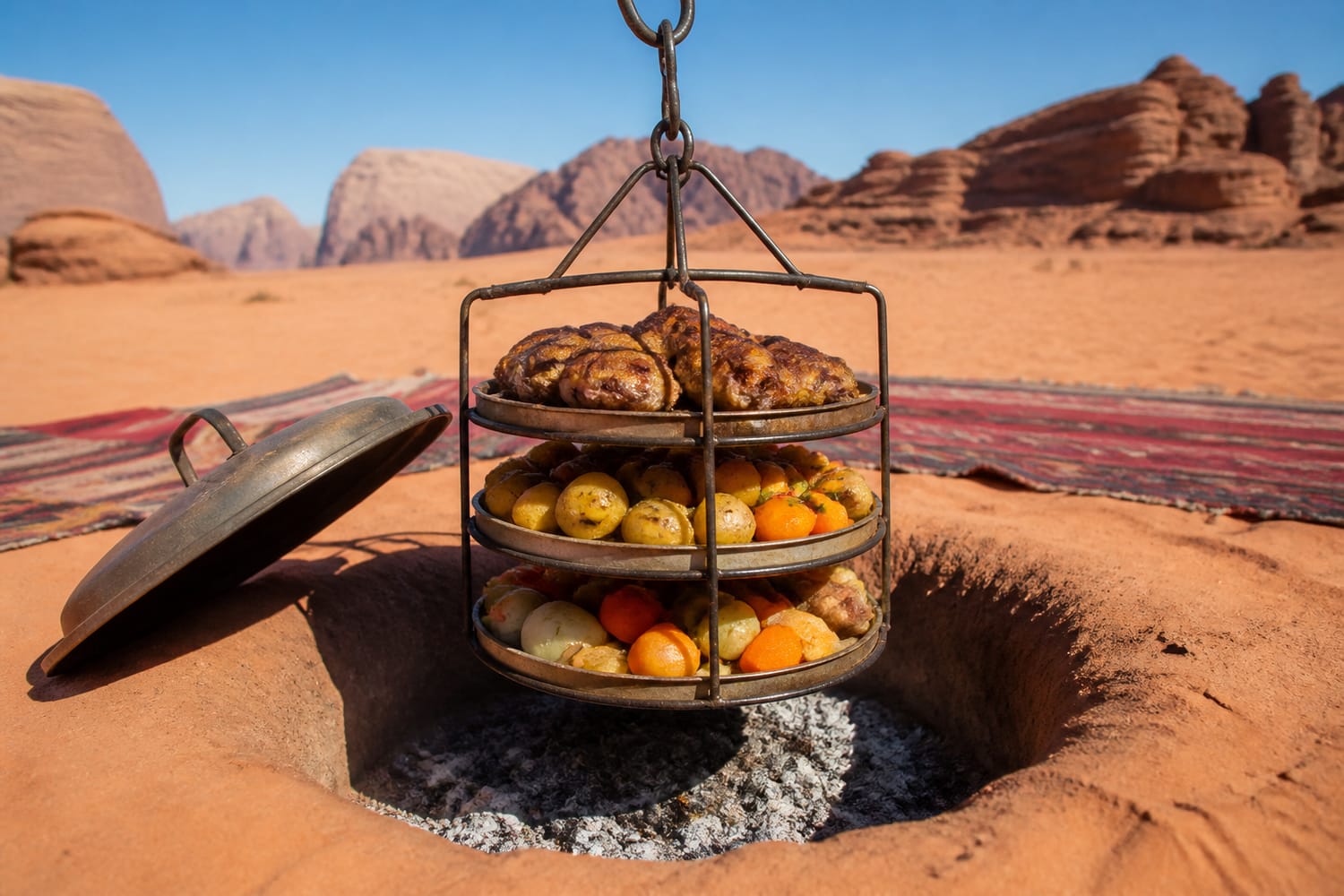
Zarb is closely associated with Bedouin hospitality in Jordan, particularly around Wadi Rum. Meat and vegetables are arranged on stacked metal trays, lowered into an underground oven over hot coals, and covered tightly.
The arrangement allows meat juices to drip onto vegetables below, seasoning potatoes, onions, and carrots as they cook. Meanwhile, the enclosed oven protects everything from the dry desert air. The result is tender lamb or chicken, lightly smoky vegetables, and a dramatic tableside moment when the loaded rack is lifted from the sand. It is the type of communal meal that makes unusual dining experiences especially memorable.
Lovo in Fiji
Fijian lovo is prepared for celebrations, family gatherings, and cultural feasts. A pit is filled with fire-heated stones, then layered with root crops, leaf-wrapped meat or fish, and vegetables before being covered and sealed.
Tourism Fiji’s explanation of how a traditional lovo is prepared highlights ingredients such as taro, cassava, sweet potatoes, chicken, pork, fish, and palusami. Coconut milk, leaves, meat juices, and steam mingle underground, producing creamy greens, tender proteins, and smoky-sweet root vegetables.
The New England Clambake
The traditional New England clambake brings earth-oven cooking to the beach. Stones are heated in a pit, covered with wet seaweed, and layered with clams, lobsters, corn, potatoes, and sometimes sausage. More seaweed and a heavy covering trap the steam.
Each ingredient contributes something: Shellfish supply briny juices, corn adds sweetness, sausage brings savory fat, and seaweed creates fragrant steam. Unlike direct grilling, the method cooks delicate seafood gently, helping it remain moist. The finished meal tastes unmistakably coastal, as though the beach itself has seasoned dinner.
Why Buried Food Is Worth Digging Up
Underground cooking succeeds because it combines insulation, retained moisture, steady heat, and time. Tough meat becomes tender, root vegetables grow creamy, and herbs or leaves perfume everything enclosed in the pit.
Yet flavor is only part of its appeal. Digging, heating stones, arranging ingredients, sealing the oven, and finally uncovering the feast all encourage participation and anticipation. These foods taste so good because they are slowly transformed—but also because their preparation turns dinner into a shared event.