
The Sound Before the Bite
A pestle strikes a mortar. A mallet lands on rice. A cook taps a cutlet flat. These motions do more than break food into smaller pieces: pounding can turn separate grains into a chewy cake, soften meat for frying, or bruise a vegetable just enough to catch its dressing.
That makes texture a clue worth following when you travel. Across these ten foods, the difference between smooth, springy, crisp, and crunchy is often the difference between a dish that merely contains the right ingredients and one that feels right to eat.
Fufu: A Dough That Carries Soup
In parts of West and Central Africa, cooks pound cooked yam, cassava, plantain, or other starchy ingredients into fufu. What begins as separate pieces becomes a cohesive mass that can be pinched off and eaten with soup or stew.
The transformation matters at the table. A smooth piece holds together when you dip it, while a lumpy one is harder to shape. Fufu’s mild flavor leaves room for the accompanying dish, but its yielding texture makes the whole meal work. The name covers a range of regional preparations rather than one fixed recipe.
Mochi: Rice With a Chewy Second Life
Steamed glutinous rice is already sticky. Pound it repeatedly, though, and the individual grains become a soft, stretchy mass: mochi. In Japan, traditional rice-pounding gatherings are especially associated with the New Year, although mochi is enjoyed in sweet and savory dishes beyond the holiday.
Fresh mochi offers a satisfying pull quite unlike a spoonful of rice. It can be shaped into cakes, paired with sweet bean paste, or served in soup. Japan’s tourism organization describes how both the pounding process and the rice itself give mochi its distinctive texture.
Poi: Taro Made Spoonable
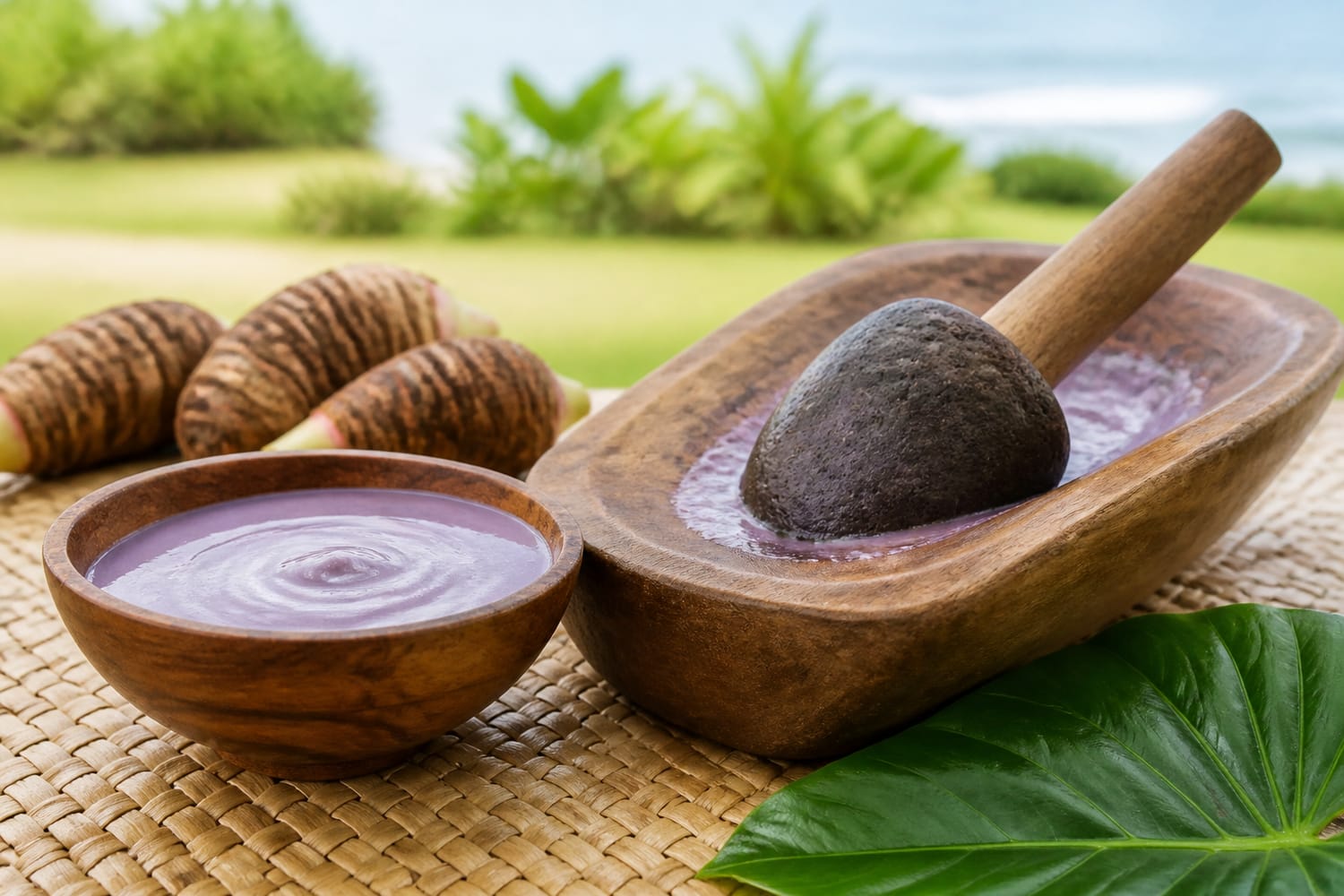
In Hawaiʻi, cooked kalo, or taro, is traditionally pounded on a wooden board with a stone pounder. Water turns the thick pounded mixture into poi. Add less water and it remains firmer; add more and it becomes easier to scoop.
Poi shows that pounding is only part of a texture decision. The amount of water changes how the food moves and feels on the tongue, while fermentation can change its taste over time. The University of Hawaiʻi at Hilo explains the traditional pounding method used to make poi.
Som Tam: Pounded, Not Pulverized
Thai som tam makes the case for a lighter touch. Garlic and chilies are crushed for the dressing, then shredded green papaya and other ingredients are gently bruised. The goal is to help the dressing coat the salad while keeping the papaya crisp.
That balance gives each forkful its snap, heat, and tang. Pound too hard and the refreshing strands lose their character. Som tam also appears in Tour Trivia’s look at street-food discoveries around the world—a reminder to pay attention to the crunch as well as the seasoning.
Pesto: A Sauce Built by Crushing
In Liguria, traditional pesto is worked in a mortar with a pestle. Garlic, pine nuts, basil, cheese, salt, and olive oil become a sauce that is creamy yet still recognizably made from herbs and nuts.
Here, pounding brings ingredients together without turning the finished sauce into a thin liquid. It is a different texture goal from mochi’s stretch or som tam’s crunch. The Pesto Genovese Consortium’s recipe specifies a marble mortar and wooden pestle for the traditional method.
Guacamole: Flavor First, Avocado Second
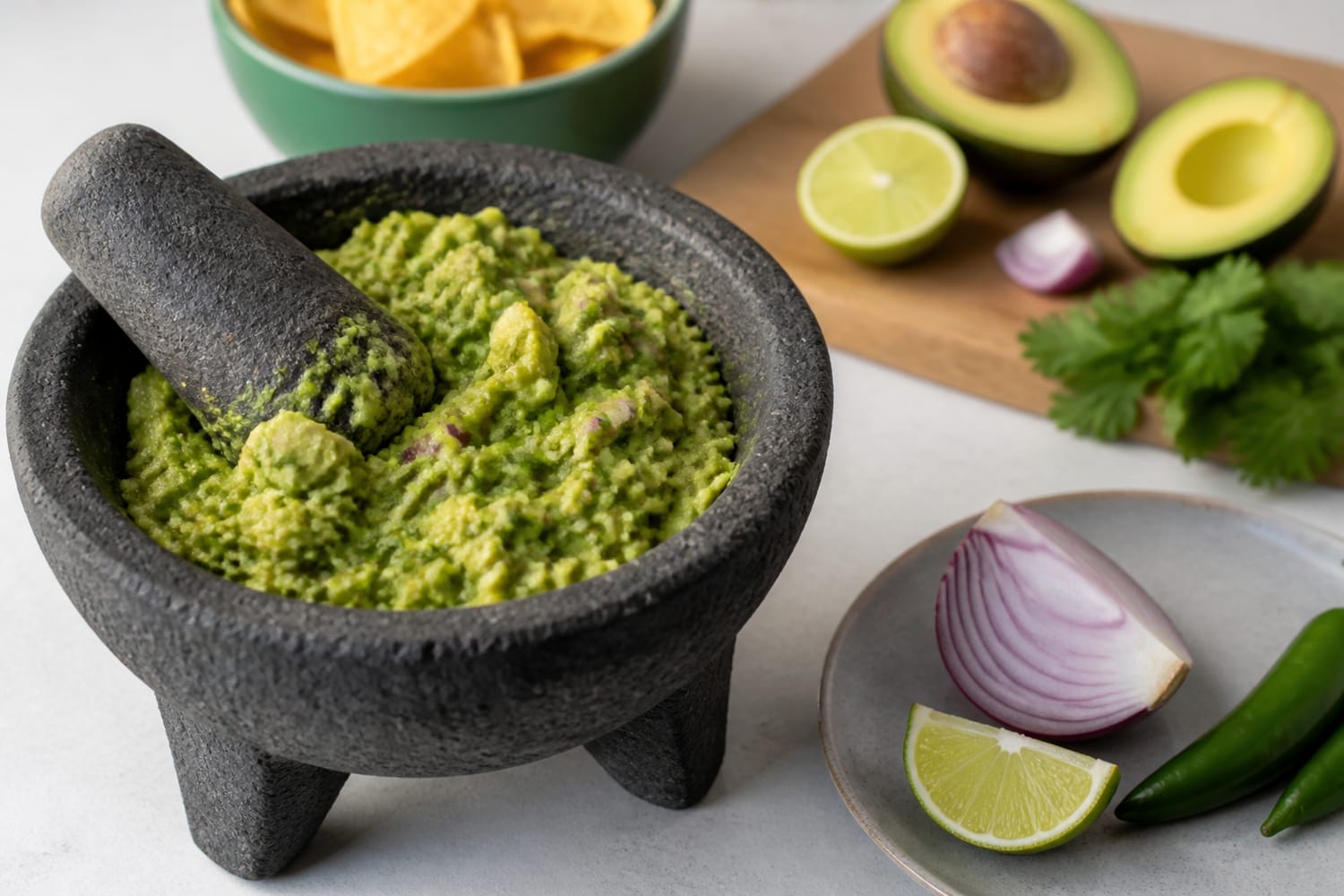
A Mexican molcajete can make guacamole in two stages. First, pound ingredients such as chile, onion, cilantro, and salt into a coarse seasoning paste. Then fold in avocado gently enough to leave some pieces intact.
That contrast is the pleasure: the seasoning reaches throughout the dip, while soft avocado chunks remain distinct. Crushing everything equally would make a different guacamole, not necessarily a better one. Mexico-born chef Roberto Santibáñez uses the paste-first approach in his molcajete recipe.
Sambal Oelek: Heat With Some Bite
Sambal oelek is an Indonesian-style chile condiment associated with crushing chilies using a mortar and pestle. Rather than disappearing into an entirely smooth sauce, pieces of chile can remain visible.
Those bits change how the heat arrives. A spoonful can add little bursts of chile alongside its overall warmth, whether it is served with a meal or stirred into another dish. It is a useful reminder that a condiment has texture, too: two hot sauces can taste different in part because one is coarse and the other is silky.
Wiener Schnitzel: A Cutlet Made Even
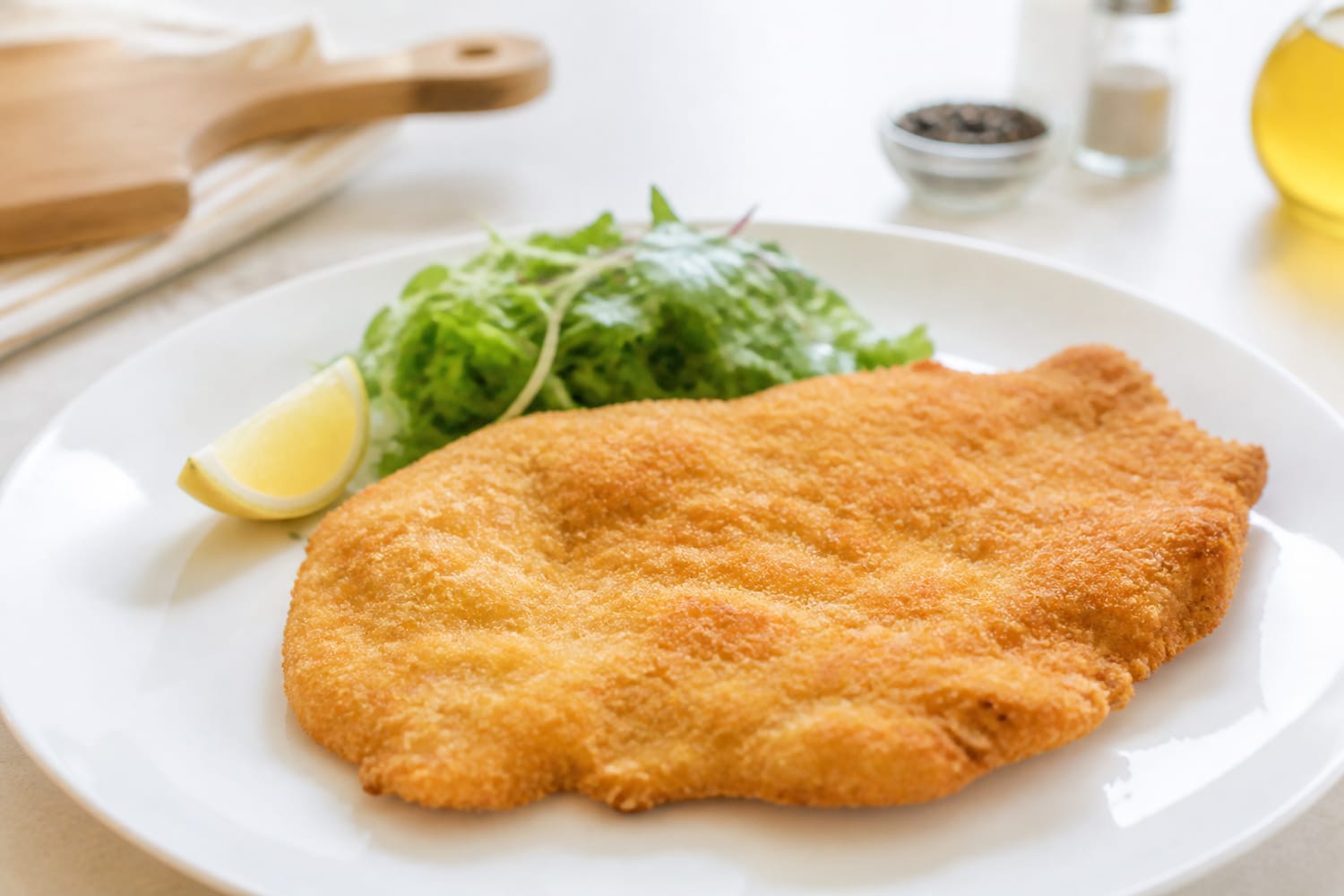
Pounding does not always aim for a paste. For Wiener schnitzel, veal is carefully flattened before it is breaded and fried. The resulting thin cutlet can cook evenly beneath its crisp coating.
The appeal is the contrast between the tender meat and the breadcrumbs. Strike too aggressively and you risk tearing the cutlet; leave it uneven and thicker spots cook differently from thinner ones. Austria’s tourism site includes pounding as an essential early step in its Wiener schnitzel recipe.
Kibbeh: A Mixture That Holds Its Shape
Some traditional preparations of kibbeh pound meat before combining it with bulgur, onion, and seasonings. Other versions use finely ground meat and modern equipment. Either way, texture is central: the mixture needs enough cohesion to be shaped.
Kibbeh may be served in different forms, including stuffed, fried croquettes. In those, the relatively smooth outer layer surrounds a filling with its own texture. The first bite reveals why making the shell cohesive matters: it keeps the savory contents tucked inside.
Skordalia: Garlic With Body
Greek skordalia is a garlicky dip or sauce made with a substantial base such as potato or bread. In a traditional hand-prepared version, garlic is pounded and worked into that base with olive oil and an acidic ingredient.
The result is thick enough to cling to food rather than run off it. Pounding distributes the garlic through the mixture and helps create its rich, unified feel. Try it alongside vegetables or fish, and notice that its texture delivers the strong flavor as surely as the garlic does.
Listen for What Changes
These dishes ask for different kinds of force. Mochi needs repeated blows; som tam needs restraint. Schnitzel is flattened, while fufu is brought together. Pounding is not one technique with one result—it is a way for cooks to choose how a food should behave in the mouth.
The next time a familiar ingredient feels surprisingly different, consider what happened before it reached the plate. For more foods where mouthfeel shapes the experience, explore Tour Trivia’s look at why certain foods divide opinion.