
À La Carte and Fixed-Price Menus: Know the Difference
With à la carte ordering, you select individually priced dishes rather than buying a predetermined combination. A fixed-price menu bundles a meal into one advertised price, usually with a specified number of courses and sometimes a limited choice within each course. Neither format automatically tells you how generous the portions will be.
France offers a useful example of how these choices coexist. A restaurant might offer a lunchtime formule with a starter and main, or a main and dessert, alongside other ordering options. Some also offer a three-course version. Read the combinations carefully rather than assuming every fixed-price lunch includes everything.
For travelers, the useful question is: “What comes with this?” Ask before adding sides or drinks, and check whether particular dishes carry a supplement. Compare the complete meal you want, not simply the lowest number on the page.
Spain’s Menú del Día: A Lunch With Structure
Spain’s menú del día is a set lunch built around a small selection of dishes. Madrid’s official tourism guide describes the familiar combination of a first course, second course, drink, and dessert, while distinguishing it from ordering individual dishes a la carta.
Think of it as choosing within a framework. You are not necessarily accepting one identical meal served to everyone: a daily menu can list several first-course and main-course options. The restaurant’s board or printed sheet should explain the available choices and inclusions.
Before ordering, check these details:
- Which courses are included?
- Does the price cover a drink?
- Is the finishing option dessert, coffee, or a choice between them?
- Are any selections priced above the basic menu?
A short clarification is easier than discovering that your interpretation and the restaurant’s differ.
Japan’s Teishoku: A Complete Meal Arrives Together
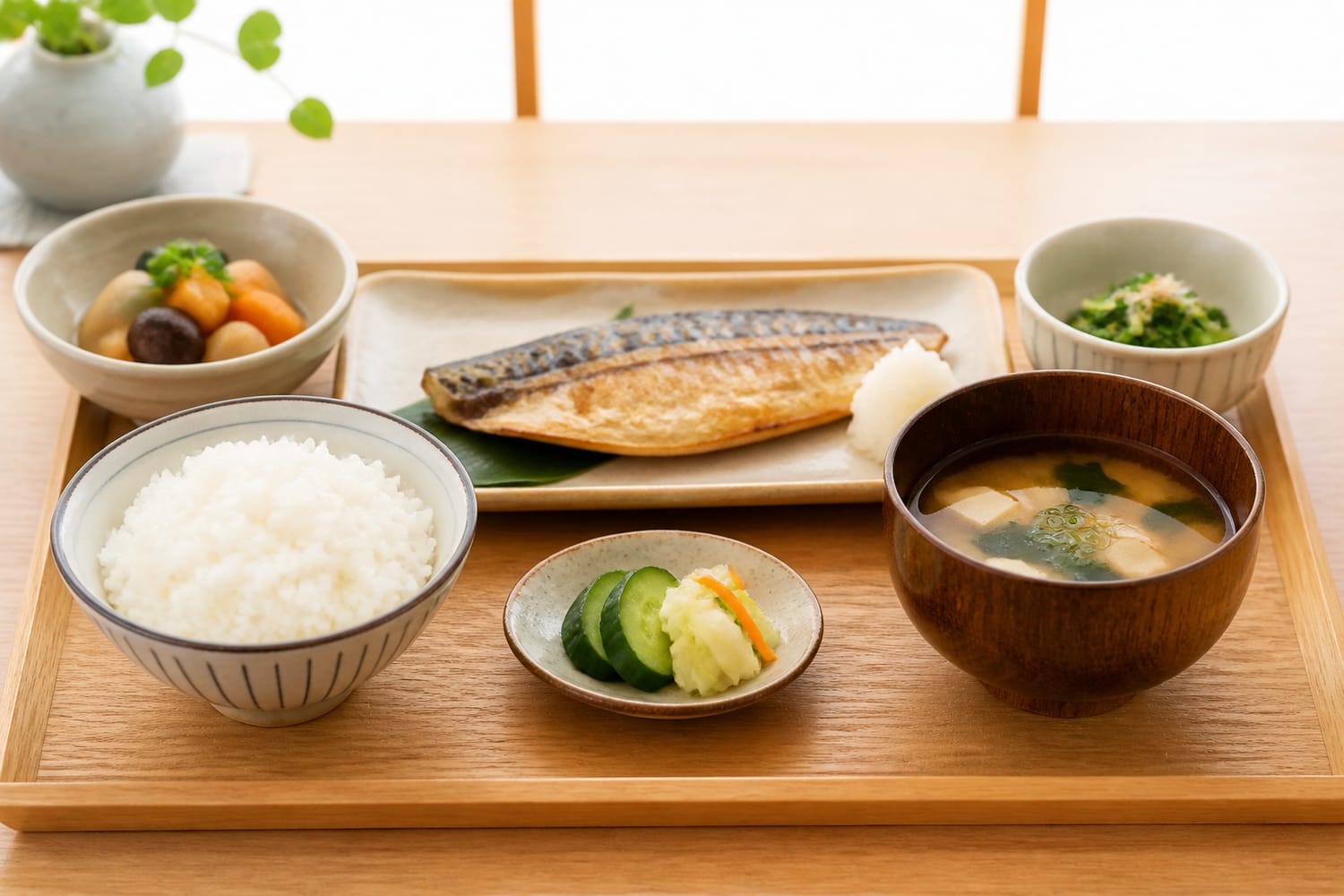
In Japan, teishoku offers a different version of the set meal. Instead of progressing through separate courses, the components generally arrive together: rice, miso soup, a main dish, and accompaniments such as vegetables and pickles. The main might be grilled fish, chicken, or a fried pork cutlet.
The Japan National Tourism Organization’s guide to teishoku explains the central idea: choose the main item, and its supporting dishes form the set. This makes the format particularly approachable when a long menu feels overwhelming.
Ordering may also happen before you sit down. Some casual establishments use vending machines: buy the appropriate meal ticket, then hand it to the staff. That ticket is your order, not a reservation for a buffet.
Do not assume that “set meal” means unlimited servings. Ask whether rice or soup refills are included before requesting another bowl.
India’s Thali: Variety on One Plate
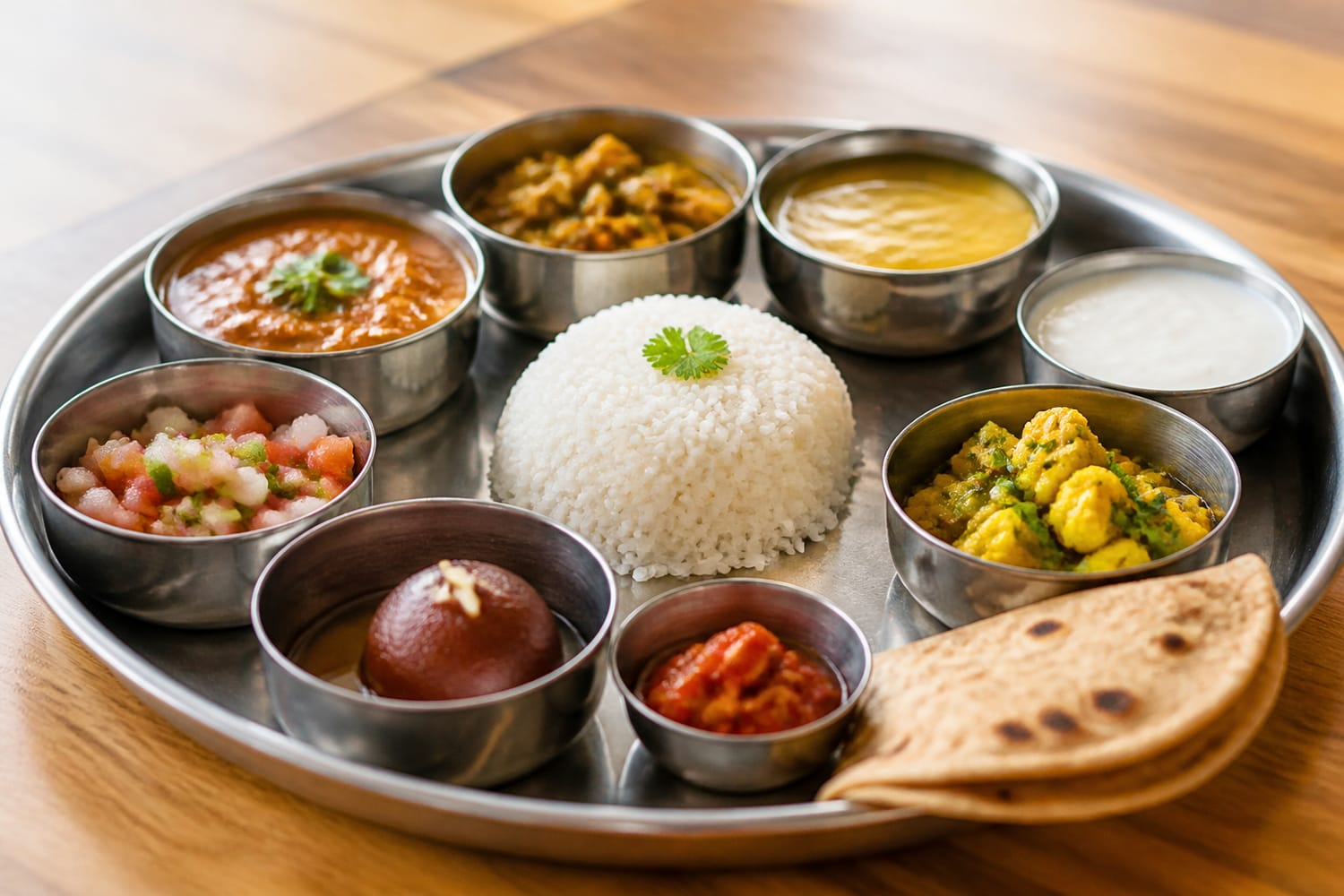
A thali brings several meal components together, often with small bowls arranged on a larger platter. Its contents vary by region and establishment rather than following one nationwide recipe. A restaurant version might combine dal, vegetables, rice, flatbreads, pickles, and a sweet.
The important pricing distinction is between the initial assortment and any replenishments. As Lonely Planet’s guide to eating in India explains, rice or bread is often replenished, and servers may offer additional sauces too. But “often” is not a guarantee that every component is unlimited.
Ask which items can be refilled and whether anything costs extra. Start with the portions served, then request more of what you enjoy. That approach lets you explore the assortment without treating every bowl as something you must immediately finish.
Hong Kong’s Dim Sum: Order for the Table
Dim sum changes the ordering unit from one complete meal per person to several small dishes shared among diners. In Hong Kong, the experience commonly pairs tea with sweet and savory selections, including dumplings, buns, and rice noodle rolls.
At traditional trolley-service restaurants, you can select dishes as they pass, with staff recording your choices on the bill. The moving display is a way to order, not evidence that everything is included in an admission price.
Ask how many pieces come in a serving before choosing quantities. For a group, begin with a modest assortment and order more if needed. This makes it easier to balance different appetites without accidentally ordering a full plate of everything for everyone.
Brazil’s Por Quilo: The Buffet Goes on the Scale
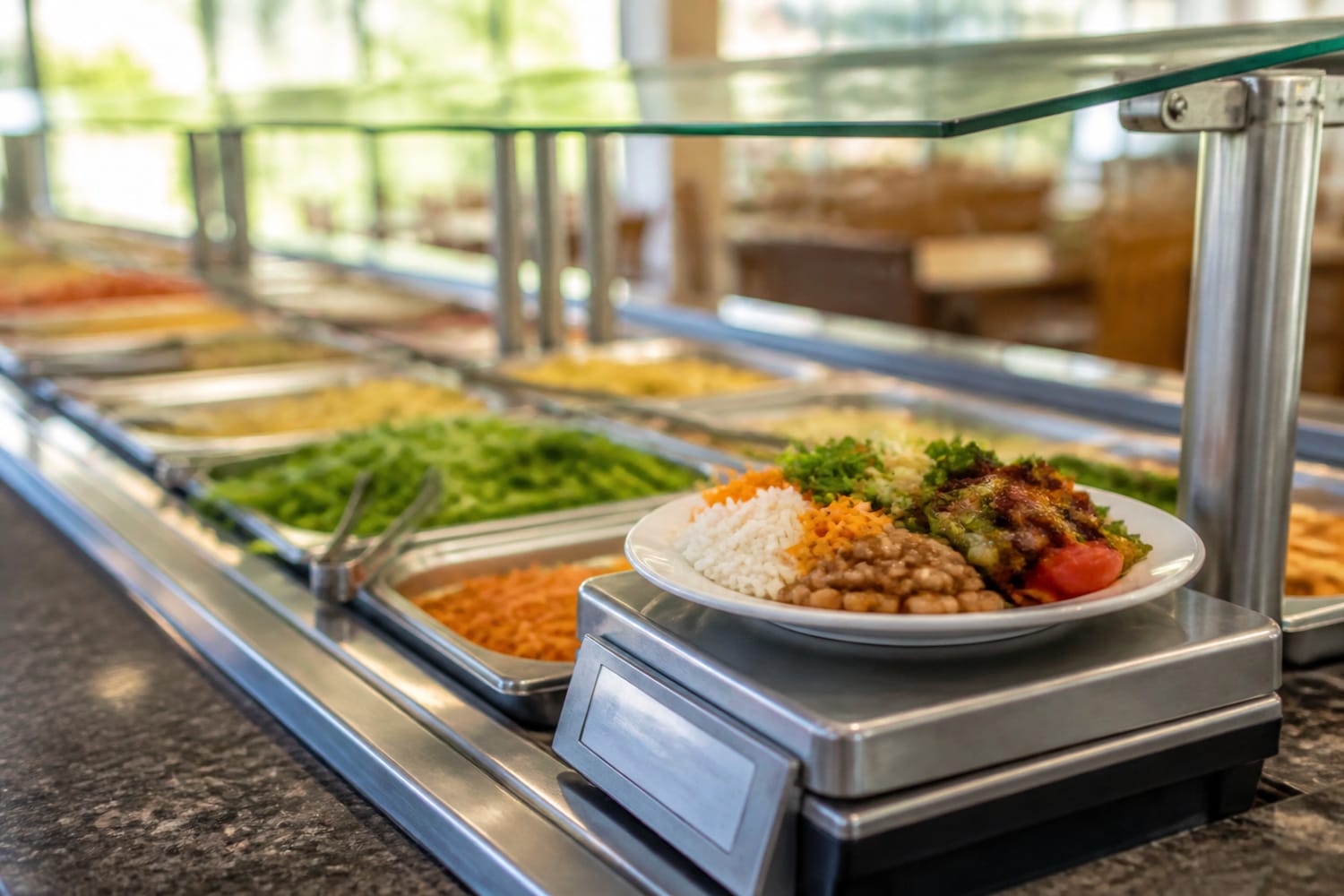
Brazil’s por quilo restaurants separate buffet service from all-you-can-eat pricing. You choose food from the display, take your plate to be weighed, and pay according to its weight. Frommer’s guide to dining in Brazil describes how the charge may be recorded on a slip, with drinks added separately and payment collected before departure.
Check the displayed rate before serving yourself. As a purely illustrative calculation, food priced at R$100 per kilogram would cost R$40 for a 400-gram portion. Do not mistake a per-kilogram rate for the price of one lunch.
Keep any ordering slip or card you receive, and ask whether particular items are charged separately.
Brazil also has rodízio service, which works differently. At a rodízio-style steakhouse, a fixed price generally covers repeated servings of meat brought to the table; drinks and desserts may cost extra. Por quilo charges by weight; rodízio sells an inclusive serving experience.
Read the System Before Choosing the Food
Before committing, establish three things: what the price measures, what it includes, and how additional food is charged. Then ask about portion sizes, sharing, and payment arrangements.
Keep that curiosity going beyond restaurants with Tour Trivia’s guide to street foods around the world. Learning how to order is part of discovering a destination—not an obstacle standing between you and lunch.