
What Real Wasabi Actually Is
True wasabi is Eutrema japonicum, also known as Wasabia japonica, a plant native to Japan. It belongs to the mustard family, alongside horseradish. Although menus and shops often call the part used for paste a “wasabi root,” the prized portion is actually an enlarged stem, commonly described as a rhizome. Finely grating it produces the condiment served with sushi, sashimi, and noodles.
Japanese terminology offers a useful distinction: hon-wasabi refers to the genuine Japanese plant, while seiyo-wasabi, meaning “Western wasabi,” refers to horseradish. They are botanical relatives, not interchangeable names for the same crop.
That difference makes wasabi a fitting companion to Tour Trivia’s exploration of traditional seasonings and their origins. Sometimes the smallest ingredient on the plate has the biggest backstory.
What Is in the Familiar Green Paste?
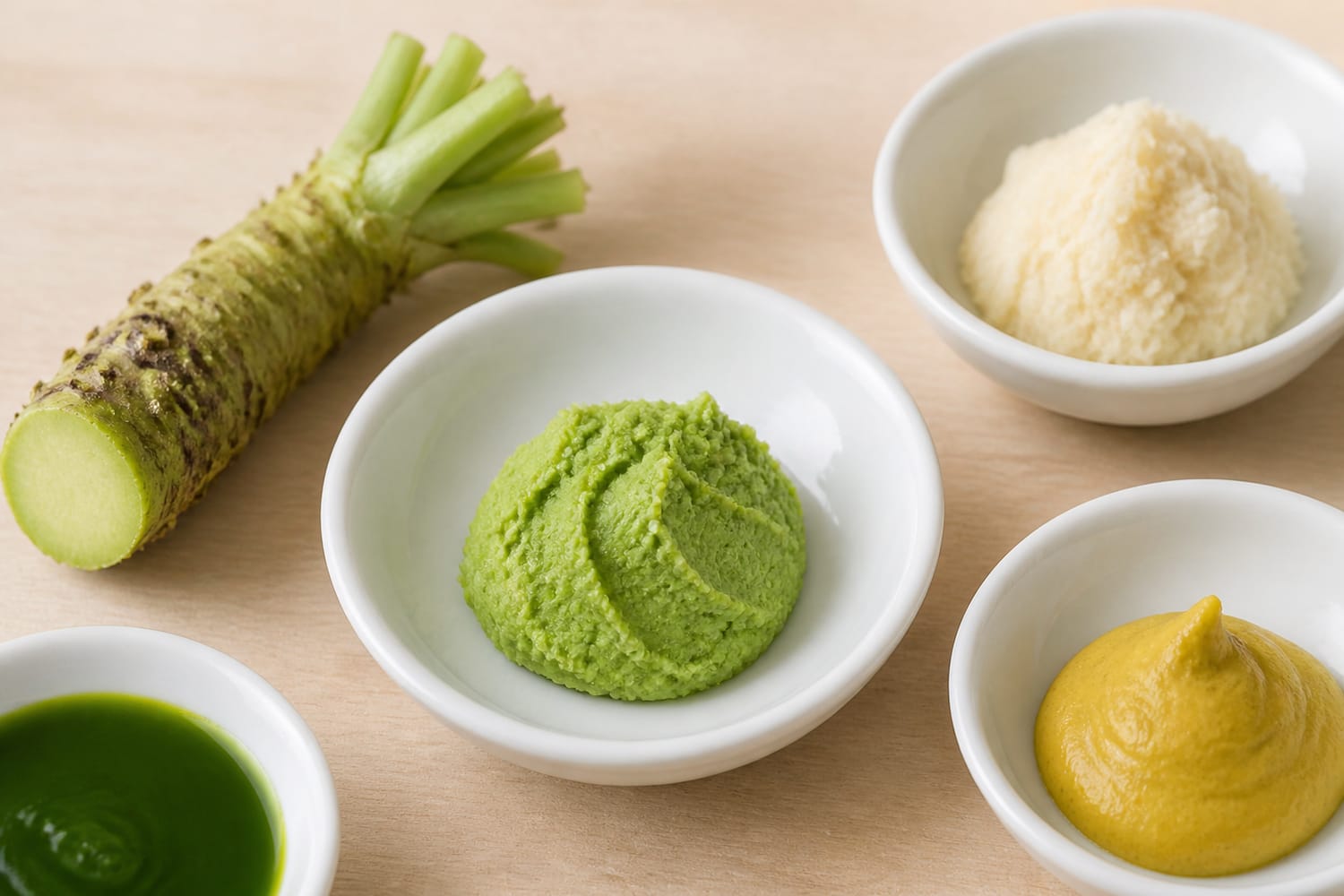
There is no single recipe for imitation wasabi. Many versions use horseradish for pungency, mustard for additional bite, and coloring for the expected green appearance. Other products blend horseradish with genuine wasabi, so the choice is not always “completely real” versus “completely fake.”
As the Japan Tourism Agency’s explanation of wasabi products notes, the amount of actual wasabi varies between products. Horseradish is easier to cultivate, making it a practical alternative to a relatively scarce, expensive ingredient.
The substitution is not limited to restaurants outside Japan, either. Japan-focused travel guide Japan Guide notes that supermarket products and some restaurant offerings contain little or no real wasabi. Simply eating sushi in Japan does not guarantee that the green paste came entirely from the Japanese plant.
“Fake wasabi” makes a punchy headline, but “horseradish-based substitute” often describes the situation more fairly. The useful question is what the product contains—not whether you should feel embarrassed for enjoying it.
Why Genuine Wasabi Is So Demanding
Wasabi is not a crop that thrives just anywhere. Traditional water-grown wasabi needs shade, abundant clean water, and carefully managed growing beds. According to JETRO’s guide to Japanese wasabi, ideal water temperatures are approximately 10–15°C, or 50–59°F. Strong sunlight is another problem, limiting suitable cultivation sites.
In Izu, Shizuoka Prefecture, growers developed the tatamiishi system: terraced beds built with layers of stone, gravel, and sand, through which mountain water flows. These landscapes are working agricultural systems, not simply picturesque streams with plants tucked into them. Japan’s national tourism organization describes how the arrangement filters water and helps maintain suitable growing conditions.
Not all genuine wasabi grows in flowing water, however. Field-grown wasabi also exists, including cultivation in cool, shaded settings. The distinction matters: claims that “real wasabi can only grow in a Japanese mountain stream” turn a remarkable farming story into an inaccurate one.
Does Real Wasabi Taste Different?
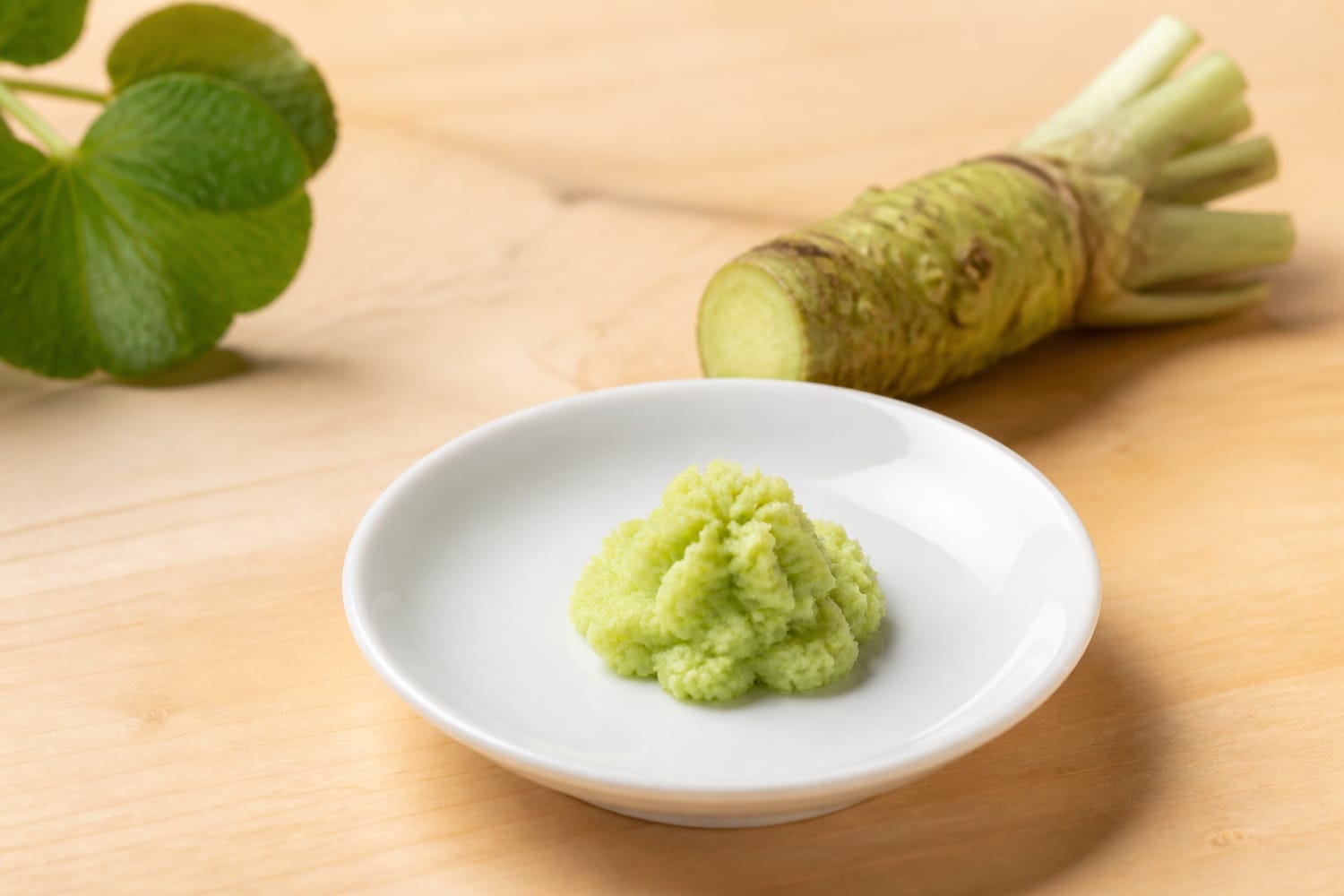
Yes—but “less spicy” is an incomplete description. Fresh wasabi combines pungency with natural sweetness, and its heat fades relatively quickly. Horseradish-based products can deliver a sharper, longer-lasting effect. Genuine wasabi is worth trying for its balance, not just to see whether it produces a stronger reaction.
The familiar nose-tingling sensation comes largely from allyl isothiocyanate, a pungent compound associated with wasabi. It stimulates the nasal passages more than the tongue, helping explain why a small amount can feel so startling. Horseradish has similar spicy attributes, which makes it a convincing stand-in.
Preparation matters, too. Grating breaks down the plant’s tissue and helps generate its pungent compounds. Fresh wasabi’s flavor changes quickly after preparation, which is why chefs who use whole stems typically grate small amounts close to serving time.
For a useful comparison, try a tiny amount before adding soy sauce. Give yourself a chance to notice the aroma and sweetness rather than turning the tasting into a heat-endurance contest.
How to Tell What You Are Getting
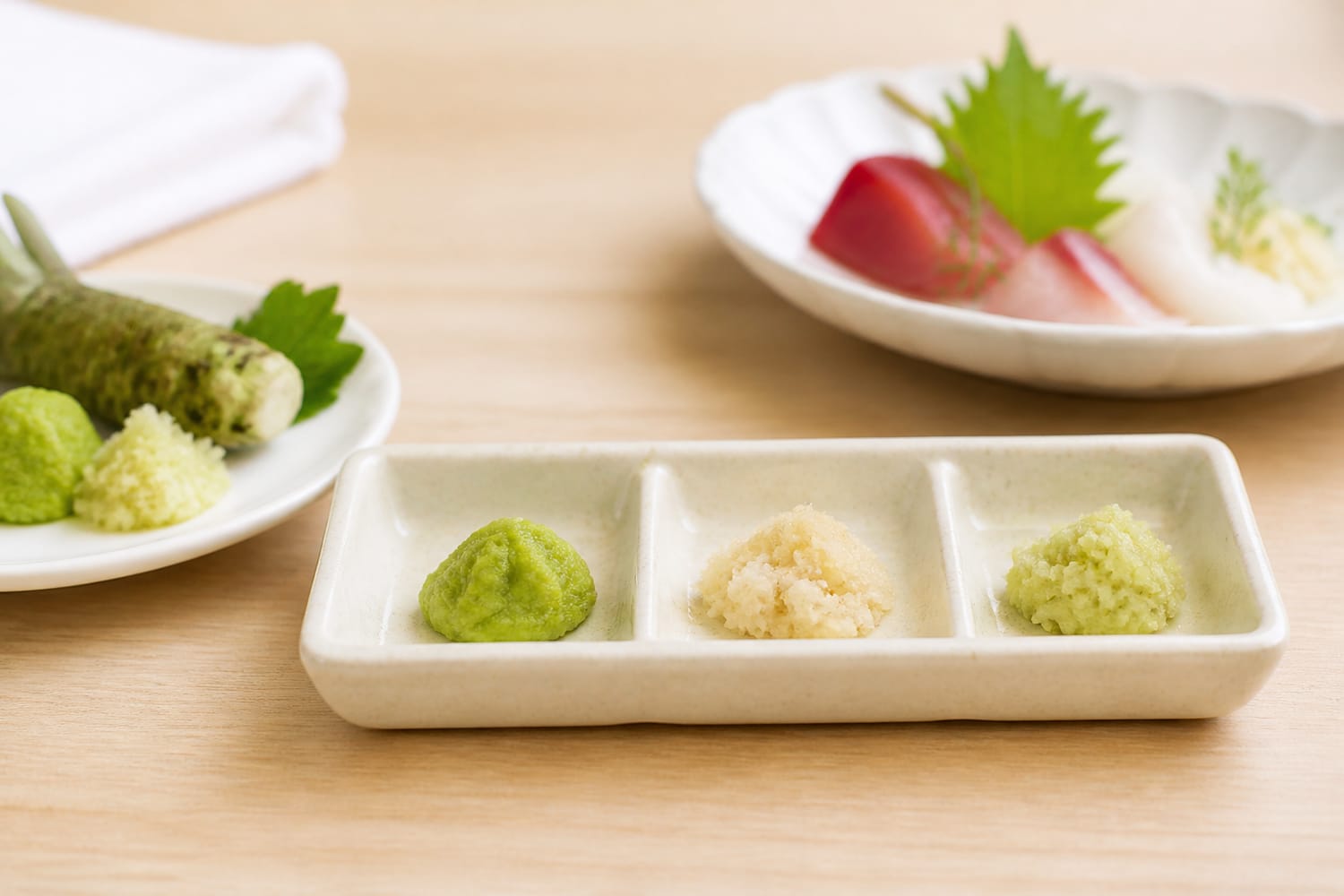
You do not need to become a botanist to ask better questions. Start with the product information rather than relying on the paste’s appearance.
- Read the ingredients. Look for whether the product contains wasabi, horseradish, mustard, or a combination.
- Ask a specific restaurant question. “Is this freshly grated wasabi, a blend, or horseradish-based paste?” is clearer than “Is it real?”
- Look for fresh preparation. Seeing a whole stem grated offers stronger evidence than seeing a green mound.
- Do not assume a tube means imitation. Genuine wasabi is also used in processed pastes and powders; composition varies.
Likewise, treat words such as “authentic” as a starting point for questions, not a substitute for answers. Ask what the description means and whether a manufacturer or restaurant can identify the ingredients.
The goal is informed curiosity. You can enjoy an inexpensive horseradish blend while still wanting to discover how freshly grated wasabi differs.
Follow the Flavor Back to the Farm
For food-minded travelers, wasabi offers a reason to venture beyond the sushi counter. Izu’s growing landscapes connect the condiment to mountain water, agricultural craftsmanship, and regional food culture. Japan’s tourism organization highlights the area as a destination for learning about traditional cultivation.
Another established stop is Daio Wasabi Farm in Azumino, near Matsumoto in Nagano Prefecture. Visitors can explore paths through the fields and discover wasabi in forms ranging from soba to soft-serve ice cream. It is a reminder that this ingredient has a life well beyond sushi.
So, is your wasabi really wasabi? The answer begins with a label or a question. Either way, that little green mound has just become considerably more interesting.