
What Happens When Bagel Dough Hits Hot Water?
The key transformation is called starch gelatinization. When the dough meets hot water, starch near the surface absorbs moisture and changes into a gel-like layer. This partially cooked exterior becomes the foundation for the bagel’s finished crust.
Think of it as giving the dough a head start on its outer structure. Rather than entering the oven completely raw, the bagel arrives with its surface already changed. Baking then turns that prepared exterior into the familiar glossy skin.
Boiling does not replace baking. It prepares the outside; the oven finishes cooking the bread and develops its browned crust. The two stages perform different jobs, and a traditional bagel depends on both.
Why Boiling Makes Bagels Chewy Instead of Fluffy
Bread dough normally expands as it heats. A bagel’s partially set exterior puts some limits on that expansion, helping preserve a tighter interior rather than an especially airy one. A longer boil generally leaves less room for further rising in the oven.
That creates two connected eating experiences: resistance from the crust and a substantial chew inside. Neither should feel like biting into a rock. A well-balanced bagel can be chewy while remaining tender enough to enjoy without a wrestling match.
Without the boiling step—or another process designed to treat the surface—the same dough tends toward a more roll-like result. The hole may announce “bagel,” but the texture will not necessarily deliver on the promise.
The Dough Deserves Some Credit, Too
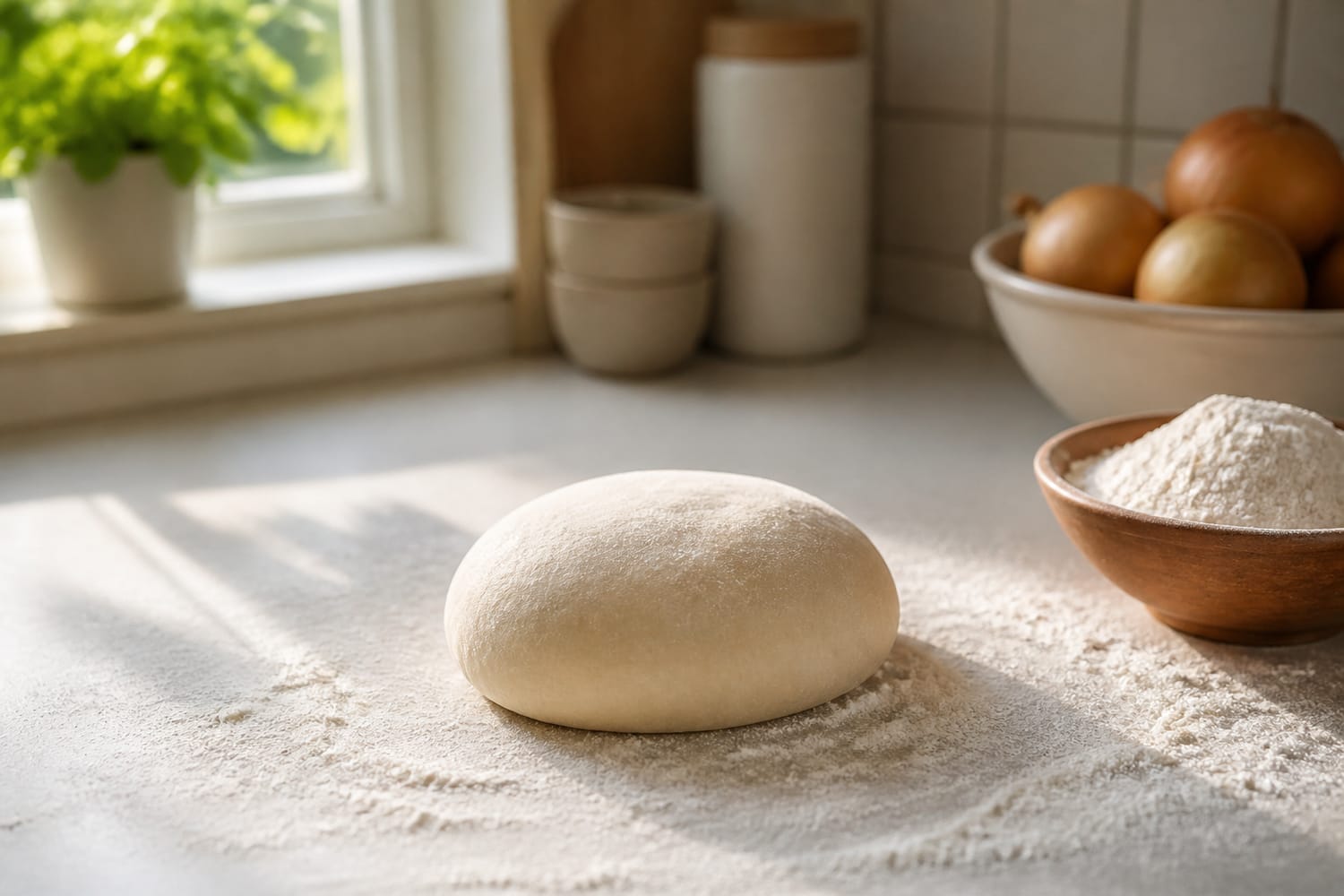
Boiling is important, but it cannot create the entire texture by itself. Flour choice matters: higher-protein flour generally produces greater chew and a more pronounced bite, while lower-protein flour tends toward a softer, more roll-like mouthfeel.
Bagel dough is also usually relatively stiff. In its explanation of the five elements of great bagels, King Arthur Baking identifies hydration, flour protein, shaping, fermentation, and boiling as interconnected influences. Changing one affects how the others behave.
That is why “boil any bread dough” is not a reliable bagel recipe. The water bath works alongside a dough formulated and handled for this particular result. For beginners, following one complete recipe is more useful than combining instructions from several different versions.
How Long Should Bagels Be Boiled?
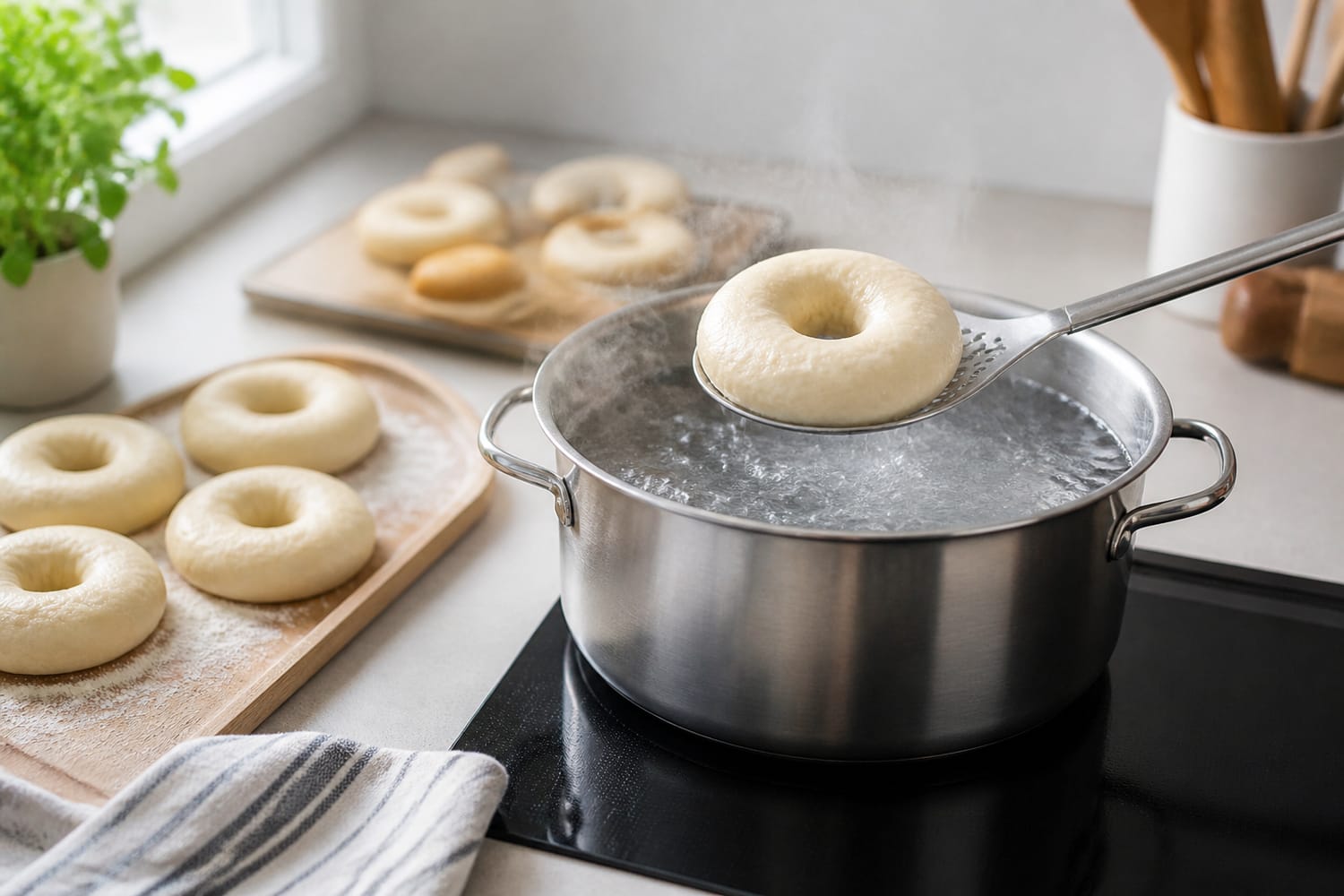
There is no single correct time for every bagel. Size, dough formulation, and the intended texture all matter. King Arthur’s Water Bagels recipe uses approximately 30 seconds per side, while its standard Bagels recipe calls for two minutes on the first side and one on the second.
The general relationship is straightforward:
- A shorter boil usually produces a thinner crust and allows more oven expansion.
- A longer boil generally encourages a chewier result with less expansion.
- An excessive boil can contribute to an unpleasantly hard bagel.
For a useful home experiment, keep the dough and baking conditions identical and change only the boiling time. King Arthur’s bagel-making tips suggest modest adjustments rather than assuming that longer always means better. Record which batch gives you the bite you prefer.
Why Bakers Add Malt or Honey to the Water
The bath is not always plain water. Barley malt syrup or non-diastatic malt powder is associated with New York-style bagels, while honey appears in Montreal-style preparation. These additions contribute flavor and can enhance the finished sheen.
This is one of those small production choices worth noticing when comparing bakeries. Ask what goes into the kettle, and you may learn something that the toppings alone would never reveal.
The technique also travels beyond those two cities. Seattle’s Eltana describes its bagel-making process as hand-rolling, boiling in honey water, seeding both sides, and baking in a wood-fired oven. The sequence shows how boiling remains central even when a bakery develops its own style.
For more food-focused exploring, Tour Trivia’s guide to local markets around the world offers another starting point for following your appetite.
What the Oven Does After the Boil
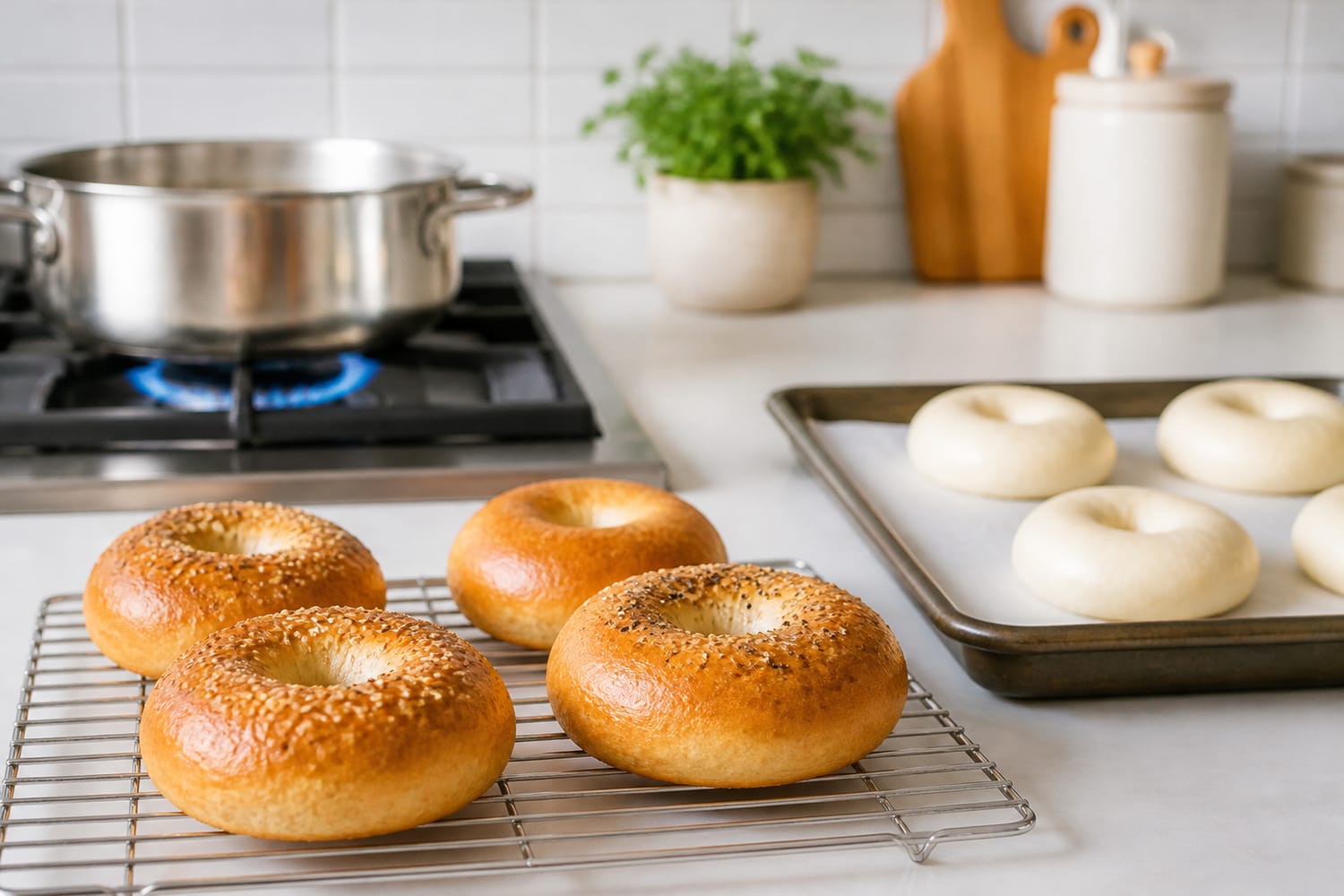
Once boiled, bagels still need the oven to finish their transformation. The exterior develops color, the interior finishes baking, and the water-treated surface becomes the finished crust. Boiling supplies the preparation; baking supplies the finish.
At home, a few practical habits help preserve that work:
- Use a wide pan and avoid crowding the bagels.
- Maintain the gentle simmer or boil specified by your recipe.
- Turn and lift the dough carefully.
- Apply seeds after boiling and before baking, as directed.
- Let the baked bagels cool before slicing.
Do not judge a recipe by its boiling instructions alone. Its timing, dough, and oven temperature are intended to work together.
The Secret Is the Sequence
A bagel’s signature bite comes from a coordinated process: build an appropriate dough, shape it, boil it, and then bake it. The bath changes the surface before the oven can expand and brown it, helping create that unmistakable combination of crust and chew.
That is the delightful answer hidden inside an everyday breakfast. If you enjoy discovering how familiar foods acquire their character, explore Tour Trivia’s food museums and culinary attractions. Sometimes the most interesting part of a food is the step you never see.