
A Taste That Travels Across Borders
Open a jar of kimchi in Seoul, tear into a chunk of sourdough in San Francisco, sip kefir in the Caucasus, or drizzle soy sauce over rice in Tokyo, and you’re experiencing one of the world’s oldest culinary traditions: fermentation. Long before refrigerators, canning factories, and global shipping, people needed clever ways to preserve food. Fermentation was one of the answers.
But fermented foods are more than survival tools. They are cultural icons, comfort foods, everyday staples, and sometimes bold flavor adventures. Around the world, fermentation has turned humble ingredients like cabbage, milk, beans, grains, and fish into foods with deep complexity and local identity.
For travelers, fermented foods offer something special: a taste of history in every bite. They tell stories of climate, agriculture, migration, religion, trade, and family recipes passed down for generations. Whether you’re a curious eater or planning your next food-focused trip, fermented foods are a delicious way to understand how people around the world make the most of what they have.
What Makes Fermented Foods So Fascinating
Fermentation happens when microorganisms such as bacteria, yeasts, and molds transform food. That may sound scientific, but the results are wonderfully human: tangy yogurt, fizzy kombucha, funky miso, crusty sourdough, sharp pickles, and rich cheeses.
The process changes flavor, texture, aroma, and shelf life. Milk becomes yogurt or cheese. Grapes become wine. Cabbage becomes sauerkraut or kimchi. Soybeans become tempeh, soy sauce, natto, or miso. Grains become beer, bread, or injera.
One reason fermented foods are loved globally is that they create strong, memorable flavors. Fermentation can make food sour, savory, earthy, spicy, creamy, salty, or even slightly sweet. These bold tastes often become central to a culture’s cuisine. Imagine Korean food without kimchi, German sausages without sauerkraut, Indian meals without dosa batter, or Japanese soup without miso.
Fermented foods also tend to be practical. They help preserve seasonal harvests, stretch ingredients, and reduce waste. In cold climates, fermented vegetables carried families through winter. In warm regions, fermented drinks and dairy products offered nutrition in forms that lasted longer than fresh ingredients.
The Comfort of Tradition
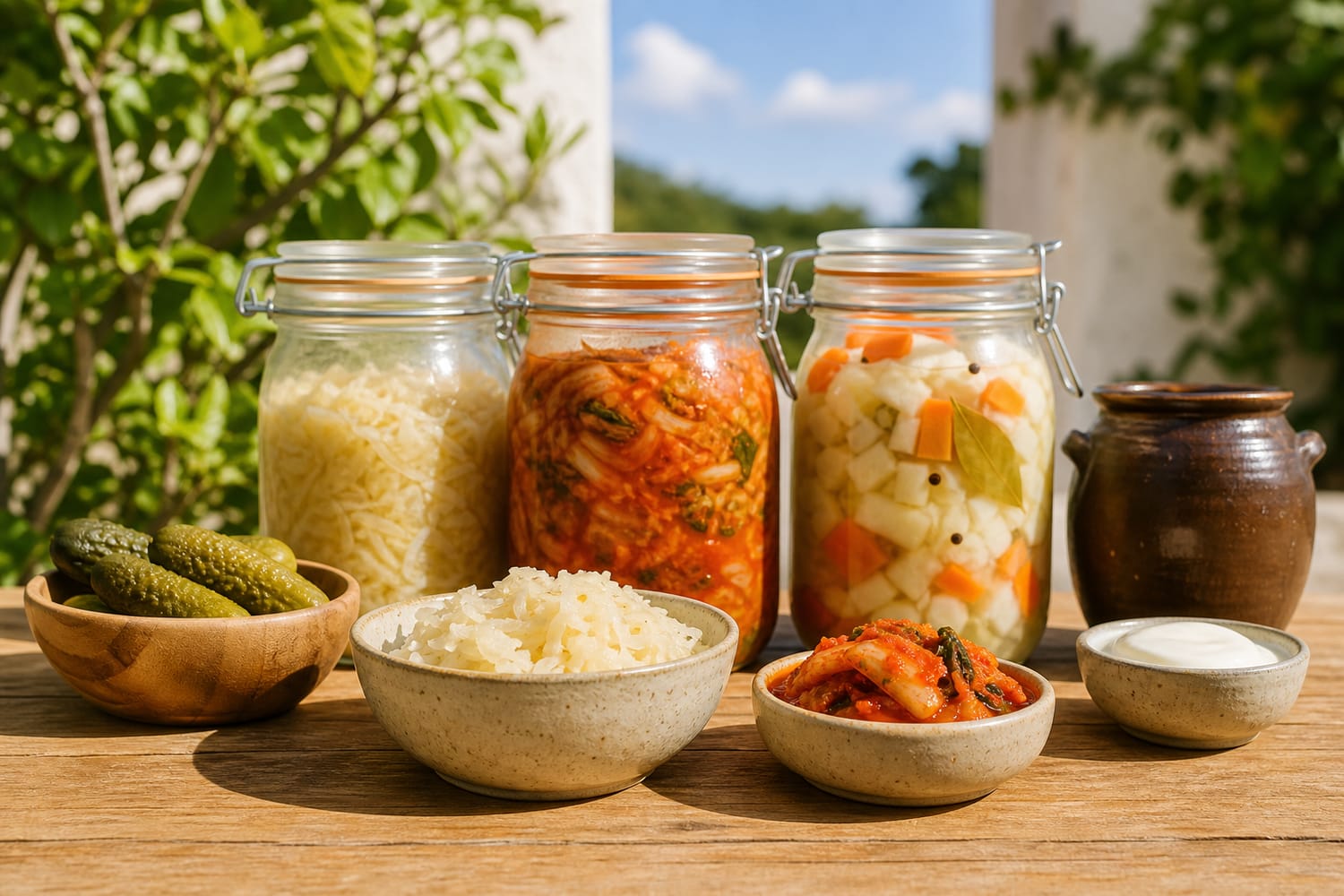
Fermented foods often begin at home. A grandmother’s pickle recipe, a family sourdough starter, a clay pot of miso, or a jar of preserved lemons in the pantry can carry memories as strongly as photographs.
In many cultures, fermentation is a ritual. Korean families have traditionally gathered for kimjang, the communal making of kimchi before winter. In parts of Europe, cabbage harvests led to large batches of sauerkraut. In Mexico and Central America, fermented corn drinks have long been linked to community and ceremony. In Ethiopia and Eritrea, injera, a fermented flatbread, is both a utensil and the foundation of the meal.
These traditions make fermented foods feel personal. They are not just things people eat; they are things people make, share, store, gift, and celebrate. The process can take days, months, or even years, which gives the final food a sense of patience and care.
For Tour Trivia readers, that’s part of the magic. Trying fermented food while traveling is like tasting local time. You are experiencing something shaped by weather, place, microbes, and memory.
Fermented Favorites Around the World
Kimchi is perhaps one of the most famous fermented foods today. Usually made with napa cabbage or radish, it is seasoned with chili, garlic, ginger, scallions, and often fish sauce or salted seafood. It is spicy, sour, crunchy, and deeply savory. In South Korea, it appears at nearly every meal, but it also stars in stews, pancakes, fried rice, and noodles.
Sauerkraut, common in Germany and across Central and Eastern Europe, is made by fermenting shredded cabbage with salt. It is simpler than kimchi but no less beloved. Its sharp tang pairs beautifully with sausages, pork, potatoes, and rye bread.
Miso, from Japan, is a paste made from fermented soybeans, often with rice or barley. It can be light and sweet or dark and intensely savory. Miso soup is the classic introduction, but miso also works in marinades, dressings, glazes, and desserts.
Yogurt is one of the most widespread fermented foods in the world. From thick Greek yogurt to Indian curd, Turkish yogurt, and Middle Eastern labneh, it is enjoyed in sweet and savory forms. It can cool spicy dishes, enrich sauces, or stand alone with fruit and honey.
Kefir, a fermented milk drink associated with the Caucasus region, is thinner than yogurt and pleasantly tart. It can be slightly fizzy and is often consumed as a refreshing drink.
Tempeh, originally from Indonesia, is made by fermenting soybeans into a firm cake. It has a nutty flavor and hearty texture, making it popular in both traditional Indonesian cooking and modern plant-based diets.
Natto, a Japanese fermented soybean dish, is famous for its sticky texture and strong aroma. It is often served over rice with mustard, soy sauce, and scallions. For adventurous eaters, it is a memorable first bite.
Sourdough bread, found in many forms around the world, relies on wild yeasts and bacteria. Its tangy flavor and chewy texture have made it a favorite from ancient baking traditions to modern artisan bakeries.
Why Your Taste Buds Love the Funk
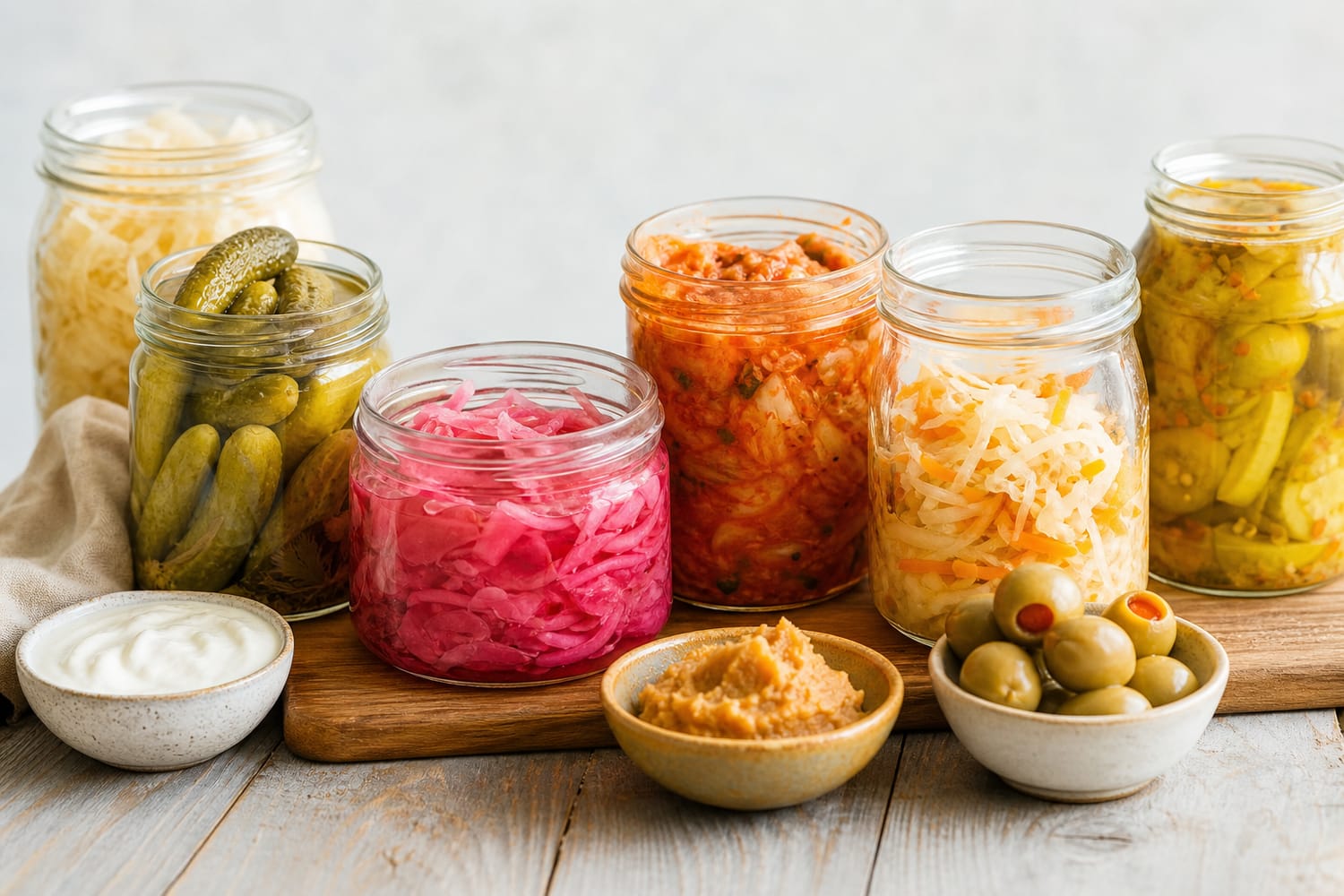
Fermented foods are often described as “funky,” but that funk is really flavor complexity. Fermentation produces acids, alcohols, gases, and aromatic compounds that create depth. This is why a spoonful of miso can make soup taste richer, why pickles brighten a sandwich, and why sourdough tastes more layered than plain white bread.
Many fermented foods are rich in umami, the savory taste associated with foods like mushrooms, aged cheese, soy sauce, and slow-cooked meats. Soy-based ferments such as miso, soy sauce, and tempeh are especially umami-packed. Fish sauce, shrimp paste, and fermented seafood products also bring powerful savory flavor to cuisines across Asia.
Acidity is another reason fermented foods are so useful. Sourness balances richness and makes meals feel lively. Think of yogurt with grilled meat, pickles on a burger, sauerkraut with sausage, or kimchi with rice and pork belly. The tang cuts through fat and adds contrast.
Texture matters too. Fermented foods can be creamy, crisp, chewy, bubbly, or soft. This variety keeps meals interesting. A crunchy pickle or spoonful of kimchi can completely change the experience of a dish.
Are Fermented Foods Good for You?
Many people are drawn to fermented foods because of their possible health benefits. Some fermented foods contain live microorganisms, often called probiotics, which may support gut health. Yogurt with live cultures, kefir, some fresh sauerkraut, kimchi, and certain fermented drinks may contain beneficial bacteria.
Fermentation can also make some foods easier to digest. Yogurt and kefir, for example, may be easier for some people to tolerate than milk because fermentation reduces lactose. Fermenting grains and legumes can help break down certain compounds and improve flavor and texture.
However, not every fermented food contains live cultures by the time you eat it. Some are cooked, pasteurized, baked, or heavily processed, which can reduce or eliminate live microbes. Sourdough bread is fermented, but the baking process kills the live organisms. Soy sauce is fermented, but it is not usually considered a probiotic food.
Still, fermented foods can be part of a balanced diet because they add flavor, variety, and satisfaction. As with all foods, moderation matters. Some fermented items, especially pickles, sauces, and cured products, can be high in salt.
What to Try First
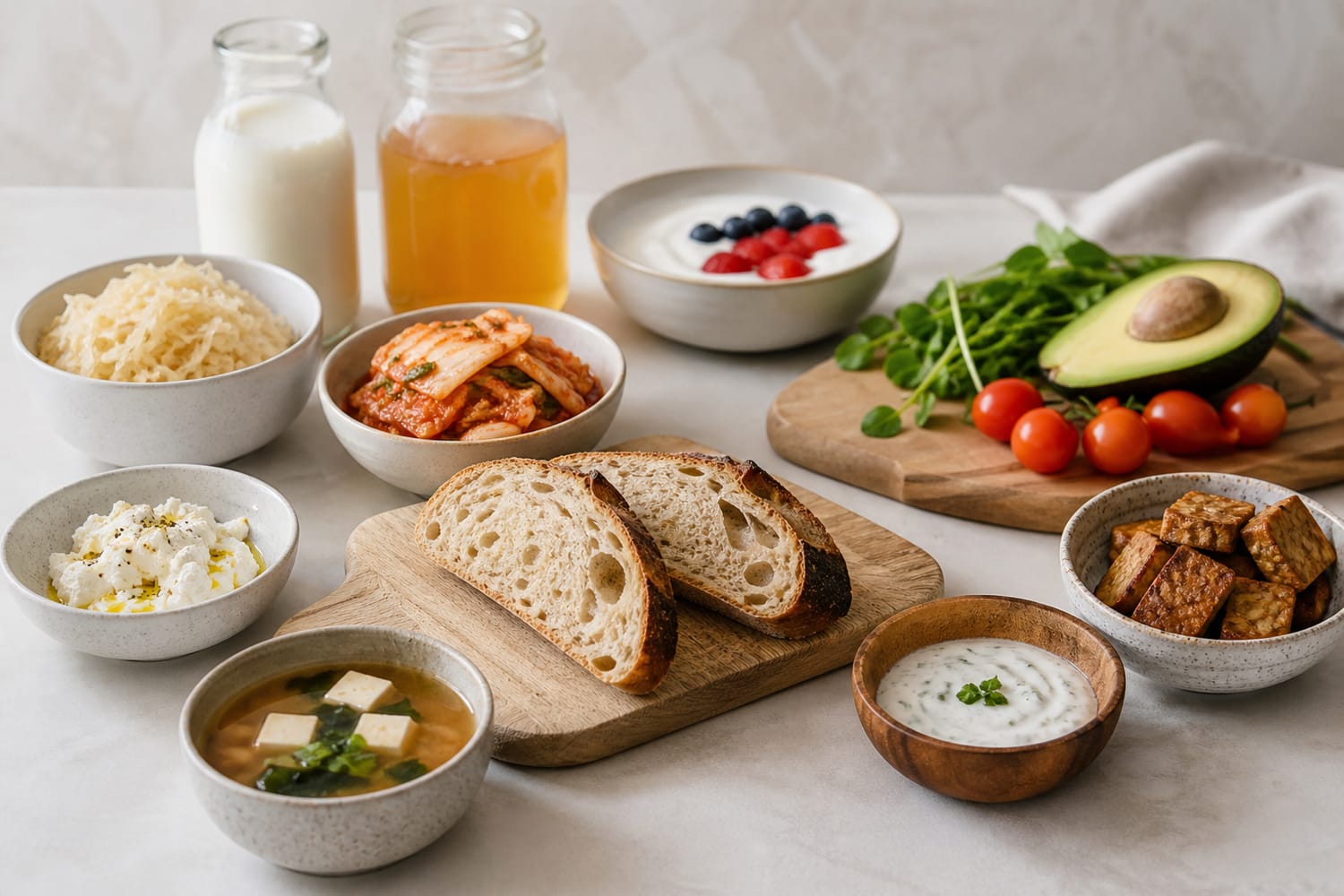
If you’re new to fermented foods, start with familiar flavors. Yogurt is one of the easiest entry points. Try plain yogurt with honey, fruit, or granola, then explore savory uses like tzatziki, raita, or labneh with olive oil and herbs.
Next, try sourdough bread. It is widely available, mild compared to stronger ferments, and easy to enjoy with butter, soup, cheese, or avocado.
For vegetables, start with sauerkraut if you prefer simple tangy flavors, or kimchi if you enjoy spice and garlic. Add a small amount to meals rather than eating a large serving on its own. Kimchi with fried rice or sauerkraut on a sandwich can be more approachable than tasting them straight from the jar.
Miso is another excellent beginner-friendly choice. Make a basic miso soup or whisk a spoonful into salad dressing. Its savory depth is easy to love, especially if you already enjoy broths, mushrooms, or soy sauce.
If you want a drink, try kefir or kombucha. Kefir is creamy and tart, while kombucha is tea-based, lightly fizzy, and often flavored with fruit or herbs. Start with mild versions, as some can be quite sour.
For a bolder step, try tempeh. Slice it, marinate it, and pan-fry it until golden. It has a satisfying bite and works well in stir-fries, sandwiches, and rice bowls.
How to Enjoy Fermented Foods While Traveling
When exploring a new destination, fermented foods can be a gateway to local culture. Visit markets, bakeries, street stalls, and family-run restaurants. Ask what pickles, sauces, breads, cheeses, or drinks are traditional to the region. Many fermented foods appear as side dishes or condiments, so pay attention to the small plates and jars on the table.
Food tours can be especially helpful because guides often explain how local specialties are made. In Japan, you might learn about miso, soy sauce, sake, and pickles. In Korea, kimchi-making classes are popular. In Germany or Poland, you may encounter sauerkraut, pickled cucumbers, rye breads, and fermented dairy. In Ethiopia, injera is impossible to miss and essential to the dining experience.
Be open-minded, but don’t feel pressured to love everything immediately. Fermented flavors can be intense, and some are acquired tastes. Start small, pair them with other foods, and notice how they change the meal.
A World of Flavor in Every Bite
Fermented foods are loved around the world because they are practical, flavorful, traditional, and endlessly diverse. They preserve harvests, deepen taste, connect generations, and turn ordinary ingredients into cultural treasures.
From the spicy crunch of kimchi to the creamy tang of yogurt, the savory richness of miso to the rustic comfort of sourdough, fermentation proves that some of the best foods come from patience and transformation.
If you’re wondering what to try first, begin gently: yogurt, sourdough, miso soup, sauerkraut, or kimchi with rice. Then keep exploring. Every country has its own fermented specialties, and each one offers a small, delicious lesson in how people around the world eat, adapt, and celebrate.