
A Spoonful of Somewhere Else
Why does one jar of honey taste softly floral while another is almost bitter? The short answer is what the bees collected. A hive beside citrus groves has different nectar available from one near a heather-covered hillside. Season, weather, and the surrounding landscape change the menu again—making honey a remarkably sweet way to taste a place.
The Flowers Do the Flavoring
Bees transform nectar into honey, but the nectar’s character does not disappear. Different plants produce nectar with different flavor and aroma profiles, which can leave a finished honey tasting citrusy, herbal, earthy, or even slightly bitter. Honey from a predominant blossom is often named for that plant; wildflower honey may draw on several. As the University of Arizona’s guide to monofloral honey explains, the plant source is central to the flavor in the jar.
Geography matters because it determines what grows within reach of the hive. Timing matters, too: a spring harvest and a later harvest from the same area may reflect different blooms. Even color offers only a clue. Dark honey is often bolder than pale honey, but there are exceptions, so the most reliable test is still a taste.
Around the Mediterranean: Herbs, Trees, and Dessert
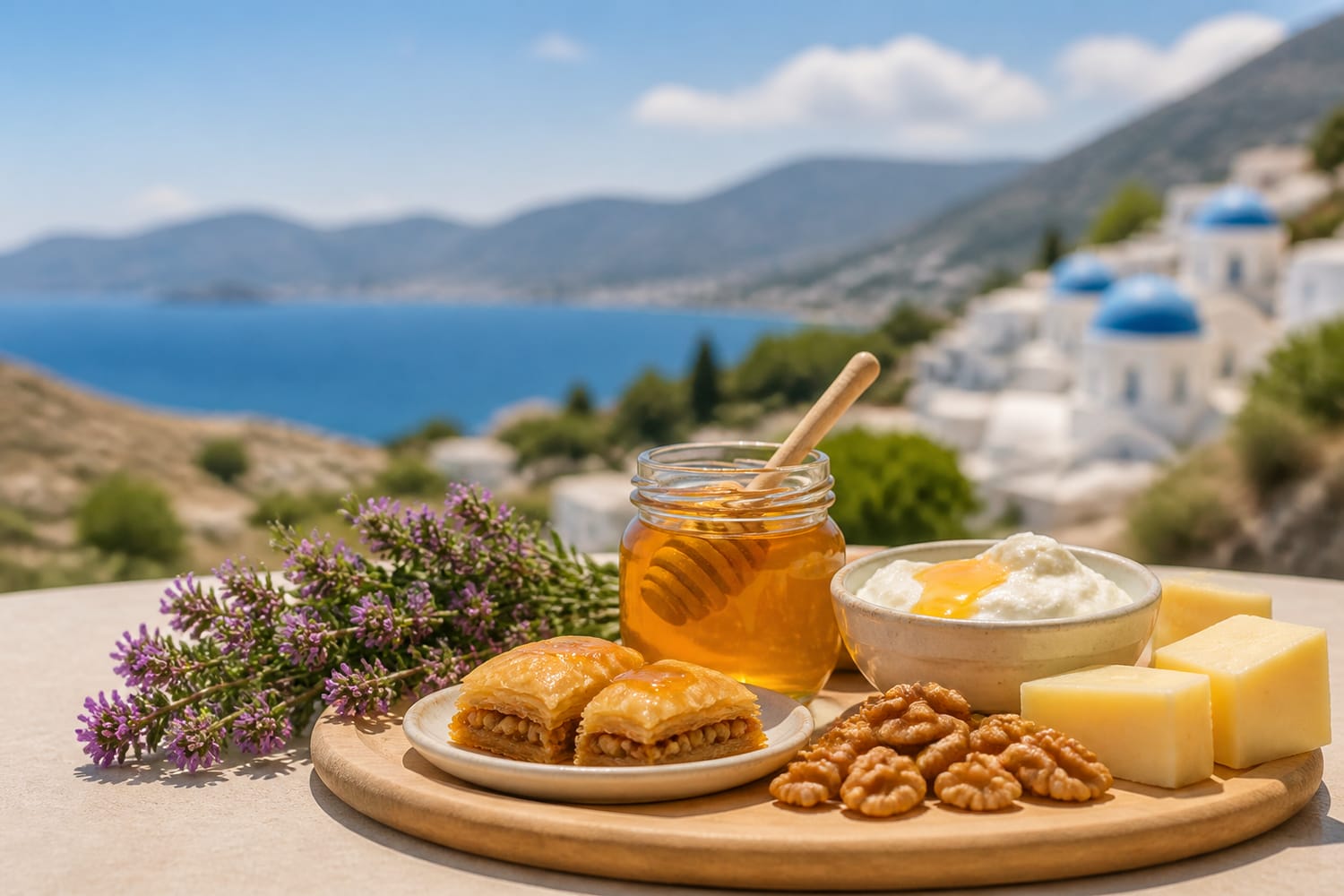
In Greece, thyme honey evokes the scrubby, aromatic vegetation of islands and hillsides. Greek tourism sources describe thyme as a source of local honey in the Cyclades, where honey also features in traditional pastries. A spoonful over thick yogurt lets its fragrance stand out; paired with cheese, it turns a simple plate into something memorable.
Across the sea in Italy, honey can take a darker turn. Chestnut honey is known for a pungent aroma and a more persistent, assertive flavor than a mild table honey. Try it with a strong cheese rather than expecting it to disappear quietly into tea. Tuscany offers plenty of ways to explore the connection between local ingredients and local cooking: honey, nuts, and fruit meet in panforte, a dense sweet featured in Tour Trivia’s guide to Tuscan dining.
Honey’s role also changes from dish to dish. It can be the main flavor, a finishing drizzle, or one part of a richer sweetness. Consider baklava: depending on the recipe, its crisp pastry and nuts are sweetened with honey or syrup. It is a useful reminder that tasting a food tradition means noticing how an ingredient is used, not just whether it appears on the menu. Tour Trivia includes baklava in its tour of foods from around the world.
North America: From Citrus Blossoms to Buckwheat
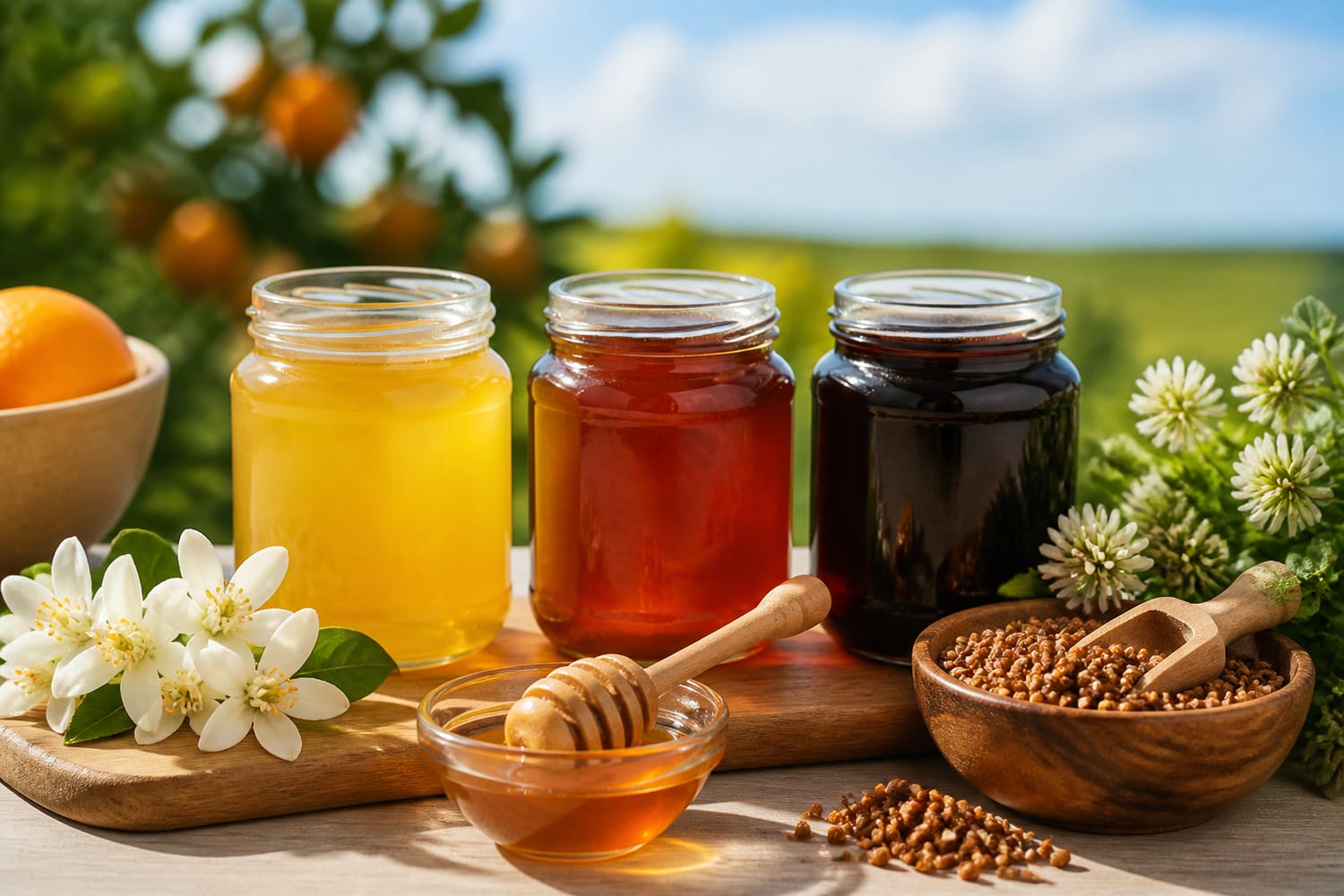
North American honeys show how much variety can fit within a single continent. Orange blossom honey brings a recognizable citrus-floral aroma to toast, yogurt, or a light cake. Clover honey tends to be gentler, making it an easy starting point for someone who has never compared floral varieties side by side. Buckwheat honey heads in another direction: dark, robust, and far less likely to be mistaken for a delicate drizzle.
That range is useful in the kitchen. Use a mild honey when you want sweetness without changing the character of a dish. Reach for a stronger one when you want the honey to announce itself—perhaps alongside sharp cheese or in a savory glaze. The University of Arizona’s honey-pairing guide suggests buckwheat with blue cheese and orange blossom with goat cheese or meat glazes.
New Zealand: What Makes Mānuka Mānuka?
New Zealand’s mānuka honey comes from bees collecting nectar from the mānuka plant. Its reputation travels far beyond New Zealand, but its most interesting feature for a curious eater is its distinctive botanical identity. It is a honey to taste slowly rather than treating every jar labeled “honey” as interchangeable.
There is a practical label-reading lesson here, too. A place name and a floral name answer different questions: where was the honey made, and what plant supplied its nectar? New Zealand’s guidance on authenticating mānuka honey distinguishes monofloral from multifloral mānuka honey and explains the testing required for honey exported under that name. When browsing unfamiliar jars, reading beyond the front label can make the tasting adventure more informative.
Not Every Honey Begins With a Flower
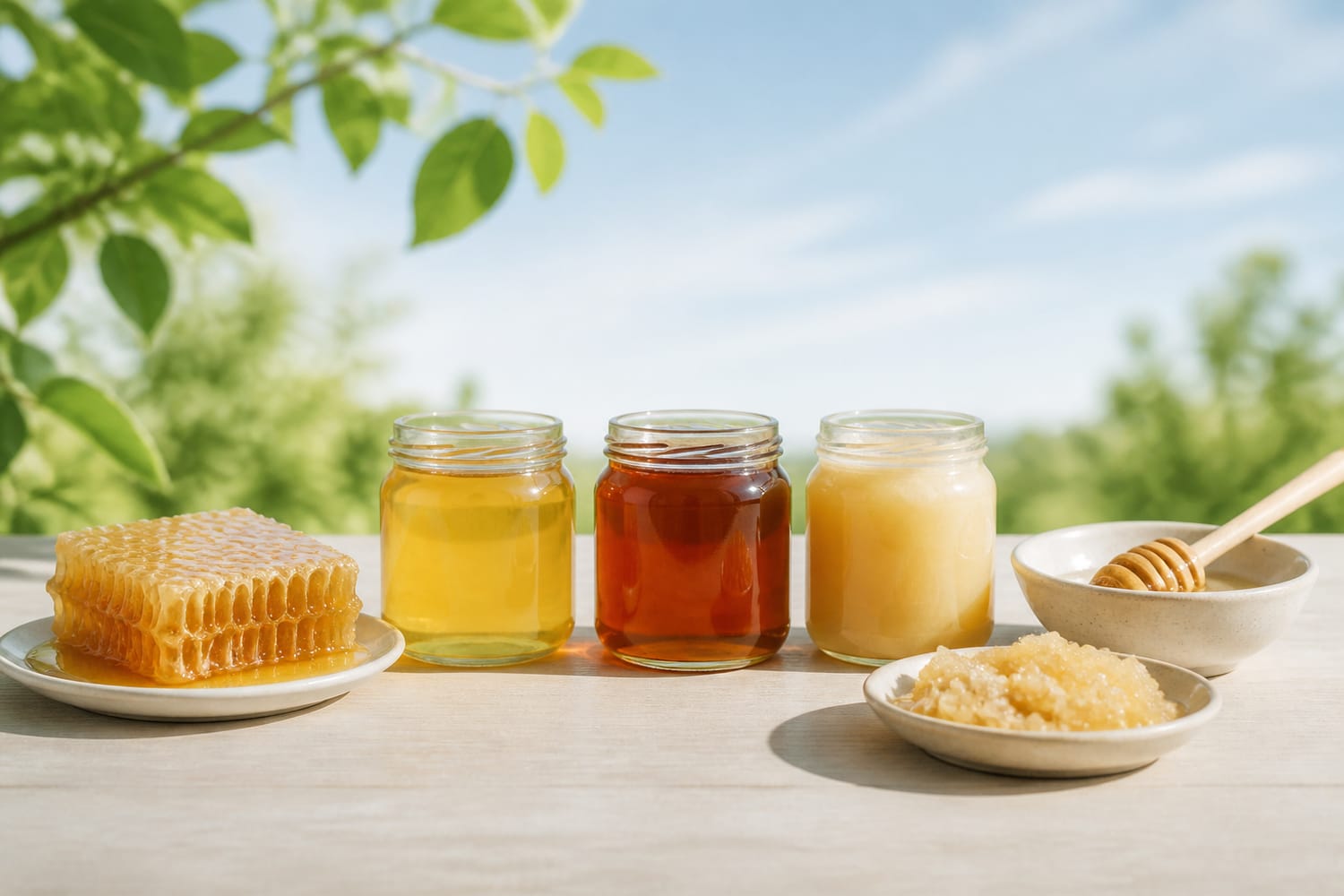
Here is a piece of honey trivia worth sharing over breakfast: honeydew honey is not primarily made from flower nectar. Bees can collect honeydew, a sugary material associated with trees and sap-feeding insects, instead. It is a striking reminder that the landscape influencing honey includes more than blossoms.
Texture provides another surprise. If a jar develops crystals, it has not necessarily gone bad or acquired a new floral source; crystallization is a natural change in honey’s physical state. Nor should a dark jar automatically be judged superior to a pale one. Color can hint at flavor, but it is not a measure of quality—or a substitute for tasting.
Take a Honey Tour at Your Own Table
You do not need a plane ticket to compare landscapes by the spoonful. Choose three small jars with clearly identified sources—perhaps clover, orange blossom, and buckwheat. Taste a little of each on its own, moving from mild to bold. Pause to notice the aroma before deciding whether a flavor seems floral, fruity, herbal, or earthy.
Then try the same honeys with plain yogurt, bread, or cheese. A pairing can bring forward something you missed in a straight taste, and your favorite spoonful may not be the one you prefer in food. On your next trip, look for a locally produced jar and ask what was blooming when it was harvested. The answer may tell you as much about the surrounding countryside as the honey itself.