
The Crunch Is a Clue
A loaf can crackle when you cut it and still feel soft when you pull it apart because its surface and center experience different conditions in the oven. The outside loses moisture, browns, and becomes a crust. The inside retains more water while its network of starch, protein, and air pockets sets into a springy crumb. Same dough, two very different textures.
That contrast is especially noticeable in a baguette, but it isn’t a rule for every bread. A soft sandwich loaf, a chewy bagel, and a pillowy flatbread each give bakers a different answer to the question: What should the outside feel like?
First, Dough Builds a Soft Interior
Before bread enters the oven, yeast has already been busy. As it ferments sugars in the dough, it produces carbon dioxide. In wheat bread, a stretchy gluten network helps hold those gas bubbles in place, creating the beginnings of the holes you’ll see in a slice.
Then comes oven spring: the rapid expansion that happens early in baking. As the dough heats, its gas pockets expand and the loaf grows. Meanwhile, starch absorbs water and forms a gel, and proteins help set the structure around those pockets. The result isn’t raw dough trapped beneath a cooked shell. The middle is fully baked, but it remains relatively moist and flexible.
The size and feel of the crumb vary. A baguette may have large, irregular holes; sandwich bread usually has smaller, more even ones. Both owe their softness to a structure that can yield when you press it.
The Outside Has a Drier Fate
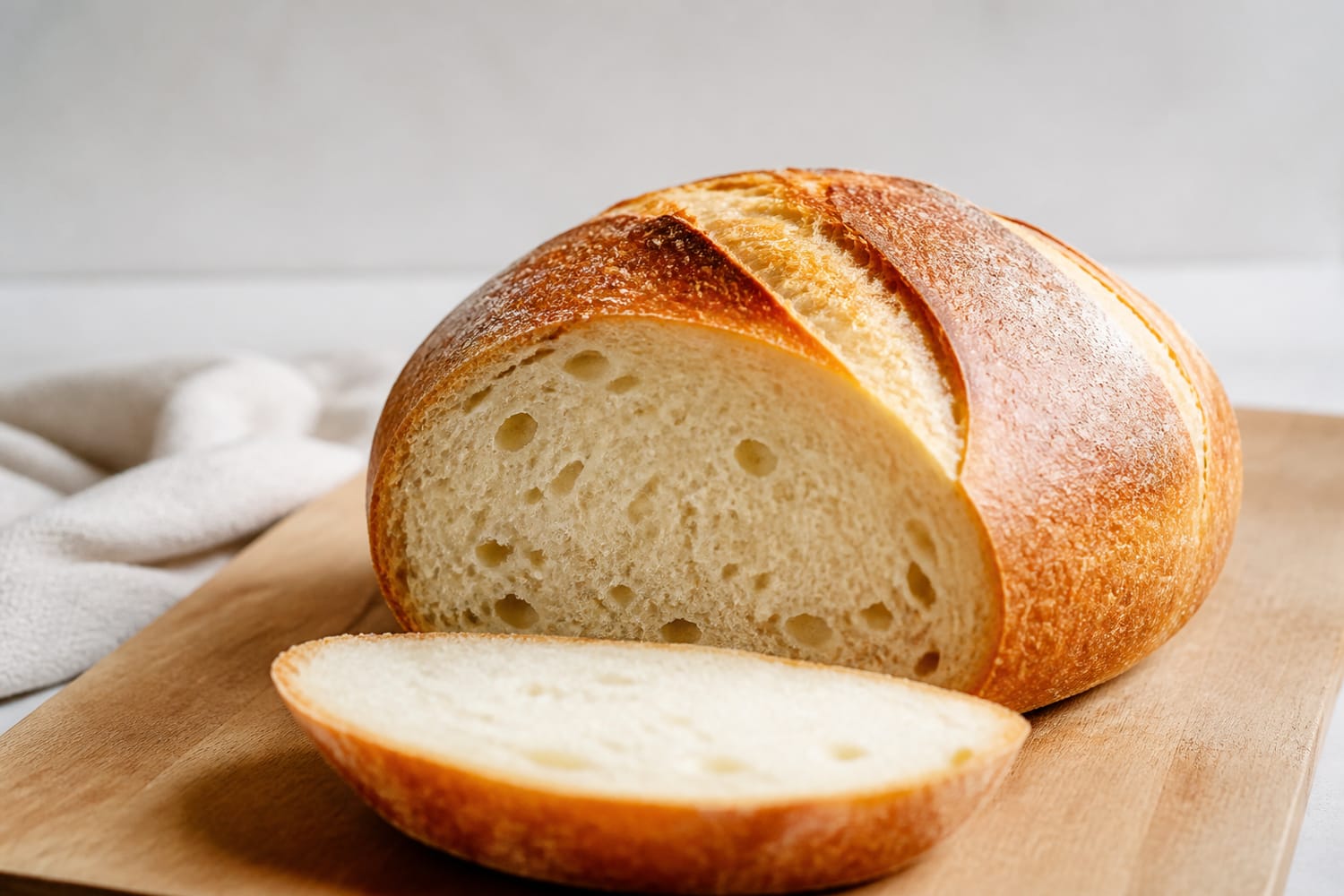
The loaf’s surface is exposed directly to the oven’s heat. As baking continues, water escapes from this outer layer. Once the surface dries enough to get hotter, browning reactions produce the crust’s color, aroma, and flavor.
One important reaction is the Maillard reaction, in which sugars and components of proteins interact under heat. It helps explain why a deeply browned crust smells and tastes different from the pale crumb inside. Drying also makes that outer layer firmer and more brittle: the part that gives way with a satisfying crackle.
So the crust isn’t simply the “overcooked” part of the loaf. It is the part that has lost enough moisture to undergo changes the wetter center cannot undergo in quite the same way.
Why Bakers Add Steam to Make Bread Crispy
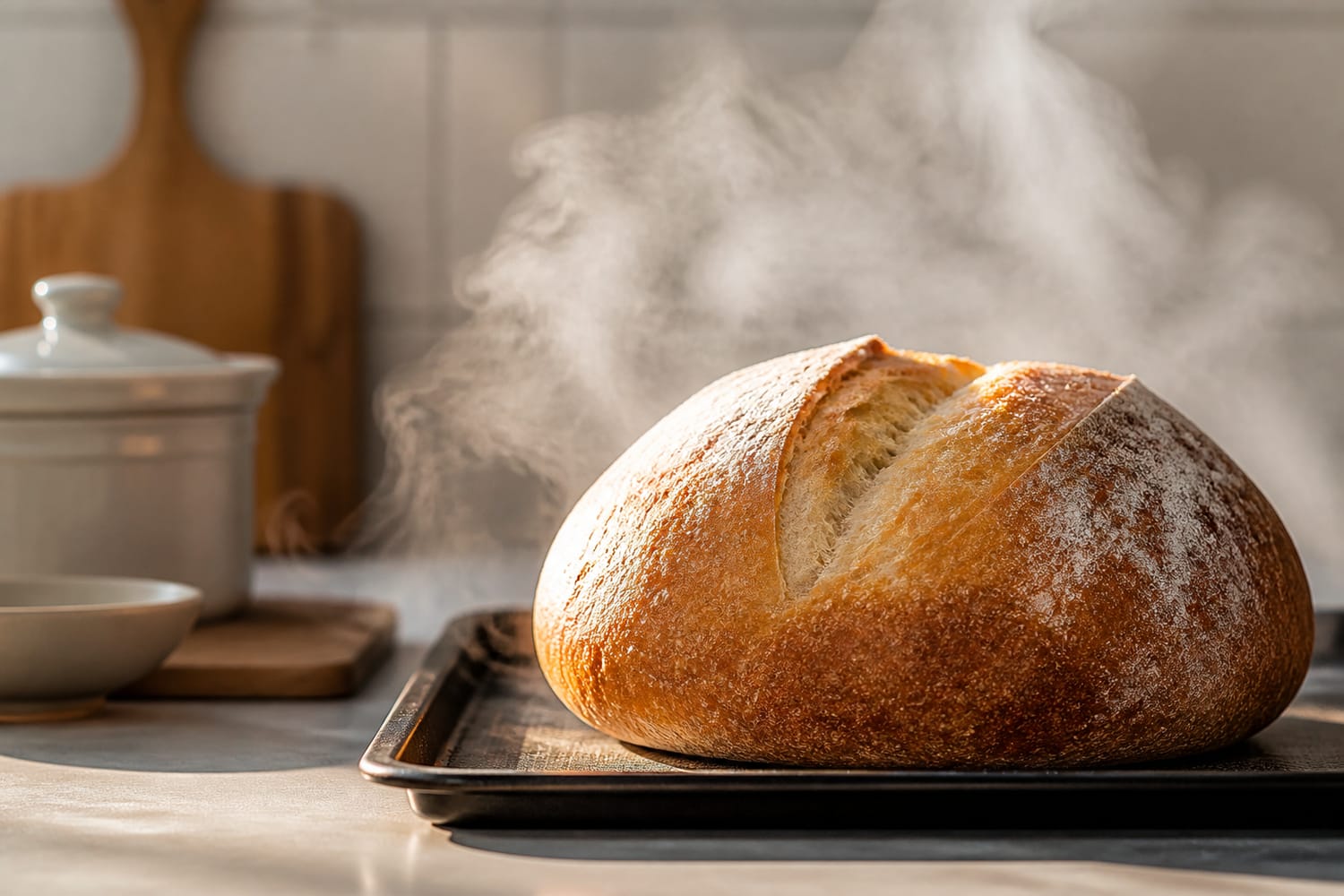
Here’s the counterintuitive bit: water can help produce a crisp crust. Many bakers introduce steam at the start of baking, when they want the dough’s surface to stay supple. If the crust hardens too soon, it can restrict the loaf’s expansion.
Steam also helps gelatinize starch on the surface, contributing to the thin, glossy crust associated with many hearth breads. But the loaf shouldn’t stay in a steamy environment throughout the bake. Later, drier oven air allows the surface to brown and crisp. For a closer look at the timing and home-baking methods, see King Arthur Baking’s guide to baking bread with steam.
Think of it as a two-part plan: keep the surface flexible first, then let it dry. That sequence helps a loaf become both lofty and crunchy.
A Trip Around the Bread Basket
Bread’s crust-to-crumb contrast changes with its shape, ingredients, and cooking method. A slender French baguette has plenty of exposed surface relative to its interior, making each bite particularly crust-forward. A larger round loaf offers a more substantial stretch of soft center between its edges.
In Tuscany, bread is part of dishes such as bruschetta and panzanella, where its texture can matter as much as its flavor. Tour Trivia’s guide to Tuscan dining explores how bread fits into the region’s table. A crusty baguette also takes on a different job in Vietnam’s bánh mì: it needs enough structure to hold its fillings while remaining pleasant to bite through. That sandwich appears in Tour Trivia’s look at street food across cultures.
Not every bread aims for a loud crunch. Richer doughs containing ingredients such as butter and eggs can produce tender breads like brioche. Bagels go another direction: boiling the dough before baking gelatinizes its surface starch, helping create a smooth, chewy exterior rather than a baguette-like crust.
Flatbreads widen the picture further. Pita can puff dramatically when heat turns water in its dough to steam, forming its familiar pocket. Ethiopia’s spongy injera offers a different kind of bread experience altogether: its flexibility makes it useful for scooping up food, as described in Tour Trivia’s tour of dining traditions around the globe. The world’s breads don’t share one ideal crust; they’re made to suit different meals.
Why the Crackle Fades
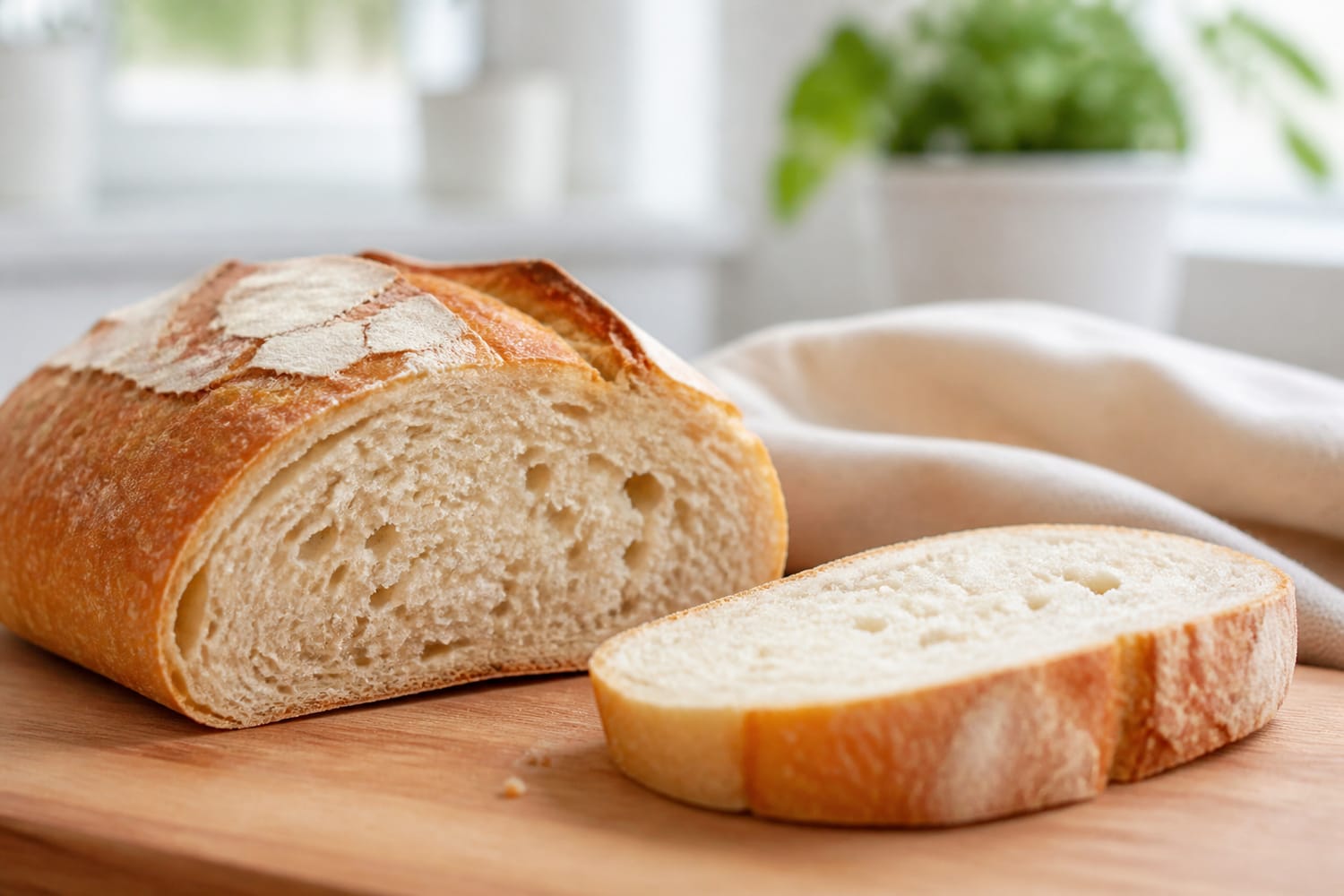
Fresh bread doesn’t hold its exact texture forever. As a loaf cools and sits, moisture can migrate from the crumb toward the crust, softening what was crisp. At the same time, starch in the interior gradually reorganizes—a process called retrogradation that contributes to staling. A softer crust and a firmer crumb can therefore happen in the very same loaf.
Storage involves a trade-off. Airtight wrapping helps protect the interior’s moisture, but it softens a crunchy crust. Leaving bread exposed may preserve some crispness briefly while allowing the inside to dry. If you’re saving a crusty loaf for later, freezing portions and reheating or toasting them is often more useful than expecting the original crackle to last. King Arthur Baking’s bread-storage tests explain the choices.
Read Your Next Loaf Like a Baker
The next time you tear into bread, notice what happens before you taste it. Does the crust shatter or bend? Are the holes inside large or tiny? Is the surface deeply browned, or pale and tender?
Those details tell a small story about the dough and its journey through heat. A crispy outside and soft inside are not competing outcomes. In a crusty loaf, they’re the delicious result of the surface drying and browning while the center sets around the moisture and air it retains.