
One Grain, Many Textures
Why does sushi rice hold together while the rice in biryani falls into separate grains? The short answer is starch. Rice varieties contain different proportions of two starch components, amylose and amylopectin, which influence how they soften and cling during cooking. Water, rinsing, stirring, and steaming then shape the final texture. What counts as perfect rice depends on the dish.
That distinction turns a simple ingredient into a culinary map. A cohesive grain makes it easier to shape a piece of sushi. Distinct grains give a spiced rice dish its airy texture. In risotto, the pleasure lies somewhere else entirely: tender grains surrounded by a creamy sauce.
The Starch Behind the Stickiness
Most of a rice grain’s interior is starch. Amylose is associated with firmer, less sticky cooked rice; amylopectin helps produce a softer, more cohesive result. As rice heats in water, its starch absorbs moisture, swells, and softens. Some starch also escapes onto the grains’ surfaces or into the cooking liquid, affecting whether the finished rice feels separate or creamy.
Generally, rice with more amylose cooks into distinct grains, while rice with less amylose tends to cling. But it is a tendency, not a rule you can judge by sight alone. Starch structure varies among varieties, so two kinds of rice with similarly shaped grains can behave differently in the pot.
There is also a useful vocabulary trap: glutinous rice does not mean rice containing gluten. The name describes its glue-like texture. Also called sticky or sweet rice, it contains primarily amylopectin and becomes much more cohesive than ordinary sushi rice.
Japan: Rice That Holds Its Shape
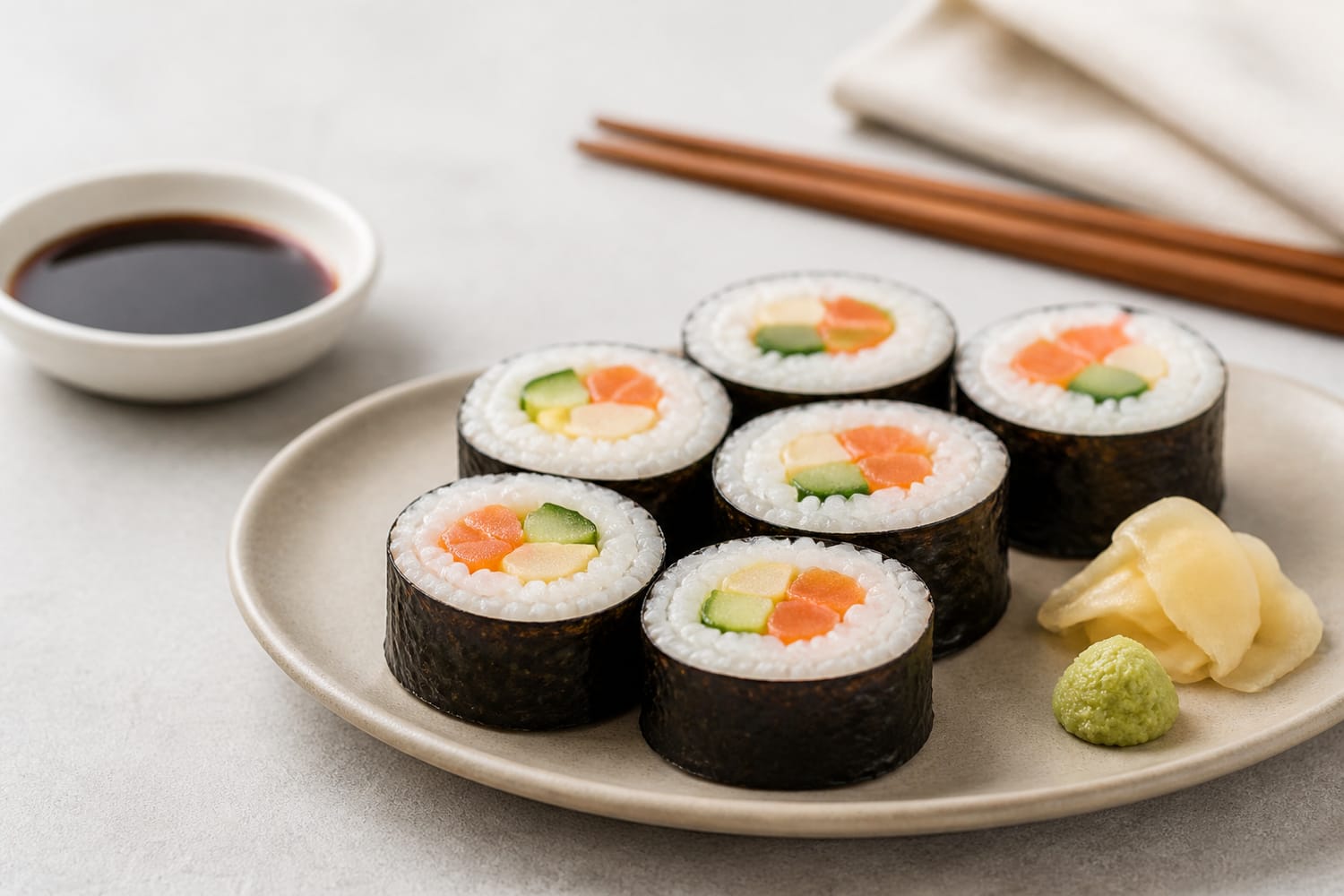
For sushi, the grains need to cling enough to form a roll or a small mound, yet remain pleasant to eat rather than turning into paste. Short-grain rice suits that task because it cooks up moist and cohesive. Sushi rice is then seasoned with vinegar; “sushi” refers to the prepared rice, not simply to raw fish.
That texture has a practical purpose. Rice that scatters across the plate would be difficult to shape and serve. Tour Trivia’s guide to local delicacies around the world offers a reminder that a dish’s defining ingredients often work together: in sushi, the rice is as essential to the experience as its topping or filling.
Sushi rice should not, however, be confused with glutinous rice. Both stick, but they do so to different degrees. Substituting one for the other changes the bite of the finished dish.
Thailand and Laos: Sticky Rice by Design
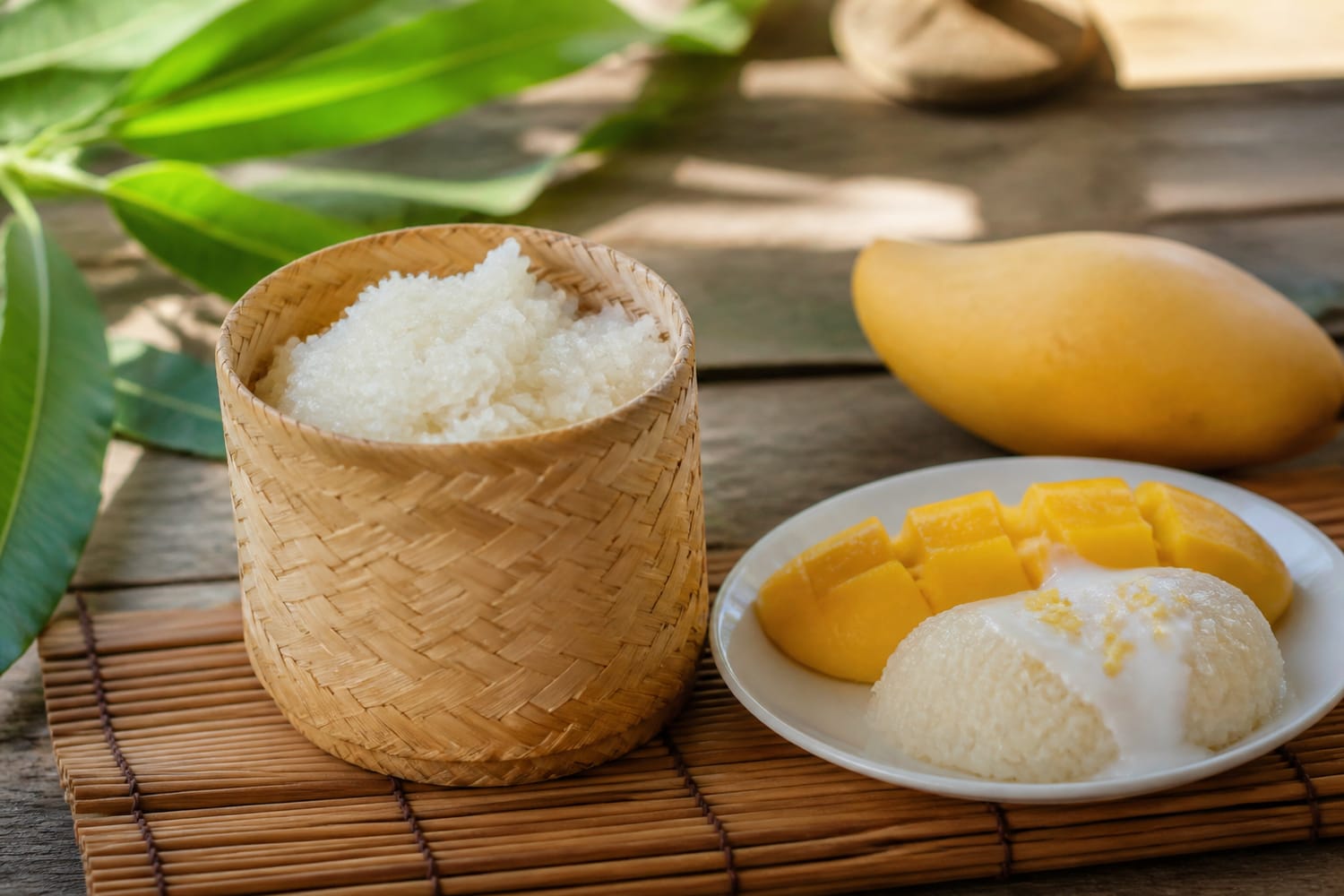
In parts of Southeast Asia, stickiness is not merely useful—it is the point. Glutinous rice can be gathered into small portions and eaten alongside savory foods. It also gives Thai mango sticky rice its satisfying chew, providing a substantial contrast to soft fruit and coconut sauce. Tour Trivia includes the dessert in its journey through global street foods.
Steaming is a common way to cook this rice. Unlike boiling it in a pot of water, steaming exposes the grains to moisture without leaving them submerged. The variety supplies the characteristic cling; the cooking method helps turn it into a texture suited to the meal. For a home cook, the key is to buy rice labeled glutinous or sticky, rather than expecting an ordinary long-grain rice to behave the same way.
South Asia: Making Room Between the Grains
Basmati illustrates the opposite goal. Its long, slender grains can cook up separate and fluffy, making it a fitting choice when a dish should have definition rather than a unified mass. In a biryani, that separation allows the rice, spices, and other ingredients to mingle without becoming a single sticky mixture.
Technique reinforces the variety. Rinsing can remove loose starch from the surface, and using the appropriate amount of water helps prevent over-softening. Giving cooked rice a brief rest before gently fluffing it also protects the grains from rough handling. For the best starting point, follow the directions for the specific rice you bought: water needs and cooking times differ among varieties.
Not every fragrant long-grain rice behaves like basmati. Jasmine rice, for example, is also long and aromatic but generally cooks softer and somewhat clingier. The label long-grain tells you something about shape, not everything about texture.
Italy and Spain: Two Short Grains, Two Different Goals
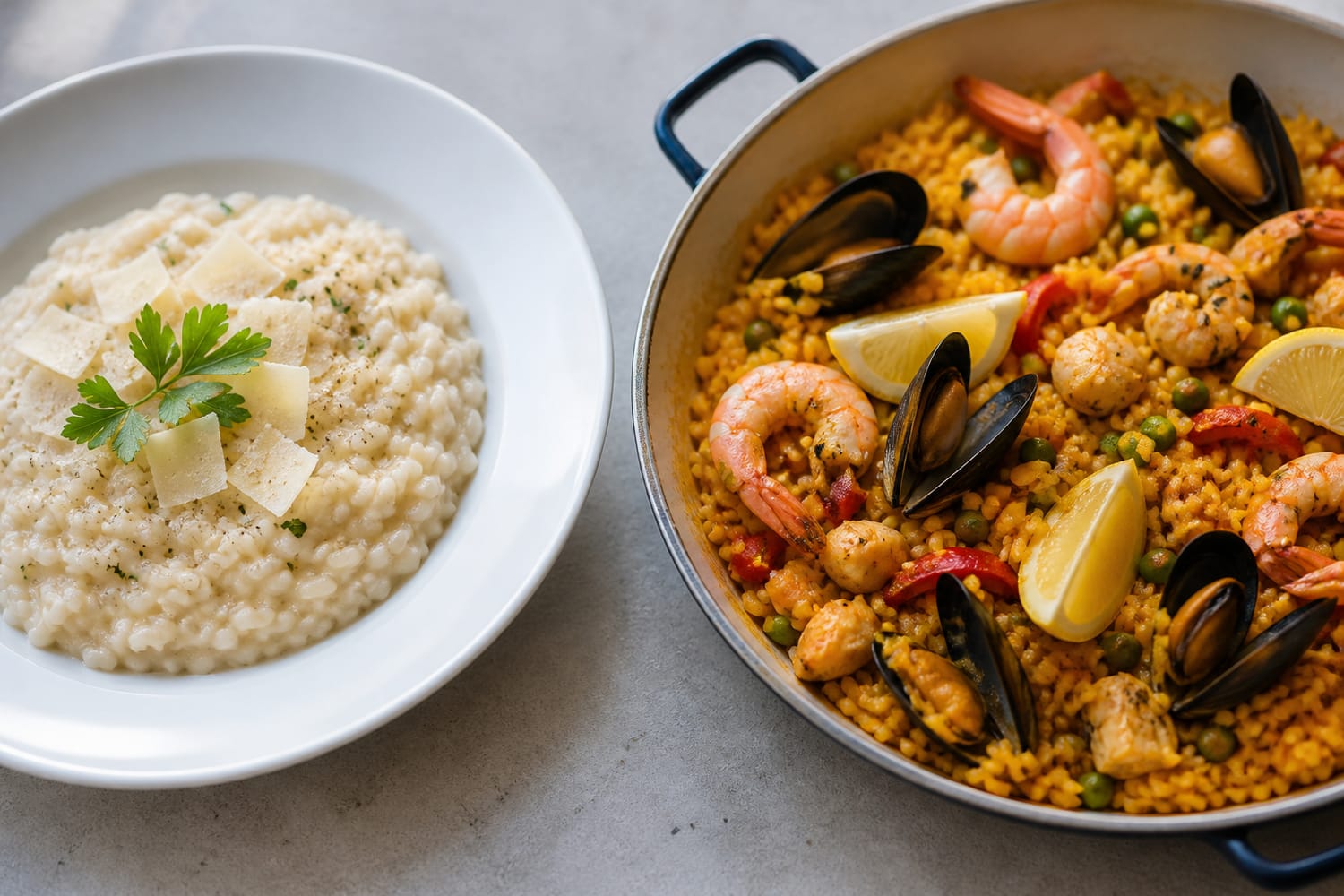
Risotto and paella make an illuminating pair. Italian risotto uses rice that can release starch into its cooking liquid, creating a creamy coating around grains that still have some structure. Adding liquid during cooking and stirring help develop that consistency. The desired result is neither a pile of separate grains nor a solid block of sticky rice.
Spanish paella calls for a different finish. Bomba, a short-grain rice used for paella, can absorb flavorful liquid while remaining comparatively distinct. Rather than stirring continually as you would for risotto, cooks generally leave the rice undisturbed after the ingredients are combined. The Rice Association’s paella guide makes that contrast especially clear.
Here is the surprising part: short-grain does not automatically mean sticky. Variety and method work together. Put paella rice through a risotto-style process, or treat risotto rice as though it were basmati, and the result will tell a different story from the one the dish was meant to tell.
Choose the Texture Before the Rice
When cooking, begin with the eating experience you want. For distinct, fluffy grains, start with a suitable long-grain rice such as basmati and avoid excess water. For sushi, choose rice sold for that purpose. For the pronounced chew of mango sticky rice, seek out glutinous rice; for a creamy risotto, use a risotto variety. Rinsing, water, heat, and stirring can fine-tune a result, but they cannot completely rewrite the grain’s natural character.
Rice is not sticky in one cuisine and fluffy in another because someone has discovered a universally better way to cook it. Each tradition asks the grain to do a different job: hold together, stand apart, or make its own sauce. Understanding the starch makes those choices easier to appreciate—and much easier to recreate in your own kitchen.