
Meet the Spice Behind the Sensation
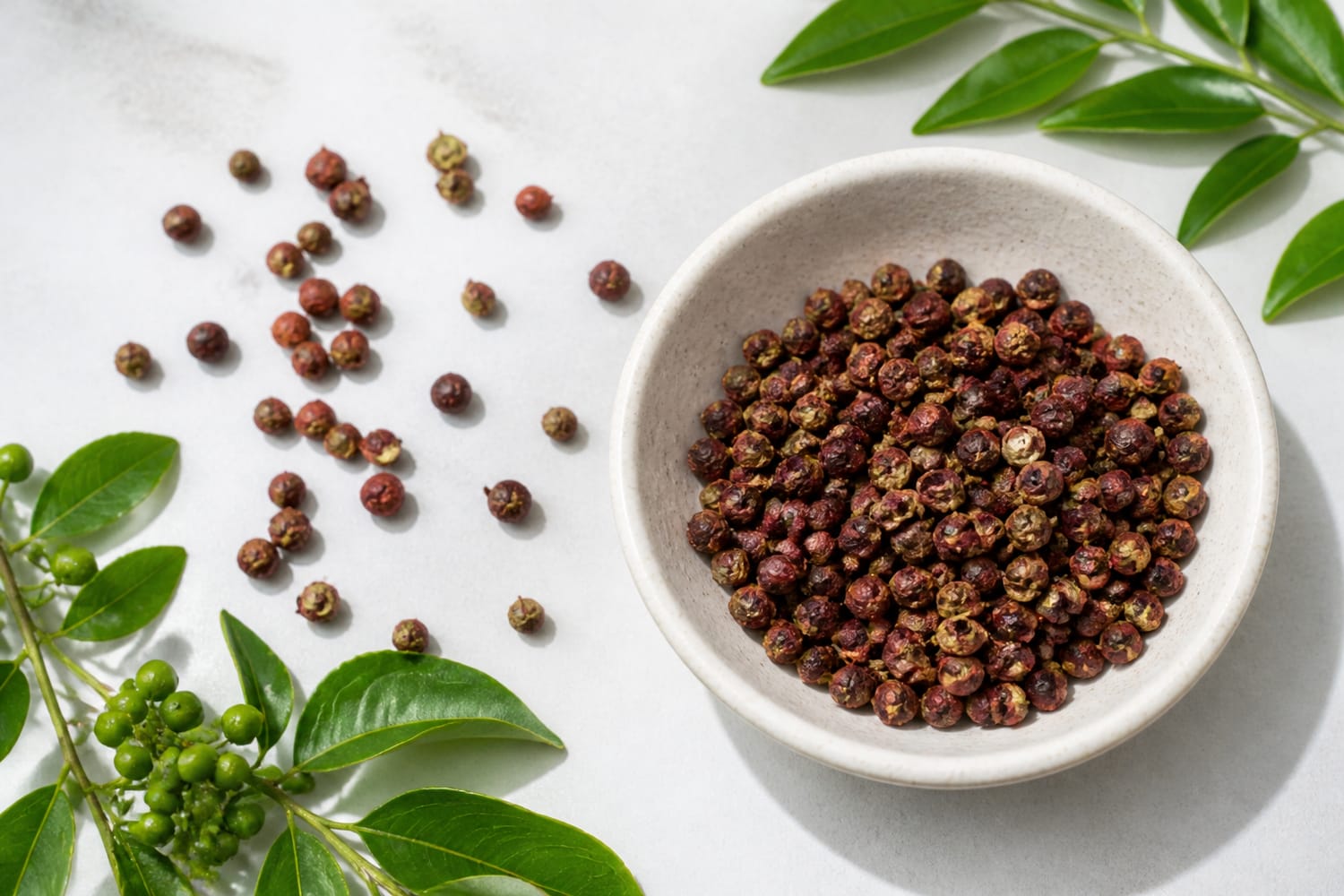
Despite its name, Sichuan pepper is not the same ingredient as black pepper or chili pepper. The spice consists mainly of the dried outer husks of prickly-ash fruits. Those reddish husks bring a citrusy, floral fragrance alongside their distinctive numbing quality; the hard, dark seeds are generally removed because they are gritty and unpleasant to eat.
Red Sichuan peppercorns are widely used, but green varieties offer another experience. They come from different prickly-ash trees rather than simply being unripe red peppercorns. Their aroma often leans more intensely citrusy and herbal, and their numbing effect can be stronger.
For a traveler exploring regional food, that distinction is useful: “Sichuan pepper” describes an ingredient family with variation, not one perfectly standardized flavor.
Hydroxy-Alpha-Sanshool Turns Up the Nerve Signals
The main chemical behind the buzz is hydroxy-alpha-sanshool, often shortened to sanshool. Laboratory research has shown that it can excite sensory neurons by inhibiting certain potassium channels in their cell membranes. These channels help regulate a nerve cell’s electrical state.
Think of those channels as part of the cell’s electrical braking system. When sanshool inhibits them, the neuron becomes easier to excite and can send signals onward. That is a simplified picture, but it captures the central surprise: blocking a channel can increase nerve activity rather than silence it.
The influential study investigating sanshool and potassium channels identified effects on several sensory-neuron types, including large neurons associated with touch. The sensation is therefore more complex than a single “tingle receptor” being switched on.
Rather than treating every unusual mouth sensation as a flavor, scientists distinguish taste from signals about touch, temperature, and irritation. Sichuan pepper makes that distinction deliciously obvious.
Why the Buzz Feels Like Vibration
One especially memorable experiment put a number on the sensation.
In a 2013 study, researchers applied Sichuan pepper to participants’ lower lips. Participants then compared the resulting tingle with mechanical vibrations delivered to an index finger. On average, they matched the pepper-induced sensation to a vibration of approximately 50 hertz, meaning 50 cycles per second.
That does not mean the spice physically shakes your lips 50 times each second. It means the chemically produced sensation feels comparable to vibration at that frequency. The findings implicated sensory pathways associated with rapidly adapting touch fibers, which help detect fluttering mechanical stimulation.
It is an extraordinary sensory illusion: a chemical stimulus produces an experience normally associated with movement. Nothing needs to buzz against your mouth for your nervous system to report a buzz.
Tingling Is Not the Same as Chili Heat
Chili peppers produce their characteristic burning sensation largely through capsaicin acting on TRPV1, a sensory channel involved in detecting potentially painful heat. Sanshool’s potassium-channel effects provide a different route to sensory excitement.
The distinction matters when describing food. A dish can be strongly numbing without being especially chili-hot, or fiercely hot without much numbing sensation. Combining the two creates the celebrated málà profile: má refers to numbing, while là refers to spicy heat.
Neither sensation should be confused with the food’s actual serving temperature. A bubbling hot pot can deliver physical heat, chili burn, and Sichuan-pepper tingling together—three different experiences arriving in the same mouthful.
That layered approach is part of what makes exploring the ingredients that shape familiar dishes so rewarding: intensity is not just a matter of adding more heat.
Why “Numbing” Does Not Simply Mean Switching Nerves Off
“Numbing” sounds like an absence of sensation. Yet Sichuan pepper often creates the opposite impression: tingling, fizzing, and heightened awareness of your lips. That apparent contradiction makes sense because sanshool excites sensory neurons rather than simply shutting down their activity.
Later research explored how that chemically induced tingle interacts with ordinary touch. In a study involving 42 participants, steady pressure on the lips reduced the perceived intensity of sanshool-induced tingling. Stronger pressure produced greater reductions, and the location of the pressure mattered too.
As UCL’s explanation of the touch research describes, the findings suggest that different touch signals can inhibit one another within the nervous system. Your mouth’s final experience reflects how those signals interact, not just which ingredient touched it.
From Laboratory Curiosity to Sichuan Cooking
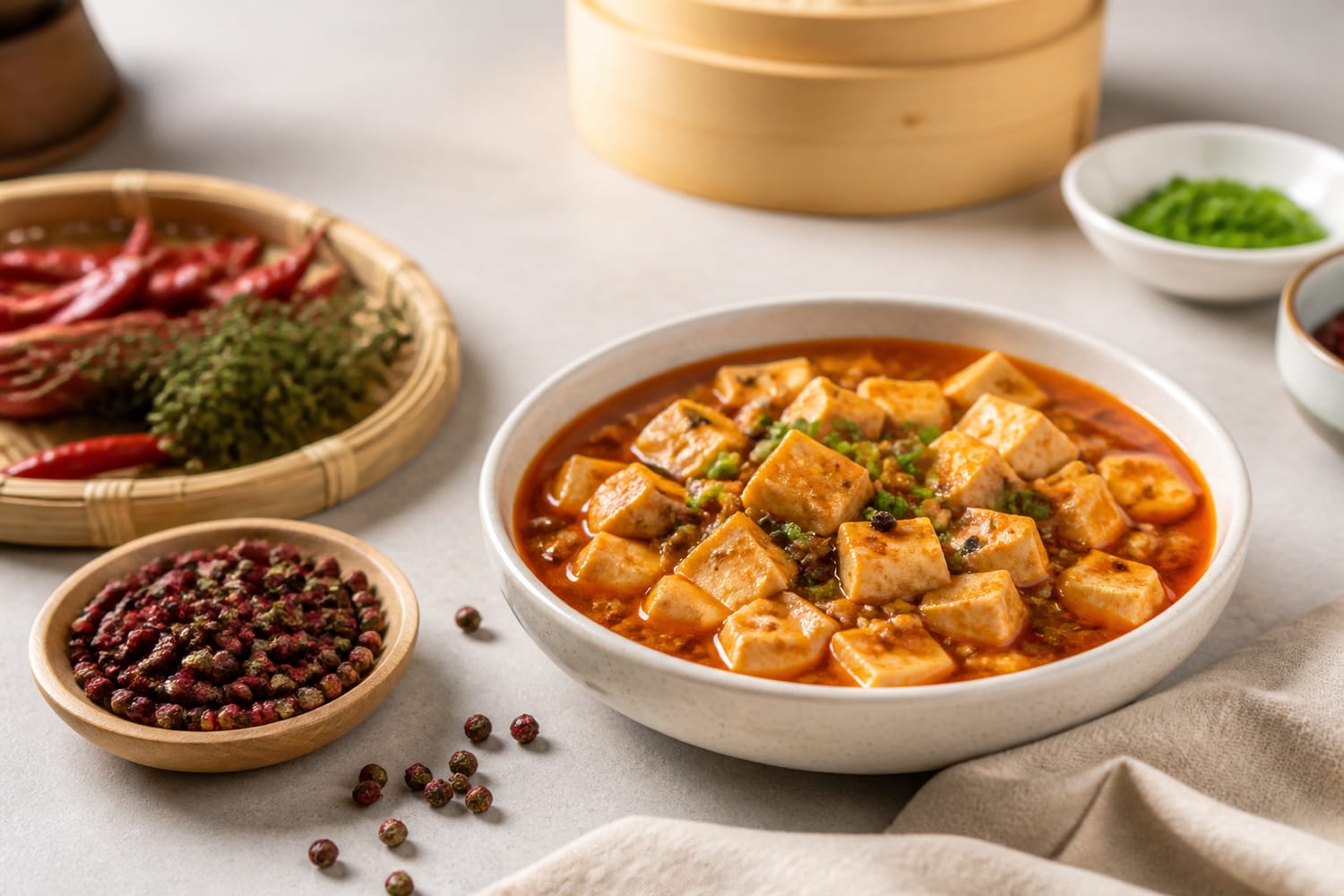
Sichuan cooks use peppercorns for fragrance as well as sensation. They can season braises, flavor oils, appear in stir-fries, or be ground and sprinkled over finished dishes. Small quantities may contribute aroma without producing an overwhelming buzz.
Mapo tofu offers a particularly clear introduction. Its sauce combines chili heat with Sichuan pepper’s numbing character, while the soft tofu provides a contrasting texture. Peppercorn strength varies, so the amount that feels pleasantly lively in one batch may be overpowering in another.
For food-focused travelers, learning that distinction is more useful than chasing the hottest possible meal. Ask about both heat and numbing intensity, and approach unfamiliar dishes with curiosity rather than treating dinner as an endurance test.
How to Explore the Tingle at Home
Start with a small amount in a recipe rather than a mouthful of whole peppercorns. Biting directly into a husk can be intense. The Woks of Life guide to Sichuan peppercorns recommends lightly toasting them before grinding and removing stray seeds and stems.
For a simple comparison, try a little ground peppercorn in a savory dish without chili, then compare it with a chili-containing version. Notice the fragrance, the fluttering sensation, and the burn separately.
It is a small experiment with a memorable takeaway: Sichuan pepper does more than season your food. It reveals how much of eating happens through touch.