
A Fresh Start, the World Over
New Year’s Eve is one of the few celebrations that truly belongs to the whole world. Different calendars, religions, and cultural traditions mean not everyone marks the new year on January 1, but the idea of crossing from one chapter into another is almost universal. And wherever there is a new beginning, there are superstitions.
Some are meant to bring luck. Others are designed to scare away evil spirits, invite love, attract money, or guarantee a year of travel. Many involve food, noise, fire, water, or symbolic actions performed at exactly midnight. For travelers, these customs are more than quirky traditions. They offer a fascinating look at what different cultures value most: prosperity, family, health, romance, or simply a clean slate.
At Tour Trivia, we love the stories behind the rituals. So grab your suitcase, your lucky charm, and maybe a plate you do not mind breaking, as we explore New Year superstitions around the world.
Spain’s Twelve Grapes at Midnight
One of the most famous New Year traditions comes from Spain, where people eat twelve grapes as the clock strikes midnight. Each grape represents one month of the coming year, and the goal is to eat all twelve in time with the twelve chimes of the clock.
It sounds simple, but anyone who has tried it knows it can quickly become a hilarious challenge. The grapes are often eaten at public squares, family parties, and in front of televisions broadcasting the countdown from Madrid’s Puerta del Sol.
The superstition says that if you successfully eat all twelve grapes, you will enjoy twelve months of good luck. If you miss a grape or fall behind, one of those months may be less fortunate. Today, some people even peel and seed their grapes in advance to improve their chances.
Denmark’s Broken Plates and Leaps of Luck
In Denmark, broken dishes can be a good thing. Traditionally, people saved old plates and china throughout the year, then smashed them against the doors of friends and family on New Year’s Eve. The more broken plates you found outside your home, the more loved and lucky you were considered to be.
While the tradition is not as widespread as it once was, it remains one of the most memorable New Year superstitions in Europe. It turns the usual idea of mess and destruction into a symbol of affection.
Danes also practice a midnight leap. Many people stand on chairs or sofas and jump into the new year as the clock strikes twelve. The idea is to physically leave the old year behind and land in the new one with positive energy.
Italy’s Red Underwear and Lentils
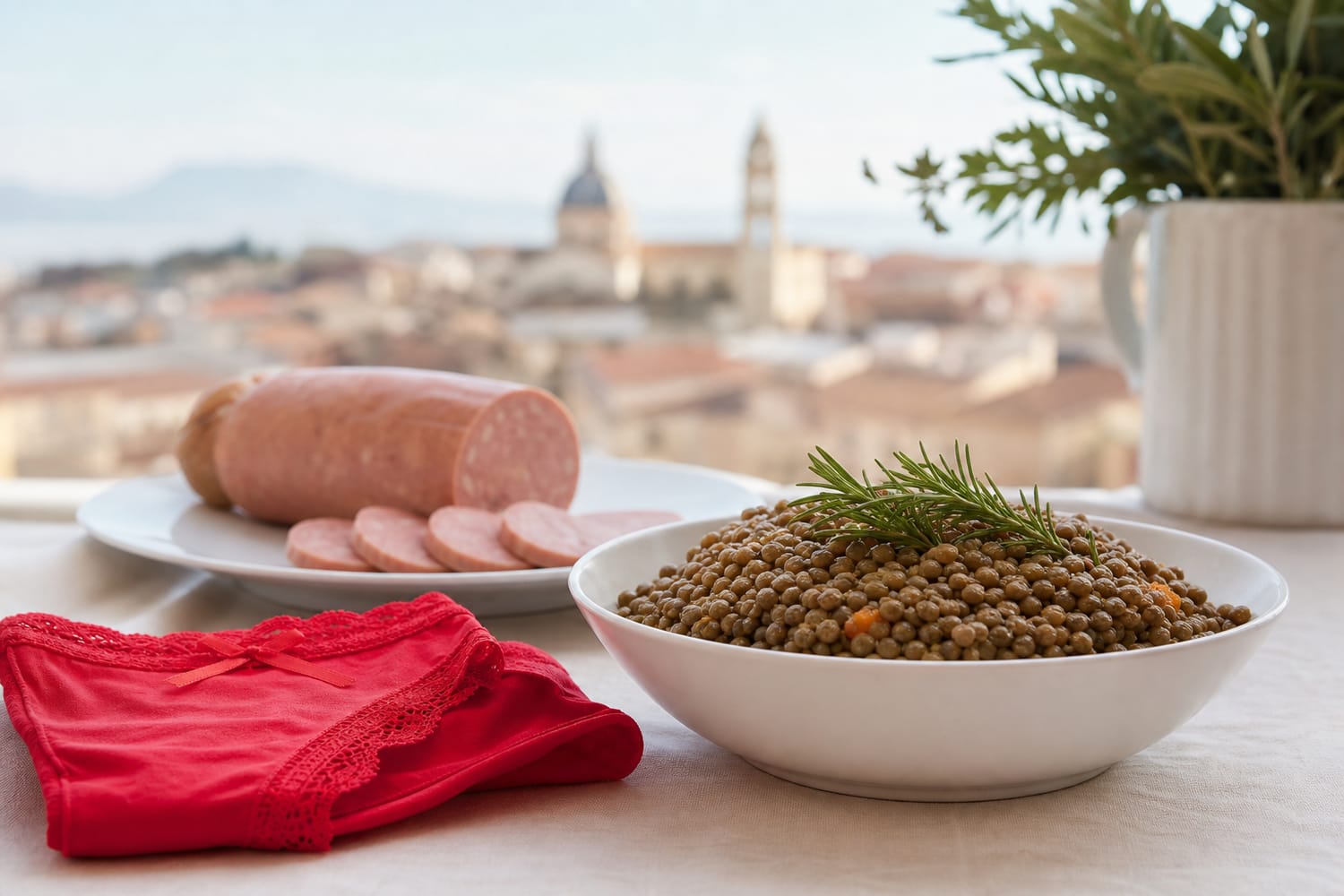
In Italy, what you wear under your clothes on New Year’s Eve may matter more than your outfit. Red underwear is believed to bring luck, love, and passion in the year ahead. Shops across Italy often display bright red lingerie and boxers in December, making this superstition hard to miss.
But there is an extra rule: the underwear should ideally be a gift, and some traditions say it should be thrown away the next day to complete the ritual.
Food is just as important. Italians commonly eat lentils after midnight because their round, coin-like shape symbolizes wealth. The more lentils you eat, the more prosperity you may attract. They are often served with cotechino, a rich pork sausage, creating a hearty and symbolic meal to begin the year.
Brazil’s White Clothing and Ocean Offerings
In Brazil, especially along the coast, New Year’s Eve is a spectacular celebration filled with music, fireworks, and symbolism. Many people wear white to represent peace, purity, and renewal. On beaches such as Copacabana in Rio de Janeiro, crowds dressed in white create a breathtaking scene.
Some also choose accent colors depending on what they hope to attract. Yellow may symbolize money, red passion, green health, and blue harmony.
Another important tradition involves offerings to Iemanjá, the Afro-Brazilian goddess of the sea. People may place flowers, candles, perfume, or small gifts into the ocean as a sign of respect and a wish for blessings. Jumping over seven waves is also popular, with each wave representing a wish or spiritual request for the year ahead.
Greece’s Pomegranates and Lucky Onions
In Greece, the pomegranate is a powerful symbol of abundance, fertility, and good fortune. On New Year’s Day, families may smash a pomegranate against the front door of the home. The more seeds that scatter, the more luck and prosperity are believed to enter the household.
This dramatic ritual is often performed after returning from church or a family gathering. It is messy, colorful, and deeply symbolic.
Another Greek custom involves hanging an onion outside the front door. Because onions can sprout even when left alone, they represent growth and rebirth. Parents may gently tap children on the head with the onion on New Year’s morning to wake them and pass along the blessing of renewal.
Japan’s Bells, Noodles, and Clean Homes
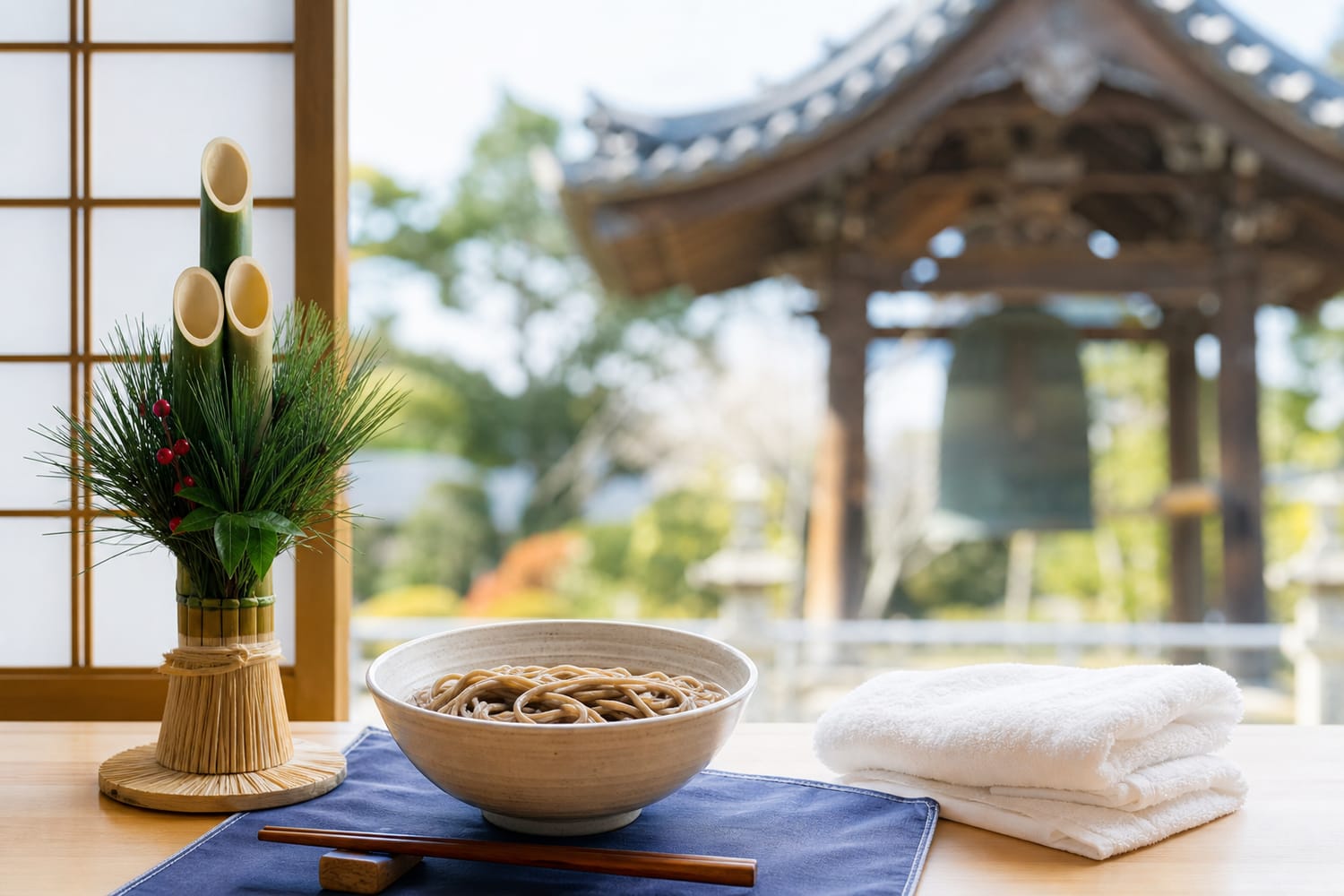
Japanese New Year, or Shōgatsu, is one of the country’s most important holidays. Before the new year arrives, many households take part in ōsōji, a deep cleaning meant to sweep away the dust, bad luck, and troubles of the past year. Starting the year with a clean home is believed to invite good fortune.
At Buddhist temples, bells are rung 108 times on New Year’s Eve in a ceremony called joya no kane. The number represents earthly desires or temptations in Buddhist belief. Each ring helps cleanse one of these attachments, allowing people to enter the new year with a clearer spirit.
Food also plays a role. Many Japanese families eat toshikoshi soba, long buckwheat noodles that symbolize longevity and resilience. The noodles are meant to be eaten before midnight, creating a delicious farewell to the old year.
The Philippines and the Power of Circles
In the Philippines, round shapes are everywhere at New Year. Circles are associated with coins, so they are believed to attract wealth and prosperity. People may wear polka dots, fill tables with round fruits, and keep coins in their pockets.
A traditional New Year fruit display often includes twelve round fruits, one for each month. The exact fruits can vary, but oranges, grapes, melons, and apples are common choices. The important thing is the shape.
Noise is another key part of Filipino New Year celebrations. Fireworks, horns, drums, pots, pans, and loud music are used to drive away evil spirits. Children may also jump at midnight in the hope of growing taller, a playful superstition that many families still enjoy.
Colombia’s Empty Suitcases
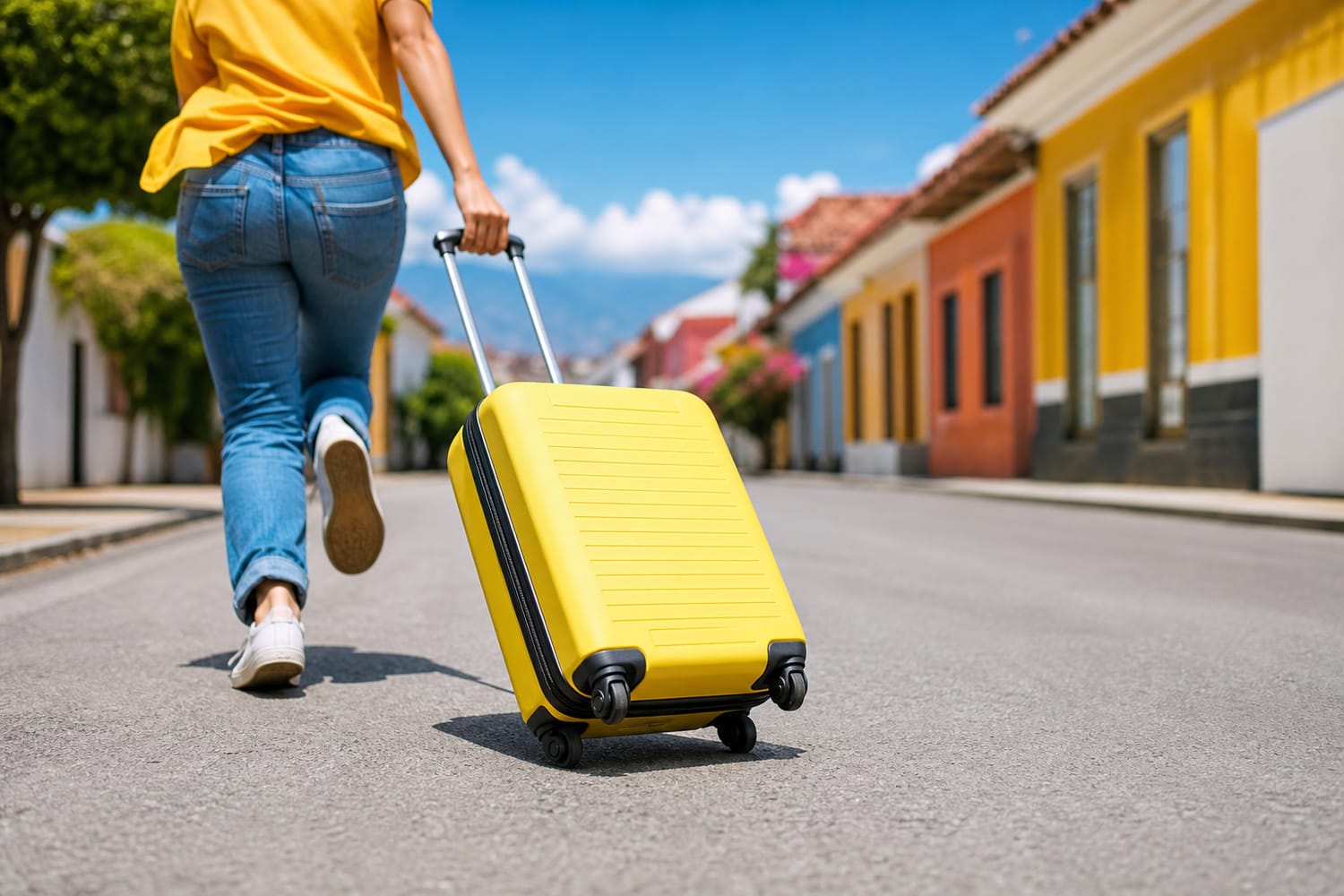
If your dream for the coming year is travel, Colombia has the perfect superstition. At midnight, people may grab an empty suitcase and run around the block. The belief is that this action will bring a year filled with journeys and adventure.
For travel lovers, it is one of the most charming New Year customs in the world. It turns wanderlust into a ritual, combining hope, humor, and movement.
Colombians may also practice other New Year traditions, such as eating twelve grapes, wearing yellow underwear for luck, or placing money in hand at midnight to attract financial success. But the suitcase ritual remains especially popular among those hoping to collect more passport stamps.
Scotland’s First-Footing Tradition
In Scotland, New Year’s celebrations are known as Hogmanay, and one of the most important superstitions is “first-footing.” This refers to the first person to enter a home after midnight.
Traditionally, the luckiest first-footer is a tall, dark-haired man. This belief may be connected to old historical fears of fair-haired Viking invaders. The first-footer should bring symbolic gifts such as coal for warmth, shortbread for food, salt for flavor, whisky for cheer, or coins for prosperity.
The idea is that the first visitor sets the tone for the year ahead. A good first-footer brings blessings, comfort, and abundance into the home.
Latin America’s Colorful Underwear Superstitions
Across several Latin American countries, underwear color can be a serious New Year decision. Yellow is often worn to attract money and good luck, while red is chosen for love and romance. In some places, green may symbolize health, and white can represent peace.
This tradition is especially popular in countries such as Mexico, Colombia, Bolivia, and Peru. Markets and shops often display colorful underwear before New Year’s Eve, making the superstition both practical and festive.
Some versions say the underwear must be new. Others say it should be worn inside out before midnight and then turned the right way after the new year begins. Like many superstitions, the details vary, but the goal is the same: dress for the destiny you want.
Why New Year Superstitions Still Matter
Even for people who do not truly believe that grapes, lentils, suitcases, or smashed plates can change fate, New Year superstitions continue to thrive. They give people a sense of control at a moment filled with uncertainty. They turn hope into action.
These rituals are also a way to connect with family, culture, and memory. A grandmother’s recipe, a city’s countdown, a beach offering, or a noisy neighborhood celebration can make the turning of the year feel meaningful.
For travelers, experiencing these customs firsthand can be unforgettable. New Year’s Eve in another country is not just a party. It is a window into what people wish for most.
Whether you are eating twelve grapes in Spain, jumping waves in Brazil, breaking plates in Denmark, or running with a suitcase in Colombia, each tradition carries the same message: may the year ahead be luckier, brighter, and full of possibility.