
The Tooth Fairy’s Surprisingly Recent Career
In the United States, the familiar arrangement is simple: leave a baby tooth beneath your pillow, fall asleep, and discover money where the tooth used to be. Versions of this nighttime exchange also appear in Britain, Canada, Australia, and elsewhere.
Despite her seemingly timeless credentials, the modern American Tooth Fairy is relatively young. The National Museum of Dentistry’s history of the Tooth Fairy places her emergence in the early 1900s, drawing on several older tooth-related legends rather than one original tale.
That distinction matters: celebrating lost teeth is much older than the particular winged visitor familiar from American childhood. The fairy is one imaginative answer to an ancient parental challenge—making an unfamiliar bodily change feel less frightening and more exciting. Researchers suggest such rituals can serve psychological and social purposes for children and parents alike.
Spain’s Famous Tooth-Collecting Mouse
Across Spain and much of Spanish-speaking Latin America, a small rodent handles the collection. Often called Ratoncito Pérez or Ratón Pérez, this visitor exchanges children’s fallen teeth for money or gifts. Names and details vary, so not every Spanish-speaking household tells precisely the same story.
Pérez also has a royal literary connection. In 1894, Spanish writer Luis Coloma wrote a story featuring the mouse for the young King Alfonso XIII. The tale helped establish the character’s enduring identity, although mouse-related tooth folklore extends beyond that single story.
For travelers, the best twist is that this fictional collector has a real Madrid address. The Ratón Pérez House-Museum occupies Calle del Arenal 8, turning a bedtime character into a family sightseeing stop. Few childhood legends can claim both international recognition and a city-center museum.
France Welcomes La Petite Souris
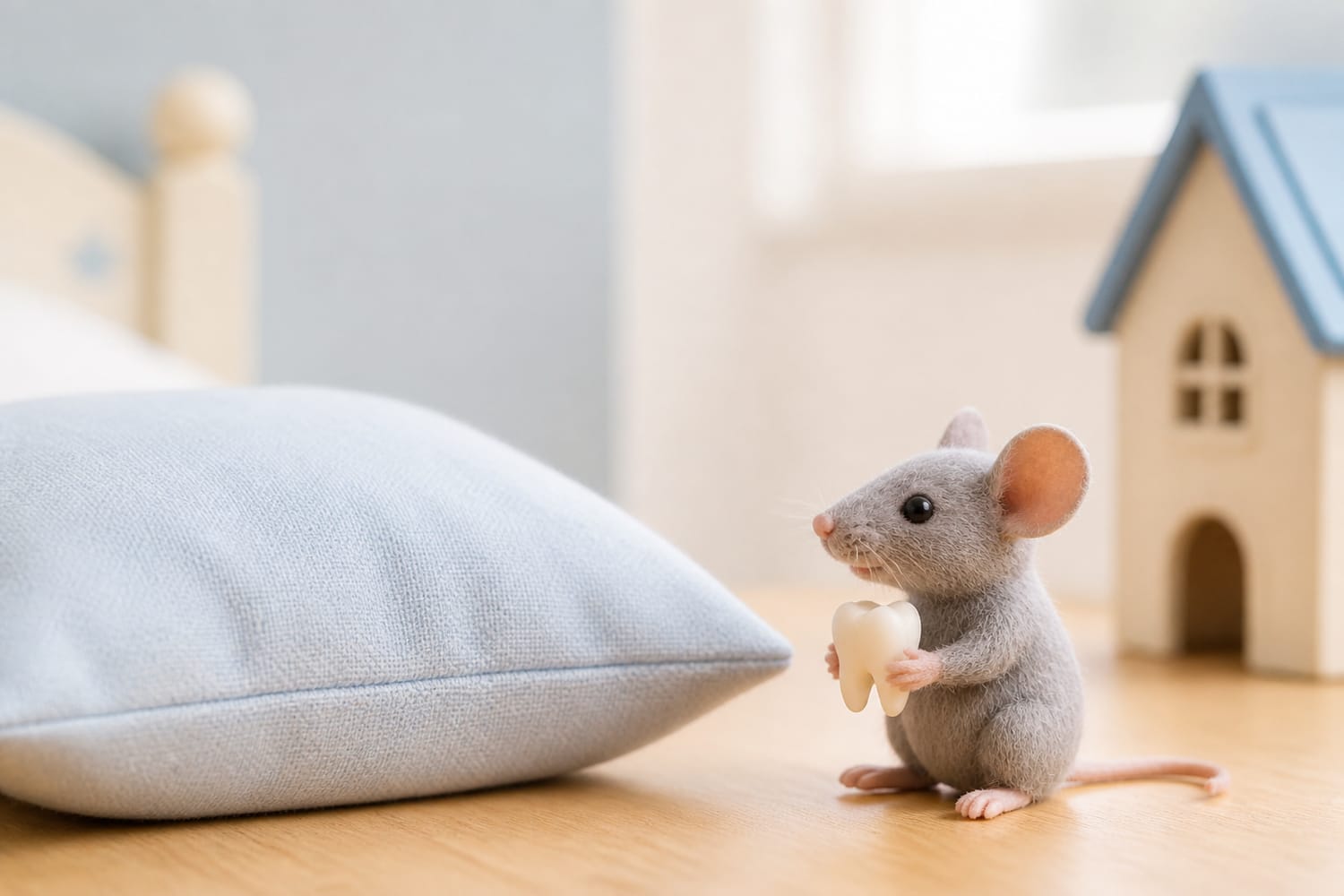
French children may also leave a tooth beneath their pillow, but the expected collector is La Petite Souris: “the little mouse.” The basic exchange resembles the fairy’s routine, simply with whiskers instead of wings.
The comparison offers a useful reminder: a familiar ritual does not guarantee a familiar character. Two children might follow nearly identical bedtime instructions while imagining completely different visitors arriving after dark.
Why mice? Dental folklore frequently connects these animals with the wish for strong replacement teeth. The National Museum of Dentistry contrasts that emphasis with the American Tooth Fairy, whose exchange does not necessarily promise a stronger new tooth.
Seen that way, the mouse is more than an unexpected substitute. Its role belongs to a wider world of animal helpers recruited to oversee a child’s changing smile.
Japan Sends Teeth in Opposite Directions
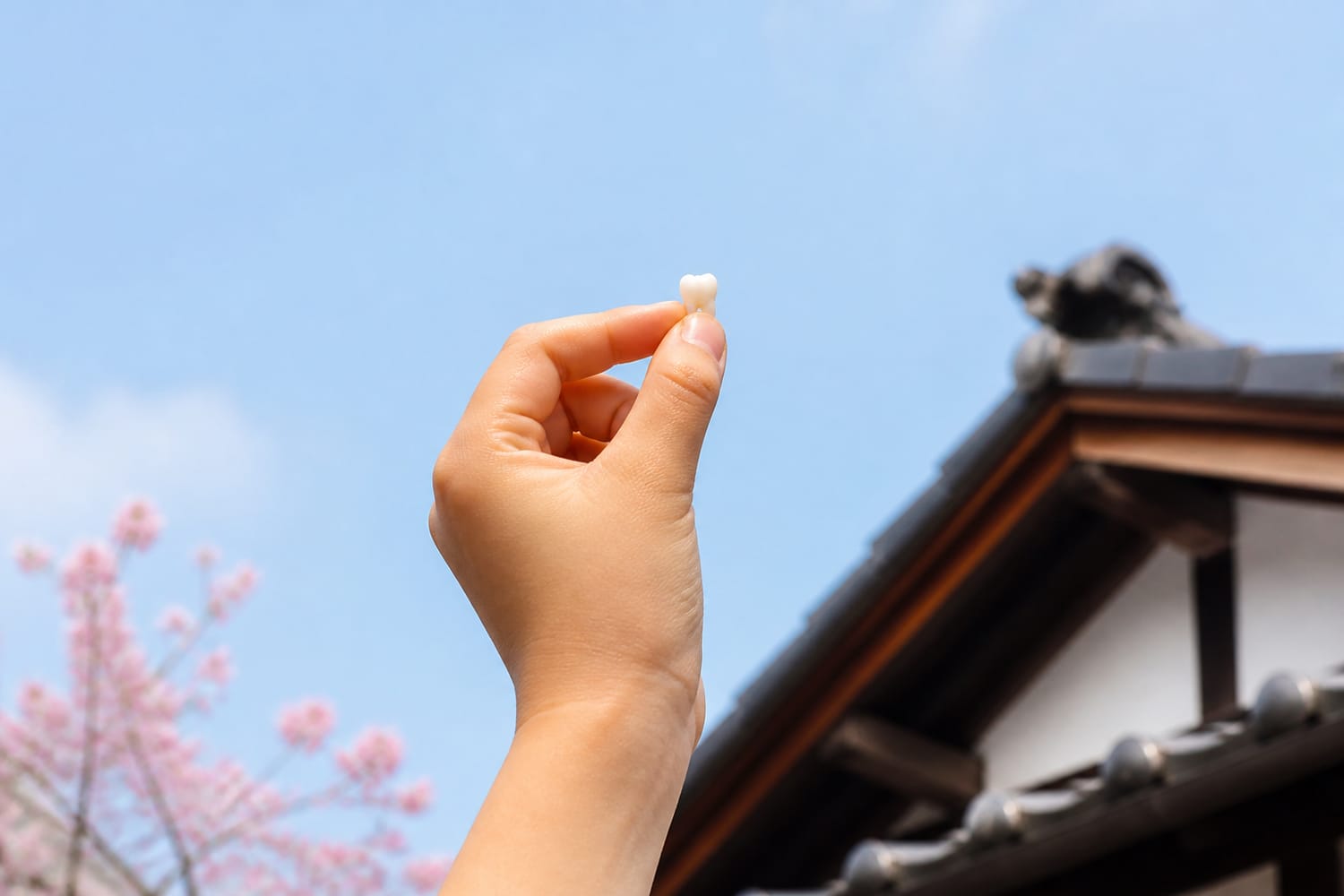
In a documented Japanese tradition, the tooth’s original position determines its destination. A lower baby tooth is thrown upward, often toward the roof; an upper tooth is thrown downward. The associated wish is that the permanent teeth will grow straight.
The memorable rule is lower goes up, upper goes down. Rather than waiting for a nighttime collector, the child participates directly in sending the old tooth on its way.
Versions of this directional custom have also been documented in places including Vietnam, Thailand, and Taiwan. However, destinations and explanations differ, so it is better understood as a family of related traditions than a single custom shared uniformly across Asia.
There is something wonderfully practical about its imagery: the departing tooth seems to point the replacement in the right direction. That is folklore’s symbolism, not a claim about how tooth growth actually works.
Rooftops Become Wishing Places
Japan is far from alone in giving lost teeth an aerial farewell. The British Dental Journal describes a Greek custom in which children throw a tooth onto the roof while wishing for its replacement to grow strong and healthy. It also records backward tooth-throwing in Indonesia.
These small differences are part of the appeal. The destination may match, yet the movement, words, and hoped-for outcome can change from one tradition to another.
Sometimes the rooftop serves as a meeting point with an animal helper. The journal describes traditions involving a mouse in Georgia, a sparrow in India, and a squirrel in Sri Lanka. The child offers the old tooth in expectation of a new one.
The rooftop, then, is not merely an unusual disposal spot. Within these stories, it becomes somewhere a wish can be delivered.
Messages for the Sun, Moon, and Birds

Other tooth traditions look beyond the house. The British Dental Journal records customs in Egypt, Oman, and Libya involving an appeal to the sun, with different words and gestures accompanying the farewell.
Moon-related traditions appear too. In a documented Botswana custom, children throw teeth onto the roof and ask the moon for replacements. A Bhutanese tradition describes the tooth as an offering to a moon goddess associated with strong, healthy new teeth.
Birds also receive requests. One Brazilian tradition involves reciting a verse asking birds to take the old tooth and bring another. In that account, the birds accept only clean teeth—a neat storytelling incentive for brushing.
Whether addressed to a bird or a celestial helper, the request is reassuringly recognizable: take this little tooth, and let something good follow.
One Small Tooth, Many Family Stories
These rituals are an inviting starting point for exploring family dynamics and cultural values around the world. Ask someone what happened to their first lost tooth, and leave room for an answer that differs from the familiar national story.
A useful follow-up is, “Did your parents do the same thing?” That invites a family memory rather than asking one person to represent an entire culture.
For Tour Trivia readers, that may be the most rewarding discovery: the fairy, mouse, rooftop, and whispered wish are different ways of making growing up memorable. The tooth is tiny. The story attached to it can last a lifetime.