
Respect Is a Social Map
In some cultures, age comes first because it helps people understand their responsibilities toward one another. Seniority may influence greetings, language, seating, dining, decision-making, and family roles. Rather than treating age as a simple number, these traditions use it as a social map—one that promises order, continuity, and mutual obligation.
For travelers from societies that emphasize informality and equality, age-based customs can be surprising. Why should the oldest person enter first? Why might someone ask your age soon after meeting you? Why does a younger adult use special language with someone only a year older?
The answer lies in the hidden rules that define respect. These rules are not universal, nor are they practiced identically by every generation. Yet understanding them can reveal how a community thinks about family, authority, experience, and harmony.
Why Elders Traditionally Hold a Special Place
Before books, schools, and digital archives were widely available, older community members carried valuable knowledge. They remembered family histories, seasonal patterns, medicinal practices, spiritual traditions, and the solutions to earlier crises.
Listening to elders was practical as well as respectful. Their experience could help a family survive a poor harvest, settle a dispute, arrange a marriage, or preserve a ceremony. Age suggested that someone had witnessed more of life and accumulated lessons worth sharing.
This idea remains visible in many extended-family households. Grandparents may help care for children, pass down recipes, maintain religious customs, and advise younger relatives. Respecting them acknowledges both their experience and their contribution to family continuity.
Age-based respect can also provide social stability. When everyone understands who speaks first, who hosts a ceremony, or who makes the formal introduction, there is less uncertainty about how an interaction should proceed.
The Influence of Filial Piety

In East Asian societies influenced by Confucian thought, respect for parents and older relatives is often connected to filial piety. This principle extends beyond polite behavior. It may include caring for parents, protecting the family’s reputation, remembering ancestors, and fulfilling responsibilities attached to one’s role.
The Stanford Encyclopedia of Philosophy’s overview of Confucius explains how filial conduct within the family became connected to wider ideas about loyalty, ritual, and social order. The family was viewed as the first place where people learned how to live responsibly with others.
Importantly, traditional hierarchy was not supposed to benefit elders alone. Senior family members were expected to offer guidance, protection, generosity, and moral leadership. A younger person owed deference, but an older person also carried greater responsibility.
That reciprocal ideal is sometimes overlooked. Age may grant authority, but it can also create an obligation to care for those with less experience or status.
How Age Appears in Everyday Etiquette
Age-based respect is often communicated through ordinary actions rather than dramatic ceremonies. A visitor may notice who receives food first, where people sit, or how an object is passed across the table.
Common signs can include:
- Greeting the oldest person before others
- Allowing elders to enter, sit, or begin eating first
- Using respectful titles instead of first names
- Offering and receiving objects with both hands
- Avoiding open contradiction in a group setting
- Giving older relatives prominent roles during celebrations
- Adjusting posture, tone, or vocabulary when speaking
These actions may seem formal to outsiders, but locally they can feel as natural as saying “please” or holding a door open. Tour Trivia’s guide to cultural etiquette around the globe explores how gestures that appear small can carry significant meaning.
When Language Reveals the Hierarchy
Language is one of the clearest ways age shapes social interaction. Some languages offer different titles, pronouns, verbs, or sentence endings depending on the relationship between speakers.
South Korea is a particularly noticeable example. Age and social position can influence the level of formality someone chooses, even when the age difference is small. Asking a person’s age may therefore be less about curiosity than about finding the appropriate way to address them.
The Cultural Atlas guide to South Korean etiquette notes that respect for older people may be shown through speech, gestures, and waiting for an elder’s input. Offering food, gifts, and other objects with two hands is another familiar sign of consideration.
Japan also uses honorific speech, although age operates alongside professional rank, familiarity, and group relationships. The language chosen for a supervisor, customer, older relative, or close friend may differ considerably.
For an English-speaking visitor, the challenge is that English often hides these distinctions. Calling everyone “you” feels neutral in English, but a direct translation may sound overly casual elsewhere.
Meals Make the Rules Visible
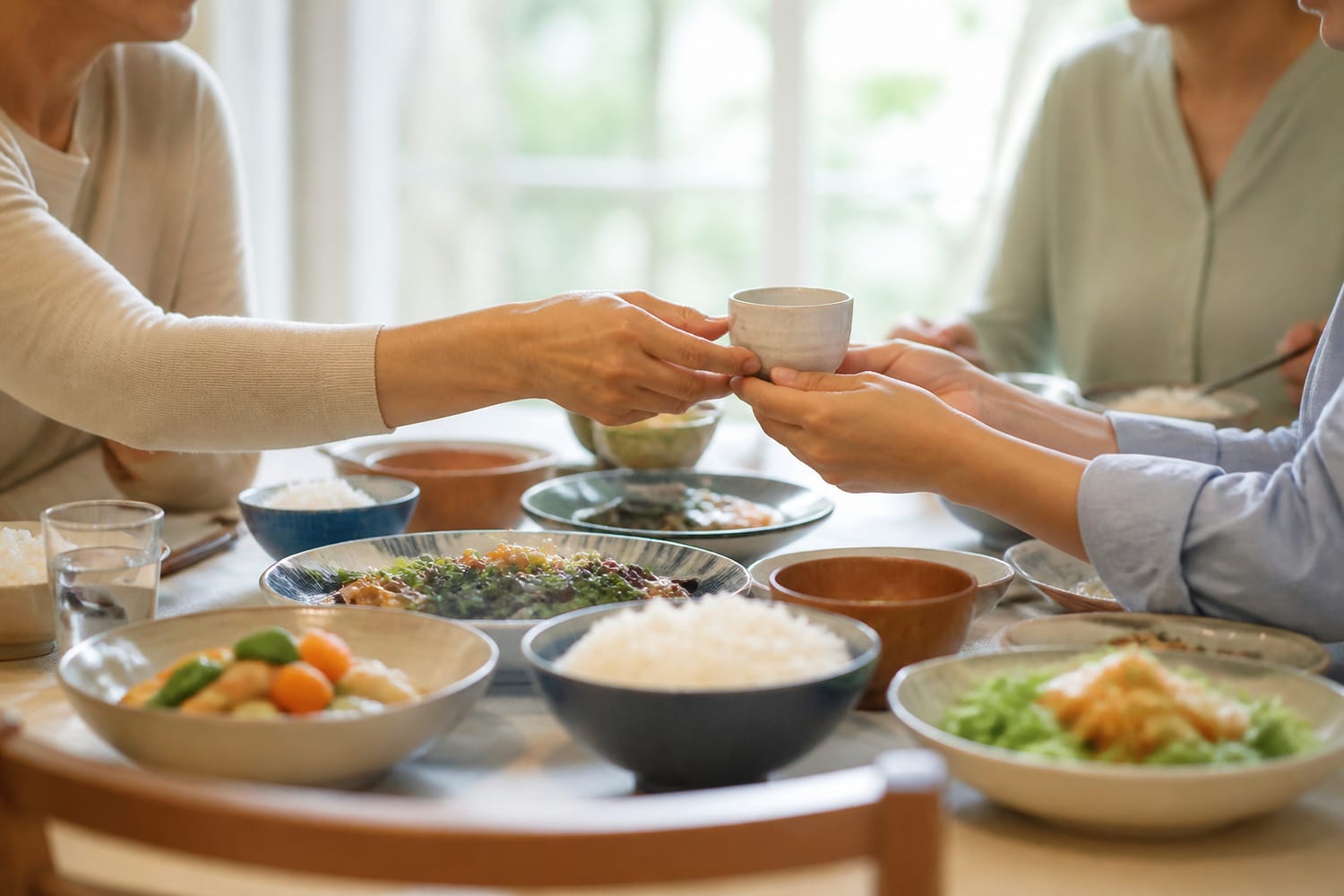
Shared meals often turn invisible social expectations into visible actions. In an age-conscious setting, diners may wait for the oldest person to lift their utensils before beginning. The senior guest might receive the place of honor, the first serving, or the responsibility of inviting everyone to eat.
Drinking customs can carry similar signals. A younger person may pour for an elder, hold a cup with two hands, or avoid appearing too casual when receiving a drink.
Travelers should resist turning these practices into a performance. Exaggerated bows and theatrical gestures can feel mocking rather than respectful. Quiet observation is more valuable than perfect imitation.
Dining customs also vary by household and occasion. A formal holiday meal with grandparents may follow rules that a group of young friends would ignore. As the Tour Trivia article on why personal questions are not always rude demonstrates, context often determines what a custom actually means.
Respect Does Not Always Mean Agreement
Visitors sometimes assume that respect for elders requires unquestioning obedience. In practice, the relationship is usually more complicated.
A younger person may disagree while choosing softer language, raising the issue privately, or waiting for an appropriate moment. The goal is often to avoid publicly embarrassing an elder rather than to suppress every opposing opinion.
Traditional ideals can also be challenged when seniority is used to excuse unfairness, silence younger people, or resist necessary change. Modern families and workplaces frequently debate where courtesy ends and excessive authority begins.
This tension is important. A culture can value older people without believing they are always correct. Respect may govern how disagreement is expressed, not whether disagreement is allowed.
Traditions Are Changing, Not Simply Disappearing

Urbanization, smaller families, international education, and changing workplaces have altered many age-based customs. Younger generations may prefer first names, casual speech, shared decision-making, and professional authority based on ability rather than seniority.
Nevertheless, change rarely erases tradition completely. Someone may reject rigid workplace hierarchy while still serving a grandparent first at dinner. Friends may speak casually together but become noticeably formal during a family celebration.
Customs also vary within countries. Region, religion, class, family background, and personality all matter. Statements such as “everyone in this country respects age in the same way” flatten a complex social reality.
The better approach is to recognize broad patterns without treating individuals as cultural stereotypes.
How Travelers Can Show Respect
You do not need to memorize an entire hierarchy before visiting a new place. A few thoughtful habits can prevent many misunderstandings:
- Watch what local people do before taking a seat or beginning a meal.
- Use titles until invited to use a first name.
- Greet senior family members or officials first.
- Let your host guide introductions and seating.
- Receive gifts, cards, and food carefully rather than snatching them with one hand.
- Avoid joking about someone’s age unless they introduce the humor.
- Ask polite questions when you are uncertain.
Above all, remain observant and flexible. Most hosts understand that visitors will not know every rule. Sincere effort matters more than flawless technique.
Seeing Age Through Local Eyes
Age comes first in some cultures because it represents more than the years a person has lived. It can signal experience, family position, accumulated responsibility, and a connection to earlier generations.
The custom has strengths and complications. It can preserve knowledge, encourage care for elders, and make social responsibilities clear. It can also become restrictive when age is treated as automatic proof of wisdom or entitlement.
For travelers, the goal is not to judge the system against their own habits. It is to notice what respect looks like locally. A seat offered, a title carefully chosen, or a meal paused for an elder may reveal an entire philosophy of belonging—one quiet gesture at a time.