
Why Bathroom Habits Become Bathroom Design
A bathroom is built around what its users expect to do there. Someone accustomed to washing with water needs a convenient water source. Someone who prefers squatting needs a different fixture from someone who sits. Sanitation specialists therefore consider cultural preferences alongside cost, maintenance, privacy, and accessibility when designing facilities.
Those preferences are not neatly divided by national borders. A country can have squat toilets in older public buildings, seated toilets in homes, and electronic bidet seats in hotels. The useful question is not “What toilet does this country use?” but “What facilities might I encounter?”
Bidets: The “Second Toilet” That Isn’t a Toilet
A standalone bidet is a washing fixture, not a place to deposit waste. Usually positioned beside the toilet, it allows users to wash their intimate areas afterward. Traditional versions resemble low sinks, with taps rather than the familiar toilet tank and flushing mechanism.
Although strongly associated with Italy and other southern European countries, the bidet’s history leads back to France. Early examples were essentially washbasins mounted in furniture, before indoor plumbing transformed them into permanent bathroom fixtures. The Swiss National Museum’s history of the bidet traces that journey from movable furniture to plumbed-in porcelain.
The name offers a memorable piece of bathroom trivia: bidet also referred to a small horse, reflecting the straddling position associated with early designs. Modern versions need not occupy a separate corner; attachments and replacement toilet seats combine washing and toileting in one fixture.
Handheld Sprayers and Water-Washing Traditions
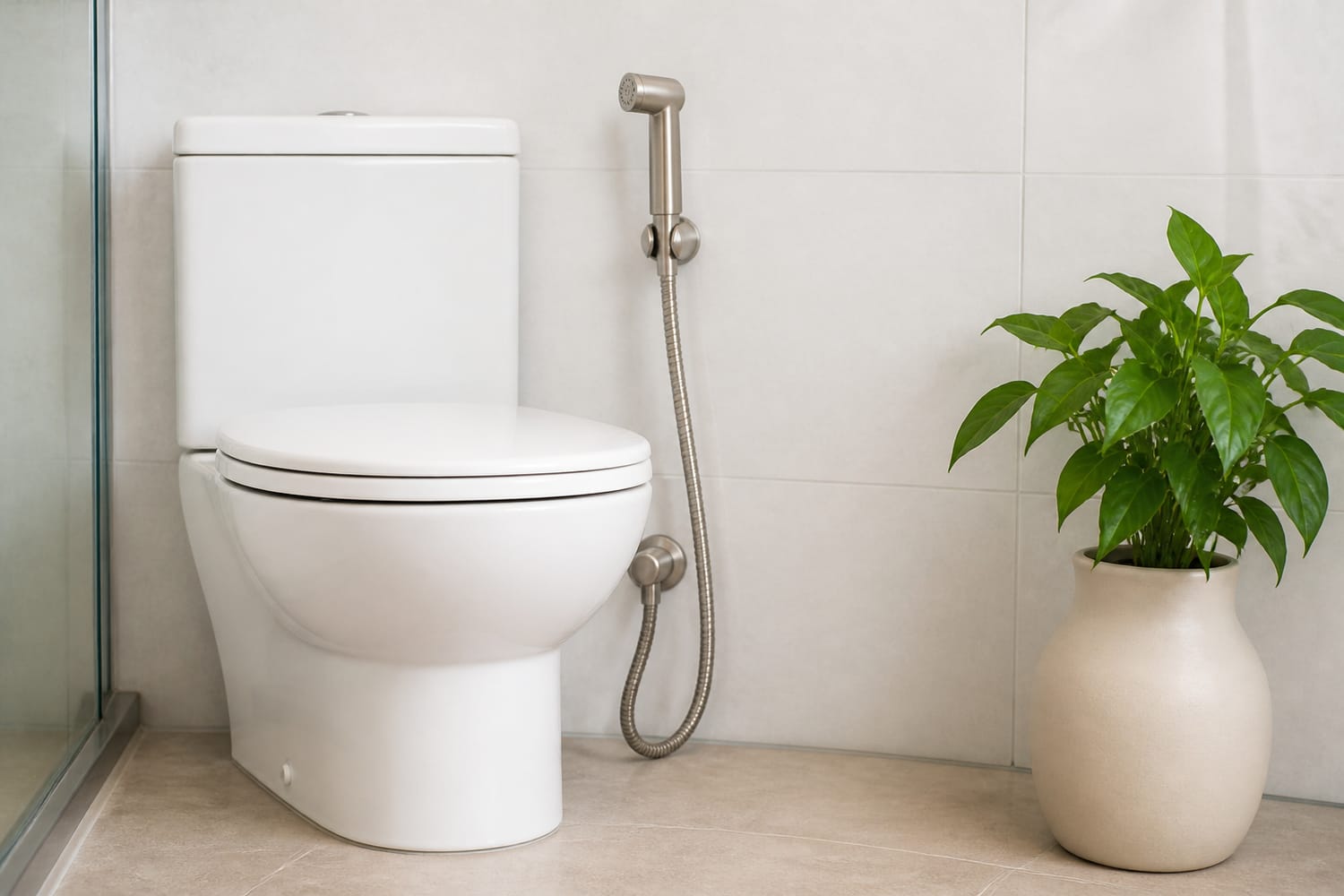
A hose beside the toilet serves a similar purpose without requiring another porcelain basin. Handheld bidet sprayers provide water for personal cleansing, while other bathrooms supply a small jug or vessel. Water-washing arrangements can accompany either seated or squat toilets.
Religion helps explain some of these preferences. Water-based cleansing is important in many Muslim communities, although religious practice, family habits, and individual preferences vary. The broader point is that bathroom equipment supports an established routine, rather than creating that routine from scratch.
These traditions also connect with left-hand etiquette in different cultures, where the left hand’s historical association with personal cleansing helps explain preferences for using the right hand during meals or social exchanges. Treat that as cultural context, not a rule describing every person.
Squat Toilets: A Different Posture, Not a Different Century
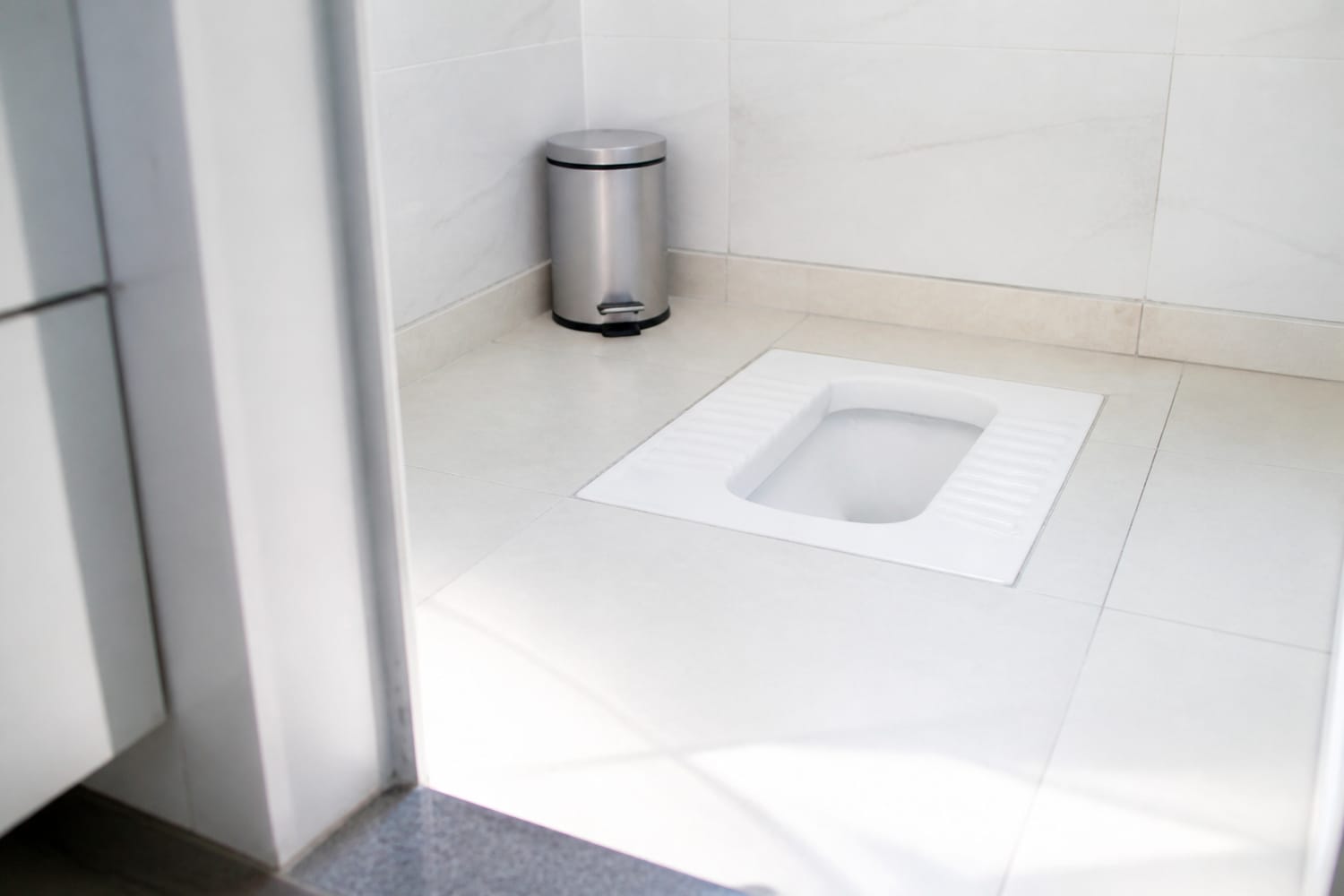
Squat toilets generally feature a floor-level pan with places to position your feet. They occur across parts of Asia, the Middle East, Africa, and Europe, with availability varying substantially between buildings and communities. Their presence does not automatically indicate an outdated or poorly maintained bathroom.
One reason some users prefer them is straightforward: there is no shared toilet seat to touch. Familiarity matters, too. What feels awkward to a first-time visitor may feel entirely ordinary to someone who has used that posture since childhood.
However, squatting is not comfortable or possible for everyone. Sanitation research identifies seated toilets as more convenient for some people with movement difficulties. If squatting is unsuitable for you, ask about seated or accessible facilities rather than assuming every stall contains the same fixture.
Japan’s Toilets Turn Comfort Into Technology
Japan’s electronic toilets bring several bathroom functions together. Depending on the model, features can include heated seats, adjustable washing sprays, warm-air drying, and sound effects that help mask bathroom noises. TOTO introduced its Washlet electronic bidet seat in 1980, making this a decades-long design story rather than a recent novelty.
The Japan National Tourism Organization’s guide to Japanese toilets explains the features visitors may encounter. Read the controls before pressing buttons: washing, drying, flushing, and sound functions serve different purposes.
Technology also coexists with older designs. Traditional squat toilets remain in some stations and older establishments, illustrating why even a destination famous for sophisticated bathrooms cannot be reduced to a single toilet style.
Plumbing Explains Paper Bins and Payment Gates
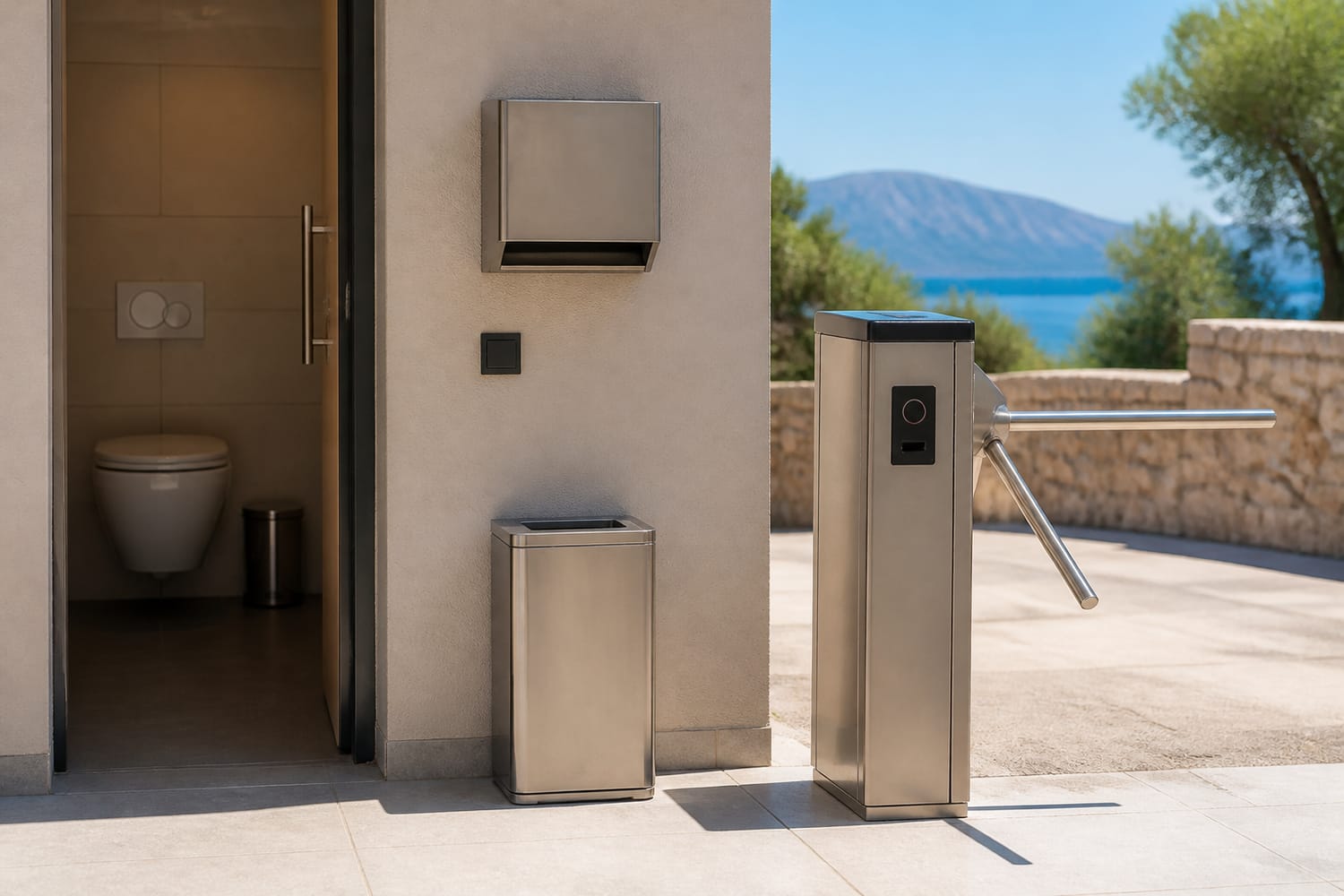
Sometimes the biggest difference is not the toilet itself but what you may put into it. In some bathrooms in Greece and Turkey, users are instructed to place toilet paper in a wastebasket because the plumbing cannot reliably handle it. Follow the posted instructions or ask your host; do not assume the rule applies identically everywhere.
Paid public toilets are another practical surprise. Charges help cover water, cleaning, and maintenance, and visitors may encounter payment systems at stations, highway stops, or attractions. Rick Steves’ European toilet guide offers useful preparation, including carrying tissues and small change.
Even Bathroom Slippers Tell a Story
In some Japanese settings, dedicated toilet slippers separate restroom footwear from the slippers worn elsewhere indoors. Change back when leaving. It is a small detail, but one that makes more sense alongside the broader custom of removing shoes indoors.
Ultimately, approach unfamiliar bathrooms with curiosity rather than a ranking system. Read signs, ask practical questions, and leave the space ready for the next person. You do not need to adopt every bathroom habit permanently to understand why someone else considers it perfectly normal.