
It’s the Script, Not the Language
We often call Arabic a “right-to-left language,” but technically, direction belongs to the script—the system of written characters—not to the spoken language. Speech itself has no left or right edge. The distinction matters because one language can use several writing systems.
Azerbaijani is a useful example. Written in Latin or Cyrillic letters, it runs left to right; written in Arabic script, it runs right to left. The language does not need to change for the direction to change. The World Wide Web Consortium’s guide to right-to-left scripts explains this relationship.
So the better question is not “Why does this language go backward?” It is “How did this writing system acquire its direction?” That small shift removes the assumption that English follows the natural order and everyone else takes a detour.
Ancient Alphabets Passed Down Their Direction
One important part of the story begins with the Phoenicians, whose alphabet helped shape later writing systems around the Mediterranean. Phoenician writing ran from right to left. When communities borrowed and adapted letters, they could also inherit established ways of arranging them.
This was not a single leap from one ancient alphabet to every modern one. Scripts developed through branching traditions, with letters changing shape and acquiring new uses. Aramaic was closely related to Phoenician, while Arabic developed through the Nabataean writing tradition.
The Metropolitan Museum of Art’s explanation of the origins of the Arabic alphabet highlights surviving Nabataean inscriptions that resemble Arabic writing. Direction is therefore part of a much larger inheritance, alongside letter forms and writing conventions.
For a broader look at these connections, explore Tour Trivia’s guide to ancient writing systems.
Did Stone Carving Decide Everything?
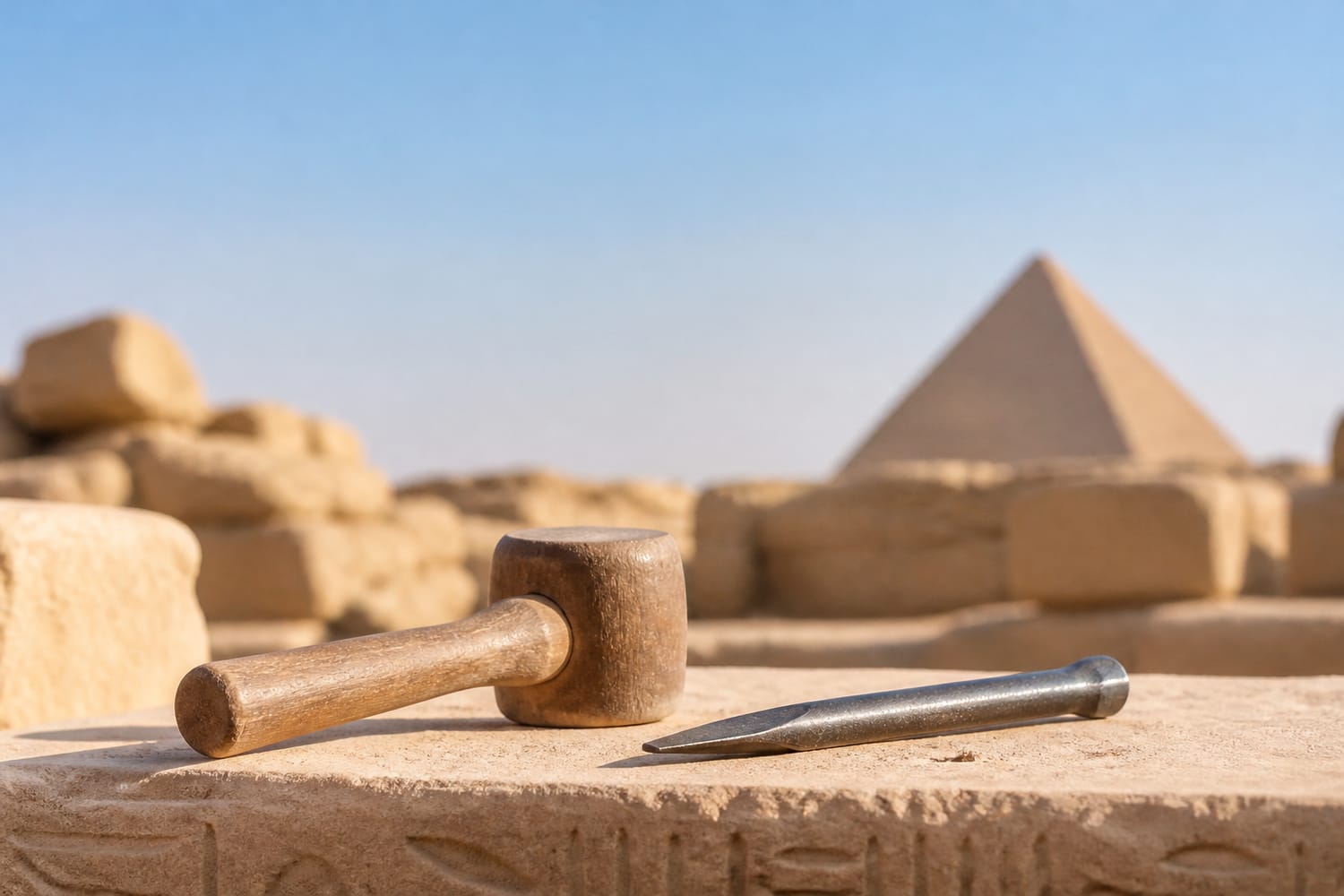
A popular explanation credits the hammer and chisel. Picture a right-handed craftsperson holding a hammer in the right hand and guiding a chisel with the left. The theory suggests that moving right to left could make the work easier to see. It sounds satisfyingly practical—but it should not be presented as a settled explanation.
A useful counterexample comes from Egypt. Hieroglyphic texts could run in either horizontal direction, while handwritten Egyptian scripts generally ran right to left. That variety makes any simple “stone means right to left, ink means left to right” formula inadequate.
Tools may help explain particular practices, but they do not provide a universal answer. It is safer to distinguish what surviving texts demonstrate—the directions people used—from theories about why their earliest predecessors chose them.
The honest answer is less tidy than the familiar carving story, but more revealing: writing direction has several histories, not one invention.
The Greeks Tried Both Directions
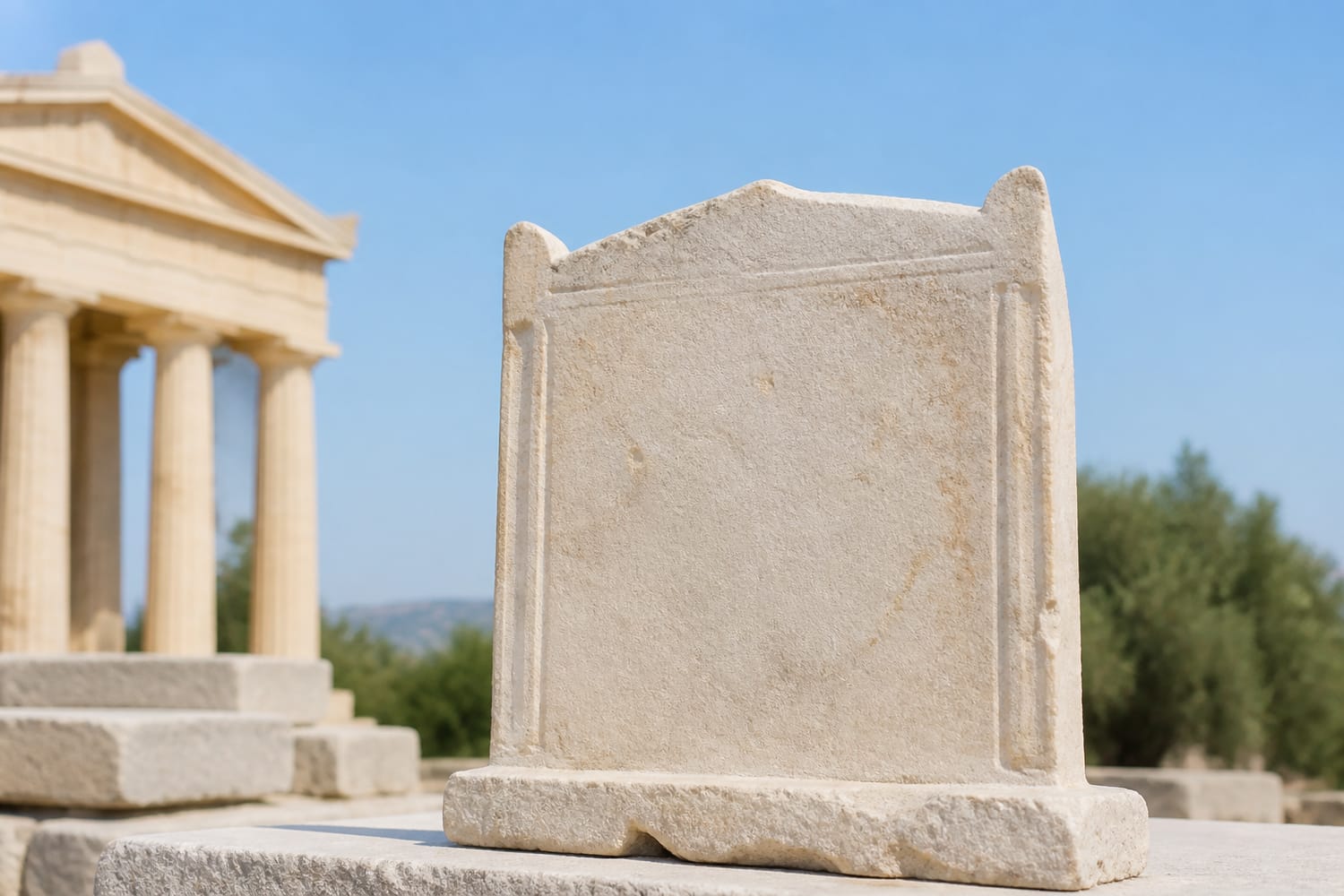
If you assume an alphabet has always traveled in one direction, ancient Greek inscriptions offer a surprise. The Greeks borrowed their alphabet from the Phoenicians, but early Greek writing did not immediately settle into the left-to-right pattern familiar today. Some inscriptions alternate direction from line to line.
This arrangement is called boustrophedon, meaning “ox-turning.” Imagine an ox plowing a field: it crosses one furrow, turns, then comes back the other way. The writing follows a similar route, rather than returning to the same margin after every line.
A limestone funerary monument at The Met, dated to the middle of the sixth century BCE, preserves this alternating layout. It is a wonderfully concrete reminder that writing conventions were once more flexible than a modern printed page suggests.
Which Languages Use Right-to-Left Writing?
Arabic and Hebrew are familiar examples, but they are far from alone. Persian, Urdu, and Pashto use forms of Arabic script, while Yiddish uses Hebrew script. Other right-to-left writing systems include Syriac, Thaana, and N’Ko. Right-to-left writing is not one alphabet shared by one linguistic family.
Nor does “right to left” necessarily describe every movement across a page. Japanese provides a different arrangement: in vertical composition, characters run from top to bottom, with successive lines progressing from right to left. In horizontal composition, characters generally run left to right.
That distinction is useful in a bookstore abroad. Before deciding where a text begins, check whether it uses horizontal lines or vertical columns. “Which side first?” and “Which way next?” are separate questions.
Why Numbers Can Go the Other Way

Here is a detail worth watching for on menus and tickets: a right-to-left sentence can contain a number whose digits run left to right. Arabic and Hebrew text can also include English names or other Latin-script text that retains its own direction. The result is called bidirectional text.
For example, the digits in 2026 do not become 6202 simply because the surrounding sentence is Arabic. The sequence keeps its left-to-right arrangement within the larger right-to-left flow.
Digital text systems must handle these changes carefully, especially around punctuation. W3C guidance explains how a paragraph’s overall direction and the direction of individual text segments interact. So a mixed-language sign is not breaking the rules; it is following more than one set at once.
A Different Direction, Not a Backward One
The next time you encounter an unfamiliar script, pause before treating its layout as an obstacle. Look for the beginning of the line, notice any embedded numbers, and compare the arrangement with a translation if one is available.
That curiosity fits naturally with Tour Trivia’s advice on traveling more like a local: small efforts to understand everyday communication can make unfamiliar surroundings feel more approachable.
A page has no universally correct starting side. What feels automatic to one reader may feel unfamiliar to another. Writing direction is a reminder that even the simplest daily habits have a history—and travel gives us a chance to notice them.