
A Small Gesture With a Big Meaning
Showing the soles of your feet may seem harmless, but in parts of Asia, the Middle East, and North Africa, it can communicate disrespect. Feet and shoes are associated with the ground, dirt, and the lowest part of the body. Pointing them toward a person, sacred object, or important symbol may therefore feel insulting.
For travelers, this custom is easy to overlook. Simply crossing one leg over the other can turn the bottom of a shoe toward someone nearby. Stretching out on the floor, resting your feet on furniture, or using a foot to point can create the same problem.
Understanding the custom is not about memorizing a mysterious rule. It is about recognizing that posture, like speech, carries different meanings around the world.
Why Feet Are Considered “Low”
The taboo begins with an obvious physical fact: feet touch the ground. Historically, people walked on dusty roads, muddy paths, and unclean surfaces, often in sandals or simple footwear. Even today, shoes collect dirt from streets, bathrooms, and public spaces.
This practical association became a cultural symbol. In many societies, the body is understood as a kind of hierarchy. The head occupies the highest position and may represent thought, identity, honor, or spirituality. Feet occupy the lowest position and are connected with dirt and low status.
That contrast is especially important in Thailand. The Thai government’s official list of cultural dos and don’ts explains that the head is regarded as the highest and cleanest body part, while the feet are considered low. Visitors are advised not to point with their feet or step over people, food, or books.
The issue, then, is not that feet are inherently shameful. They simply carry meanings that make certain gestures inappropriate.
Where Showing Your Soles May Cause Offense
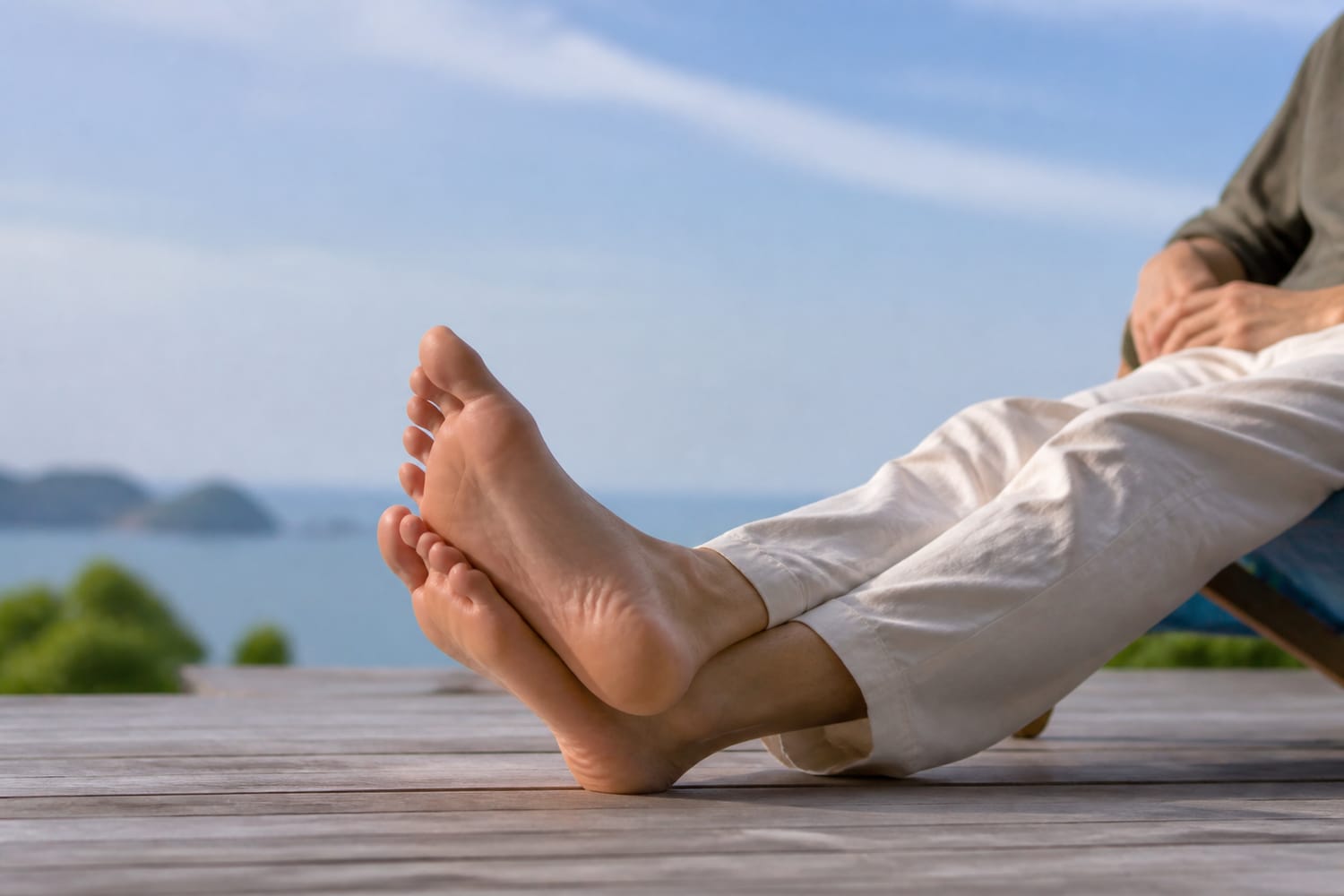
The custom is commonly associated with Thailand and several Arab societies, although attitudes vary among countries, communities, families, and individuals. Travelers should avoid assuming that everyone within a large region follows exactly the same rules.
In Thailand, pointing the soles toward another person is widely regarded as impolite. Pointing your feet at a Buddha image or other religious object can be particularly disrespectful. Using a foot to indicate an item, close a door, or move someone’s belongings may also be poorly received. The Thai Cultural Atlas etiquette guide similarly advises against pointing at people with the feet or directing the soles toward them.
Across parts of the Arab world, the sole of a foot or shoe may also symbolize dirt and contempt. An account in The National’s explanation of Arab shoe etiquette describes how an otherwise ordinary crossed-leg posture can expose a shoe sole directly toward a host.
These customs are most likely to matter in formal meetings, private homes, religious spaces, and conversations with elders or authority figures.
Shoes Can Intensify the Insult
Shoes often carry an even stronger negative meaning because they make direct contact with dirty ground. That helps explain why footwear is removed before entering many homes, temples, and mosques.
In cultures where the sole is considered offensive, throwing a shoe, striking someone with footwear, or placing a shoe on a person’s image can become a dramatic expression of contempt. The act does more than threaten physical harm. Symbolically, it lowers the target beneath something considered unclean.
Travelers are unlikely to make such an extreme gesture accidentally. More common mistakes include placing shoes on a chair, resting them on a table, or allowing their soles to face a host while sitting. Keeping footwear on the floor avoids most problems.
Posture Is a Form of Communication

Body language is easy to misunderstand because people often treat their own habits as universal. In one place, crossing your legs might signal relaxation or confidence. Somewhere else, the same posture could appear careless, overly casual, or insulting.
The direction matters as much as the foot itself. Sitting with both feet on the floor is generally unremarkable. Trouble is more likely when the sole points directly at another person, a religious image, an altar, food, or a respected object.
This is one example of how small gestures can carry centuries of cultural meaning. Bowing, shaking hands, kissing cheeks, and pressing the palms together also communicate ideas about status, friendliness, and respect. Tour Trivia’s guide to greeting customs around the world explores how these ordinary movements change across borders.
Situations Where Travelers Should Be Careful
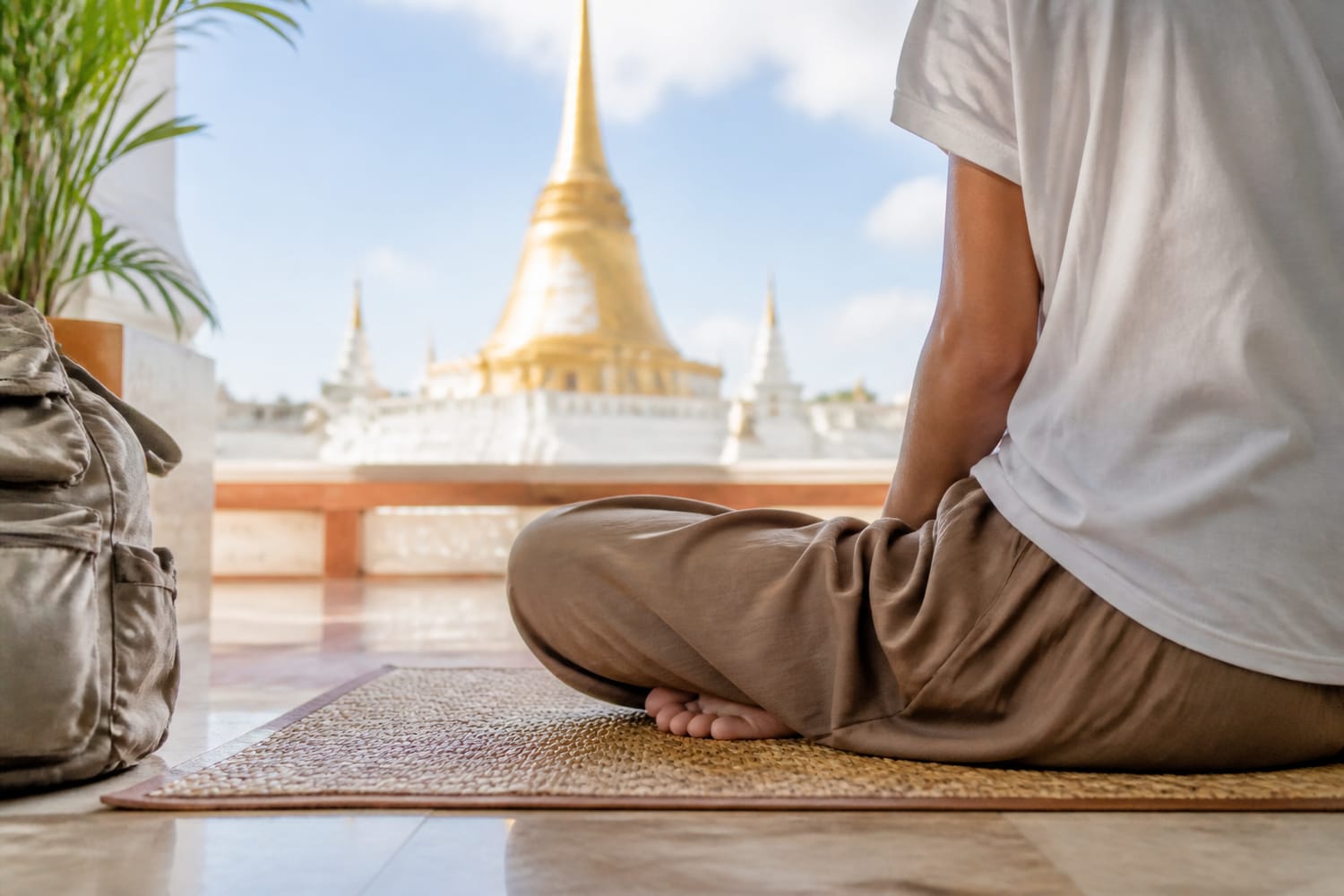
The custom can become relevant in several everyday settings:
- Sitting on the floor: Fold your legs to the side or position your feet behind you rather than pointing them at another person.
- Crossing your legs: Keep the raised foot angled downward instead of directing the sole toward someone.
- Visiting religious sites: Never point your feet toward an altar, Buddha image, religious leader, or sacred object.
- Entering a home: Look for shoes near the entrance and follow the host’s example.
- Handling belongings: Do not move bags, books, food, or personal items with your feet.
- Relaxing in public: Avoid placing your feet on chairs, tables, walls, or seats intended for other passengers.
- Taking photographs: Be mindful of poses that place your shoes near statues or sacred structures.
Learning these habits is part of becoming a more observant visitor. A broader guide to cultural etiquette around the globe can help travelers recognize other gestures that may not translate well.
What to Do If You Make a Mistake
Most accidental breaches of etiquette can be repaired quickly. Lower your feet, adjust your position, and offer a brief, sincere apology. A dramatic explanation is rarely necessary.
It also helps to follow local behavior. If everyone removes their shoes, sits with their legs tucked away, or avoids pointing with their feet, do the same. Hosts generally understand that visitors may not know every rule, especially when the traveler responds politely after being corrected.
The goal is consideration, not perfection. Showing that you are willing to learn often matters more than flawlessly performing every custom.
Respect Begins With Paying Attention
The soles-of-the-feet taboo illustrates one of travel’s most valuable lessons: ordinary actions are not culturally neutral. Posture, gestures, clothing, and personal space can all send messages we never intended.
Keeping your feet on the floor may feel like a tiny adjustment, but it acknowledges the values of the people and places around you. That awareness turns etiquette from a list of restrictions into something more meaningful—a practical way to travel with curiosity, humility, and respect.