
More Than a Matter of Manners
In many cultures, avoiding an elder’s first name is a way to acknowledge age, experience, authority, and family position. Titles, kinship terms, honorifics, and formal pronouns turn ordinary speech into a social map. What sounds distant to one traveler may communicate warmth, humility, and belonging to someone else.
Names are deeply personal, but the rules surrounding them are cultural. In highly informal societies, quickly moving to first names can suggest equality and friendliness. Elsewhere, that same choice may sound presumptuous—as though the speaker has claimed a closeness that has not yet been earned.
Every Greeting Reveals a Relationship
A form of address does more than identify a person. It can reveal who is older, who holds authority, how well two people know each other, and whether the setting is formal or intimate.
This is why “first name” and “last name” are not always universal or even useful categories. Naming structures vary widely: family names may come first, people may use patronymics, and some communities rely heavily on nicknames, family roles, or professional titles. The World Wide Web Consortium’s guide to personal names around the world illustrates just how much naming patterns differ across languages and societies.
For travelers, the important question is not simply, “What is this person’s name?” It is, “Which part of the name is appropriate for me to use?”
Age Can Be a Social Rank

In cultures where age is associated with wisdom, sacrifice, or accumulated knowledge, elders often occupy a recognized position within the family and community. Using a first name without a title can appear to erase that position.
This does not necessarily mean that every older person has formal power. An aunt, neighbor, teacher, or family friend may still receive a respectful form of address because age itself creates a social responsibility. Younger people demonstrate that they understand their place within the relationship.
These customs are connected to broader family dynamics and cultural values. In many extended families, relationships are defined not only by affection but also by duties between generations: elders advise and protect, while younger relatives listen, assist, and show deference.
Honorifics Carry Meaning That Names Cannot
A culture does not need to avoid personal names completely to create respectful distance. Instead, it may add a title, suffix, professional rank, or kinship word.
In Japan, for example, a surname is commonly paired with an honorific such as -san, while titles connected to work or status may replace personal names in professional settings. In parts of India, ji can be added to a name or title as a sign of respect. Stanford’s cultural guidance for healthcare providers recommends beginning with formal address when speaking with traditional Hindu older adults and waiting for permission before using first names.
Respect may also appear through:
- Family terms such as auntie, uncle, grandmother, or elder
- Professional titles such as doctor, teacher, director, or professor
- Honorific suffixes or prefixes attached to a name
- Formal versions of “you”
- Special verb forms or sentence endings
- Avoidance of the person’s name altogether
These choices can express affection as well as hierarchy. Calling an unrelated elder “auntie” may welcome that person into a symbolic family circle rather than create emotional distance.
Why First Names Can Feel Too Familiar
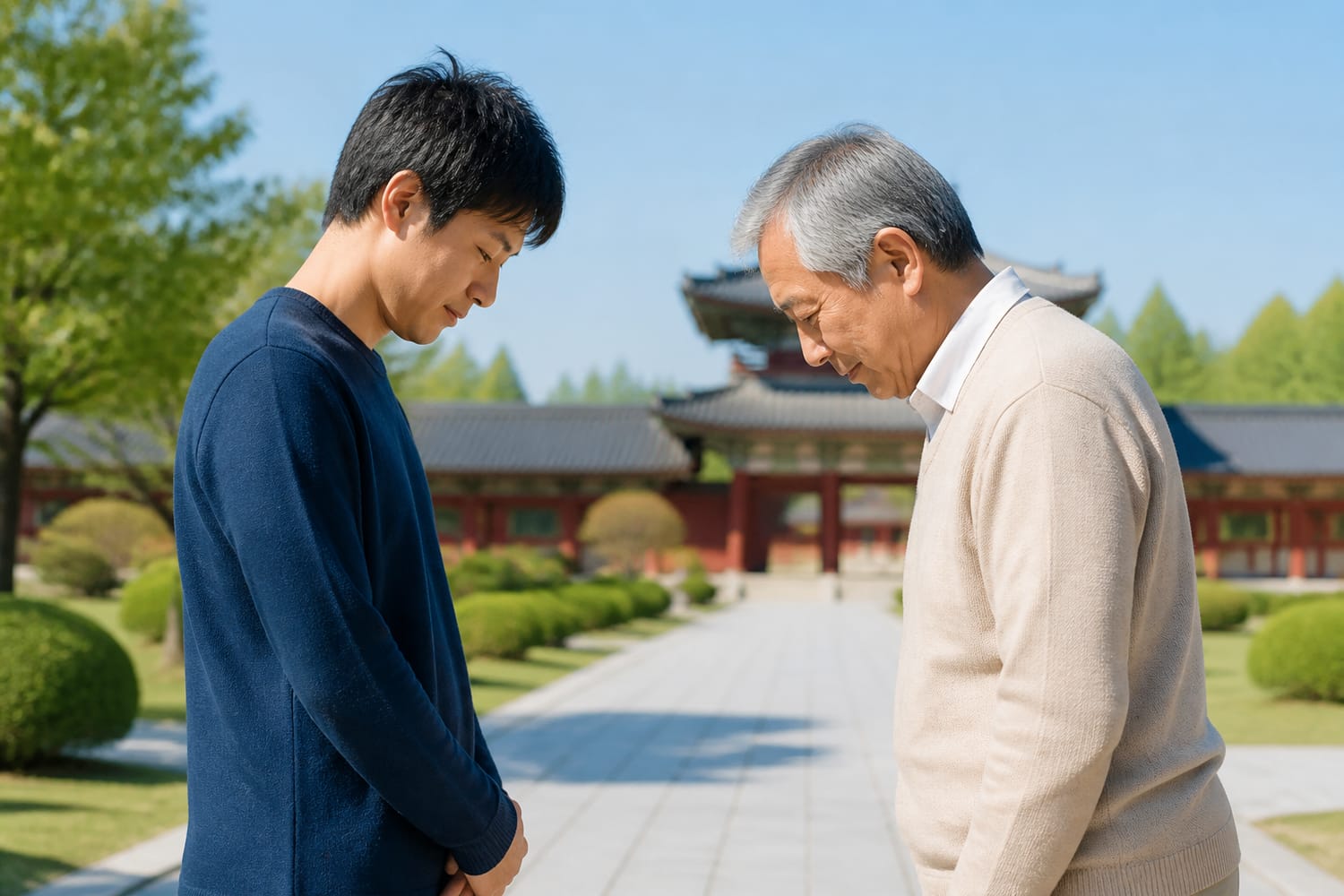
Many English speakers associate first names with warmth. In the United States, colleagues may address a supervisor by their given name, and professors sometimes invite students to do the same. This informality is often intended to reduce barriers.
Yet familiarity is not interpreted identically everywhere. In more formal or hierarchical settings, using an elder’s given name may suggest that the speaker considers the two people socially equal or personally close. If that relationship has not been established, the address can seem careless or disrespectful.
An intercultural communication guide from Virginia Commonwealth University notes that Americans often move rapidly toward first-name terms, while other societies expect titles and honorifics, particularly in professional relationships.
The misunderstanding works in both directions. A traveler may think formal language feels cold, while a local person may believe that formality is precisely what makes the interaction courteous.
Respect Is Not the Same as Submission
Rules about addressing elders are sometimes described as evidence that a culture values obedience over individuality. That interpretation is too simple.
Honorifics can reinforce hierarchy, but they can also preserve history, clarify responsibilities, and recognize the contributions of older generations. A respectful title may say, “I recognize what you have lived through,” rather than, “I agree with everything you say.”
At the same time, customs are not frozen. Younger generations may question rigid hierarchies, while elders may prefer informal address. Urban life, international workplaces, migration, and social media can all change how people speak. A family may follow traditional naming rules at home but use first names at school or work.
Culture offers a pattern, not a guarantee.
The Rules Change With Context

Even within one country, address customs may vary by region, generation, class, religion, workplace, and family. A title expected during a first meeting may disappear after friendship develops. An elder who welcomes first-name address in a casual setting may still expect formality at a ceremony.
That flexibility is why travelers should avoid relying on a single etiquette checklist. The broader world of unusual etiquette rules shows that polite behavior is rarely universal.
Watch for contextual clues. How do people your age address the person? Does everyone use a family term, surname, or job title? Has the elder introduced themselves formally? Most importantly, have they invited you to use another form?
How Travelers Can Address Elders Respectfully
When uncertain, beginning formally is usually safer than assuming familiarity. A title can be relaxed later, but an overly casual opening may create an awkward first impression.
Try these practical habits:
- Listen carefully during introductions.
- Follow the form used by local hosts.
- Learn common honorifics before traveling.
- Ask, “How would you like me to address you?”
- Pronounce names and titles as carefully as possible.
- Wait for an explicit invitation before switching to a first name.
- Avoid treating every older person from a region identically.
It also helps to understand the structure and meaning of local names. Tour Trivia’s exploration of unique naming traditions around the world offers a reminder that names may carry ancestry, geography, religion, and family history—not merely individual identity.
The Hidden Language Becomes Visible
Not calling an elder by their first name is rarely about the name alone. It reflects a culture’s ideas about closeness, age, authority, family, and social harmony.
Once travelers learn to hear those meanings, titles stop sounding like empty formalities. They become small verbal gestures of recognition. A single word—teacher, auntie, grandfather, doctor, or a carefully chosen honorific—can say: “I see your place in this community, and I will not assume a closeness you have not offered.”
That is the hidden language of respect: not silence, but speaking in a way that honors the relationship.