
Two Systems, Two Starting Points
The main difference is simple: does numbering begin at ground level or above it?
In the American system, the street-level floor generally counts as floor one. The next level is the second floor, followed by the third. In the British system, street level has its own name: the ground floor. Numbering starts with the level above it. Cambridge Dictionary’s definition of “first floor” explicitly distinguishes these two meanings.
Here’s the practical comparison:
| Physical position | Typical U.S. label | Typical British label | |---|---|---| | Street level | First floor | Ground floor | | One level above street | Second floor | First floor | | Two levels above street | Third floor | Second floor |
These are conventions, not competing mathematical truths. One approach counts the entrance level as the first floor; the other treats the ground as a separately named starting point.
Why “First” Can Mean Something Different
The confusion comes from assuming that familiar words must describe familiar positions. “First floor” sounds universal, but its meaning depends on the variety of English being used. Collins’ explanation of British and American usage confirms that the same phrase points to different levels.
Think of the British convention as counting the floors above the ground. Think of the American convention as counting from the ground upward, beginning with one.
For travelers, that distinction matters more than finding a single historical explanation for every country’s practice. The useful question isn’t which system is correct. It’s which system the building uses.
It’s also a neat companion to Tour Trivia’s guide to language mishaps and how they happen: sometimes the confusing phrase needs context rather than translation.
Recognizing Ground Floors Around the World

Ground level doesn’t always announce itself with an English word. Learning a few local terms makes building directories much less mysterious.
Useful examples include:
- France: rez-de-chaussée, meaning ground floor.
- Germany: Erdgeschoss, also meaning ground floor.
- Spain: planta baja, the ground floor.
- Italy: pianoterra, another ground-floor term.
Collins’ translation of rez-de-chaussée illustrates why translating floor descriptions requires care: its British English equivalent is “ground floor,” while its American English equivalent is “first floor.”
Japan provides a useful contrast. Its usual numbering begins with the entrance level as the first floor, often displayed as 1F, followed by 2F above it. So an American traveler may find Japanese floor numbers more immediately familiar than British ones. Geography alone won’t tell you where counting starts.
Decoding Elevator Letters and Symbols
An elevator panel may mix numbers with letters. Common examples include L for lobby, B for basement, and R for roof. In Japanese buildings, B1 and B2 identify successive basement levels, while 1F and 2F identify floors above ground.
Treat these labels as clues, not a universal code. Before pressing anything, compare the panel with the directory beside the elevator.
If your host says “floor three,” use the building’s button marked three. Don’t automatically add or subtract one because you’ve crossed a border. The conversion helps you understand the floor’s physical position; it shouldn’t replace the building’s own directions.
A useful arrival habit is to note the button for reception before heading upstairs. That gives you a reliable reference point for returning later.
When the Numbers Skip
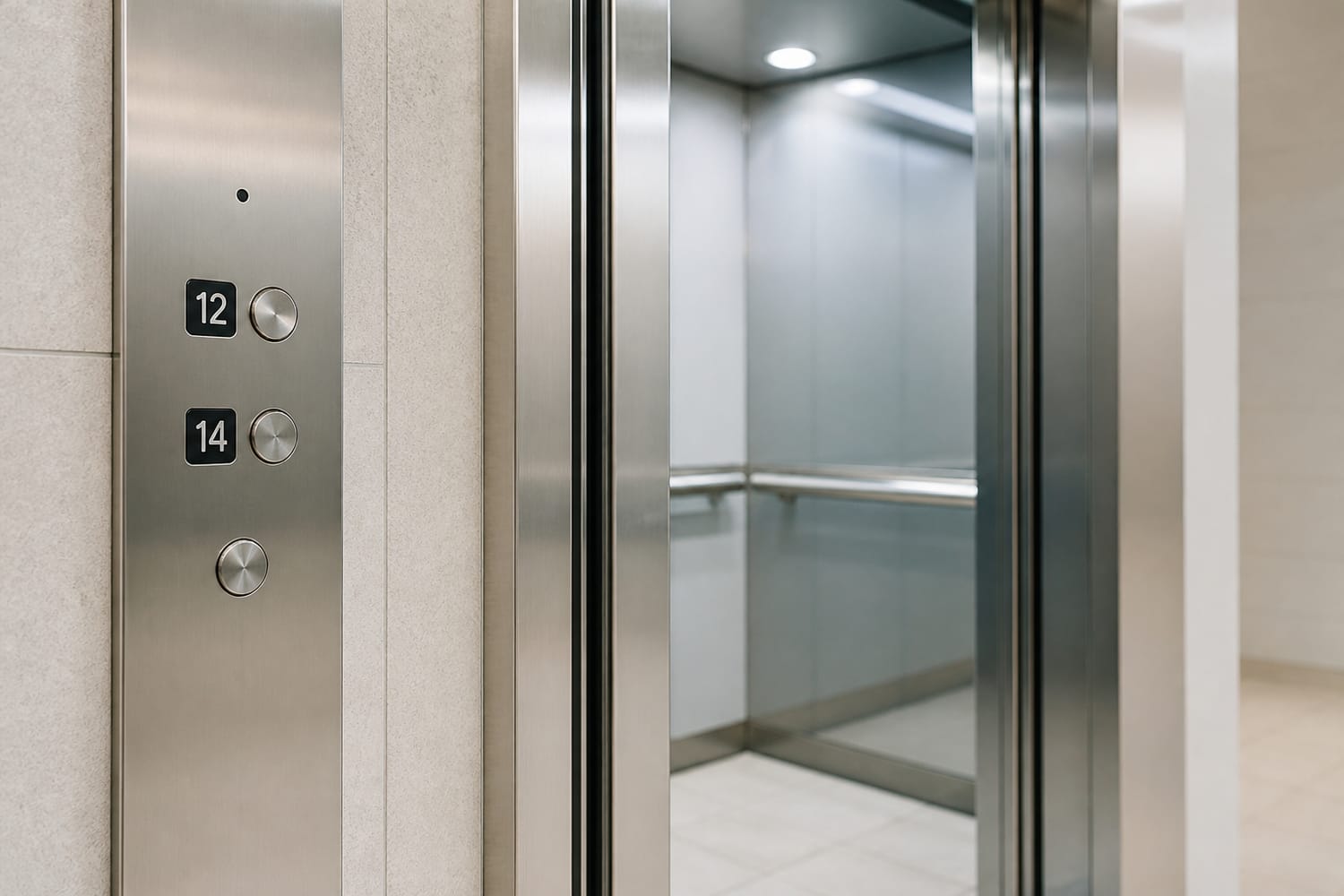
Sometimes a numbering sequence jumps for reasons unrelated to the ground floor.
Some buildings omit a designated thirteenth floor because of the number’s unlucky reputation. Research examining New York condominium addresses documents this practice, showing that floor labels aren’t always a straightforward count of physical levels.
If an elevator goes from 12 to 14, don’t assume an entire story has vanished. Follow the displayed labels rather than trying to reconstruct the building’s arithmetic.
The same principle applies whenever a directory seems unexpected: your destination’s official label matters more than your estimate of how many levels lie beneath it.
Booking a Room Without Surprises

When choosing accommodation, ask about the journey from the entrance to the room—not just its floor number.
A British “first-floor room” is normally above the ground floor, unlike an American first-floor room. That makes an apparently simple booking description worth clarifying before arrival.
Useful questions include:
- “Is the room on the same level as the main entrance?”
- “How many staircases are between the entrance and the room?”
- “Does the elevator reach the room’s level?”
- “Are there any steps before reaching the elevator?”
If step-free access matters, request explicit confirmation of the complete route. Asking only for a “low floor” leaves too much room for misunderstanding.
Navigating Museums and Meeting Points
For museums and large attractions, use the venue’s map rather than mentally translating every floor description.
The Louvre, for example, provides downloadable maps and an interactive floor plan through its official maps and directions page. Consult the attraction’s own layout before planning your route between galleries.
For meeting friends, pair the floor label with a landmark: “beside the information desk on the ground floor” is clearer than “downstairs.” Save a screenshot of the agreed location if you expect to separate.
The Simplest Rule: Check Before You Climb
Floor numbering belongs alongside other everyday travel differences, such as why some countries drive on the left, on your pre-trip curiosity list.
You don’t need perfect recall. Read the directory, follow local labels, and ask, “Do you mean street level, or one floor above it?”
That question is short enough to remember with jet lag—and much easier than carrying your suitcase up the wrong staircase.