
A Small Ring With a World of Meaning
Wedding rings are worn on different hands because marriage customs developed through distinct histories, religions, and cultural ideas about the body. The left hand dominates in countries such as the United States and United Kingdom, while the right is traditional in places including Germany, Greece, Poland, and Russia. Neither choice is universally correct.
To travelers, the difference can be surprising. A ring that clearly signals marriage at home may appear to be an ordinary piece of jewelry abroad. In some cultures, couples even move their rings from one hand to the other during the journey from engagement to marriage.
Like many nonverbal expressions of love, a wedding ring communicates through shared cultural understanding. Its meaning depends not only on its design, but also on where and how it is worn.
Why the Fourth Finger Became the Ring Finger
Despite disagreement over the hand, many cultures place wedding rings on the fourth finger. One famous explanation comes from an ancient belief in the vena amoris, or “vein of love,” which supposedly ran directly from the left ring finger to the heart.
The idea is romantic rather than anatomically correct, but it became deeply influential. Ancient Greek and Roman customs helped establish rings as symbols of devotion and marriage, while the circle itself represented continuity, permanence, and eternity. The Gemological Institute of America’s history of wedding rings traces how these customs developed from ancient rings made of materials such as iron and copper into the gold bands familiar today.
The fourth finger may also have been practical. It is used less independently than the thumb, index finger, or middle finger, potentially protecting a valuable ring from some everyday wear. Over time, repeated ritual transformed this convenient location into the “ring finger.”
Where the Left Hand Is Traditional
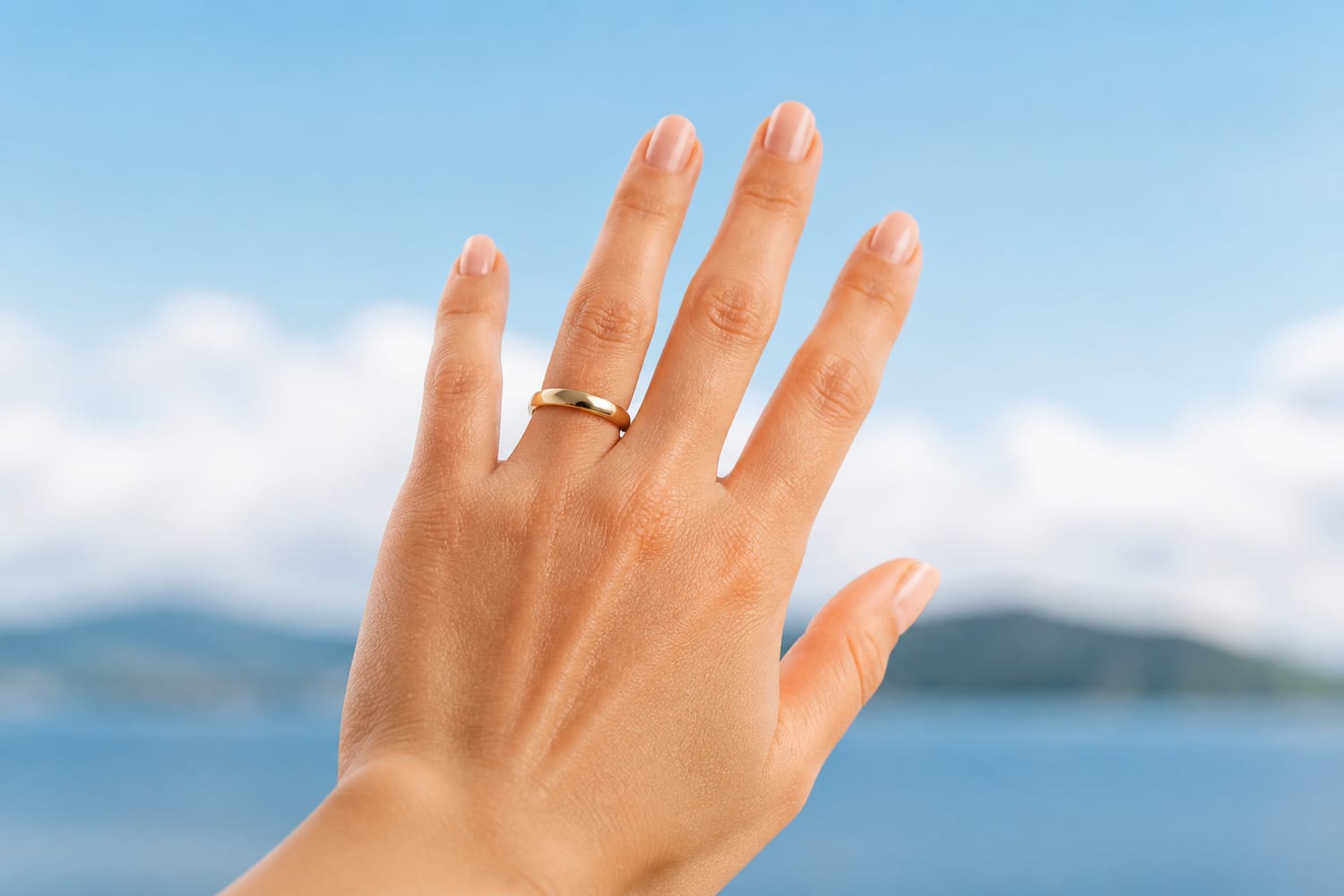
The fourth finger of the left hand is the familiar choice in the United States, Canada, the United Kingdom, France, Australia, New Zealand, and several other countries influenced by Western European customs.
Its popularity is often connected to the old vein-of-love story and the heart’s symbolic association with the left side of the body. Although the actual history is more complicated, the image of a direct path from ring to heart remains powerful.
In these cultures, the wedding band is commonly placed on the left ring finger during the ceremony. If an engagement ring is also worn, the two rings may be stacked afterward. Some people temporarily move the engagement ring to the right hand before the ceremony so the wedding band can be placed first and sit “closest to the heart.”
These habits may feel universal to someone raised in North America, but crossing a border can quickly reveal that they are regional traditions rather than fixed rules.
Why Many Cultures Choose the Right Hand

The right hand is the customary wedding-ring hand in numerous parts of Central and Eastern Europe, the Balkans, Scandinavia, and elsewhere. Traditions vary within every country, but right-hand rings are commonly associated with Germany, Austria, Poland, Russia, Greece, Norway, Bulgaria, and Ukraine.
Several explanations contribute to this preference:
- The right hand can symbolize strength, authority, honor, or a binding promise.
- Religious language frequently associates the right side with blessing and virtue.
- Regional customs may distinguish engagement from marriage by changing hands.
- Cultural ideas about cleanliness can make the right hand preferable for important exchanges.
The last point is especially relevant in parts of South Asia, the Middle East, and Africa, where the right hand has traditionally been favored for eating, greeting, giving gifts, and ceremonial actions. Tour Trivia’s guide to cultures that avoid using the left hand explores how hygiene, religion, and etiquette shaped that broader preference.
However, these patterns should not be treated as universal national laws. Customs may differ according to religion, region, family, generation, and personal preference.
How Religion Influences Ring Placement
Religion has played an important role in preserving different ring traditions. In Eastern Orthodox Christian ceremonies, rings are generally placed on the right hand. The right side carries positive religious symbolism connected with divine power, blessing, and righteousness.
The official marriage text published by the Greek Orthodox Archdiocese of America instructs the priest to place the rings on the couple’s right fingers before they are ceremonially exchanged. The accompanying prayers also refer repeatedly to the spiritual importance of the right hand.
Jewish wedding practice offers another fascinating variation. In a traditional ceremony, the ring is placed on the bride’s right index finger, where it can be clearly seen by witnesses. Many brides later move it to the left ring finger to follow the everyday custom of the country where they live.
According to My Jewish Learning’s guide to Jewish wedding rings, the ceremonial band is traditionally simple and unadorned, allowing its value to be readily understood. Placement during the ritual and placement after it can therefore serve different purposes.
Rings That Change Hands
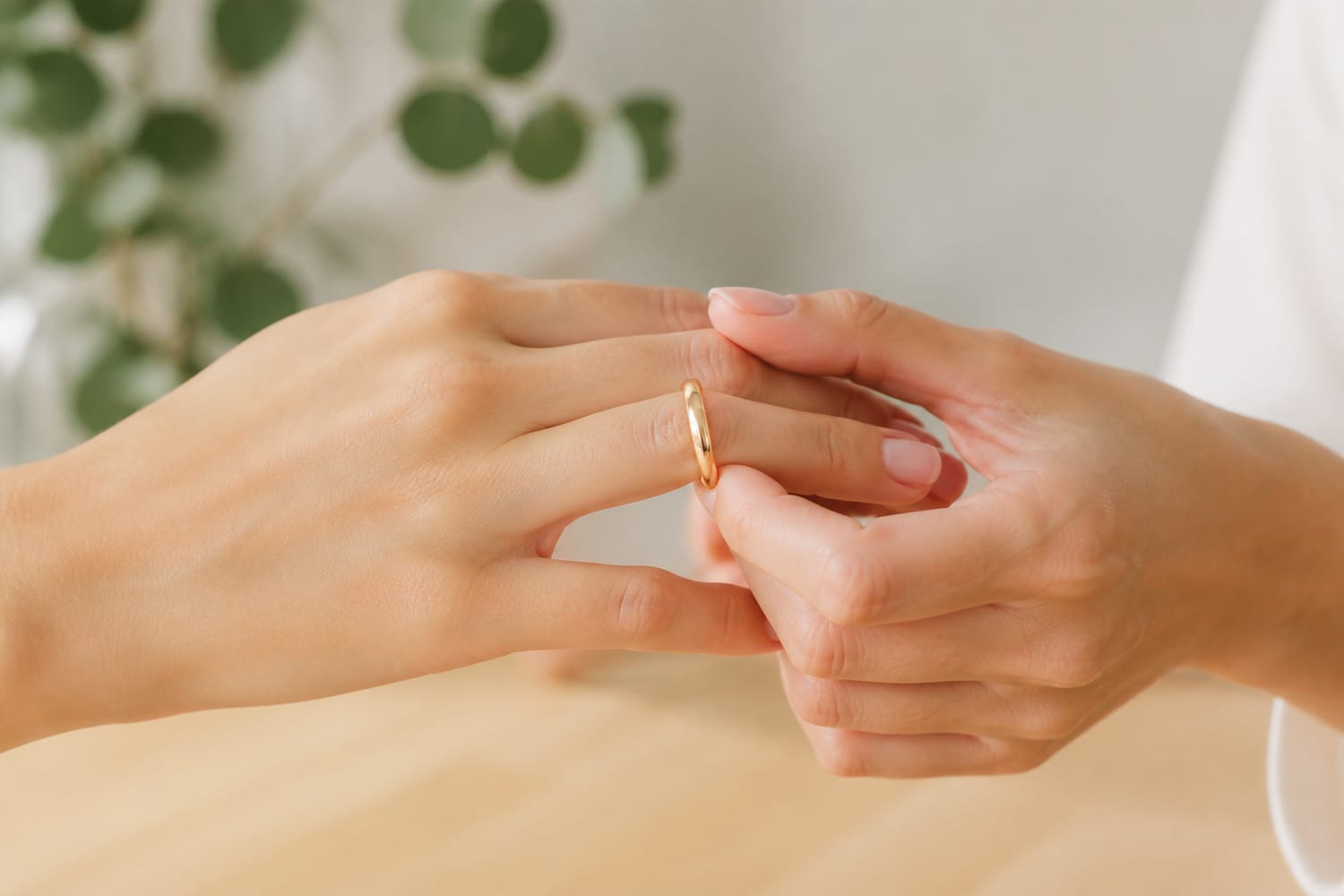
In some countries, the hand itself marks a change in relationship status. German couples, for example, may wear an engagement ring on the left hand and transfer it to the right after marriage. In other traditions, the direction is reversed: a ring begins on the right during the engagement and moves to the left at the wedding.
These customs turn the simple act of moving a ring into a miniature rite of passage. Without changing the jewelry, the couple changes its public meaning.
There are also places where engagement rings, wedding rings, and promise rings follow different rules. One partner may observe a religious tradition while the other follows a national or family custom. This flexibility fits naturally within the world’s many dating and courtship traditions, where love and commitment are expressed in remarkably varied ways.
What Travelers and International Couples Should Know
When traveling, avoid assuming that a ring on the “wrong” hand communicates singlehood, widowhood, engagement, or any other specific status. Ask respectfully if the subject arises, and remember that individuals do not always follow the dominant custom of their country.
International couples have several reasonable options. They may follow the tradition of the wedding location, honor one partner’s heritage, wear rings on different hands, or choose whichever hand is most comfortable. Left-handed people sometimes select the right hand to reduce wear, while others move a ring because of work, injury, swelling, or personal style.
Ultimately, a wedding ring’s significance comes from the commitment it represents. Whether worn on the left hand, the right hand, or moved between the two, the ring remains a compact symbol of partnership. Its changing placement is not evidence that the world disagrees about love—it shows how creatively different cultures have learned to express it.