
Where Geography Becomes an Experience
International borders often appear on maps as simple lines, but in the real world they can pass through libraries, hotels, public squares, and mountain trails. At these remarkable landmarks, travelers can place one foot in each country—or occasionally circle three nations in seconds. Before visiting, review practical travel tips for crossing borders, carry appropriate identification, and follow local regulations.
Haskell Free Library and Opera House, United States and Canada
The Haskell Free Library and Opera House straddles the boundary between Derby Line, Vermont, and Stanstead, Quebec. Inside, a dark line across the floor marks the international border, allowing visitors to stand in Canada and the United States simultaneously.
The building is not an official border crossing. Under current Haskell visiting rules, American and Canadian visitors use separate entrances and must leave through the same door they entered. That unusual arrangement only adds to the feeling that this Victorian landmark belongs to two communities at once.
Peace Arch, United States and Canada
Rising between Blaine, Washington, and Surrey, British Columbia, the Peace Arch stands directly astride the Canada–United States boundary. The surrounding grounds combine Washington’s Peace Arch Historical State Park with British Columbia’s Peace Arch Provincial Park.
Visitors can approach the monument and position themselves across the international line while surrounded by gardens representing both countries. However, the park’s special layout should not be confused with unrestricted entry into either nation. Travelers must remain within permitted areas and obey all customs and immigration requirements.
Rainbow Bridge, United States and Canada
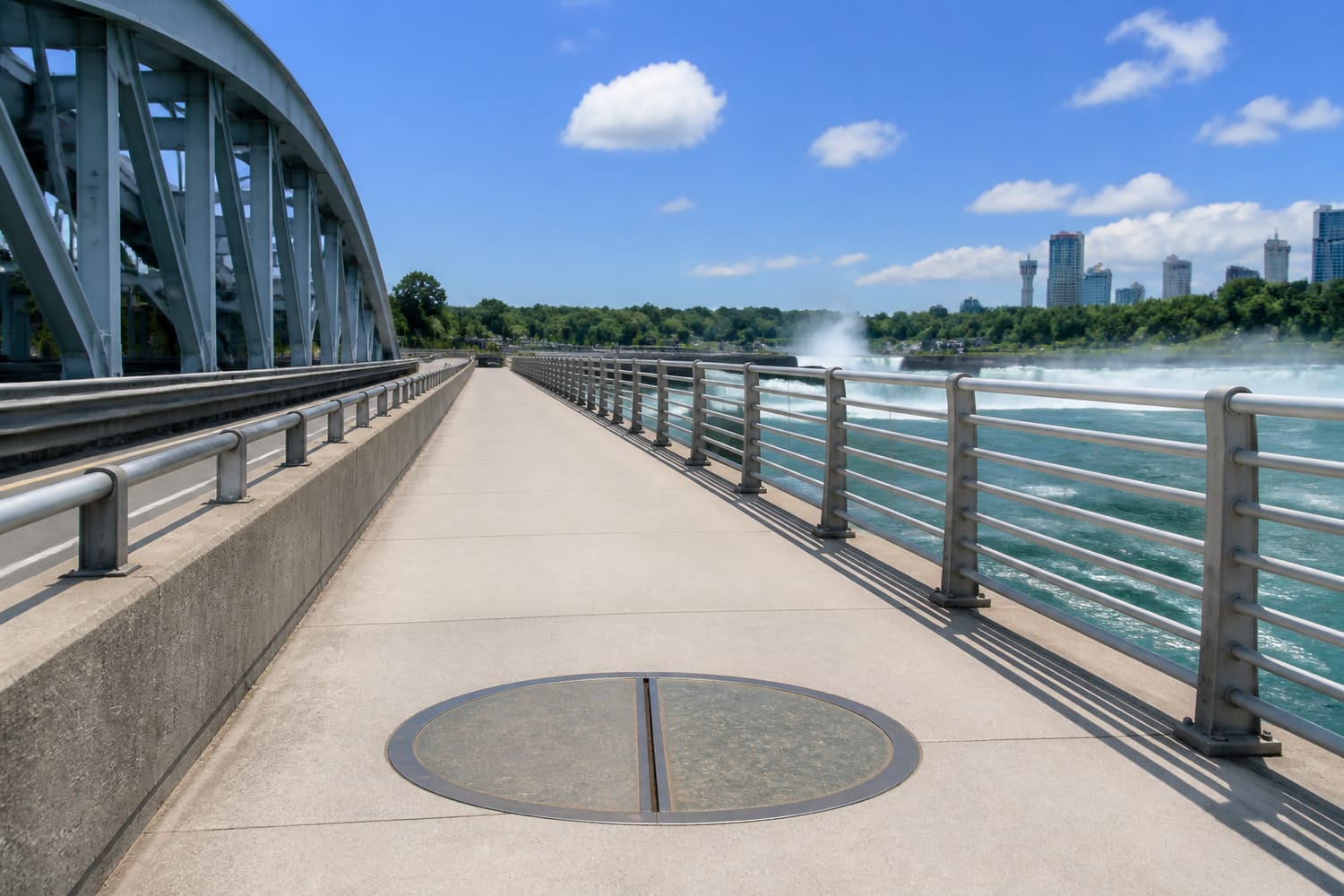
Few border crossings offer scenery as dramatic as the Rainbow Bridge, connecting Niagara Falls, New York, with Niagara Falls, Ontario. The bridge’s pedestrian walkway provides expansive views of the Niagara River and the famous waterfalls.
A plaque near the middle identifies the international boundary, creating a memorable place to pause briefly with one foot in each country. Unlike an informal roadside marker, this is a functioning port of entry. Pedestrians must carry the necessary documents, pass through immigration, and check current toll and crossing information before setting out.
Baarle-Nassau and Baarle-Hertog, the Netherlands and Belgium
In Baarle, the border does not merely divide two towns. It twists through streets, shops, restaurants, and buildings in an extraordinary patchwork of Dutch and Belgian territory. Baarle-Hertog consists of Belgian enclaves surrounded by the Dutch municipality of Baarle-Nassau, with several Dutch counter-enclaves inside the Belgian sections.
The boundaries are marked with pavement crosses, metal studs, and painted lines. Following the official Baarle enclave route, visitors can cross between Belgium and the Netherlands repeatedly—and pose directly over a marked frontier without leaving the town center.
Hotel Arbez, France and Switzerland
Hotel Arbez in La Cure offers a border experience without requiring a mountain hike or bridge crossing. The France–Switzerland boundary runs through the hotel, passing between rooms and across interior spaces.
Guests may eat, climb the stairs, or sleep while shifting between the two countries. The hotel even promotes the possibility of resting with your head in one nation and your feet in another. Its Alpine setting near Les Rousses makes the property more than a geographical curiosity—it is also a convenient base for exploring the Jura Mountains.
Europe Square, Italy and Slovenia
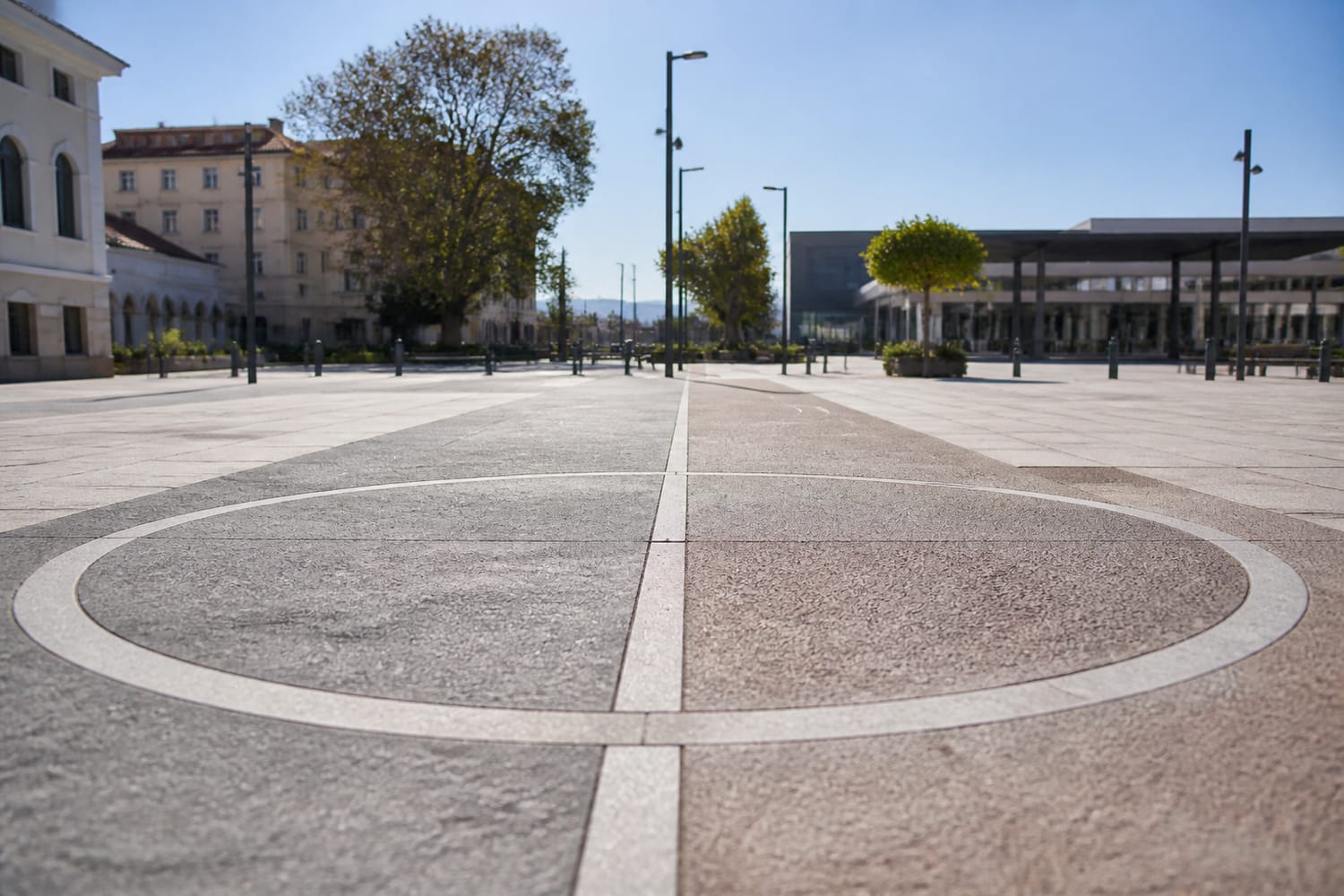
Known as Piazza Transalpina in Italian and Trg Evrope in Slovenian, this public square connects Gorizia, Italy, with Nova Gorica, Slovenia. Once associated with a tightly controlled frontier, it has become a symbol of European cooperation.
A circular mosaic marks the border in front of Nova Gorica Railway Station. Visitors can stand with one foot in Italy and the other in Slovenia, then explore two cities that increasingly function as a shared destination. The redeveloped square reopened in January 2025 ahead of the cities’ joint European Capital of Culture program.
Three-Country Point, the Netherlands, Belgium, and Germany
Why settle for two countries when you can stand where three meet? The Three-Country Point on Vaalserberg brings together the Netherlands, Belgium, and Germany. Border markings around the monument make it possible to step between all three nations within moments.
The site is a developed attraction with walking routes, restaurants, and observation towers nearby. Its wooded landscape also makes it a pleasant stop for travelers interested in mountain landmarks and scenic hikes, even though Vaalserberg is modest compared with Europe’s great Alpine summits.
Tui–Valença International Bridge, Spain and Portugal
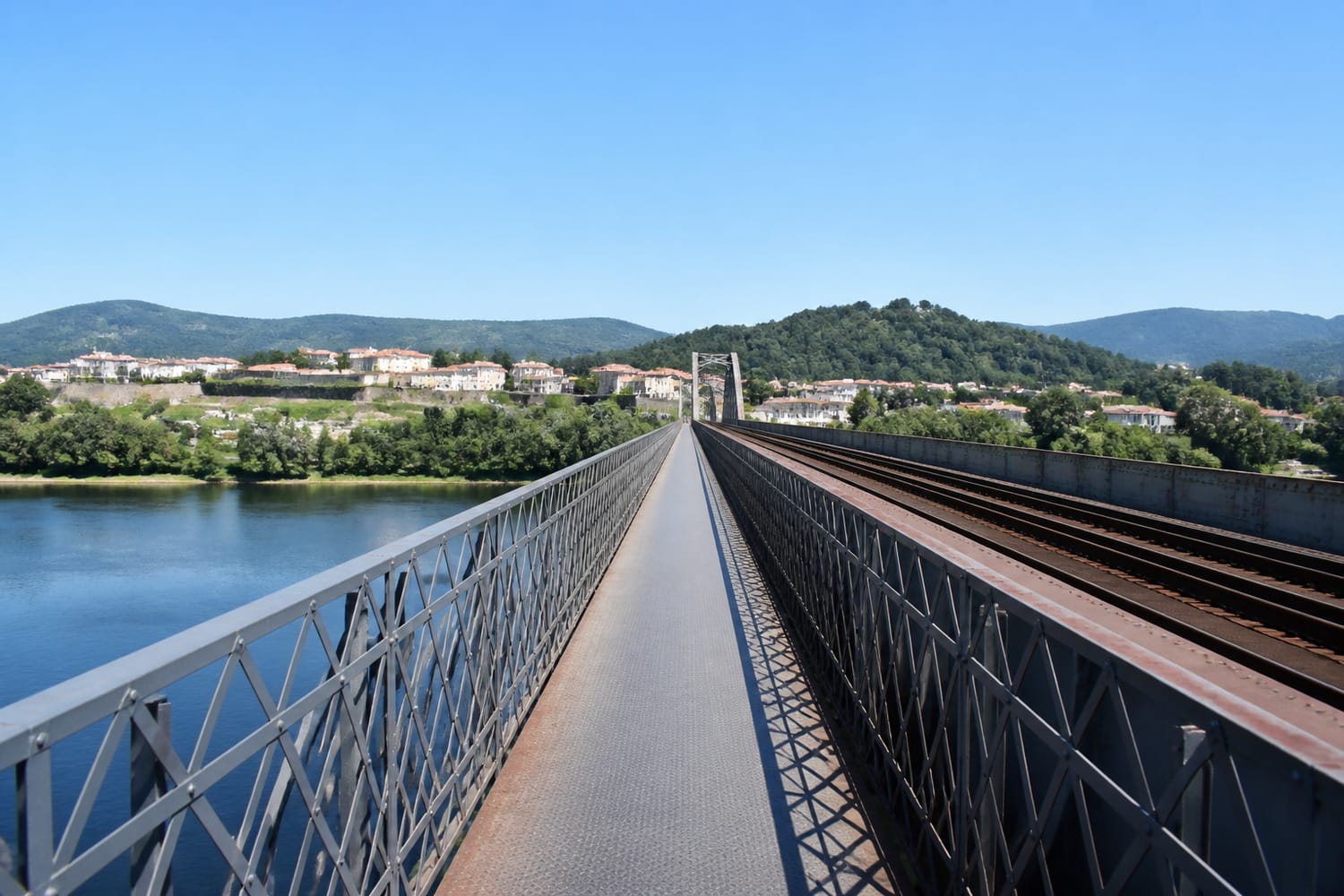
The old iron bridge over the Minho River links Tui in Spain with the fortified Portuguese town of Valença. Inaugurated in 1886, it carries rail traffic above the road level and includes narrow pedestrian walkways along its sides.
Many walkers encounter the bridge while following the Portuguese Way to Santiago de Compostela. Near the middle, travelers pass from Portugal into Spain—or vice versa—while enjoying views of the river and both historic towns. Pause at the boundary only when it is safe and avoid obstructing other pedestrians.
Friendship Bridge, Poland and the Czech Republic
The Olza River divides Cieszyn in Poland from Český Těšín in the Czech Republic, but the Friendship Bridge reconnects their historic centers. Walking across it feels less like leaving one country and more like exploring two halves of a single community.
The present bridge dates from 1953, although crossings have existed near this location since medieval times. The international boundary lies over the river, so travelers can stand at the bridge’s midpoint between Poland and the Czech Republic before continuing into streets shaped by shared Silesian history.
Three-Country Cairn, Finland, Sweden, and Norway
Deep in the Nordic landscape near Kilpisjärvi, the Three-Country Cairn marks the meeting point of Finland, Sweden, and Norway. A wooden walkway circles the yellow concrete marker, enabling visitors to move through three countries in seconds.
Reaching it is part of the adventure. The Three-Country Cairn hiking route through Malla Strict Nature Reserve covers just over 20 kilometers round trip in summer. Winter visitors may arrive across frozen Lake Kilpisjärvi with an organized excursion. Conditions can be demanding, so appropriate clothing and preparation are essential.
Cross the Line Responsibly
Border landmarks turn abstract geography into something tangible, but an amusing photograph never overrides immigration rules. Carry your passport where required, check opening hours and seasonal access, and never wander across an unmarked frontier simply because it appears unguarded.
Some of these places are relaxed public squares within the Schengen Area, while others are controlled North American crossings. With sensible planning and respect for local regulations, standing in two countries at once can become one of travel’s most memorable—and trivia-worthy—experiences.