
When Architecture Becomes an Optical Illusion
Some landmarks do more than impress the eye—they deliberately deceive it. Architects have used curved foundations, shrinking columns, painted domes, false corridors, and manipulated proportions to make buildings appear taller, straighter, deeper, or more symmetrical than they really are. These visual tricks prove that great architecture is partly about construction and partly about perception.
The Parthenon, Athens
The Parthenon looks like a masterpiece of straight lines and mathematical precision, but almost nothing about it is perfectly straight. Its platform curves gently upward, while the columns swell slightly in the middle through a technique known as entasis. Corner spacing and decorative elements were also subtly adjusted.
These refinements soften the heaviness of the Doric style and give the temple its famously balanced appearance. The result is an ancient building that seems more regular than its actual measurements suggest. The official Acropolis restoration service explains the Parthenon’s architectural refinements in greater detail.
The Taj Mahal, Agra
Approach the Taj Mahal through its monumental gateway and something strange happens: the mausoleum initially appears enormous and surprisingly close. As you walk toward it, however, it seems to shrink and move farther away.
The complex contains other carefully planned visual effects. Its four minarets appear perfectly vertical but lean slightly outward, creating aesthetic balance while directing them away from the central tomb. Changing sunlight also transforms the marble from pinkish gray to brilliant white and warm gold. The Smithsonian’s guide to the Taj Mahal’s secrets reveals more of its ingenious design.
Palazzo Spada, Rome
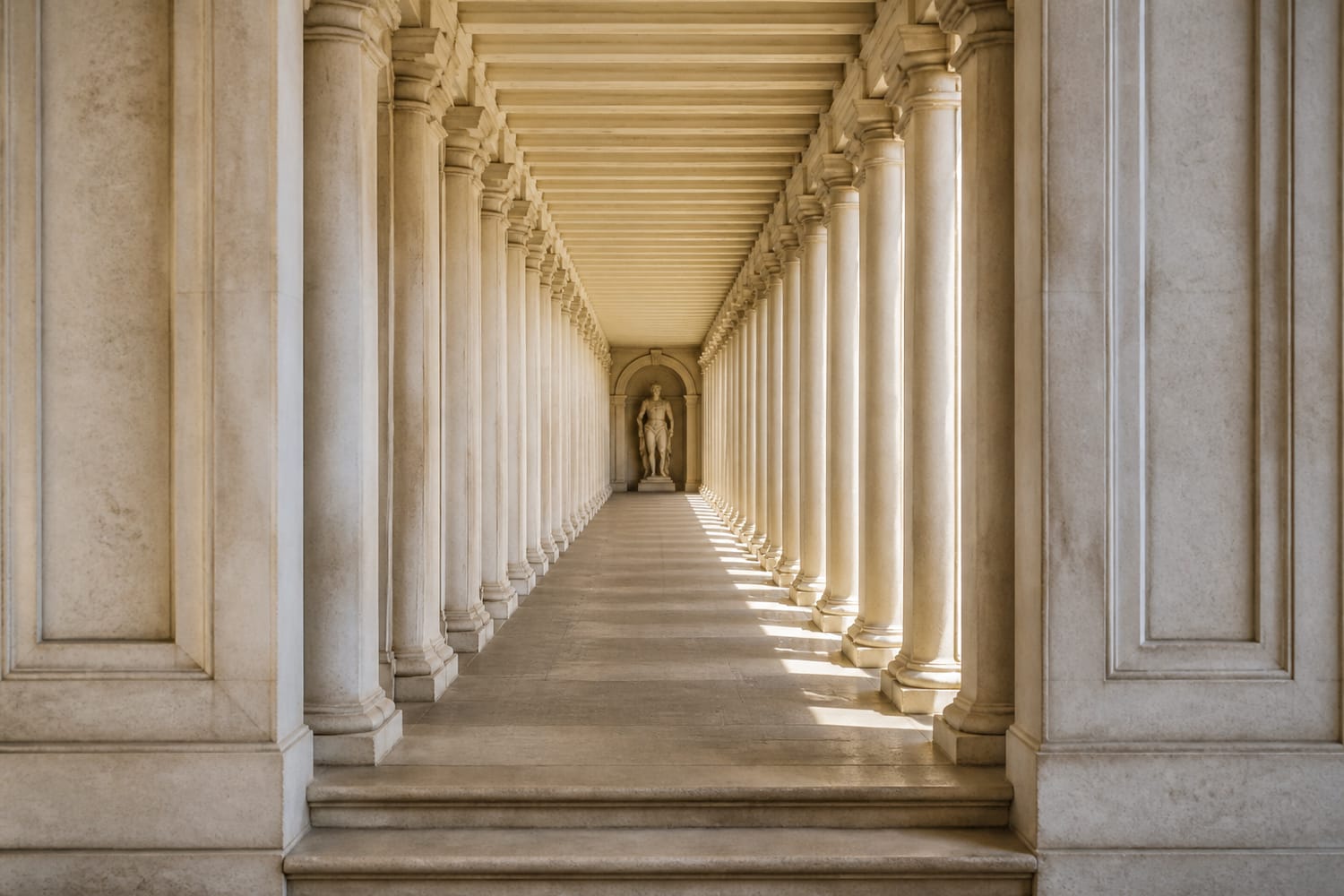
A colonnaded passage at Palazzo Spada appears to stretch deep into the distance, ending with what looks like a life-size warrior statue. In reality, the gallery is less than nine meters long, and the figure at the end is remarkably small.
Baroque architect Francesco Borromini created the illusion by gradually reducing the columns’ height, narrowing the passage, raising the floor, and lowering the ceiling. The converging features fool the brain into exaggerating the corridor’s depth. The official Galleria Spada description of Borromini’s forced-perspective gallery calls it a warning that worldly greatness may be nothing more than appearance.
St. Peter’s Square, Vatican City
Gian Lorenzo Bernini’s sweeping colonnades seem to contain a forest of columns surrounding St. Peter’s Square. Yet two small marble markers reveal the secret behind the arrangement.
Stand on either marker, and the four rows suddenly line up so precisely that they appear to become a single row. Take a few steps sideways, and the hidden columns reappear. Bernini arranged the 284 columns radially, turning movement through the square into a changing visual performance.
Sant’Ignazio Church, Rome
Visitors entering Sant’Ignazio often look up and see a grand dome rising above the church. The only problem is that the dome does not exist.
The apparently three-dimensional structure is a painting on a flat canvas created by Andrea Pozzo. From a golden marker on the floor, its perspective is convincing enough to resemble real architecture. Walk away from that viewing point, however, and the dome begins to warp and flatten. Pozzo also painted the nave ceiling so its architecture appears to open toward an endless sky.
It is one of many details that reward travelers who search for hidden features in famous landmarks.
Teatro Olimpico, Vicenza
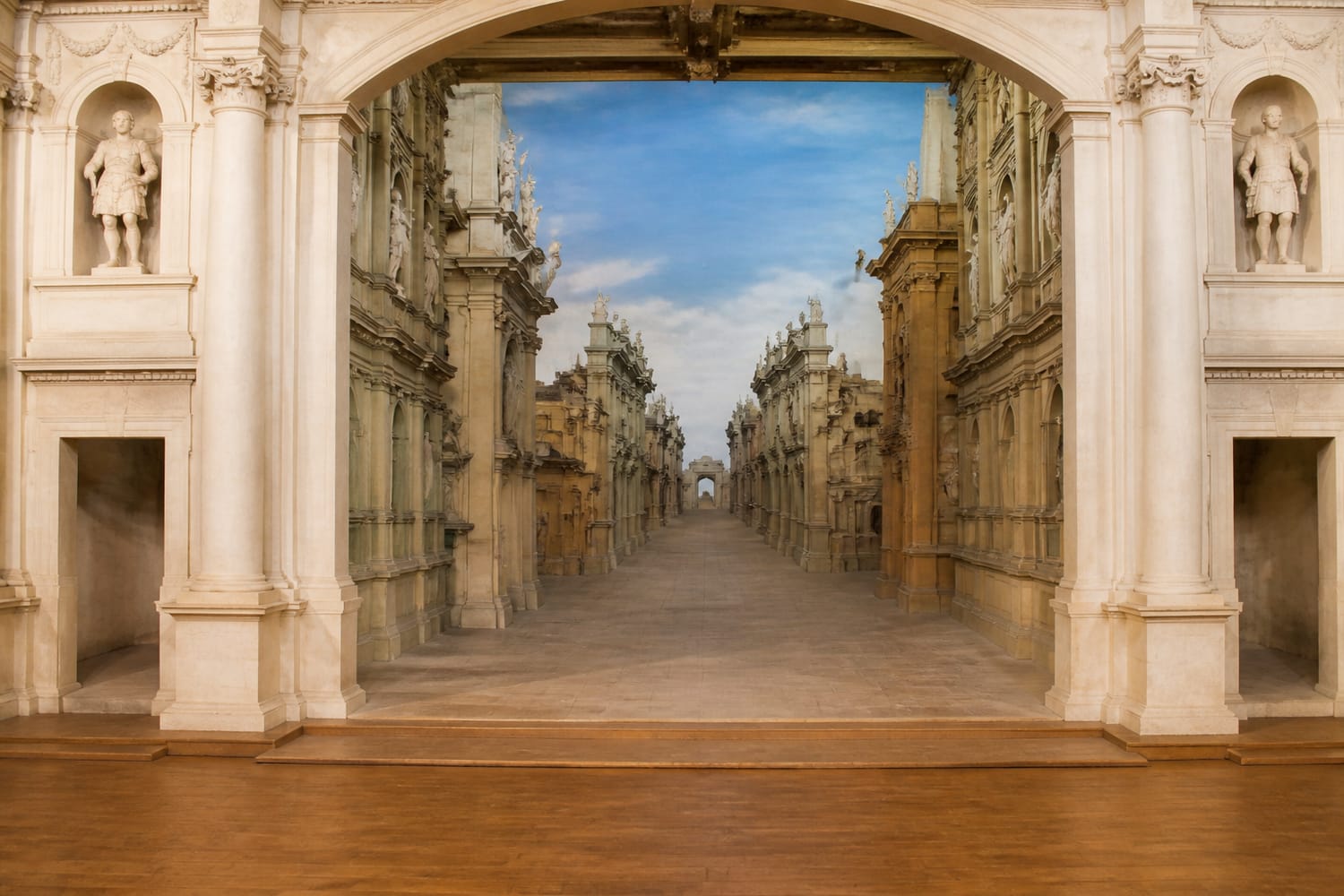
The stage of Teatro Olimpico appears to open onto long streets extending through the ancient city of Thebes. Those streets are actually shallow wooden sets contained within the theater.
Designed by Vincenzo Scamozzi, the scenery uses sharply converging lines, rising floors, and increasingly small architectural details to simulate great distance. The illusion works best from the central seats, where the miniature avenues look like full-scale streets disappearing toward a distant horizon. These permanent scenes transform a confined interior into an apparently expansive city.
Potemkin Stairs, Odesa
The Potemkin Stairs were designed as a monumental entrance connecting Odesa with its port. Their unusual proportions manipulate how visitors experience the climb.
The staircase becomes much wider toward the bottom, although perspective makes its sides appear nearly parallel when viewed from above. From the base, the landings are hidden, leaving the steps to form what seems like one enormous, uninterrupted climb. Seen from the top, the steps are less prominent and the landings dominate, producing a completely different impression.
Sleeping Beauty Castle, Disneyland
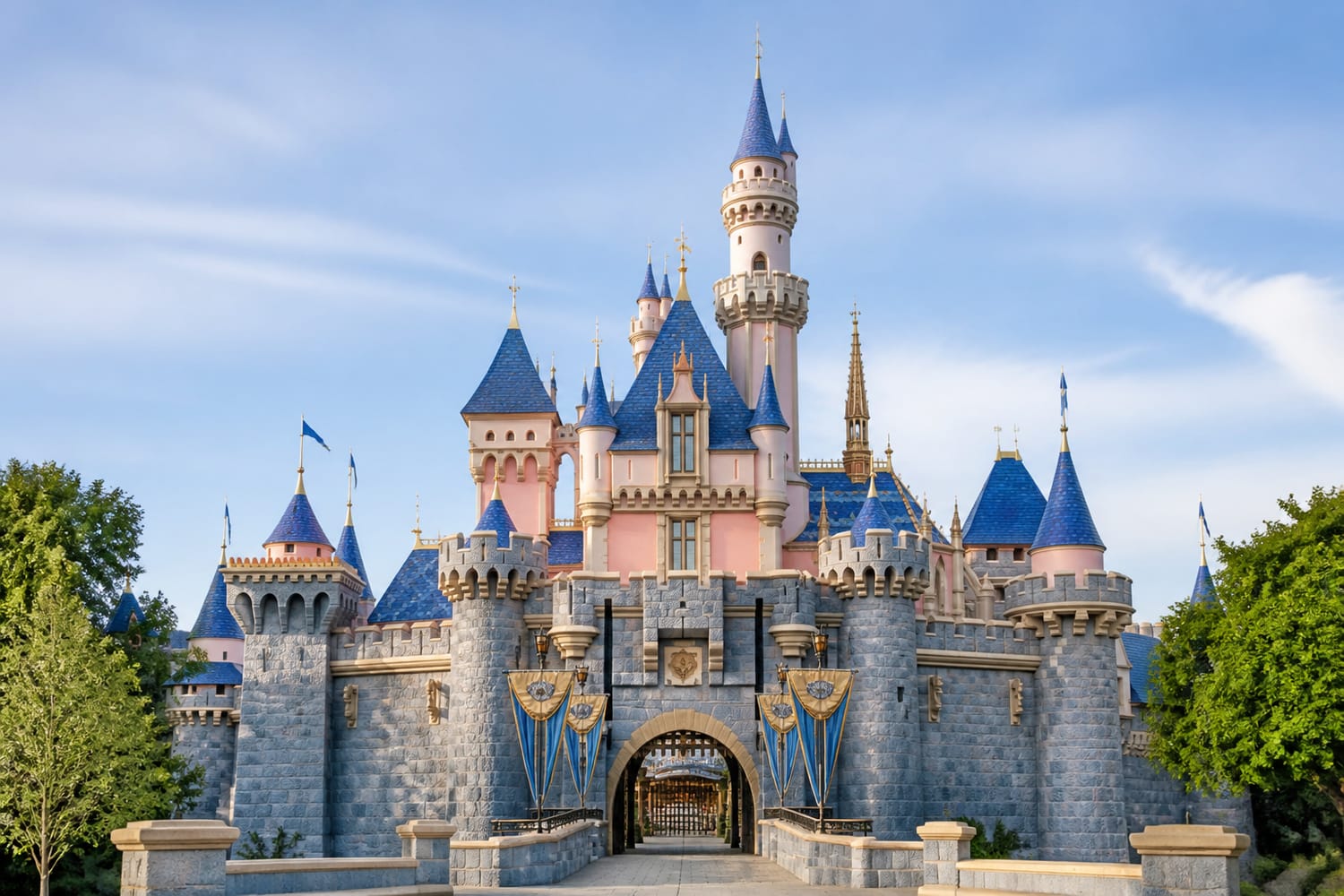
Disneyland’s Sleeping Beauty Castle looks far taller than its actual 77 feet. Disney’s designers achieved this through forced perspective, making architectural elements progressively smaller toward the top.
Stones, windows, roofs, and towers decrease in scale as they rise, encouraging the brain to interpret the upper sections as farther away. That apparent distance makes the castle seem larger and more imposing without sacrificing its friendly, storybook character. It is a modern example of the same perspective principles used by Renaissance and Baroque architects.
For more seemingly impossible structures, explore Tour Trivia’s look at ancient architectural wonders and their construction.
Sagrada Família, Barcelona
Inside the Sagrada Família, stone appears to transform into a living forest. Antoni Gaudí’s inclined, twisting columns branch near the ceiling like enormous trees, while openings allow colored light to filter through the “canopy.”
The visual effect makes the interior feel simultaneously taller, lighter, and more organic than conventional masonry architecture. Double-twist columns guide the eye upward, and branching supports disguise the transition between structural columns and vaults. Visitors may understand that they are inside a basilica, but their eyes insist they have entered a glowing stone woodland.
Piazza del Campidoglio, Rome
Michelangelo inherited an awkward hilltop space surrounded by buildings positioned at inconvenient angles. Instead of fighting those irregularities, he incorporated them into a slightly trapezoidal square.
The angled façades and radiating pavement pattern direct attention toward the Palazzo Senatorio, visually pulling the separate structures into a unified composition. The oval design around the central statue further disguises the plaza’s uneven geometry. What appears to be a harmonious, orderly civic space is actually a masterful response to an irregular site.
Seeing Famous Places Differently
These landmarks remind us that architecture is not always what it seems. A flat ceiling becomes a dome, a short corridor becomes a grand avenue, and a compact castle rises like a towering fortress.
When visiting famous places, change your position, study the lines, and compare photographs from different angles. As Tour Trivia’s exploration of landmarks that are not what they seem demonstrates, the most memorable travel discoveries often begin when you stop trusting your eyes.