
When Famous Places Change Their Look
Landmarks may seem permanent, but their appearances are surprisingly fluid. Metal oxidizes, paint schemes fall out of fashion, pollution stains stone, and ancient pigments disappear. Some color changes happen accidentally; others result from restoration or celebration. These ten landmarks prove that even the world’s most recognizable sights can look dramatically different across the centuries.
The Statue of Liberty: Copper Brown to Sea Green
When the Statue of Liberty was dedicated in 1886, its copper exterior resembled a shiny brown penny rather than the green figure recognized today. Exposure to oxygen, moisture, salt, and atmospheric chemicals gradually produced a protective layer called a patina.
By the early 20th century, green had spread across much of the statue. Although officials once considered painting it, the patina was ultimately preserved because it protects the underlying copper from further corrosion. Lady Liberty’s transformation is now one of the most famous examples of chemistry reshaping a landmark.
The Eiffel Tower: From Venetian Red to Yellow-Brown
Paris’s Iron Lady has worn numerous colors since its construction. Its prefabricated pieces were initially coated in Venetian red, followed by reddish brown for the 1889 World’s Fair. Later paint schemes included ochre brown, yellow, yellow-brown, reddish brown, and the bronze-toned “Eiffel Tower Brown.”
The changes were not purely cosmetic. Paint protects the wrought iron from rust caused by rain and air. During its 20th major painting campaign, the tower returned to the yellow-brown shade selected by Gustave Eiffel in 1907. The Eiffel Tower’s official color history reveals just how carefully its appearance has been managed.
Tower Bridge: Chocolate Brown to Patriotic Colors
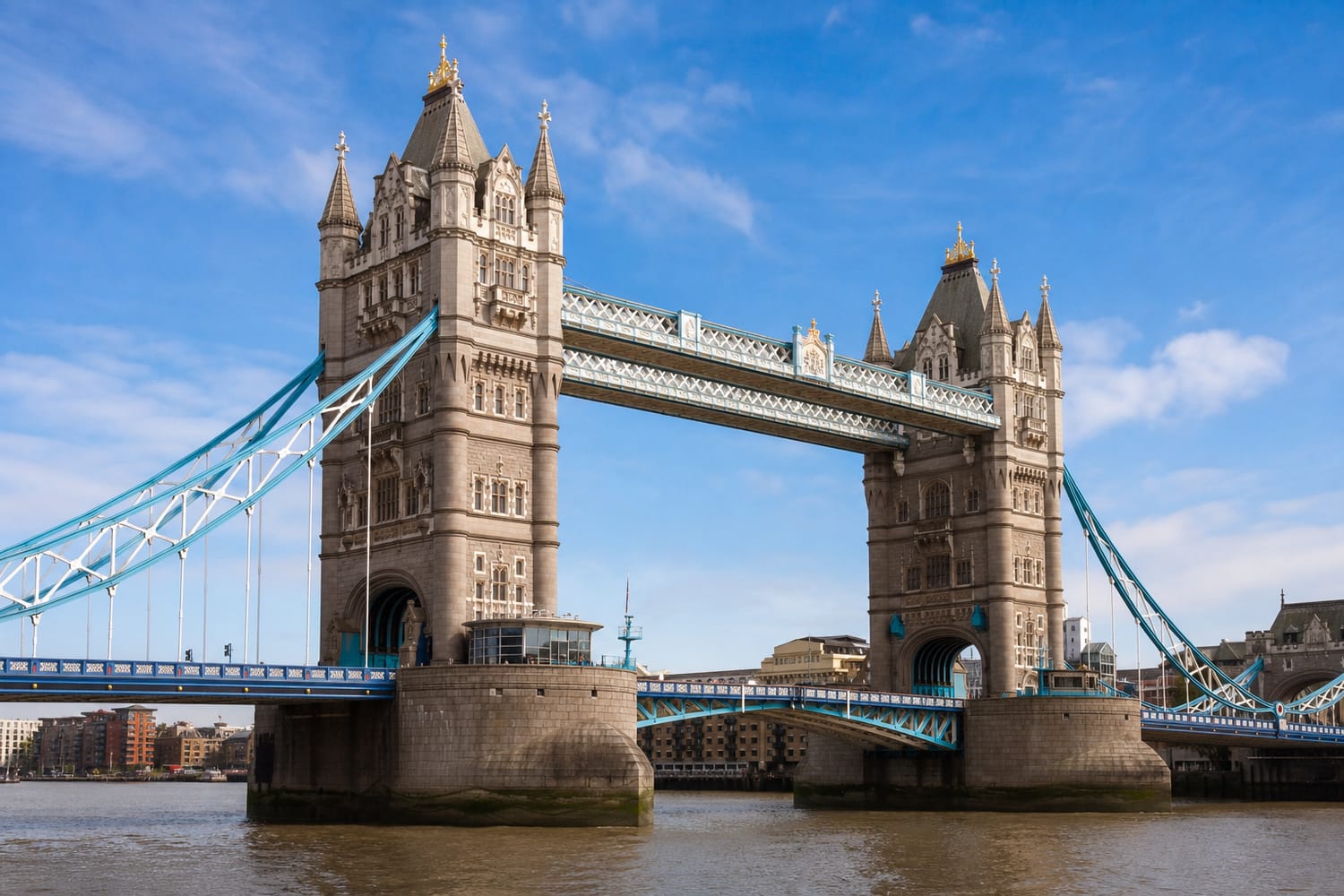
Tower Bridge’s blue suspension elements may look inseparable from its identity, but the Victorian landmark originally featured “bright chocolate” brown metalwork. Before World War II, battleship gray paint was added as camouflage, giving the bridge a far more subdued appearance.
In 1977, Tower Bridge received its familiar red, white, and blue scheme to celebrate Queen Elizabeth II’s Silver Jubilee. Its changing palette reflects both practical concerns and national celebrations—one reason it deserves a place among the world’s most fascinating architectural bridges and their stories.
Big Ben: Blue to Black and Back Again
The name “Big Ben” technically belongs to the great bell, although it is commonly used for the entire Elizabeth Tower. For generations, visitors knew its clock hands and dial frames as black. However, research conducted during the tower’s extensive restoration revealed an earlier color beneath the accumulated paint.
The original scheme featured Prussian blue, gold, and accents inspired by the Union flag. Parliament believes black paint was introduced during the 1930s to disguise pollution staining. The restored Prussian blue clock dials were fully unveiled in 2022.
The White House: Natural Sandstone to Brilliant White
Despite a persistent legend, the White House was not first painted white to conceal damage from the British burning of Washington in 1814. Its porous sandstone walls received a lime-based whitewash in 1798, years before the fire.
The coating helped prevent moisture from entering the stone, freezing, and causing cracks. Whitewash was refreshed repeatedly until white lead paint was applied in 1818. What began as practical weatherproofing eventually became the building’s defining visual feature—and even inspired its official name.
The Taj Mahal: White Marble Under Environmental Pressure
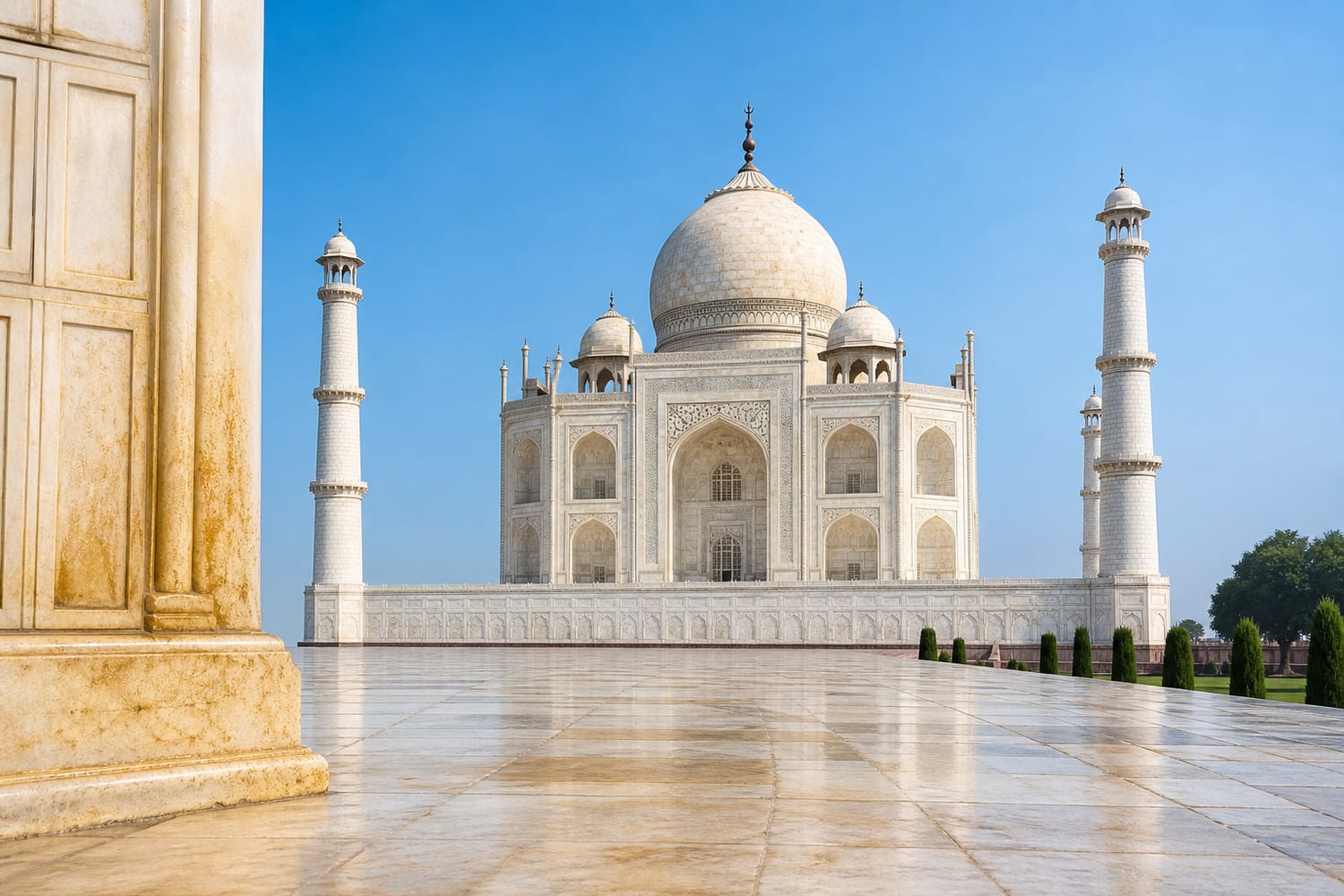
The Taj Mahal is celebrated for marble that seems to shift from pale pink at sunrise to brilliant white in daylight and gold beneath the moon. Unfortunately, some less romantic color changes have appeared as pollution, dust, insects, moisture, and biological growth affect its surface.
Sections of the monument have developed yellowish, brown, or green discoloration. Conservators use careful cleaning methods, including treatments involving fuller’s earth, to draw grime from the marble without damaging it. The battle to preserve its luminous appearance shows that landmark conservation often depends on protecting the surrounding environment.
The Great Pyramid: Gleaming White to Sandy Brown
The Great Pyramid of Giza now appears rugged and sandy brown, but its original exterior was considerably brighter. Builders covered its core with finely cut casing stones made from smooth white limestone.
Much of that outer layer was later removed and reused, exposing the rougher blocks beneath. A surviving Great Pyramid casing stone demonstrates how different the monument once looked. In Egyptian sunlight, the complete white casing would have made the pyramid appear crisp, smooth, and dazzling from a distance.
The Parthenon: From Vivid Pigments to Pale Marble
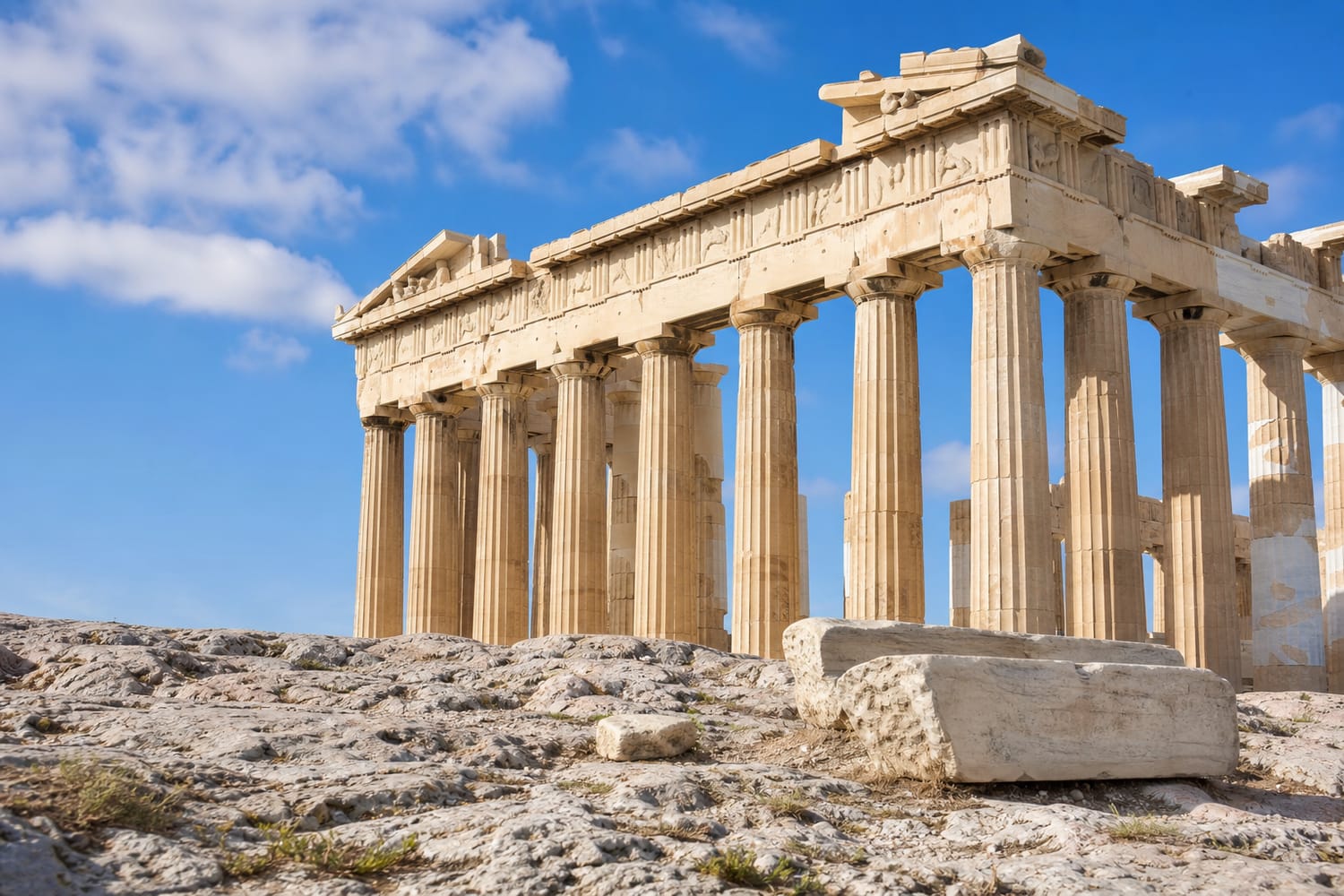
Modern visitors often associate classical Greece with elegant white marble. In reality, the Parthenon and its sculptures were originally decorated with color. Scientific analysis has detected remnants of pigments, including Egyptian blue, on surviving sculptures.
Centuries of weathering, warfare, pollution, and cleaning removed most visible paint, leaving the cream-colored stone familiar today. The British Museum’s research into Parthenon pigments challenges the popular image of an entirely white ancient world. The temple joins many other ancient architectural wonders whose surviving appearance tells only part of their story.
The Great Sphinx: A Painted Guardian Turned Limestone Beige
The Great Sphinx of Giza was not always the muted color of desert limestone. Traces of red pigment found on its face suggest that its features were once painted. Researchers have also identified evidence of blue and yellow elsewhere on the monument.
Wind, blowing sand, moisture, burial, excavation, and thousands of years of exposure gradually erased nearly all that decoration. The colorful Sphinx would have appeared much more lifelike—and perhaps more intimidating—than the weathered guardian travelers encounter today.
The Terracotta Army: Bright Soldiers Faded to Gray
China’s Terracotta Warriors are famous for their earthy gray-brown surfaces, yet the soldiers were originally painted in bold shades of red, green, purple, yellow, blue, pink, and black. Their clothing, armor, hair, and faces included carefully differentiated details.
The pigments survived underground because moisture kept the underlying lacquer stable. Once excavated and exposed to dry air, that lacquer could curl and flake within minutes, carrying the paint away with it. Modern conservation techniques now aim to stabilize newly uncovered colors before they vanish.
Color Is Part of the Story
These transformations reveal that landmarks are not frozen in time. Their colors record chemical reactions, environmental damage, changing tastes, political celebrations, and evolving conservation methods. Looking beyond the familiar postcard image can uncover a structure’s earlier lives—and make even the world’s best-known monuments feel new again.