
Some landmarks are famous because they reached perfection. Others fascinate us because they never did. Across the world, unfinished monuments, churches, towers, palaces, and memorials continue to draw travelers not despite their incompleteness, but partly because of it. Their missing domes, empty niches, uneven walls, or abandoned plans tell stories of ambition, war, money problems, changing tastes, and sheer human stubbornness.
For curious travelers, these places offer something especially powerful: a glimpse into history while it was still “under construction.” At Tour Trivia, we love landmarks with a backstory, and unfinished landmarks often have the best ones. Here are ten famous sites that were never fully completed—and why they still amaze us today.
Sagrada Família, Spain
Barcelona’s Sagrada Família may be the world’s most famous unfinished landmark. Designed by Antoni Gaudí, construction began in 1882 and continues more than a century later. Gaudí transformed the project into an astonishing blend of Gothic tradition, natural forms, and deeply symbolic religious architecture.
The reason it remained unfinished for so long is a mix of scale, funding, and history. Gaudí knew he would not live to see it completed, famously saying his client—God—was not in a hurry. After his death in 1926, the Spanish Civil War damaged models and plans, slowing progress further.
Yet its unfinished state has become part of its identity. Visitors can see old and new stonework side by side, watch cranes hover over spires, and experience a masterpiece still evolving in real time.
Crazy Horse Memorial, United States
In the Black Hills of South Dakota, the Crazy Horse Memorial is a mountain carving of the Oglala Lakota leader Crazy Horse. Work began in 1948, led by sculptor Korczak Ziolkowski, and the project remains far from finished.
The planned monument is enormous: when completed, it is intended to show Crazy Horse riding a horse and pointing into the distance. Funding has been a major factor in its slow progress, as the project has relied largely on private donations rather than federal money.
Even unfinished, the memorial is breathtaking. The completed face alone is massive, and the surrounding museum and cultural center help visitors understand Native American history, resilience, and identity. Its incompleteness also raises important questions about memory, representation, and the long timelines required for truly monumental art.
National Monument of Scotland, Scotland
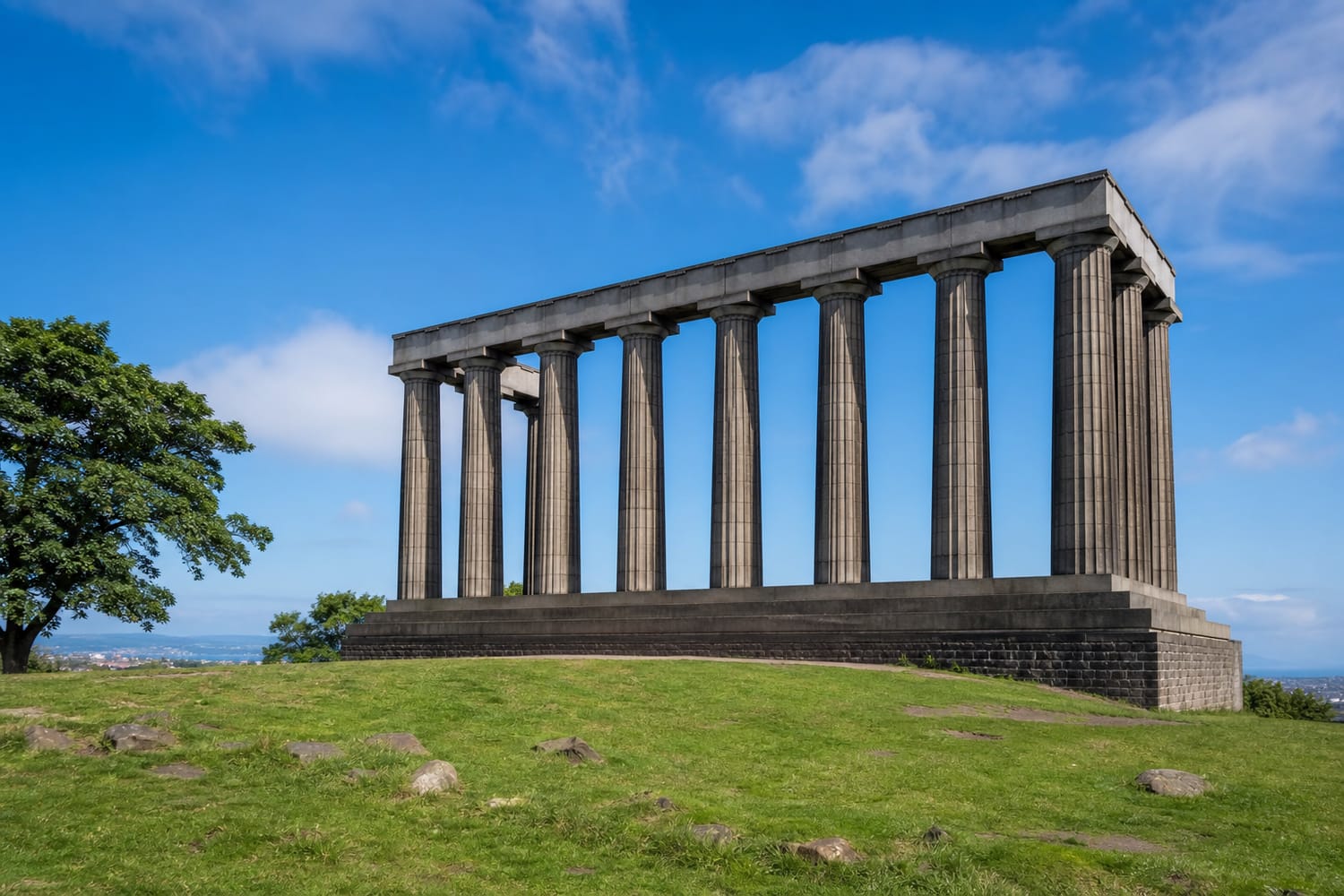
Perched on Calton Hill in Edinburgh, the National Monument of Scotland looks like an ancient Greek ruin. In reality, it was never completed. Intended as a memorial to Scottish soldiers and sailors who died in the Napoleonic Wars, construction began in 1826.
The design was inspired by the Parthenon in Athens, but only a row of columns and part of the structure were built before funds ran out in 1829. Soon, locals began calling it “Scotland’s Disgrace,” a nickname that has followed it for nearly two centuries.
Today, however, the unfinished monument is one of Edinburgh’s most atmospheric sights. Its stark columns frame panoramic views of the city, and its incomplete form gives it a romantic, mysterious quality. What began as a financial failure has become an iconic part of the skyline.
Cologne Cathedral, Germany
Cologne Cathedral is often considered a completed masterpiece, but its history is really one of long interruption. Construction began in 1248, but work stopped in the 16th century, leaving the cathedral unfinished for hundreds of years.
For generations, a medieval crane stood on the incomplete south tower, becoming a strange symbol of the city. Political changes, lack of funds, and shifting architectural tastes all contributed to the delay. Construction resumed in the 19th century during a wave of renewed interest in Gothic architecture, and the cathedral was finally finished in 1880 according to the original medieval plans.
While it did eventually reach completion, its long unfinished period is central to its legend. Visitors today admire not only its soaring towers and stained glass but also the fact that it represents more than 600 years of persistence.
Siena Cathedral’s Unfinished Nave, Italy
Siena Cathedral is already one of Italy’s great architectural treasures, but its most intriguing feature may be what was never completed. In the 14th century, Siena planned to expand the cathedral into one of the largest churches in the world.
The existing cathedral was to become merely the transept of a much grander structure. Massive walls and arches were begun, but the project was halted by the Black Death in 1348, which devastated Siena’s population and economy. Structural problems also made the plan difficult to continue.
Today, visitors can walk through the unfinished nave, known as the “Facciatone,” and climb it for spectacular views over the city. The abandoned expansion is a haunting reminder of Siena’s medieval ambition—and of how abruptly history can change.
Ajuda National Palace, Portugal
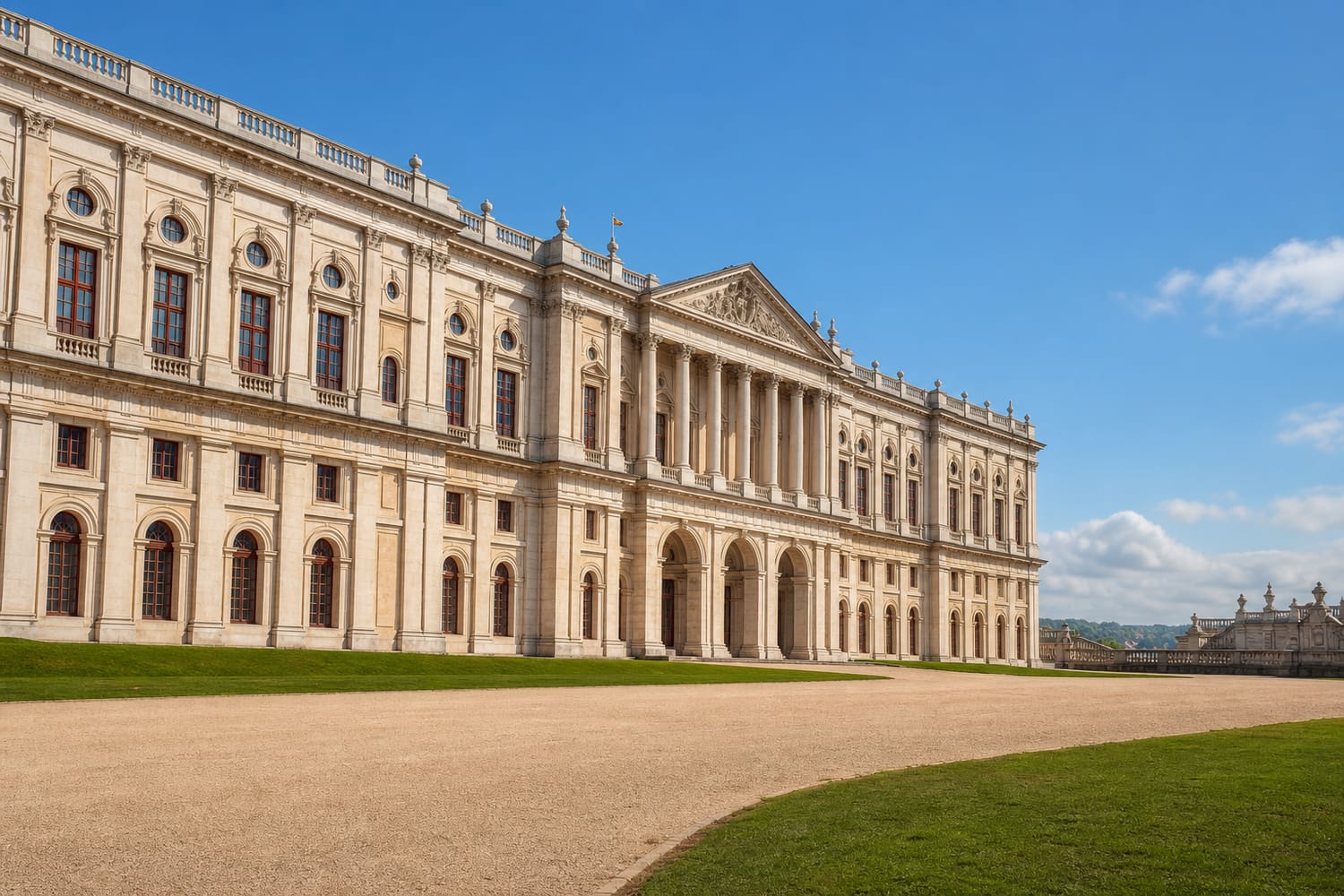
Lisbon’s Ajuda National Palace was intended to be a royal residence on a grand scale. Construction began in the late 18th century after the devastating 1755 earthquake reshaped the city and forced the royal family to seek safer ground.
The palace was never fully completed due to political upheaval, budget issues, invasions, and changing royal priorities. Portugal’s monarchy faced instability, and later the country became a republic, reducing the need for royal palace construction.
Even unfinished, Ajuda is richly impressive. Its completed interiors include lavish state rooms, chandeliers, tapestries, and royal collections. The palace tells a story not only of architectural ambition, but of a monarchy whose plans were overtaken by history.
Batalha Monastery’s Unfinished Chapels, Portugal
Batalha Monastery is a masterpiece of Gothic and Manueline architecture, built to commemorate Portugal’s victory at the Battle of Aljubarrota in 1385. Most of the monastery was completed, but one of its most famous areas remains unfinished: the Capelas Imperfeitas, or Unfinished Chapels.
These chapels were intended as a royal pantheon, but construction stopped after the death of King Duarte and later shifts in royal attention. The open-air space has no roof, allowing sunlight to pour over intricate stone carvings.
The unfinished chapels are arguably more moving because they are incomplete. Their ornate portals, delicate details, and sky-filled interior create a dramatic contrast between human craftsmanship and the passage of time.
Hassan Tower, Morocco
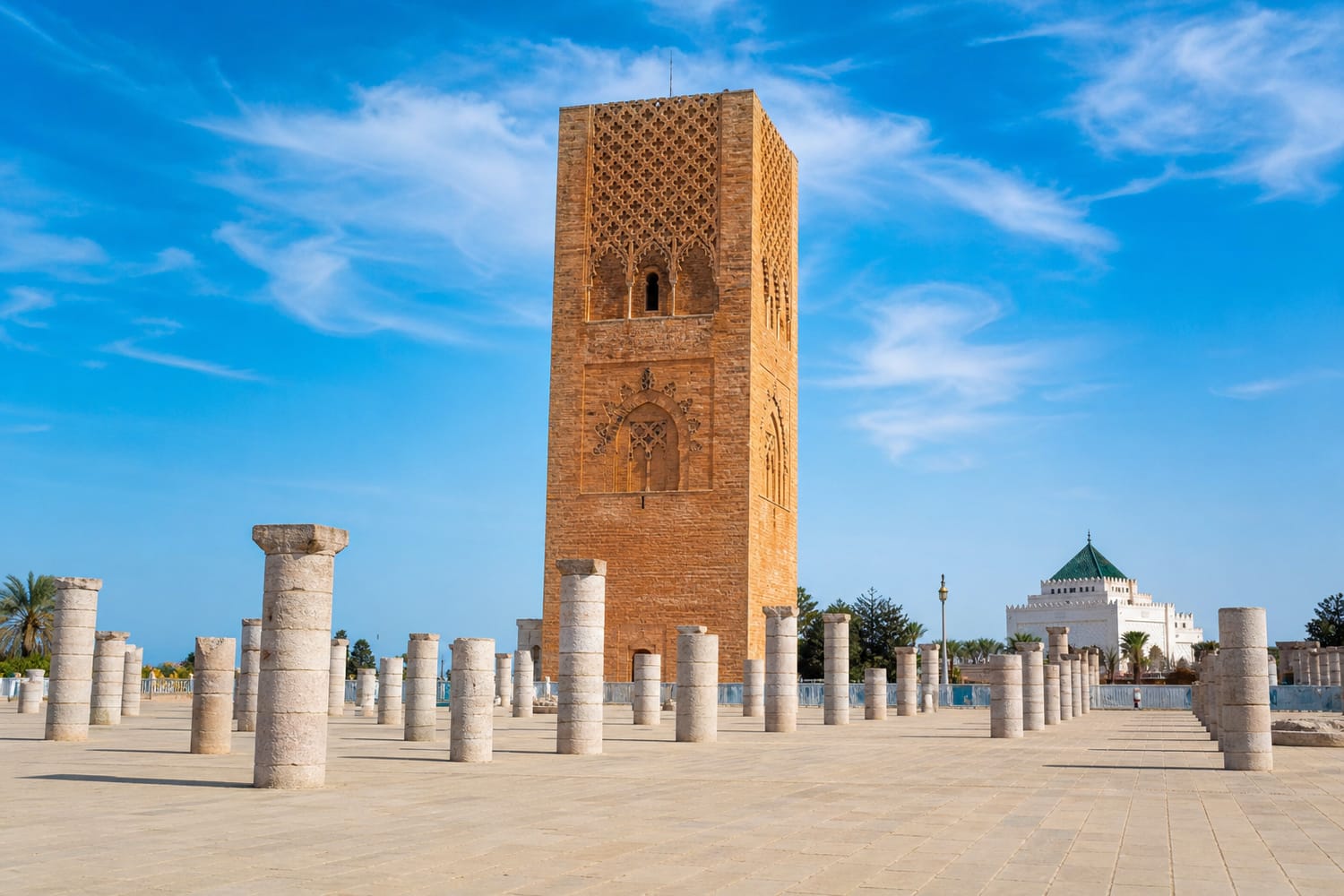
In Rabat, the Hassan Tower stands as the unfinished minaret of an ambitious 12th-century mosque. Commissioned by Caliph Abu Yusuf Yaqub al-Mansur, the mosque was intended to be one of the largest in the world.
Construction stopped after the caliph’s death in 1199. The minaret reached about half its planned height, and the mosque itself was left incomplete. Later earthquakes damaged parts of the site, leaving rows of stone columns scattered across the open plaza.
Today, Hassan Tower is one of Morocco’s most recognizable landmarks. Its red sandstone, geometric decoration, and vast open setting make it unforgettable. The site also includes the Mausoleum of Mohammed V, linking medieval ambition with modern national identity.
Palace of Westminster’s Victoria Tower Gardens Plans, England
The Palace of Westminster in London is famous for Big Ben, the Houses of Parliament, and its dramatic Gothic Revival architecture. But the complex we see today reflects compromises and unfinished ideas from its 19th-century rebuilding.
After a fire destroyed much of the old palace in 1834, architect Charles Barry and designer Augustus Pugin created a monumental plan. While the main palace was completed, certain decorative schemes, interior details, and surrounding urban plans were scaled back or left unrealized due to cost, politics, and the sheer complexity of the project.
Even with these unfinished ambitions, Westminster remains one of the world’s great political landmarks. Its beauty lies partly in the tension between medieval inspiration and Victorian practicality—a reminder that even national symbols are shaped by limits.
Prora, Germany
On the island of Rügen, Prora is a massive seaside complex built by Nazi Germany between 1936 and 1939. It was designed as a holiday resort for thousands of workers through the “Strength Through Joy” program, but it was never completed as intended.
World War II interrupted construction, and the resort never opened for its original purpose. After the war, parts of the complex were used by the East German military, while other sections decayed. In recent years, portions have been converted into apartments, hotels, museums, and hostels.
Prora amazes visitors in a very different way from cathedrals or palaces. Its sheer length and austere design are unsettling, offering a powerful look at propaganda, mass tourism, and the reuse of difficult historical spaces.
Why Unfinished Landmarks Stay With Us
Unfinished landmarks remind us that history is not a neat sequence of completed projects. It is full of interruptions: plagues, wars, bankruptcies, revolutions, deaths, and dreams too large for one lifetime. These places amaze us because they reveal ambition at its most vulnerable.
They also invite imagination. A completed building tells us what was achieved; an unfinished one asks us to picture what might have been. Whether it is a cathedral still rising in Barcelona, a half-built tower in Morocco, or roofless chapels in Portugal, each landmark offers a rare experience: the beauty of possibility frozen in stone.