
When Imperfections Become Attractions
Landmarks are often celebrated as triumphs of careful planning, yet some of their most recognizable qualities were never part of the original vision. Unstable ground, chemical reactions, abandoned ideas, wartime damage, and temporary materials have all shaped the world’s most famous sights. These unexpected details prove that architectural mistakes and historical accidents can become more memorable than perfection.
For more unexpected backstories, explore these surprising secrets of global landmarks.
The Leaning Tower of Pisa’s Famous Tilt
Pisa’s medieval bell tower was designed to stand upright. However, its shallow foundation rested on soft ground composed of clay, sand, and shells. The building began tilting after construction reached its third level in the 12th century.
Later builders attempted to compensate by making one side taller, giving the tower a slightly curved profile without solving the underlying problem. Modern engineers have stabilized the structure while deliberately preserving its lean. What began as a serious construction failure is now the feature every visitor wants to photograph.
The Statue of Liberty’s Green Skin
When the Statue of Liberty was unveiled in 1886, its copper exterior resembled the warm brown of a new penny. Exposure to oxygen, moisture, salt, and pollution gradually produced the blue-green patina familiar today.
The transformation was neither painted nor intended as a decorative effect. There were even proposals to restore the original copper color, but public resistance helped preserve the green coating. Fortunately, the patina also protects the underlying copper from further corrosion. Lady Liberty’s accidental color change became inseparable from her identity.
The Golden Gate Bridge’s Primer-Inspired Color
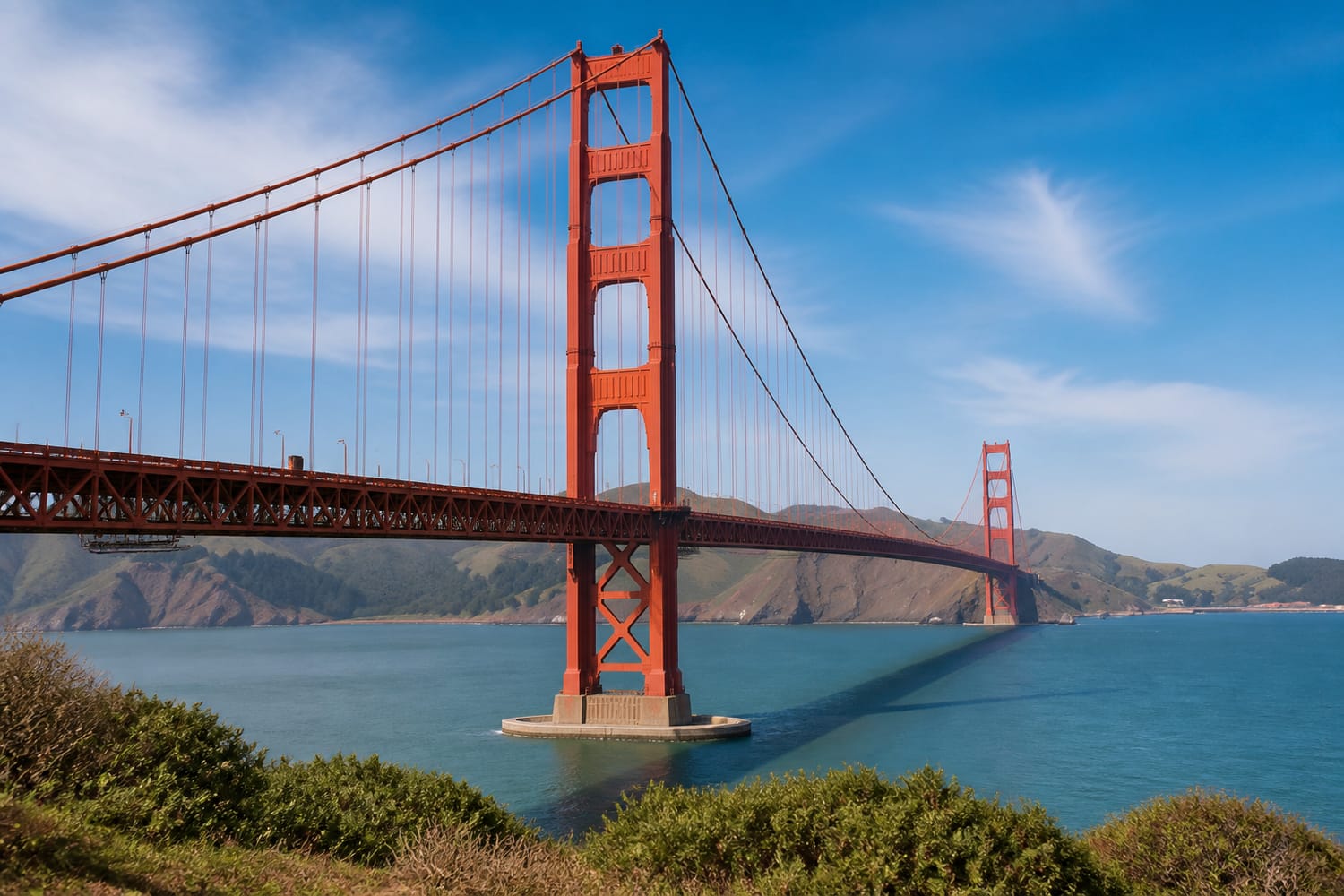
The Golden Gate Bridge could easily have been painted gray, black, or aluminum, as some early proposals suggested. Its steel arrived coated in reddish lead primer, however, and consulting architect Irving Morrow noticed how well that temporary shade complemented the surrounding hills, water, and sky.
Morrow developed a related custom color called International Orange. The final selection was intentional, but the inspiration came from a practical factory coating that was never supposed to define the bridge. The official history of the Golden Gate Bridge’s color reveals how that happy accident influenced one of America’s boldest structures.
The Hollywood Sign’s Missing Word
Los Angeles’ hillside sign originally read “HOLLYWOODLAND.” Erected in 1923, it was a temporary advertisement for a housing development rather than a monument to the movie industry.
As the deteriorating sign was refurbished in 1949, its final four letters were removed so that it represented the wider Hollywood district. This shortened version unintentionally created a stronger and more universal symbol. A disposable real estate billboard became visual shorthand for cinema, ambition, celebrity, and the promise—sometimes misleading—of stardom.
The Eiffel Tower’s Life-Saving Antenna
The Eiffel Tower was built for the 1889 Exposition Universelle and was expected to be dismantled after its 20-year concession expired. Its unlikely survival resulted from an unforeseen second career in communications.
Wireless telegraph experiments demonstrated that the structure made an excellent radio platform. Its antenna and strategic usefulness gave officials a reason to keep it standing. The story of how radio saved the Eiffel Tower shows how a temporary exhibition structure unexpectedly became the enduring symbol of Paris.
The Empire State Building’s Useless Mooring Mast
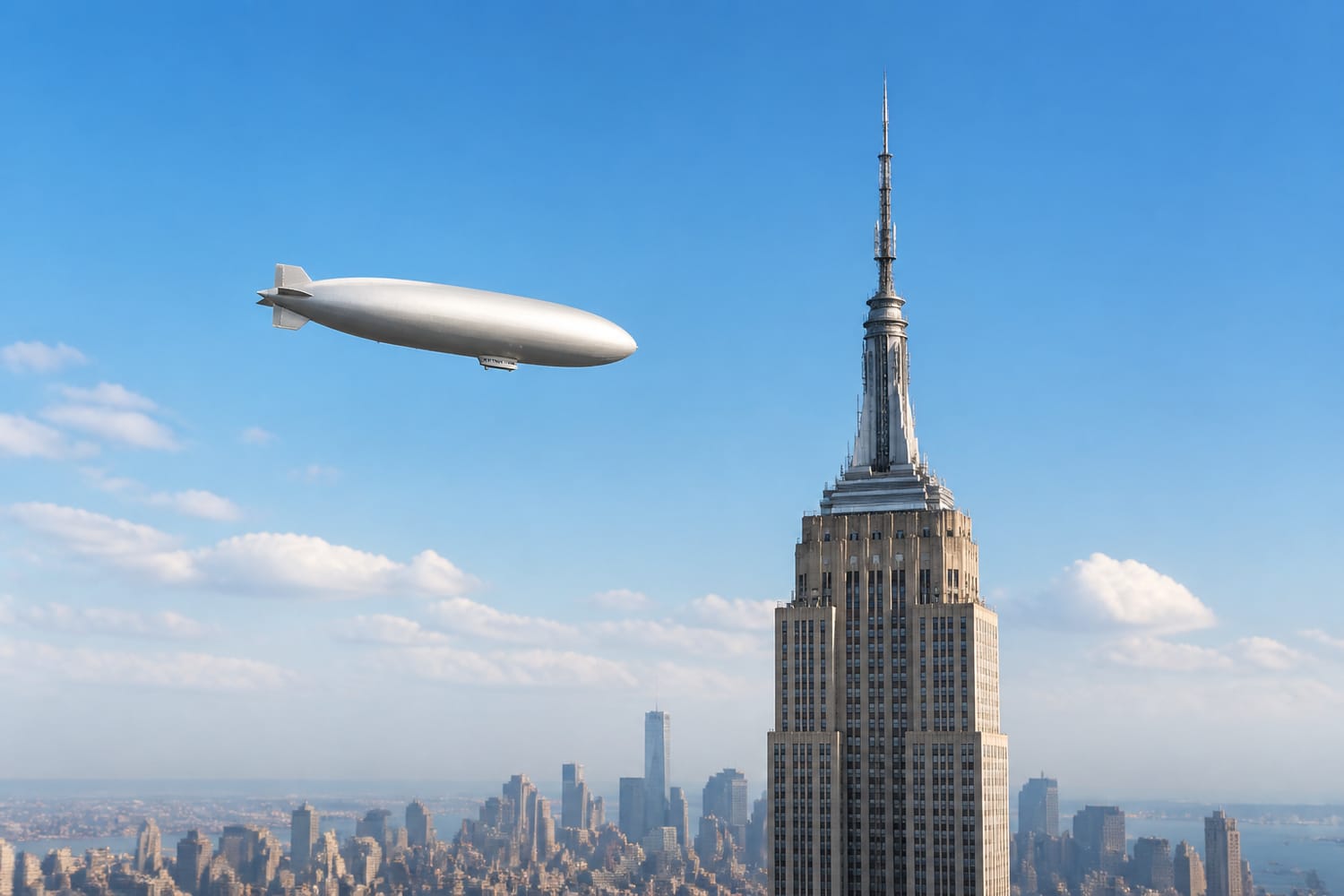
The Empire State Building’s elegant spire was originally promoted as a docking mast for passenger airships. Travelers would theoretically disembark high above Manhattan before descending through the skyscraper.
In practice, strong winds and dangerous updrafts made the scheme unrealistic. The docking plan disappeared, but the mast remained and later supported broadcasting equipment. Far from looking like a failed transportation experiment, the spire completed the building’s graceful Art Deco silhouette. An impractical idea ultimately gave New York one of its most recognizable skyline features.
Mount Rushmore’s Unfinished Appearance
Gutzon Borglum envisioned Mount Rushmore as a more extensive monument, complete with additional carved details and an ambitious Hall of Records. Funding difficulties repeatedly restricted the project, while Borglum’s death in March 1941 and America’s approaching involvement in World War II brought carving to an end.
The monument was declared complete that October, despite its unrealized elements. Today, the smooth presidential faces emerging from rough granite appear deliberately dramatic. The history of Mount Rushmore’s construction demonstrates how an unfinished project acquired a powerful finished identity.
The Colosseum’s Broken Outer Wall
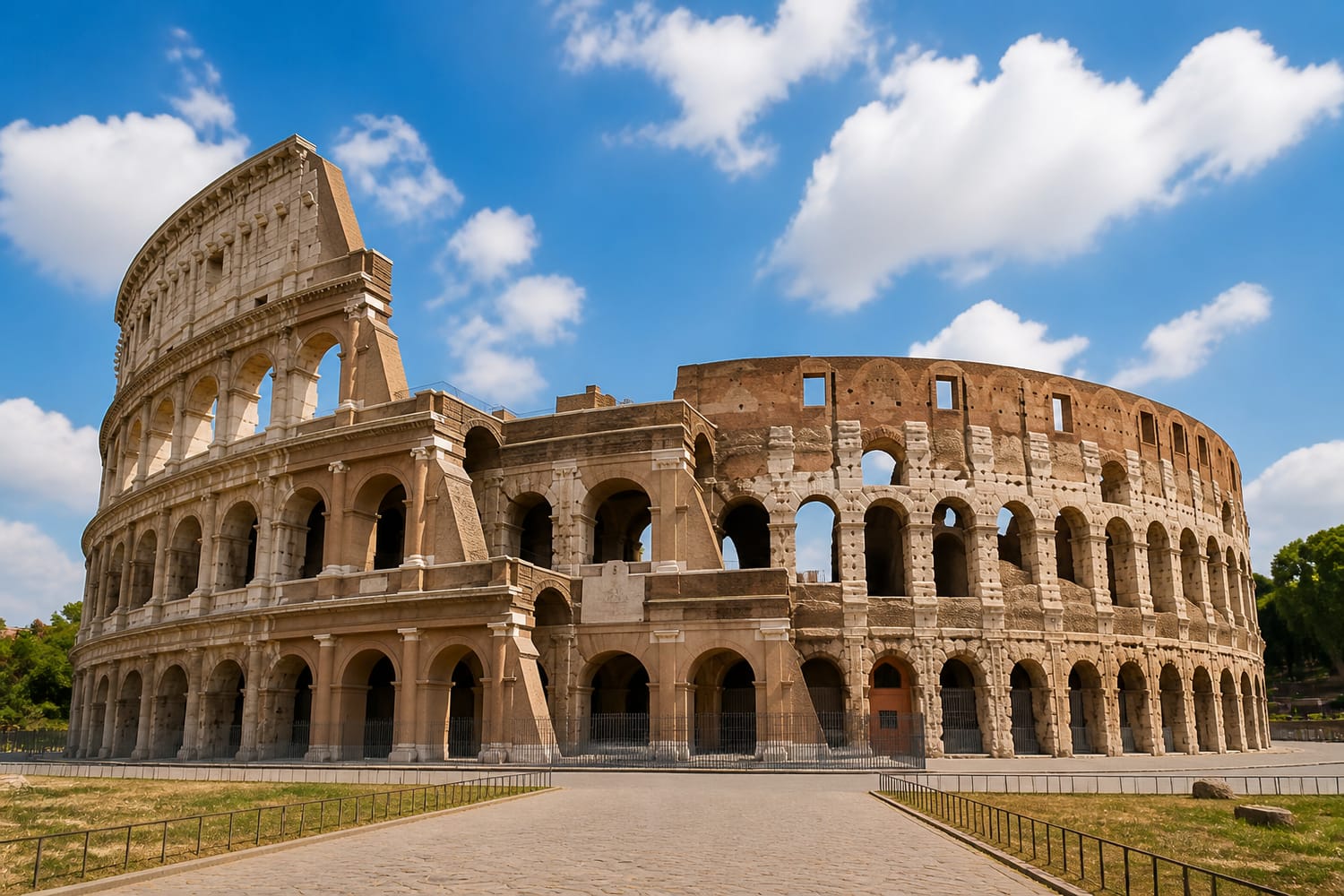
Ancient visitors would have seen the Colosseum as a complete oval enclosed by monumental tiers of arches. Its familiar asymmetrical profile developed much later.
Earthquakes caused extensive damage, including the collapse of much of the southern outer wall. Builders then treated the abandoned arena as a convenient quarry, carrying away stone for other Roman structures. The missing sections expose the building’s interior corridors and layers, making its engineering easier to appreciate. Destruction accidentally created the dramatic ruin now associated with imperial Rome.
The Parthenon’s Roofless Silhouette
The Parthenon was not always the open, roofless temple seen on the Acropolis today. In 1687, Ottoman forces were using it to store gunpowder during a Venetian siege. A projectile struck the building, triggering an explosion that caused major sections to collapse.
The blast transformed a largely intact ancient structure into a ruin. Although its destruction was a cultural tragedy, the remaining columns and fractured interior developed their own visual power. Its scarred silhouette now represents both classical achievement and the vulnerability of human heritage.
Stonehenge’s Fallen and Uneven Stones
Stonehenge was constructed as a carefully arranged prehistoric monument, not the irregular collection of standing, leaning, and fallen stones visitors recognize today. Centuries of weathering, ground movement, human interference, and collapse altered its appearance.
Some stones have been repositioned or reinforced, but the monument’s incomplete silhouette remains part of its mystery. The British Museum describes its recognizable form as the combined result of ancient construction and later damage, decay, and collapse. These disruptions made Stonehenge seem even more enigmatic, encouraging countless theories about its forgotten purpose.
Why Accidents Make Landmarks Unforgettable
Perfection can be impressive, but imperfections tell stories. A leaning foundation, oxidized surface, failed transport scheme, or shattered wall reveals how a landmark has adapted to changing circumstances.
These features remind travelers that famous places are not frozen in time. They survive through improvisation, damage, restoration, and reinvention. Tour Trivia’s stories of landmarks that narrowly escaped destruction and hidden details visitors often miss offer further proof that history’s surprises frequently create its most enduring icons.