
The Allure of Cities Time Forgot
Some cities vanish slowly, swallowed by jungle, desert, flood, war, or simple neglect. Others disappear from maps so completely that they survive only as legends, whispered about in old texts and local stories. Then, centuries later, a traveler, archaeologist, farmer, or explorer stumbles upon a wall, a carved stone, a staircase, or a forgotten road—and an entire civilization begins to reemerge.
For curious travelers and history lovers, few subjects are more fascinating than lost cities. They remind us that even the grandest places can fall silent, and that the past is often much closer than it seems. At Tour Trivia, these rediscovered cities are perfect reminders that every ruin has a story, and every stone may hold a secret.
Machu Picchu: The Cloud City of the Inca
High in the Andes Mountains of Peru, Machu Picchu is one of the most famous rediscovered cities in the world. Built by the Inca in the 15th century, it sits dramatically between mountain peaks, surrounded by mist, terraces, and steep green slopes. Although local people knew of the site, it remained largely unknown to the outside world until American explorer Hiram Bingham brought international attention to it in 1911.
Machu Picchu was never truly “lost” to nearby communities, but it was lost to global history for centuries. Spanish conquistadors never found it, which helped preserve its temples, stairways, agricultural terraces, and stone buildings. Its exact purpose is still debated. Some scholars believe it was a royal estate for Emperor Pachacuti, while others see it as a sacred religious site connected to the mountains and the sun.
Today, Machu Picchu is a UNESCO World Heritage Site and one of South America’s most iconic destinations. Its rediscovery changed how the world understood the power, engineering skill, and spiritual life of the Inca Empire.
Petra: The Rose-Red City Hidden in the Desert
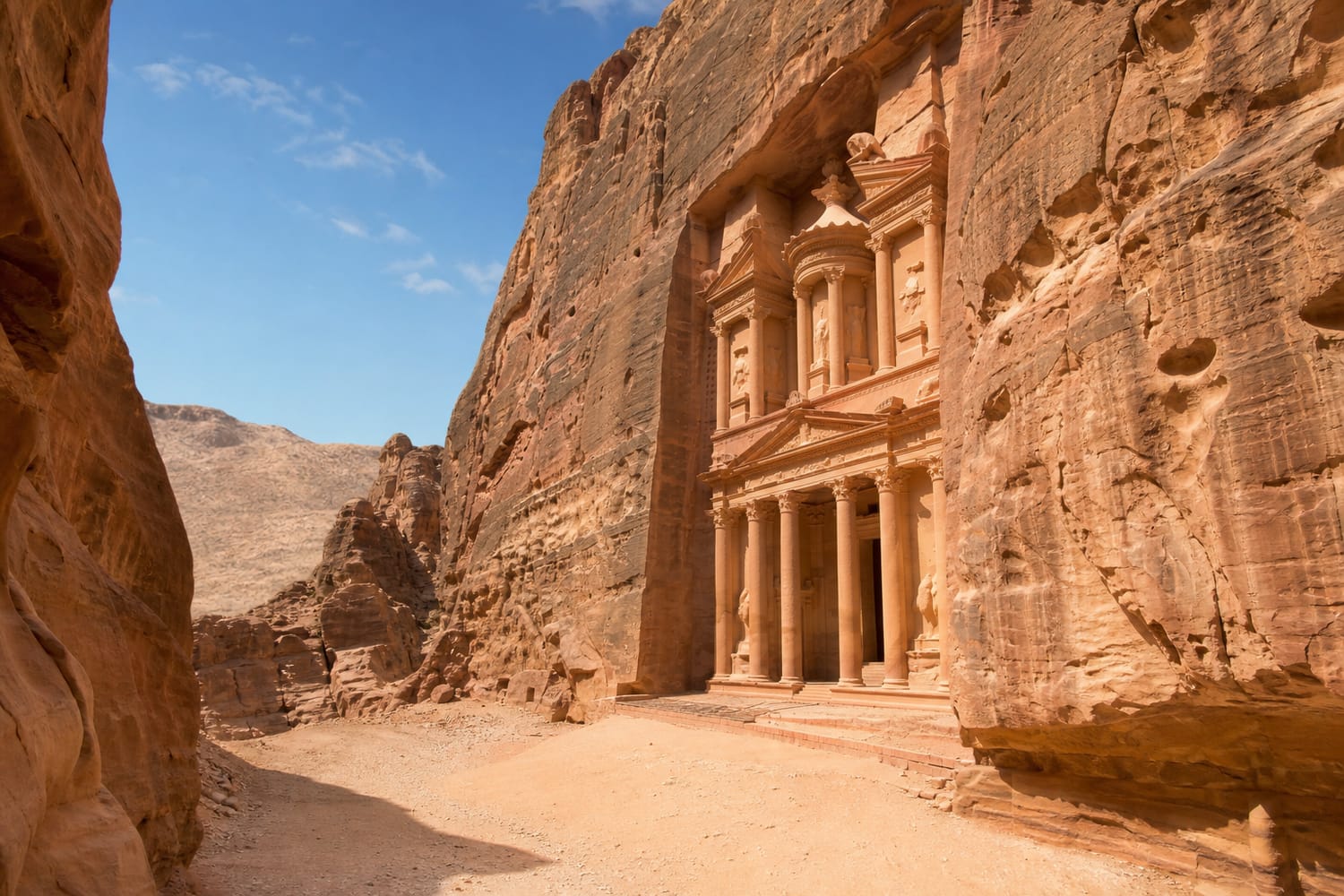
Carved into pink sandstone cliffs in present-day Jordan, Petra was once the thriving capital of the Nabataean Kingdom. It flourished more than 2,000 years ago as a major trading hub, linking Arabia, Egypt, and the Mediterranean world. Merchants passed through with spices, silk, incense, and precious goods, making Petra wealthy and cosmopolitan.
Over time, trade routes shifted, earthquakes damaged the city, and Petra faded from prominence. For centuries, it was known mainly to local Bedouin communities. In 1812, Swiss explorer Johann Ludwig Burckhardt, disguised as an Arab traveler, was guided to the site and introduced it to Western scholarship.
The most famous monument in Petra is Al-Khazneh, or “The Treasury,” with its grand façade carved directly into the cliff face. But Petra is much more than one building. It includes tombs, temples, streets, water channels, and an impressive ancient water management system that allowed people to survive in the desert.
Petra’s rediscovery revealed the extraordinary creativity of the Nabataeans and their ability to turn a harsh landscape into a magnificent city.
Pompeii: A Roman City Frozen in Time
Unlike many lost cities, Pompeii was not gradually abandoned. It was buried suddenly and violently when Mount Vesuvius erupted in 79 CE. Ash and pumice covered the Roman city, preserving houses, shops, baths, temples, streets, graffiti, mosaics, and even the final poses of some of its residents.
For more than 1,500 years, Pompeii lay hidden beneath volcanic debris. Its rediscovery began in the late 16th century, but serious excavations started in the 18th century. Archaeologists were astonished by the level of preservation. Instead of finding only broken walls, they uncovered an entire urban world.
Pompeii offers one of the clearest windows into daily life in ancient Rome. Visitors can still walk along stone streets, see bakeries with ovens, homes with painted walls, and public spaces where citizens gathered. The city’s tragic end made it a time capsule, preserving ordinary details that rarely survive elsewhere.
Today, Pompeii remains one of the most important archaeological sites in Europe, drawing travelers who want to step directly into the Roman past.
Angkor: The Jungle Capital of the Khmer Empire
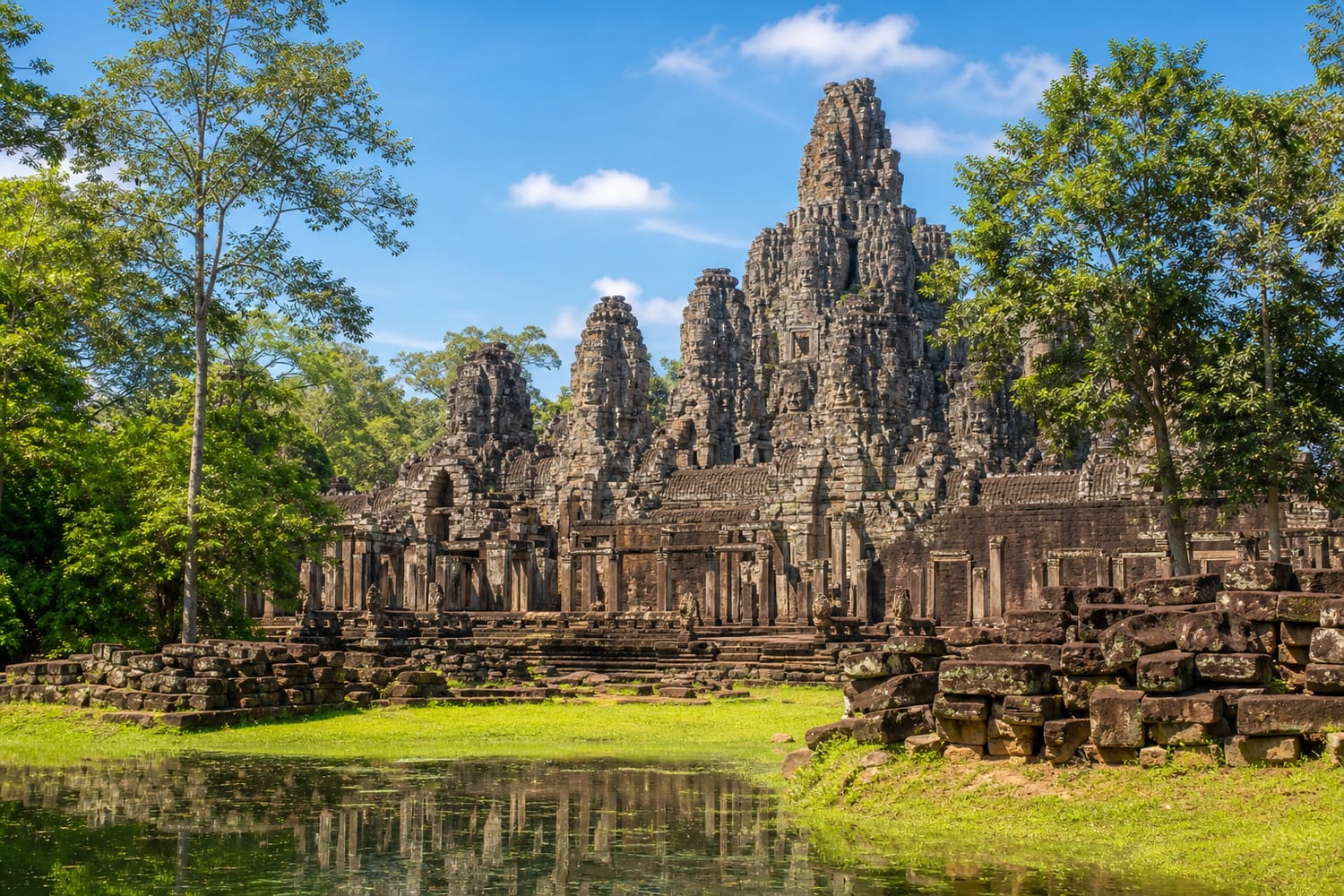
Deep in Cambodia, the ancient city of Angkor was once the heart of the powerful Khmer Empire. Between the 9th and 15th centuries, it became one of the largest urban complexes in the premodern world. Its temples, reservoirs, canals, and roads show a civilization with remarkable architectural and engineering skill.
The most famous structure at Angkor is Angkor Wat, originally built as a Hindu temple and later transformed into a Buddhist site. Nearby are other extraordinary monuments, including Bayon Temple with its serene stone faces and Ta Prohm, where massive tree roots wrap around ancient walls.
After the decline of the Khmer Empire, much of Angkor was reclaimed by the forest. Local monks and communities continued to know and use some temples, but the scale of the ancient city was not fully understood by outsiders for centuries. French explorers and archaeologists in the 19th century helped bring Angkor to international attention.
Modern technology, including aerial mapping and lidar scans, has revealed that Angkor was even larger and more complex than earlier scholars imagined. Its rediscovery continues today, as researchers uncover hidden neighborhoods, roads, and water systems beneath the jungle canopy.
Troy: The Legendary City of Homer’s Epic
For centuries, many people believed Troy was only a city of myth, made famous by Homer’s “Iliad.” According to legend, it was the setting of the Trojan War, where heroes like Achilles, Hector, and Odysseus fought beneath its walls. But was Troy real?
In the 19th century, archaeologist Heinrich Schliemann became determined to find it. Excavating at Hisarlik in modern-day Turkey, he uncovered ancient city layers that seemed to match descriptions of Troy’s location. Later archaeological work showed that the site had been occupied and rebuilt many times over thousands of years.
The rediscovery of Troy blurred the line between legend and history. While the details of Homer’s epic may be poetic and exaggerated, the city itself was real. It stood near important trade routes and likely experienced conflict over its long history.
Today, Troy is not as visually dramatic as Petra or Machu Picchu, but its cultural importance is enormous. It reminds us that myths can preserve memories of real places, even when those places disappear from common knowledge.
Tikal: A Maya Giant Beneath the Rainforest
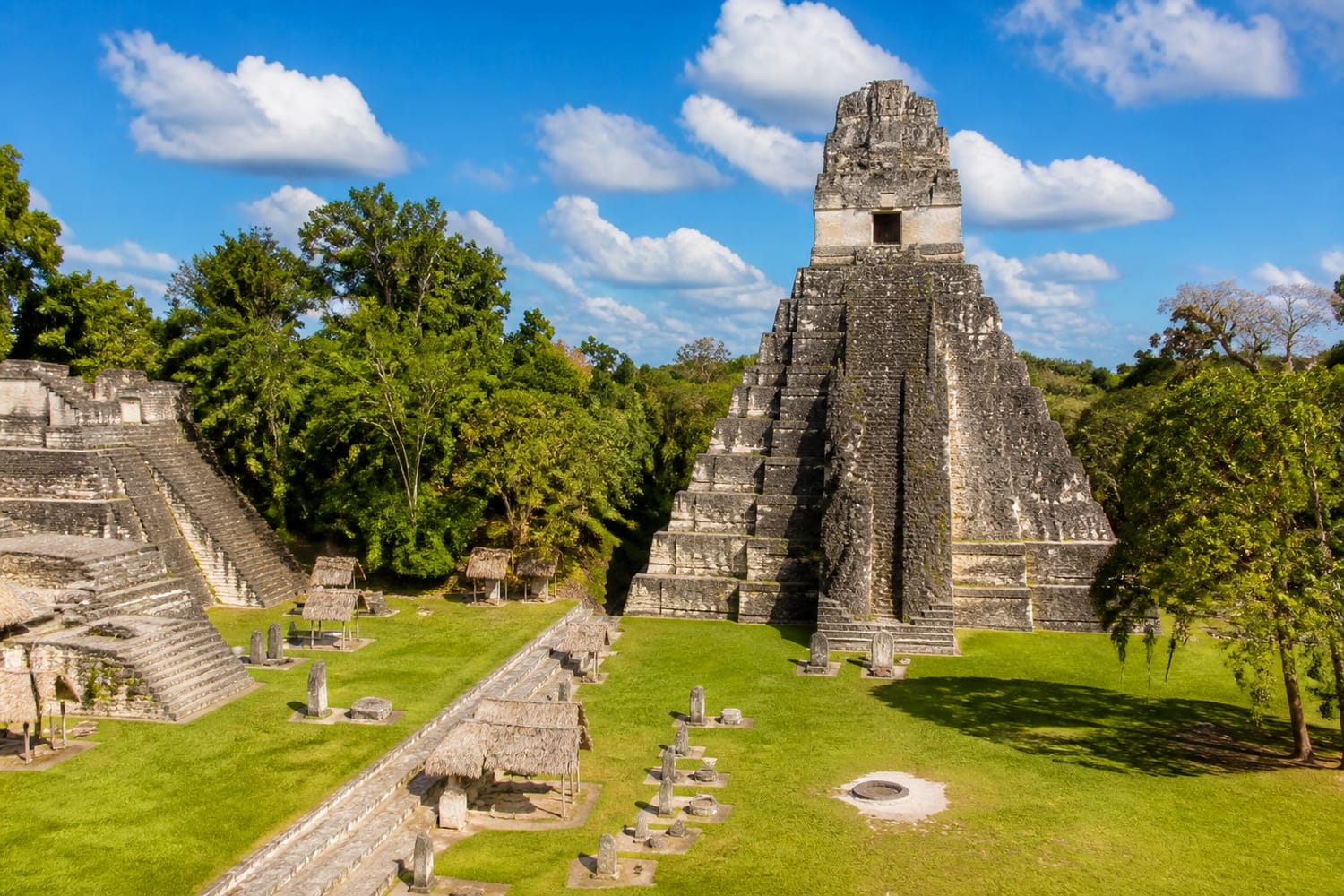
In the rainforests of Guatemala, Tikal was one of the great cities of the ancient Maya world. At its height, between roughly 200 and 900 CE, it was a powerful political, religious, and military center. Its towering pyramids rose above plazas, palaces, and causeways, while rulers carved their victories and lineages into stone monuments.
After Tikal’s decline, the rainforest slowly covered much of the city. Local people knew of the ruins, but they became widely known to the outside world in the 19th century. Archaeological investigations later revealed a vast urban center with temples, reservoirs, residences, and ceremonial spaces.
One of the most striking features of Tikal is its verticality. Temples such as Temple I and Temple IV rise above the jungle, offering views across a sea of green canopy. The city also shows the sophistication of Maya astronomy, politics, writing, and architecture.
Tikal’s rediscovery helped challenge old misconceptions that the Maya were scattered or simple. Instead, it proved they built complex urban societies with powerful cities and far-reaching influence.
Great Zimbabwe: The Stone City of Southern Africa
Great Zimbabwe, located in modern Zimbabwe, was the center of a powerful African kingdom between the 11th and 15th centuries. Its massive stone walls, towers, and enclosures were built without mortar, using carefully fitted granite blocks. The site was part of a wealthy trading network connected to gold, ivory, and goods from the Indian Ocean world.
When Europeans encountered the ruins in the 19th century, many refused to believe that local African people had built them. These false claims reflected colonial prejudice, not evidence. Archaeological research has since clearly shown that Great Zimbabwe was created by ancestors of the Shona people.
The rediscovery and study of Great Zimbabwe reshaped understanding of African history. It demonstrated the existence of highly organized, wealthy, and skilled societies in southern Africa long before European colonization.
Today, Great Zimbabwe stands as a symbol of national pride and cultural achievement. Its stone architecture remains one of the most impressive archaeological legacies on the continent.
Why Lost Cities Still Capture Our Imagination
Rediscovered cities fascinate us because they combine mystery, adventure, and evidence of human brilliance. They make us wonder how such important places could disappear, and what else may still be hidden under forests, deserts, oceans, or modern towns.
They also teach humility. Civilizations that once seemed permanent can decline, and cities filled with life can become silent ruins. Yet rediscovery gives these places a second life. Archaeologists, historians, local communities, and travelers help bring their stories back into the world.
From the mountain terraces of Machu Picchu to the desert cliffs of Petra and the jungle temples of Angkor, these ancient cities remind us that history is not just found in books. Sometimes, it waits patiently beneath roots, sand, ash, and stone—ready to surprise us centuries later.