
When Preservation Means Taking a Landmark Apart
Some landmarks are saved with fences, careful cleaning, or a new roof. Others require something much more dramatic: taking the entire structure apart, labeling every stone, moving it miles—or even across oceans—and rebuilding it like the world’s most important jigsaw puzzle.
For travelers who love history, these stories add another layer of wonder. The monument you’re looking at may seem rooted to the spot, but in some cases, it has already lived another life somewhere else. At Tour Trivia, we love those “wait, really?” moments, and few are better than discovering that a famous landmark was rescued piece by piece from rising water, urban development, or demolition.
Abu Simbel, Egypt
Abu Simbel is one of the greatest relocation stories in history. Built during the reign of Pharaoh Ramesses II in the 13th century BCE, the temples are famous for their colossal seated statues carved into the sandstone cliffs of Nubia. For thousands of years, they faced the Nile—until the 20th century brought a major threat.
When Egypt began constructing the Aswan High Dam, the creation of Lake Nasser would have submerged Abu Simbel beneath the reservoir. Rather than let the temples disappear, UNESCO launched an international rescue campaign in the 1960s.
Engineers cut the temples into massive blocks, some weighing up to 30 tons. Each piece was carefully numbered, moved, and reassembled about 200 meters back from the river and 65 meters higher than the original site. To preserve the illusion of the ancient cliff face, workers built an artificial mountain around the reconstructed temples.
One of the most impressive details is that the alignment of the Great Temple was preserved. Twice a year, sunlight still reaches deep into the sanctuary and illuminates statues inside, just as it did in antiquity—though the dates shifted slightly after the move.
The Temples of Philae, Egypt
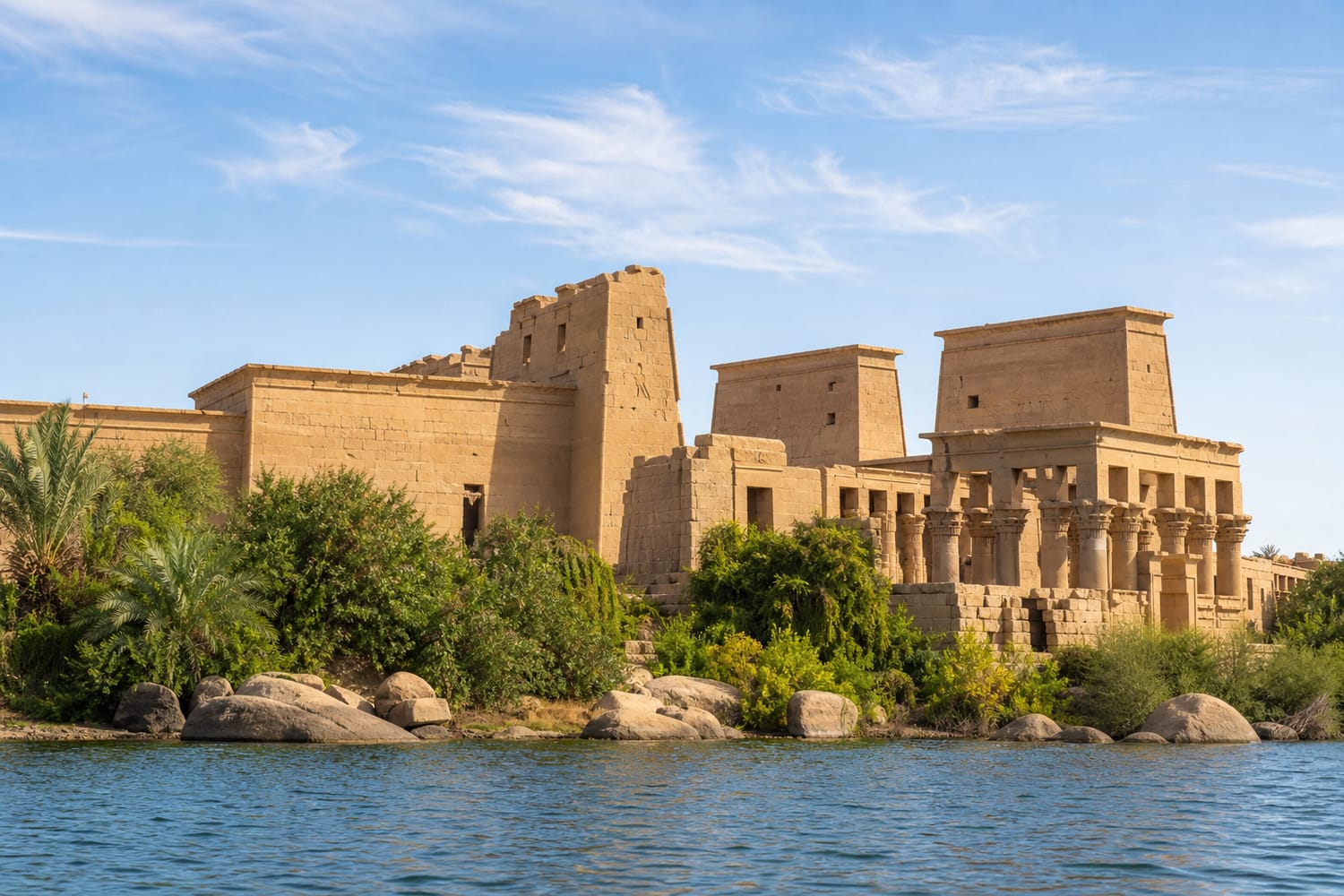
Abu Simbel was not the only ancient Egyptian treasure threatened by the Aswan Dam projects. The temple complex of Philae, dedicated primarily to the goddess Isis, also faced destruction from rising Nile waters.
Philae had already suffered from regular flooding after the earlier Aswan Low Dam was built. Visitors in the early 20th century sometimes saw the lower parts of the temples underwater. With the High Dam project, the danger became even more serious.
The solution was extraordinary. In the 1970s, the entire complex was dismantled and moved to nearby Agilkia Island, which was reshaped to resemble the original island of Philae. Tens of thousands of blocks were cleaned, cataloged, and reassembled.
Today, many visitors do not realize they are seeing a relocated site. The temples feel ancient and atmospheric, surrounded by water and reached by boat. That is part of the achievement: the move saved the monuments while preserving much of the romance of their setting.
The Temple of Dendur, New York City
Another Egyptian temple rescued during the Nubian salvage campaign now stands far from the Nile. The Temple of Dendur, built around 15 BCE during the Roman period in Egypt, was also threatened by the waters created by the Aswan High Dam.
As thanks for American support in saving Nubian monuments, Egypt gifted the temple to the United States in 1965. It was dismantled into hundreds of blocks and shipped across the Atlantic. Eventually, it found a permanent home inside the Metropolitan Museum of Art in New York City.
The temple is now displayed in a soaring gallery with a reflecting pool and a wall of glass overlooking Central Park. It is one of the most beloved spaces in the museum. While it no longer sits in its original desert landscape, the move ensured that the temple survived and became accessible to millions of visitors.
It is also a fascinating example of preservation by relocation. Instead of being rebuilt outdoors, it was reimagined as an indoor museum experience, protected from weather and decay.
London Bridge, Arizona
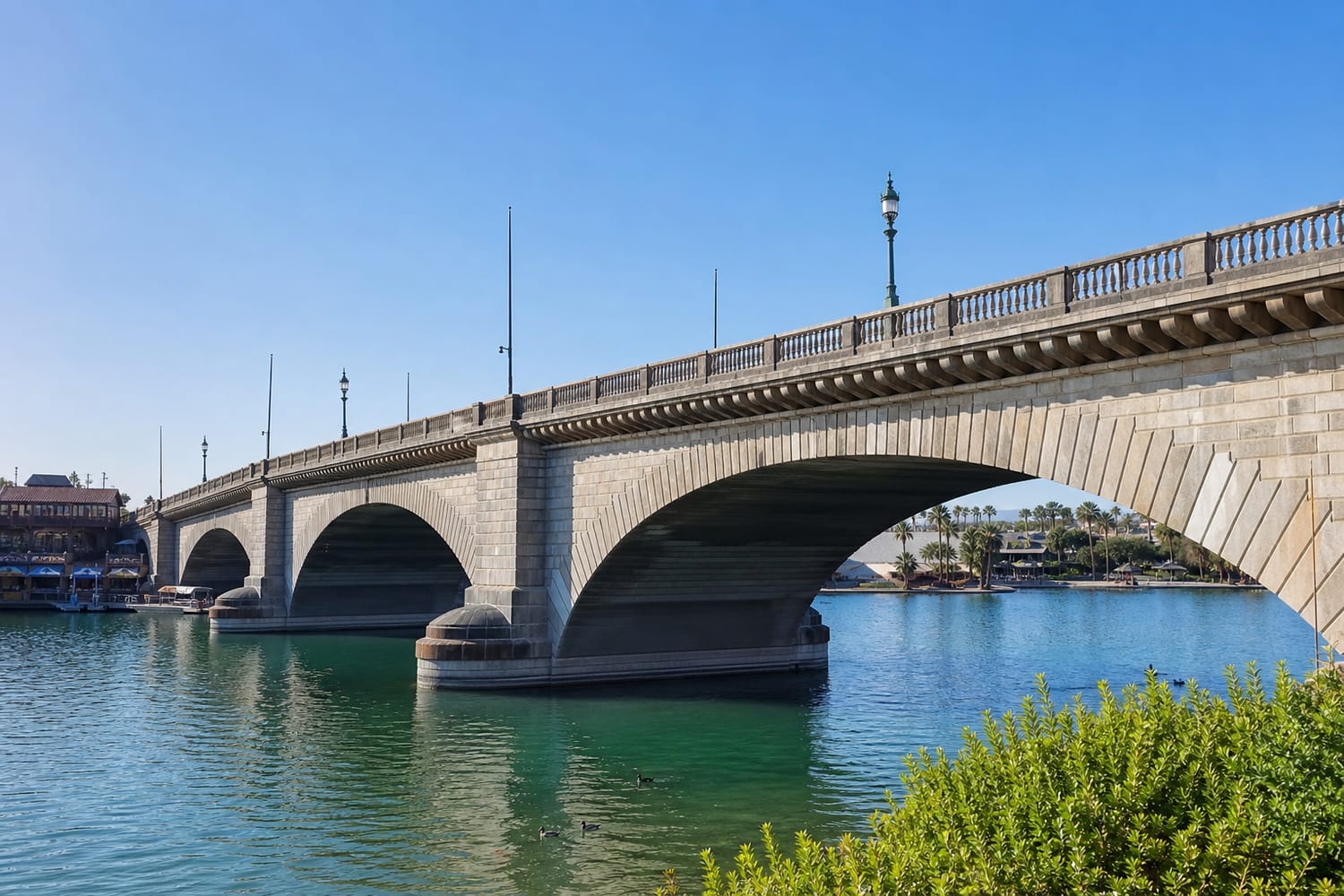
Few relocated landmarks have a stranger second life than London Bridge. Not Tower Bridge—the famous one with the towers—but the 19th-century London Bridge that once crossed the River Thames.
By the mid-20th century, the bridge was sinking and no longer suited to London’s traffic needs. The city decided to replace it. Rather than simply demolish the old bridge, London sold it in 1968 to American entrepreneur Robert P. McCulloch, who wanted a showpiece for his developing community in Lake Havasu City, Arizona.
The bridge was dismantled stone by stone. Each granite block was numbered so it could be reassembled correctly. The stones were shipped through the Panama Canal to California, then transported inland to Arizona. There, they were used as cladding over a modern concrete structure.
The result is surreal: a piece of Victorian London standing in the Arizona desert, spanning a man-made channel. It became a tourist attraction and helped put Lake Havasu City on the map. In this case, relocation saved the bridge from vanishing and gave it a completely unexpected new identity.
The Spanish Monastery, Florida
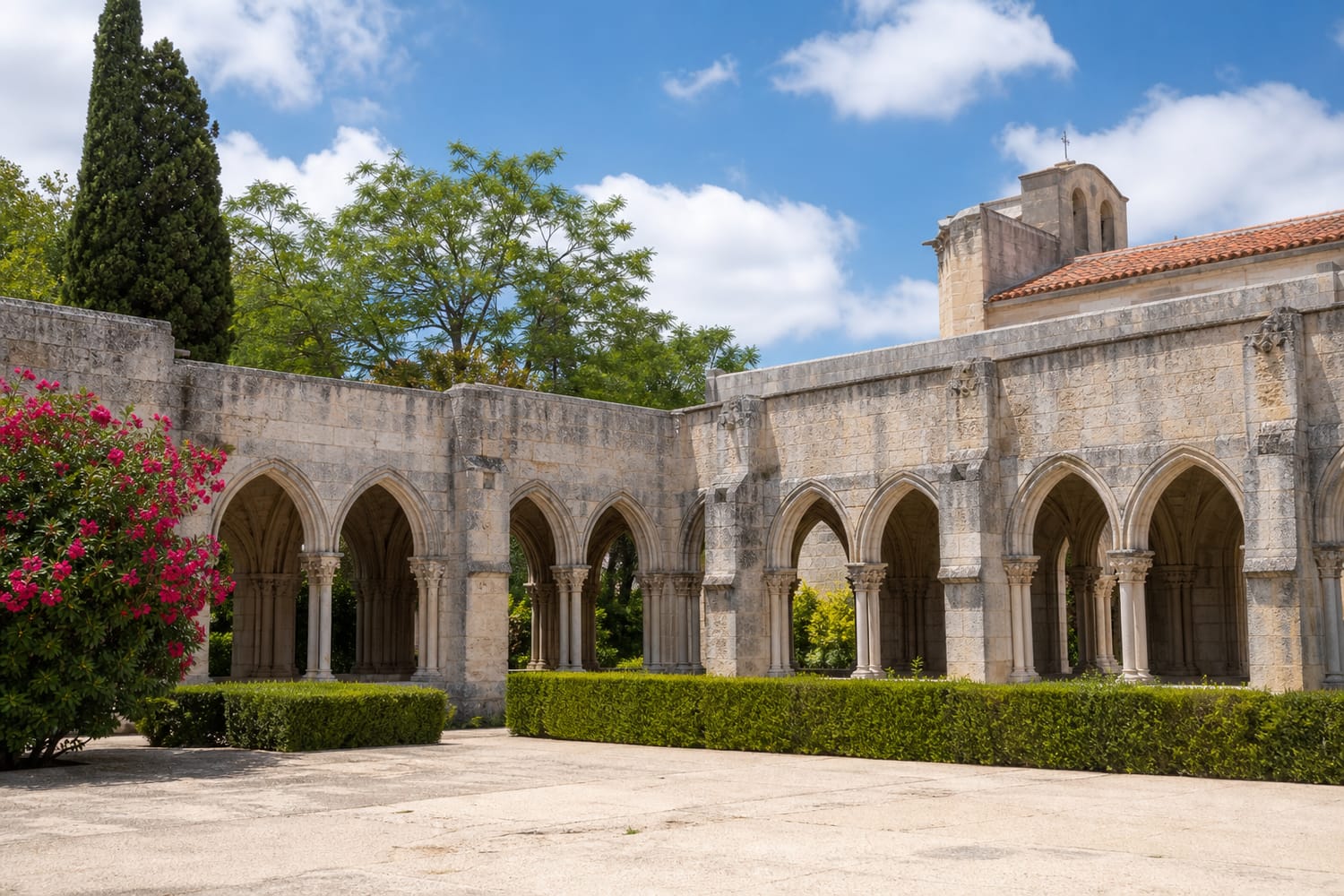
North Miami Beach is not where most people expect to find a medieval Spanish monastery, but that is exactly what makes the Ancient Spanish Monastery so fascinating.
Originally built in the 12th century in Sacramenia, Spain, the Monastery of St. Bernard de Clairvaux was occupied by Cistercian monks for centuries. In the 1920s, newspaper magnate William Randolph Hearst purchased the monastery’s cloisters and outbuildings. The structures were dismantled stone by stone, packed into thousands of crates, and shipped to the United States.
Then things went wrong. Because the packing materials included hay, U.S. authorities worried about agricultural contamination. The crates were opened, the hay was burned, and the carefully organized stones became mixed up. Hearst’s financial troubles during the Great Depression also delayed the project.
Decades later, the stones were finally reassembled in Florida. The process has often been described as an enormous three-dimensional puzzle. Today, the monastery is used as a church, wedding venue, and historic attraction. Its journey from medieval Spain to modern Florida is one of the most unusual landmark relocations in the world.
Agecroft Hall, Virginia
Agecroft Hall looks like an English Tudor manor—and that is because it once was one. The original house stood in Lancashire, England, where it dated back to the late 15th century. By the early 20th century, the area around it had changed dramatically due to industrialization and coal mining.
The house was in poor condition and at risk of disappearing. In the 1920s, American businessman Thomas C. Williams Jr. purchased it and had it dismantled. Its most important architectural elements, including timbers, paneling, and windows, were shipped across the Atlantic to Richmond, Virginia.
Agecroft Hall was then rebuilt, but not as an exact replica of the original floor plan. Instead, it was adapted into a livable home inspired by Tudor design, set within landscaped gardens overlooking the James River.
Today, Agecroft Hall operates as a museum. It offers a glimpse of Tudor England filtered through the ambitions of early 20th-century preservation. While not every stone and beam stands exactly where it once did, the move saved major parts of a historic building that might otherwise have been lost.
Why Moving Landmarks Matters
Relocating a landmark is never simple. It raises big questions: Is a monument still authentic if it has been moved? Does it lose meaning when separated from its original landscape? Or is relocation justified when the alternative is destruction?
The answer depends on the site. Abu Simbel and Philae were deeply connected to the Nile, but without relocation, they would be underwater. London Bridge no longer serves London, but it survives as a historic curiosity in Arizona. The Temple of Dendur is far from Egypt, yet it is protected and widely admired.
These landmarks remind us that preservation is not always about freezing history in place. Sometimes it is about making difficult choices so that future generations can still stand before something ancient, beautiful, or culturally important.
And for travelers, that makes the experience even richer. The next time you visit a landmark, ask not only when it was built, but whether it has always stood where it stands now. The answer might be the best trivia of the trip.