
Some places don’t just change color with the seasons—they seem to rearrange themselves entirely. Rivers swell and split, deserts bloom, wetlands appear and vanish, forests shift from green cathedrals to golden tunnels, and coastlines redraw their edges with ice, tides, storms, and migrating wildlife. These are living landscapes: places shaped by weather, water, plants, animals, and time.
For travelers who love nature with a side of surprise, these destinations offer a different experience depending on when you visit. At Tour Trivia, we think the best landscapes are the ones that make you ask, “Is this even the same place?” Here are ten remarkable landscapes around the world that transform dramatically with the seasons.
Okavango Delta, Botswana
The Okavango Delta is one of the world’s most fascinating seasonal landscapes because it does something unexpected: it floods during the dry season. Rain that falls in the Angolan highlands takes months to flow south into Botswana, arriving just as the surrounding Kalahari region becomes increasingly parched.
By peak flood season, usually between June and August, channels spread across the delta like blue veins, creating temporary islands, lagoons, and wildlife corridors. Elephants wade through shimmering water, hippos claim new pools, and travelers explore by mokoro, a traditional dugout canoe.
When the floodwaters recede, the delta changes again. Grasslands reappear, animals gather around shrinking waterholes, and predators take advantage of the concentration of prey. The Okavango is never fixed; it breathes in water and exhales land.
Sossusvlei and the Namib Desert, Namibia
At first glance, the Namib Desert appears timeless, with its towering orange dunes and cracked white clay pans. But this ancient desert is far more dynamic than it seems. Winds constantly reshape the dunes, shifting their ridgelines and softening footprints overnight.
During rare rainy periods, the transformation becomes even more dramatic. Areas around Sossusvlei can briefly bloom with grasses and wildflowers, attracting insects, birds, and desert-adapted wildlife. The famous Deadvlei, known for its blackened camel thorn trees standing against pale clay and red dunes, can look stark and surreal in dry months, then subtly softened after seasonal moisture.
The Namib’s changes may be quieter than those of a forest or wetland, but they are powerful. Here, the landscape changes grain by grain.
The Everglades, United States
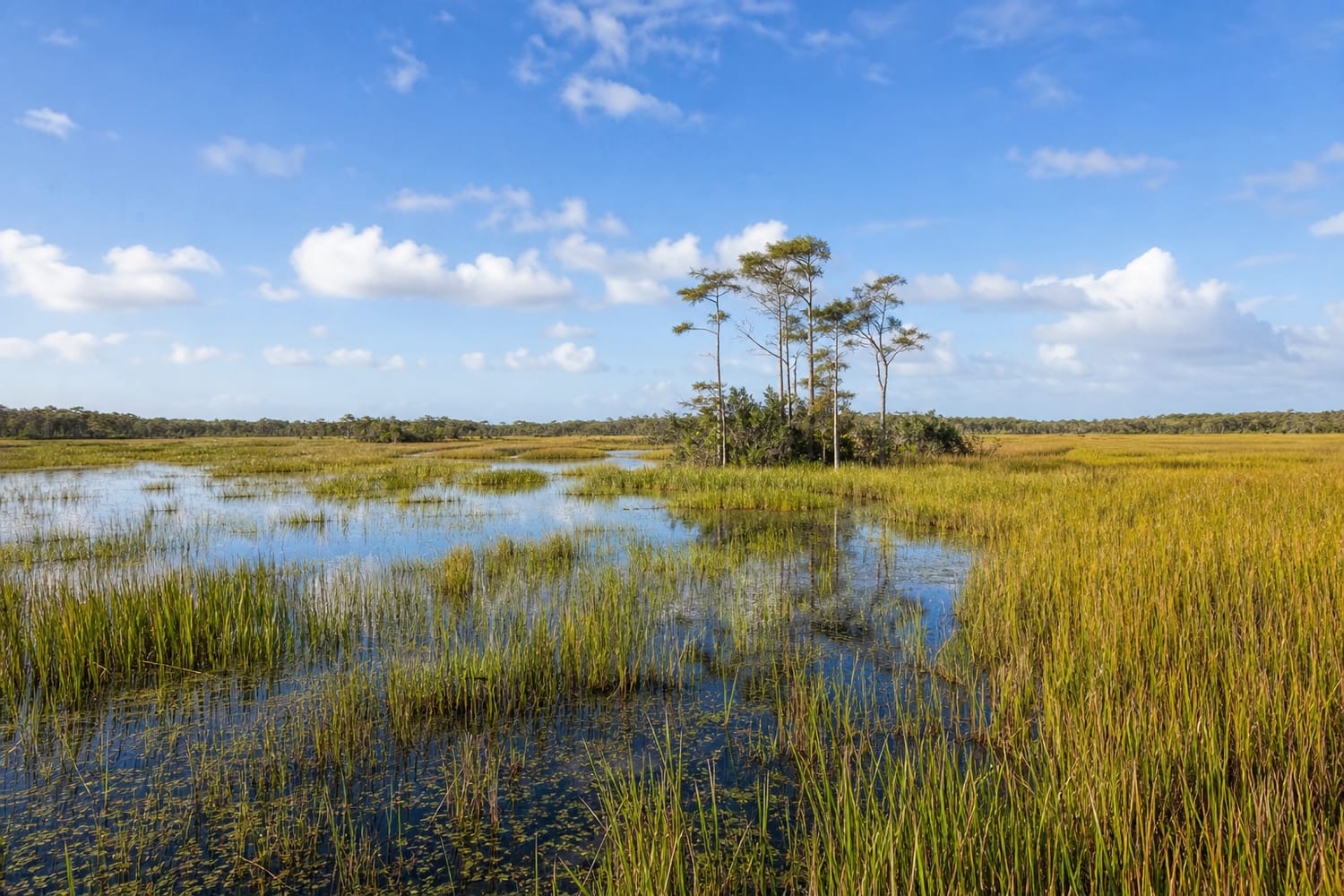
Florida’s Everglades are often described as a “river of grass,” and that name becomes especially meaningful when you see how the landscape shifts between wet and dry seasons. During the wet season, from roughly May to October, water spreads across sawgrass prairies, cypress domes, and mangrove forests. The wetlands expand, wildlife disperses, and afternoon storms build enormous skies.
In the dry season, water levels drop and animals become easier to spot. Alligators gather in remaining pools, wading birds stalk concentrated fish, and trails that were once soggy become more accessible. The same scene can feel open and airy one month, then flooded and mysterious the next.
The Everglades are a reminder that a landscape can be alive not only because of what grows there, but because of how water moves through it.
Plitvice Lakes, Croatia
Plitvice Lakes National Park is famous for its turquoise lakes, waterfalls, and lush forests, but its appearance changes dramatically throughout the year. In spring, snowmelt feeds the waterfalls, making them thunder with extra force. Wooden walkways wind above clear water, and fresh greenery begins to frame the lakes.
Summer brings dense foliage and brilliant shades of blue and green. In autumn, the surrounding forests turn gold, orange, and red, reflecting in the water and transforming the park into a painterly landscape. Winter may be the most magical season of all, when snow settles on the trees and waterfalls can freeze into curtains of ice.
Plitvice is also geologically active. Its travertine barriers slowly grow and shift as minerals build up over time, meaning the lakes and waterfalls are always evolving.
Iceland’s Glacial Lagoons
Iceland’s glacial lagoons, such as Jökulsárlón and Fjallsárlón, are shaped by ice, tides, and temperature. In winter, the scene can feel polar and still, with blue icebergs floating beneath dark skies and seals resting near the water. Snow and low light give the lagoons a dramatic, almost otherworldly atmosphere.
In warmer months, glaciers calve more frequently, releasing icebergs that drift across the lagoons before floating toward the sea. Their shapes change constantly as they melt, roll, crack, and collide. On nearby black-sand beaches, chunks of ice wash ashore like scattered glass, earning places such as Diamond Beach their nickname.
No two visits are alike. The icebergs you see today may be gone tomorrow, replaced by new sculptures from the glacier.
Keukenhof and the Dutch Flower Fields, Netherlands
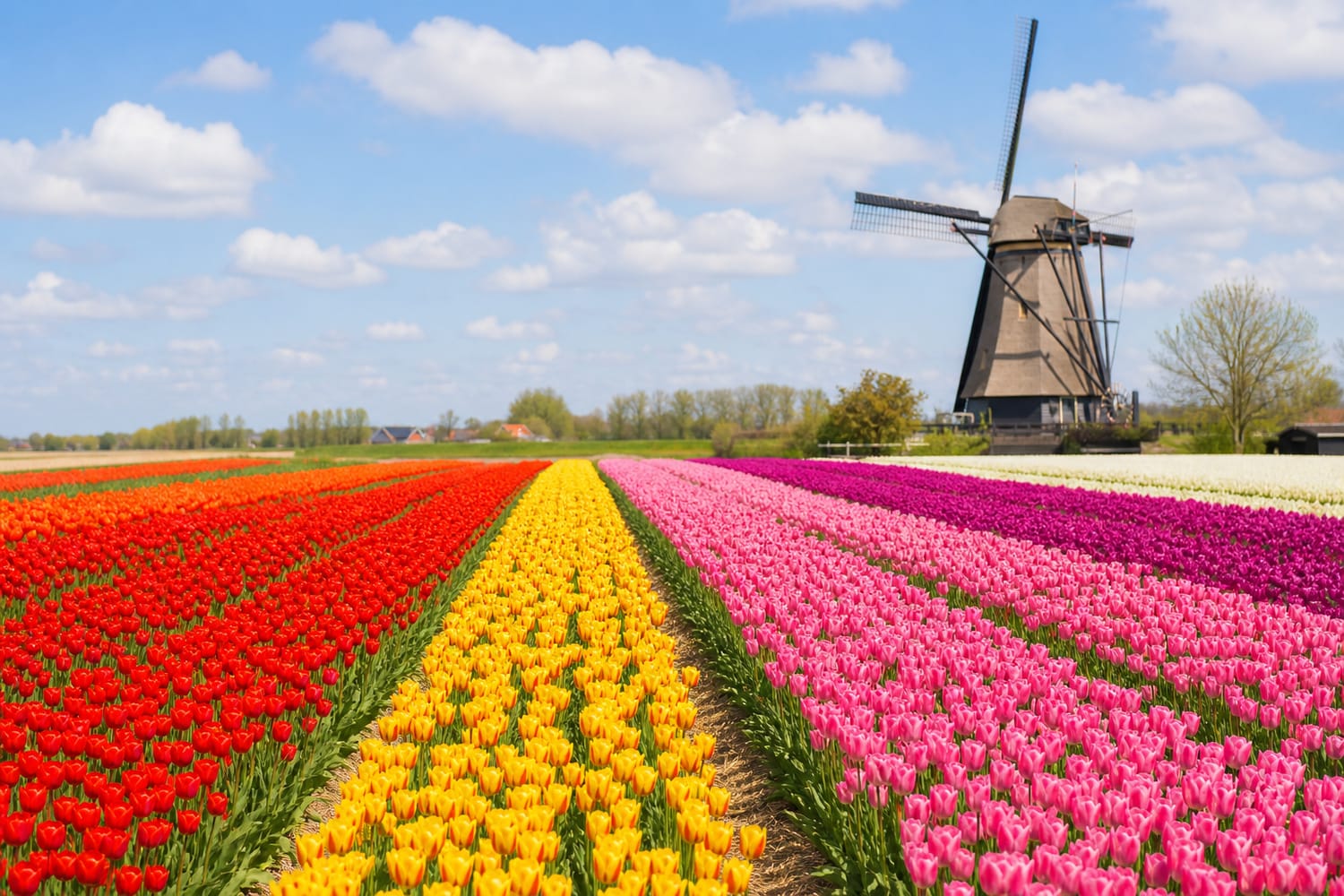
The Dutch flower fields are among the most colorful seasonal landscapes on Earth. For much of the year, the fields may look ordinary—flat farmland beneath wide skies. But in spring, they become bands of red, yellow, pink, purple, and white as tulips, hyacinths, and daffodils bloom in carefully planted rows.
Keukenhof, one of the most famous flower gardens in the Netherlands, opens for only a limited spring season, usually from March to May. The surrounding countryside near Lisse and other bulb-growing regions becomes a living patchwork quilt.
By early summer, many flowers are cut or faded, and the landscape shifts back toward green fields and working farms. That briefness is part of the magic. The flower fields are a reminder that some of the world’s most spectacular sights exist only for a few weeks.
Salar de Uyuni, Bolivia
Salar de Uyuni, the world’s largest salt flat, changes from a blinding white expanse into a giant mirror depending on the season. During the dry season, the surface forms a polygon pattern of salt crust stretching to the horizon. The scale is disorienting, and travelers often take playful perspective photos on the endless white plain.
During the rainy season, usually from around December to April, a thin layer of water can cover parts of the salt flat. When conditions are calm, the surface reflects the sky so perfectly that the horizon nearly disappears. Clouds seem to float both above and below, creating one of the planet’s most surreal landscapes.
It is a place where the ground alternates between solid geometry and liquid illusion.
Japan’s Bamboo Forests and Maple Valleys
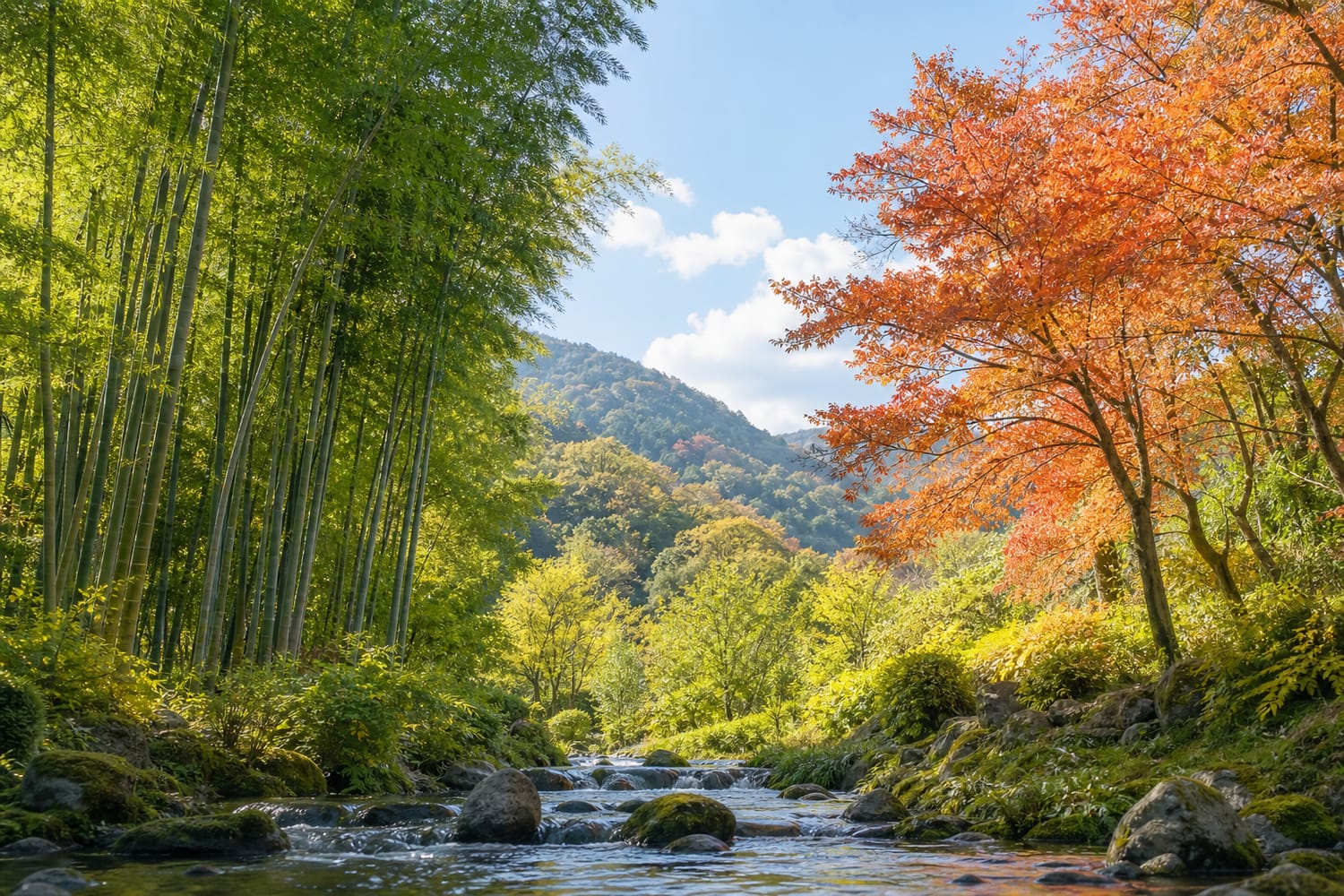
Japan’s seasonal landscapes are famous for their beauty, and while cherry blossoms get much of the attention, bamboo forests and maple valleys offer equally striking transformations. Bamboo groves, such as those in Arashiyama, remain green year-round but change in mood with the seasons. Spring brings fresh shoots, summer adds humidity and deep shade, autumn filters golden light through nearby leaves, and winter can dust the stalks with snow.
In places like Kyoto’s temple gardens or the maple-filled valleys of Nikko, the seasonal shift is even more dramatic. Summer greenery gives way to fiery autumn foliage, while winter strips the trees into elegant silhouettes.
These landscapes feel curated by nature and culture together, changing shape through leaf, light, and atmosphere.
The Arctic Tundra
The Arctic tundra may look barren at first, but it undergoes one of the most remarkable seasonal transformations on Earth. In winter, it becomes a frozen world of snow, ice, and darkness. Winds sculpt drifts across the open land, and life retreats or migrates.
When summer arrives, the change is astonishing. Snow melts, the ground softens, and a brief explosion of life takes over. Mosses, lichens, grasses, and tiny wildflowers spread across the tundra. Migratory birds return in huge numbers, insects emerge, and animals such as caribou move across the land in search of food.
Because the growing season is so short, everything happens quickly. The tundra becomes a living carpet, then gradually returns to frost as autumn closes in.
The Camargue, France
The Camargue, located in the Rhône River delta in southern France, is a shifting world of salt flats, marshes, lagoons, reed beds, and open water. Its appearance changes with rainfall, river flow, evaporation, and seasonal wildlife movement.
In spring and summer, flamingos gather in pink flocks, horses graze in wetlands, and the landscape glows with sunlit water and salt. In drier periods, lagoons shrink and salt pans become more visible, sometimes taking on rosy hues from algae and minerals. Storms and high water can reshape edges, flood paths, and transform dry ground into reflective pools.
The Camargue feels half land, half water, and always in negotiation with the Mediterranean. Its beauty lies in its instability.
Closing Thoughts
The most memorable landscapes are not always the tallest mountains or the deepest canyons. Sometimes they are the places that refuse to stay the same. A flooded delta, a blooming desert, a frozen waterfall, or a mirror-like salt flat can make travelers feel as if they are witnessing nature in the middle of a performance.
These living landscapes reward return visits because each season reveals a different version of the same place. If you visit at the right moment, you may see a transformation that lasts only days or weeks. And if you come back later, the scene may have changed completely—proof that the planet is still moving, shaping, blooming, melting, and surprising us.