
When Nature Looks Like an Architect
Some landscapes feel less like scenery and more like optical illusions. Natural bridges and rock arches are among the most surprising formations on Earth because they seem engineered, balanced, and polished with impossible precision. Yet these stone curves were carved by patient forces: wind, water, ice, gravity, and time.
For travelers, they offer the perfect blend of geology and wonder. Some tower over deserts like giant doorways. Others stretch across rivers, frame the sea, or hide in remote canyons. These natural formations prove that the planet has been sculpting masterpieces long before humans ever picked up tools.
Here are ten natural bridges and rock arches that look almost too perfect to be real.
Landscape Arch, Utah, USA
Landscape Arch in Arches National Park is one of the longest natural arches in the world, and its delicate shape looks almost impossible. Stretching across the desert like a thin ribbon of sandstone, it appears far too fragile to remain standing.
Located in the park’s Devils Garden area, Landscape Arch spans roughly 290 feet. Its narrowest section is surprisingly thin, giving it the appearance of a stone bridge suspended in midair. Over the years, pieces of rock have fallen from the arch, reminding visitors that even the most iconic formations are still changing.
What makes Landscape Arch so striking is its elegance. It does not look bulky or rugged. Instead, it seems light, graceful, and carefully drawn across the sky.
Azure Window, Gozo, Malta
Although the Azure Window collapsed in 2017, it remains one of the most famous natural arches ever seen. For decades, this limestone formation stood along the coast of Gozo, framing the bright blue Mediterranean Sea in a nearly perfect window of stone.
The arch was shaped by waves and erosion, creating a dramatic opening between the cliffs and the open water. Its location made it especially photogenic, with the sea glowing beneath it and the sky completing the frame above.
The Azure Window’s collapse was a powerful reminder that natural wonders are temporary. Even formations that seem eternal are part of an ongoing geological story. Today, divers still visit the underwater remains, where the fallen rock has created a new kind of attraction beneath the waves.
Durdle Door, Dorset, England
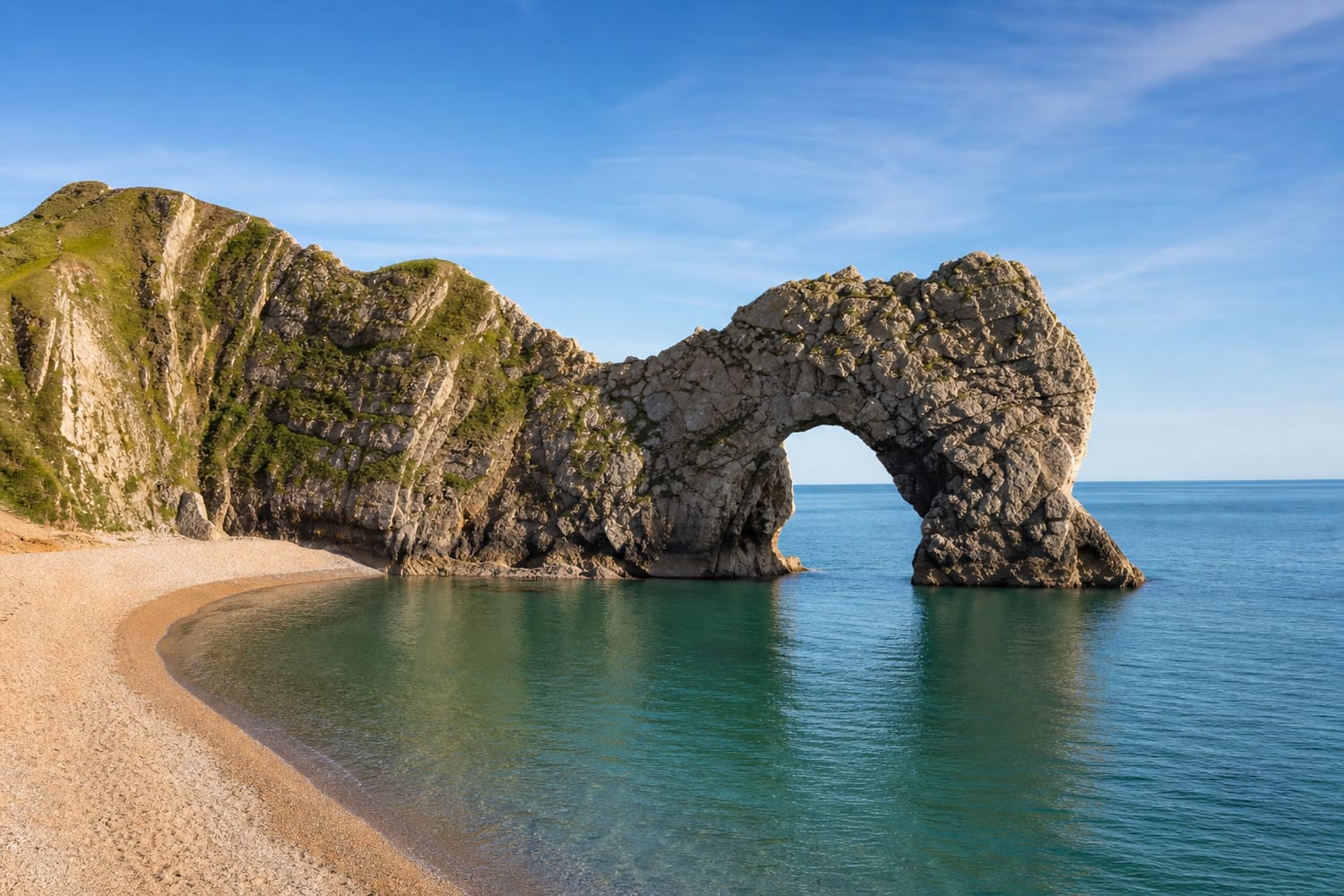
Durdle Door is one of England’s most recognizable coastal landmarks. Located on the Jurassic Coast in Dorset, this limestone arch rises from the sea with a shape so smooth and balanced that it looks like a doorway built for giants.
The arch was formed as waves gradually wore through softer sections of rock, leaving behind a sturdy curve of limestone. The surrounding cliffs and beach make the scene feel almost cinematic, especially at sunrise or sunset when the arch is silhouetted against the water.
Its name is believed to come from an Old English word meaning “drill” or “bore,” a fitting description for the way the sea carved through the stone. Today, Durdle Door is a favorite stop for hikers, photographers, and anyone who loves dramatic coastal views.
Natural Bridge, Virginia, USA
Natural Bridge in Virginia looks so perfectly placed that it has inspired awe for centuries. Standing about 215 feet high, this limestone arch spans Cedar Creek and resembles a massive stone overpass hidden in the forest.
Long before it became a tourist destination, the formation was important to Indigenous peoples of the region. Later, it fascinated early American figures, including Thomas Jefferson, who once owned the land surrounding it.
Unlike many arches found in deserts or along coastlines, Natural Bridge has a lush, woodland setting. Trees, flowing water, and steep rock walls give it a peaceful but powerful atmosphere. It feels less like a formation you stumble upon and more like a secret monument built into the landscape.
Pont d’Arc, Ardèche, France
Pont d’Arc in southern France is a natural limestone bridge that curves over the Ardèche River. Its name means “Bridge Arch,” and it truly looks like a grand stone gateway leading into a scenic river gorge.
The arch stretches about 200 feet across and rises above the water, creating a dramatic passage for kayakers and canoeists. In summer, visitors paddle directly beneath it, getting a close view of its massive underside.
Pont d’Arc was formed when the river carved through a narrow bend of rock, eventually creating a shortcut and leaving the arch behind. The result is both beautiful and practical-looking, as if nature decided the river needed a grand entrance.
The area is also famous for nearby prehistoric cave art, adding another layer of fascination to an already remarkable landscape.
El Arco, Cabo San Lucas, Mexico
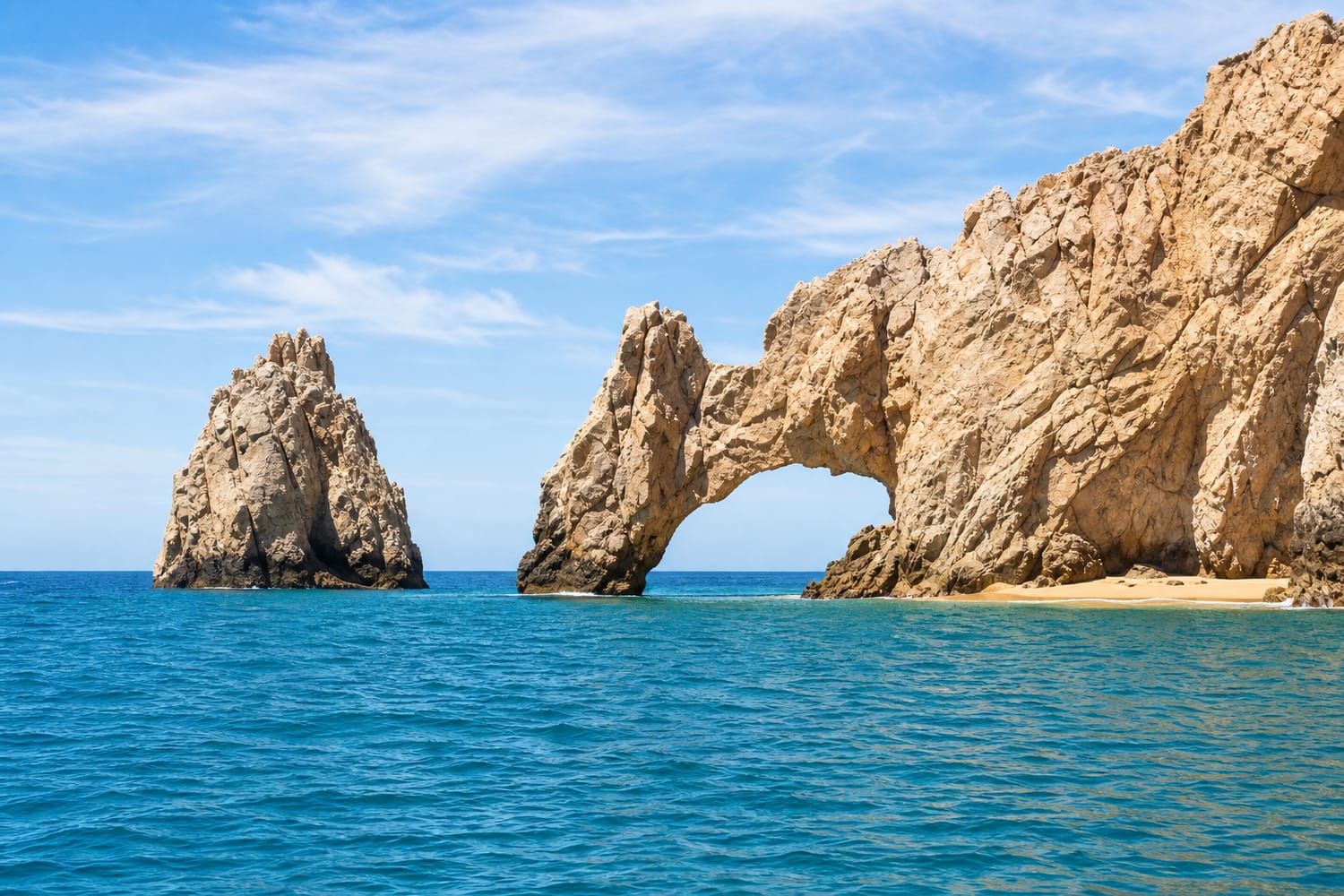
El Arco, also known as The Arch of Cabo San Lucas, stands where the Pacific Ocean meets the Sea of Cortez. This sea arch is one of Mexico’s most photographed natural landmarks, and its shape looks almost sculpted for postcard perfection.
The arch rises from golden rock at the tip of the Baja California Peninsula. Waves crash around its base, while sea lions often rest nearby on the surrounding rocks. Depending on the tide, visitors may see small beaches appear and disappear around the formation.
What makes El Arco especially memorable is its setting. The contrast of rugged stone, turquoise water, and open sky makes it feel surreal. Boat tours regularly pass by the arch, giving travelers a close look at one of the most dramatic coastal formations in North America.
Moon Hill, Guangxi, China
Moon Hill in Yangshuo, China, is a natural arch set high in a karst limestone peak. From below, the opening resembles a glowing moon-shaped window cut through the mountain, which is how it earned its name.
The formation sits among the famous karst landscapes of Guangxi, where steep green hills rise sharply from the countryside. Visitors can climb a stairway to reach viewpoints near the arch, where the opening frames the surrounding valleys and peaks.
Moon Hill is especially impressive because the arch is not at ground level or along a shoreline. Instead, it appears suspended in the mountain itself. Its smooth curve and high placement make it look more like a mythical portal than a naturally eroded feature.
Fairy Bridge, Guangxi, China
Fairy Bridge, also located in Guangxi, is one of the largest natural bridges in the world. Hidden in a remote area near the Buliu River, it has a span of more than 400 feet, making it a true giant among natural arches.
Unlike some famous formations that are easy to reach, Fairy Bridge feels mysterious because of its remote location. The bridge stretches across a river valley, surrounded by lush vegetation and steep limestone terrain. Its size and graceful curve make it look astonishingly engineered.
For many travelers, part of Fairy Bridge’s appeal is that it remains less commercialized than other natural wonders. It feels wild, quiet, and almost legendary, as if it belongs in a fantasy landscape.
Cathedral Cove Arch, Coromandel, New Zealand
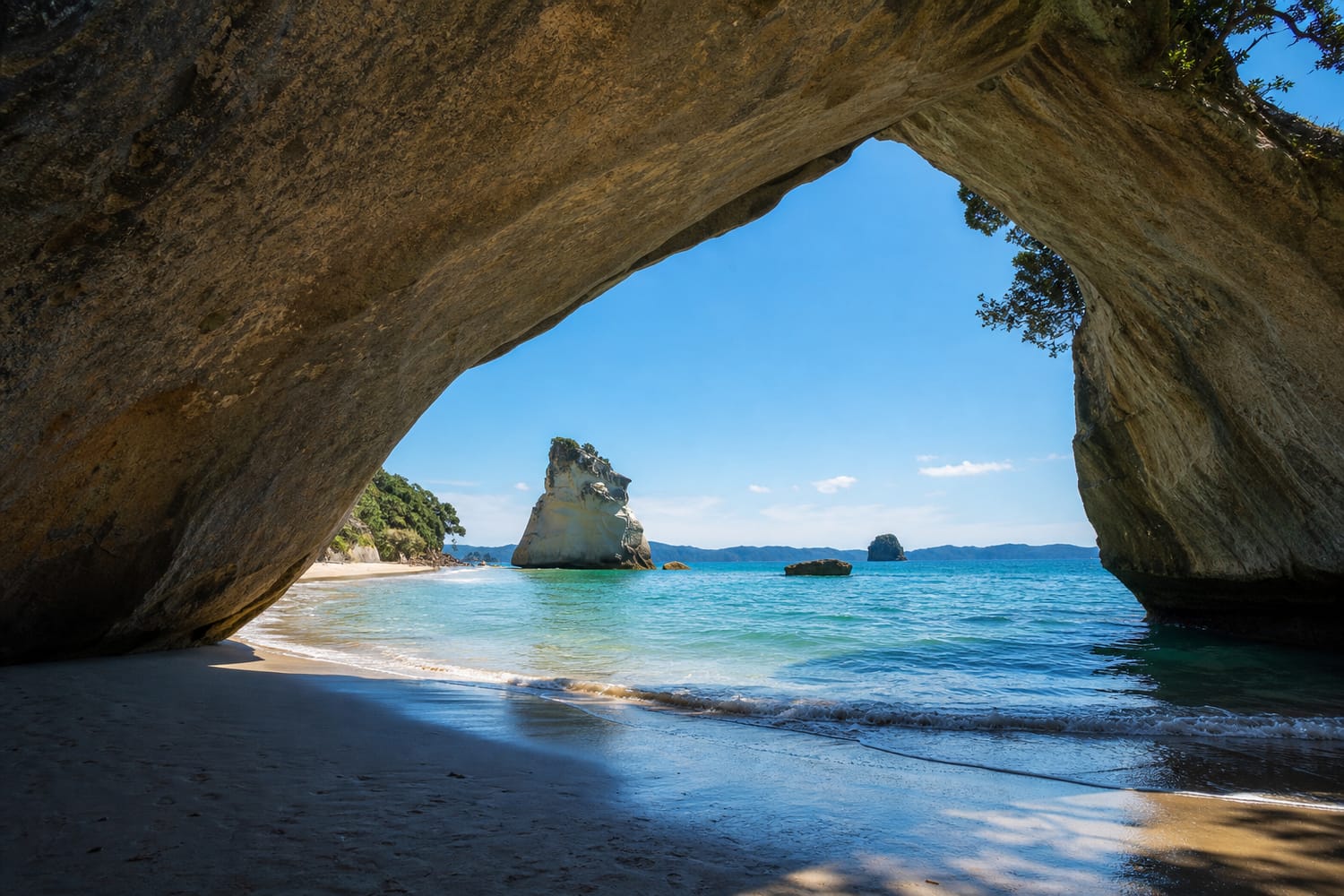
Cathedral Cove on New Zealand’s Coromandel Peninsula features a stunning sea-carved archway that connects two beaches. The arch is wide, smooth, and dramatic, with a ceiling that gives the space a cathedral-like feeling.
Visitors reach the cove by walking along a coastal trail or arriving by boat or kayak. Once there, the arch frames views of white sand, blue water, and offshore rock formations. It is one of those places where every angle seems naturally composed.
The arch was carved by the constant force of waves wearing away the softer rock. Its symmetry and setting make it look almost too cinematic to be real, which is why it has appeared in films and travel campaigns.
Sipapu Bridge, Utah, USA
Sipapu Bridge in Natural Bridges National Monument is one of the largest natural bridges in the United States. Unlike arches formed mainly by wind and weathering, natural bridges are often carved by flowing water, and Sipapu is a classic example.
This massive sandstone bridge spans a canyon in southeastern Utah. Its name comes from a Hopi word referring to a place of emergence, adding cultural meaning to its already powerful presence.
Sipapu Bridge looks ancient, solid, and monumental. Trails lead visitors to viewpoints above and below the bridge, revealing how dramatically it curves across the canyon. Its scale can be difficult to appreciate until you see tiny hikers standing near its base.
Green Bridge of Wales, Pembrokeshire, Wales
The Green Bridge of Wales is a spectacular sea arch on the Pembrokeshire coast. Formed from limestone cliffs, it extends out into the ocean like a natural causeway before curving down into the waves.
This arch looks especially dramatic because of its grassy top, which gives it the appearance of a bridge built from both rock and meadow. Seabirds nest along the cliffs, and waves continually crash against the base, slowly reshaping the structure.
The Green Bridge of Wales is a reminder that natural arches are not frozen in time. Coastal erosion continues to shape it, just as it has for thousands of years. For now, though, it remains one of the most striking and elegant sea arches in Europe.
Stone Masterpieces Worth the Journey
Natural bridges and rock arches capture our imagination because they seem to defy logic. They are strong yet fragile, ancient yet temporary, rugged yet beautifully shaped. Whether standing in deserts, forests, mountains, or coastal cliffs, each one tells a story written by erosion and time.
For travelers, these formations are more than photo opportunities. They are reminders that the natural world can create structures as breathtaking as any monument. On Tour Trivia, they also offer the perfect kind of wonder: places that make you pause, look twice, and ask how something so perfect could possibly be real.