
Where Landscapes Cross Boundaries
Some of Earth’s most memorable scenery appears where contrasting environments meet: desert and ocean, rainforest and reef, glacier and black-sand beach. These boundaries are rarely neat lines. Instead, they are dynamic places shaped by tides, winds, weather, and geological forces—creating destinations that seem to belong to two natural worlds at once.
Namib Sand Sea, Namibia
Along Namibia’s Atlantic coast, immense rust-colored dunes rise beside cold, restless ocean waters. The contrast is especially dramatic around Sandwich Harbour, where the Namib Desert appears to tumble directly into the sea.
Fog rolling inland from the Atlantic supplies precious moisture to plants and animals adapted to this extremely dry environment. UNESCO calls the Namib Sand Sea the world’s only coastal desert with extensive dune fields influenced by fog, making this collision of sand and ocean ecologically remarkable as well as visually spectacular.
Lençóis Maranhenses, Brazil
At first glance, Lençóis Maranhenses resembles an enormous white desert. After seasonal rains, however, freshwater collects between the sweeping dunes, producing thousands of blue and green lagoons.
The result is a landscape where water and sand alternate all the way to the horizon. Despite its desert-like appearance, the region receives too much rain to be classified as a true desert. Located where three Brazilian biomes meet, Lençóis Maranhenses National Park was added to the UNESCO World Heritage List in 2024.
It is also one of several extraordinary destinations featured among Tour Trivia’s underrated natural wonders.
Daintree Rainforest and the Great Barrier Reef, Australia
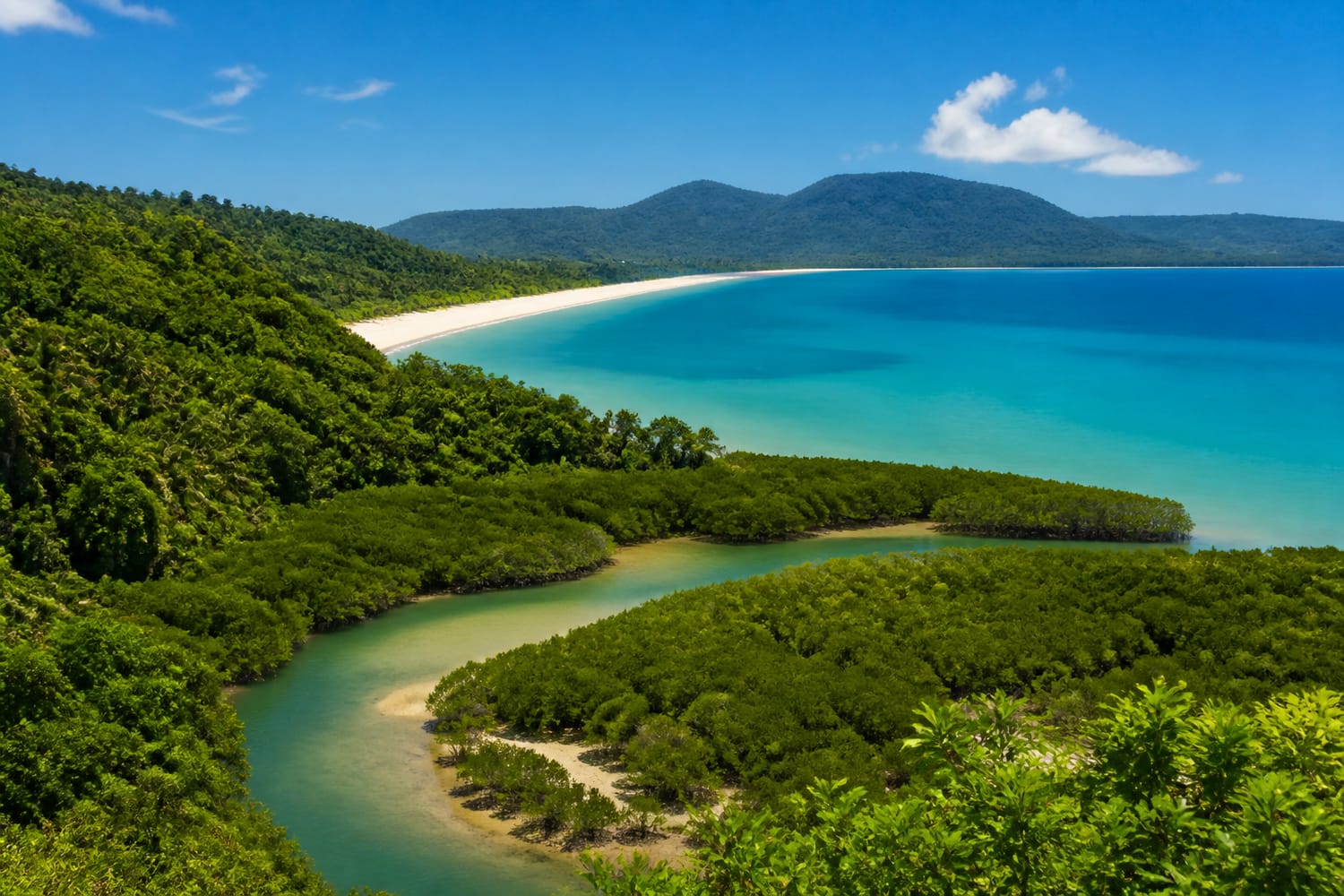
Near Cape Tribulation in northeastern Australia, ancient tropical rainforest extends toward beaches facing the Great Barrier Reef. Within a relatively small area, travelers can walk beneath dense green canopies, cross mangrove-fringed waterways, and look out over coral-rich seas.
The offshore reef is the world’s most extensive coral reef ecosystem, containing roughly 2,500 individual reefs and more than 900 islands. This meeting of rainforest, mangroves, beaches, and reef creates a remarkable sequence of connected habitats. Learn more about the enormous Great Barrier Reef ecosystem through UNESCO.
The Sundarbans, India and Bangladesh
The Sundarbans occupy a vast delta where rivers descending from the Himalayas encounter the Bay of Bengal. Freshwater, saltwater, mud, and forest constantly interact here, producing a shifting maze of tidal channels and mangrove islands.
This landscape is both terrestrial and marine. Fish move through submerged roots, birds gather on exposed banks, and Bengal tigers navigate forests divided by waterways. Recognized as the world’s largest mangrove forest, the Sundarbans demonstrate how life can flourish along an unstable boundary between land and sea.
Jökulsárlón and Diamond Beach, Iceland
At Jökulsárlón, ice calving from Breiðamerkurjökull glacier enters a deep lagoon. The icebergs slowly drift through a narrow channel toward the Atlantic, where waves may carry polished fragments onto nearby Diamond Beach.
Against the volcanic black sand, the translucent ice can resemble scattered glass. This is a meeting place for several versions of Iceland at once: ancient glacier, freshwater lagoon, dark volcanic coast, and powerful ocean. It also complements the country’s celebrated waterfalls, explored in Tour Trivia’s guide to Iceland’s majestic natural wonders.
Kīlauea’s Coast, Hawaii
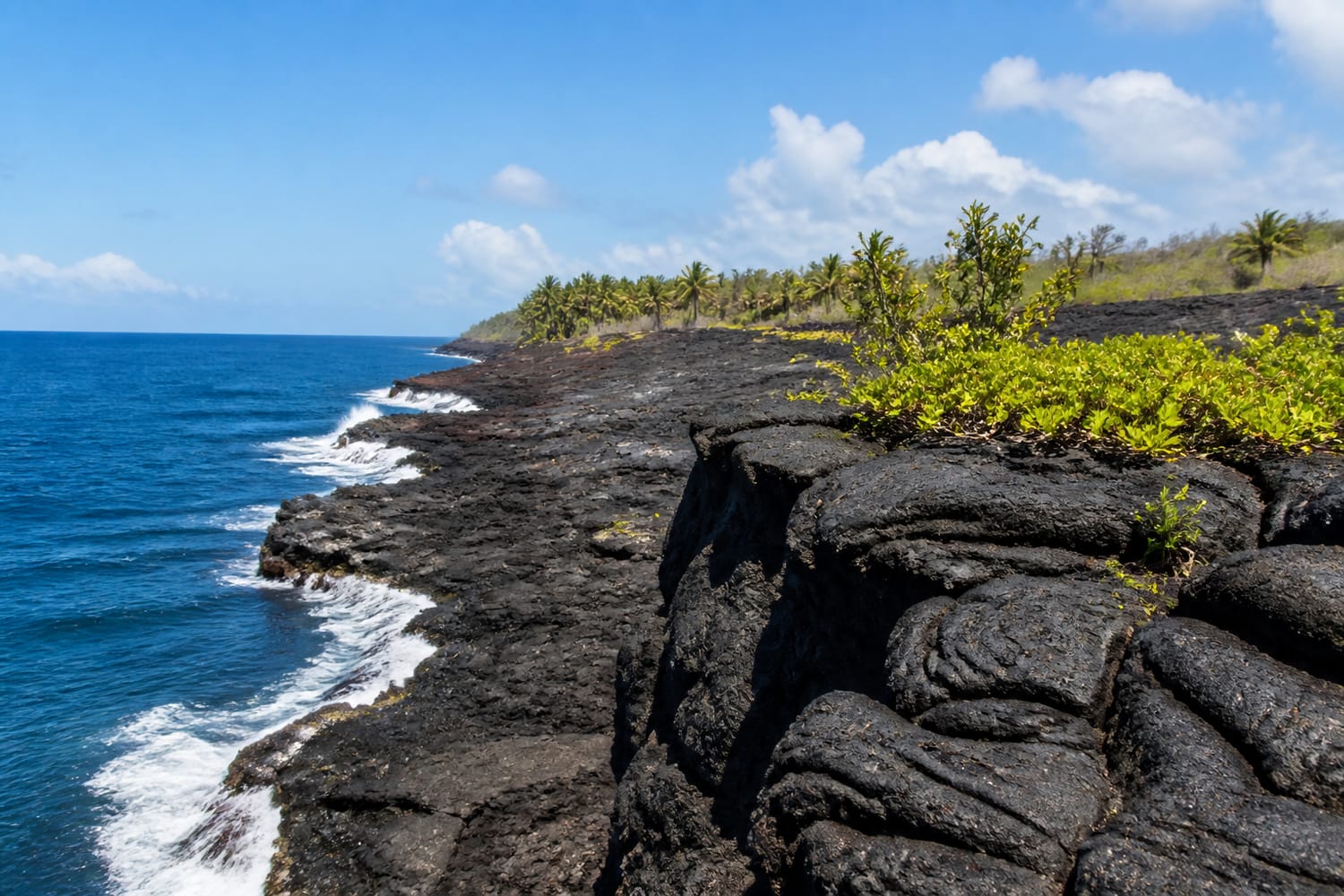
On the Island of Hawaii, volcanic activity has repeatedly brought molten rock toward the Pacific. When lava reaches the ocean, intense heat encounters cool seawater, producing steam and gradually building new coastal land.
Even when no lava is actively entering the sea, hardened flows reveal how the island has grown over time. Black cliffs, young lava fields, tropical vegetation, and bright blue water show destruction and creation sharing the same shoreline. Visitors should always observe closures and volcanic hazards from officially approved areas.
Salar de Uyuni, Bolivia
Bolivia’s Salar de Uyuni presents a different kind of collision: earth appears to merge with sky. During dry conditions, geometric patterns spread across the enormous salt crust. Following rainfall, a shallow layer of water can turn the surface into a nearly seamless mirror.
Clouds seem to float beneath visitors’ feet, and the horizon almost disappears. The effect makes scale difficult to judge and creates famously playful photographs. Its bold patterns also help explain why salt flats and other vast natural features can appear so striking in landmarks viewed from space.
Lake Hillier, Australia
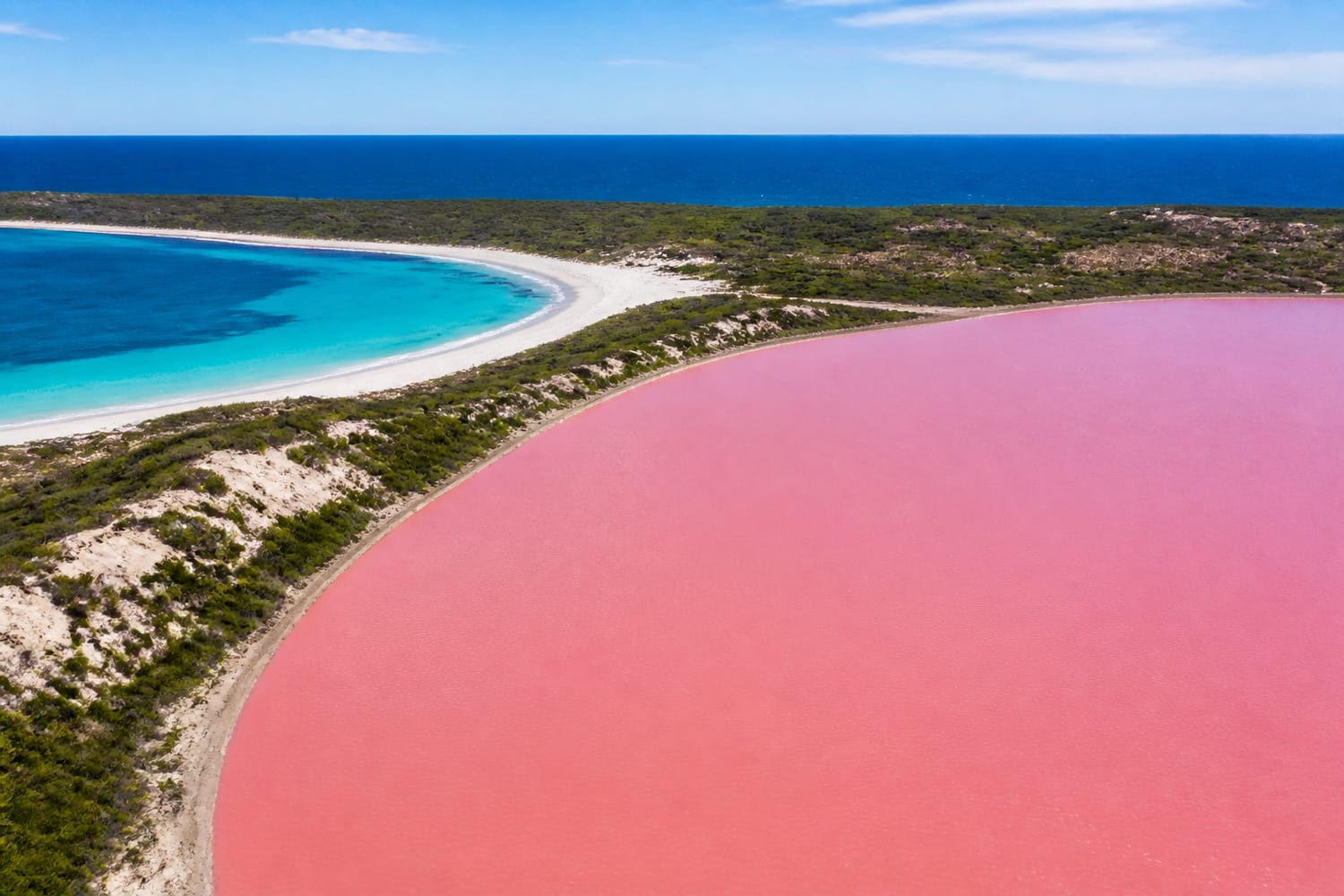
On Middle Island off Western Australia’s southern coast, pink Lake Hillier sits remarkably close to the deep-blue Southern Ocean. A narrow strip of dunes and vegetation separates the two bodies of water, making their contrasting colors especially vivid from above.
Lake Hillier’s high salinity and community of microorganisms contribute to its unusual coloration. The surrounding combination of saltwater lake, coastal forest, pale beach, and open ocean creates one of Australia’s most surprising natural palettes. Because the island is remote, the lake is most commonly appreciated through scenic flights and offshore excursions.
Torres del Paine, Chile
Chile’s Torres del Paine National Park stands at a climatic and ecological crossroads. Glaciers descending from the Southern Patagonian Ice Field meet turquoise lakes, windswept grasslands, rocky mountains, and patches of southern forest.
Conditions can change rapidly as powerful winds move across the open steppe toward the mountains. Guanacos roam relatively dry plains while glacial ice dominates the park’s western reaches. Rather than featuring one sharp boundary, Torres del Paine compresses several natural worlds into a single dramatic panorama.
Cape Agulhas, South Africa
Cape Agulhas is recognized geographically as the point where the Atlantic and Indian oceans meet. Visitors should not expect to see a perfectly defined line in the water, however. Ocean currents mix across a broad and constantly changing region.
The cape remains a compelling symbolic boundary. Warm water associated with the Agulhas Current interacts with colder Atlantic systems farther west, influencing marine conditions around southern Africa. Standing beside the marker, travelers face two named oceans and one immense, interconnected body of water.
The Beauty of Natural Boundaries
These destinations remind us that nature rarely fits into tidy categories. Deserts receive ocean fog, rain fills dune fields, glaciers reach beaches, and forests survive in tidal saltwater. Wherever two environments meet, they exchange water, minerals, energy, and wildlife.
For travelers, these boundaries provide unforgettable views. For the planet, they create complex habitats that deserve thoughtful protection. The real wonder is not simply that two natural worlds collide, but that entirely new worlds emerge where they meet.