
Why the Waters Look Separate
At certain river confluences, contrasting currents can travel side by side, creating the illusion that the waters refuse to mix. They do eventually blend, but differences in sediment, temperature, density, chemistry, speed, and volume may preserve a sharp boundary for miles. The result is one of nature’s most photogenic science lessons.
The colors usually come from suspended silt, dissolved minerals, algae, or organic compounds such as tannins. According to the U.S. Geological Survey’s guide to water color, sediment and organic material can turn natural water brown, green, yellow, or nearly black. When currents with different properties meet, turbulence gradually mixes them—but “gradually” is the key word.
Rio Negro and Rio Solimões, Brazil
Near Manaus, the dark Rio Negro meets the sandy-colored Rio Solimões at the famous Meeting of the Waters. The Negro gets its tea-like color from decaying vegetation and contains relatively little sediment. The Solimões carries pale sediment from the Andes.
Their temperatures, densities, and speeds differ, allowing them to flow beside each other for several miles before turbulent eddies complete the mixing. The boundary is so dramatic that it can be observed in satellite imagery. NASA’s explanation of the Meeting of the Waters offers a closer look at the hydrology behind the spectacle.
The confluence also makes a memorable gateway to the extraordinary wilderness of the Amazon.
Rhône and Arve, Switzerland
Geneva’s La Jonction is where the clear blue-green Rhône meets the cloudier, gray-brown Arve. Lake Geneva acts as a natural settling basin for much of the Rhône’s sediment. The Arve, meanwhile, descends from Alpine terrain and carries fine material produced by glacial erosion.
The contrasting sediment loads create a remarkably clean dividing line. Travelers can see the effect from elevated viewpoints near the Jonction bridge and viaduct, although rainfall and seasonal runoff influence the colors.
Thompson and Fraser Rivers, Canada
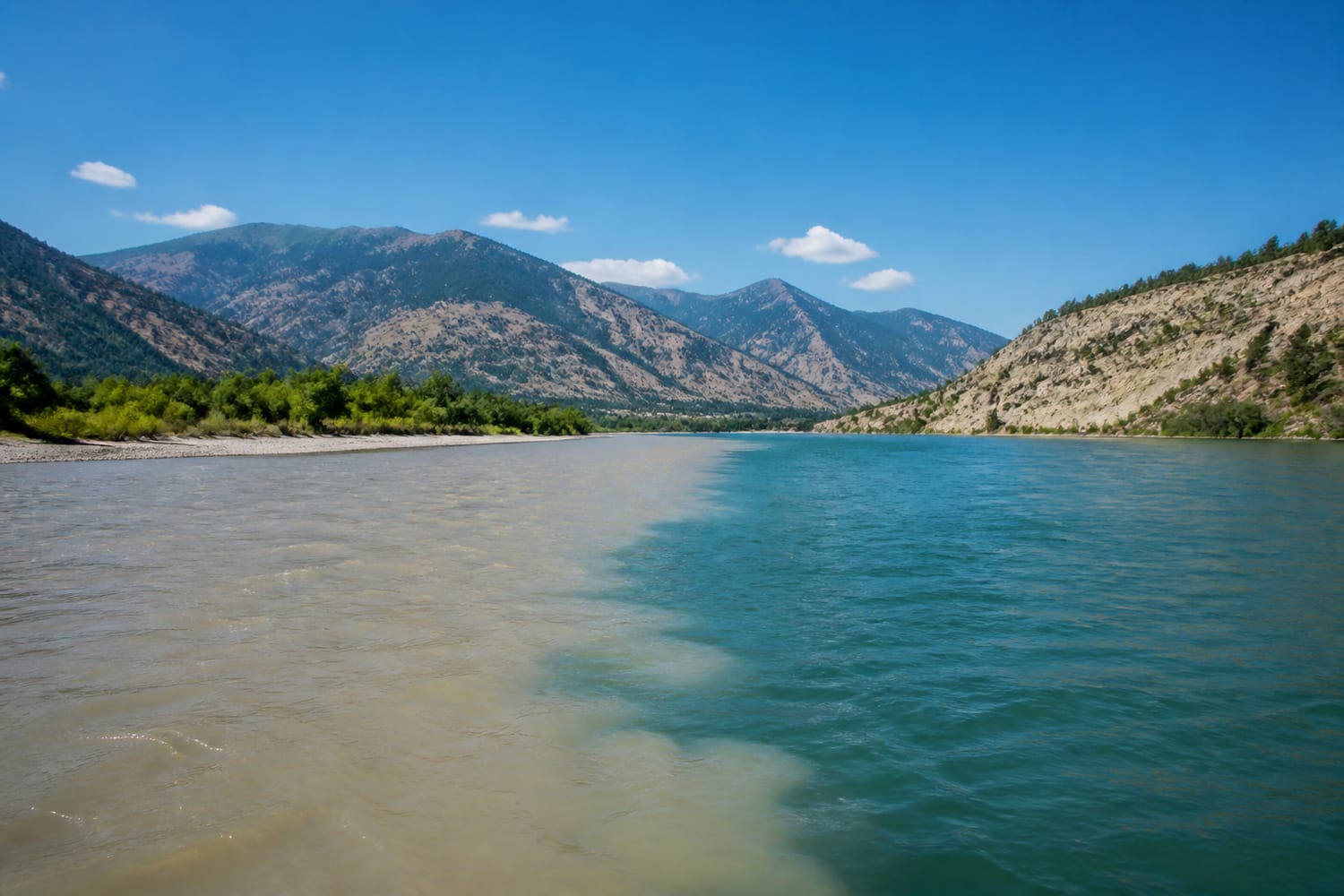
The village of Lytton, British Columbia, stands at the confluence of the Thompson and Fraser rivers. The Fraser is generally muddier because it transports abundant sediment through its vast watershed. The Thompson can appear clearer and bluer, producing a visible divide downstream.
Water volume, flow direction, and suspended sediment all contribute to the contrast. Conditions are especially changeable during spring snowmelt, when both rivers experience increased discharge. Lytton’s surrounding mountains provide a dramatic frame for the meeting currents.
Green and Yampa Rivers, United States
Deep inside Dinosaur National Monument, the Green and Yampa rivers meet beside Steamboat Rock. The dam-regulated Green often appears relatively clear and blue-green, while the free-flowing Yampa carries heavier loads of brown sediment.
This is more than a colorful meeting. Scientists use the area to compare a regulated river, a largely wild river, and the combined waterway below their confluence. Visitors who reach remote Echo Park can follow a short trail to view the junction.
Ohio and Mississippi Rivers, United States
Immediately south of Cairo, Illinois, the Ohio River joins the Mississippi. The Ohio commonly appears greener and clearer, while the Mississippi is famous for its muddy brown water. Yet storms can reverse the familiar color pattern by washing exceptional quantities of sediment into one watershed.
A NASA photograph taken in January 2006 captured brown Ohio water beside a greener Mississippi, with little visible mixing several miles downstream. The example demonstrates why confluence colors are not permanent: they respond to rainfall, erosion, floods, and seasonal flow.
Alaknanda and Bhagirathi Rivers, India
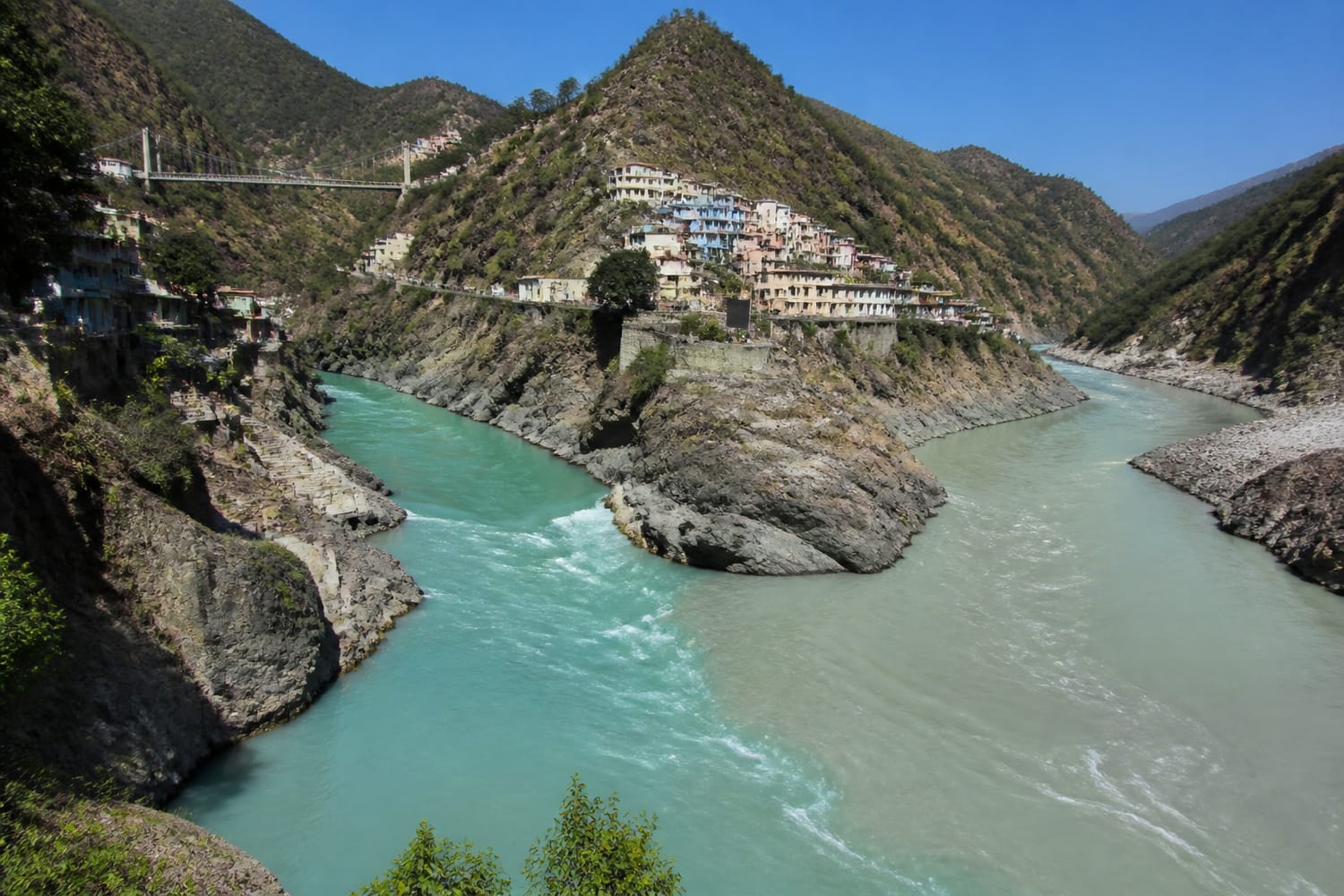
At Devprayag in Uttarakhand, the Alaknanda and Bhagirathi merge and continue under the name Ganga, or Ganges. The sacred confluence is surrounded by steep Himalayan slopes, temples, and buildings that seem to balance above the rushing water.
Different sediment loads and flow conditions can make one river appear emerald or blue-green while the other looks paler, grayer, or muddier. Beyond its visual appeal, Devprayag holds profound religious importance as one of the five sacred confluences associated with the Alaknanda.
Danube, Inn, and Ilz, Germany
Passau offers a bonus: three rivers meet at its Dreiflüsseeck, or Three Rivers Corner. The Alpine Inn may appear green, the Danube blue or blue-gray, and the smaller Ilz extremely dark because its watershed includes moorland and forests.
Differences in depth, volume, origin, and organic material allow three colored bands to remain visible after the junction. An elevated view provides the best chance of distinguishing the streams, though weather and water levels can make the colors more subtle.
Jialing and Yangtze Rivers, China
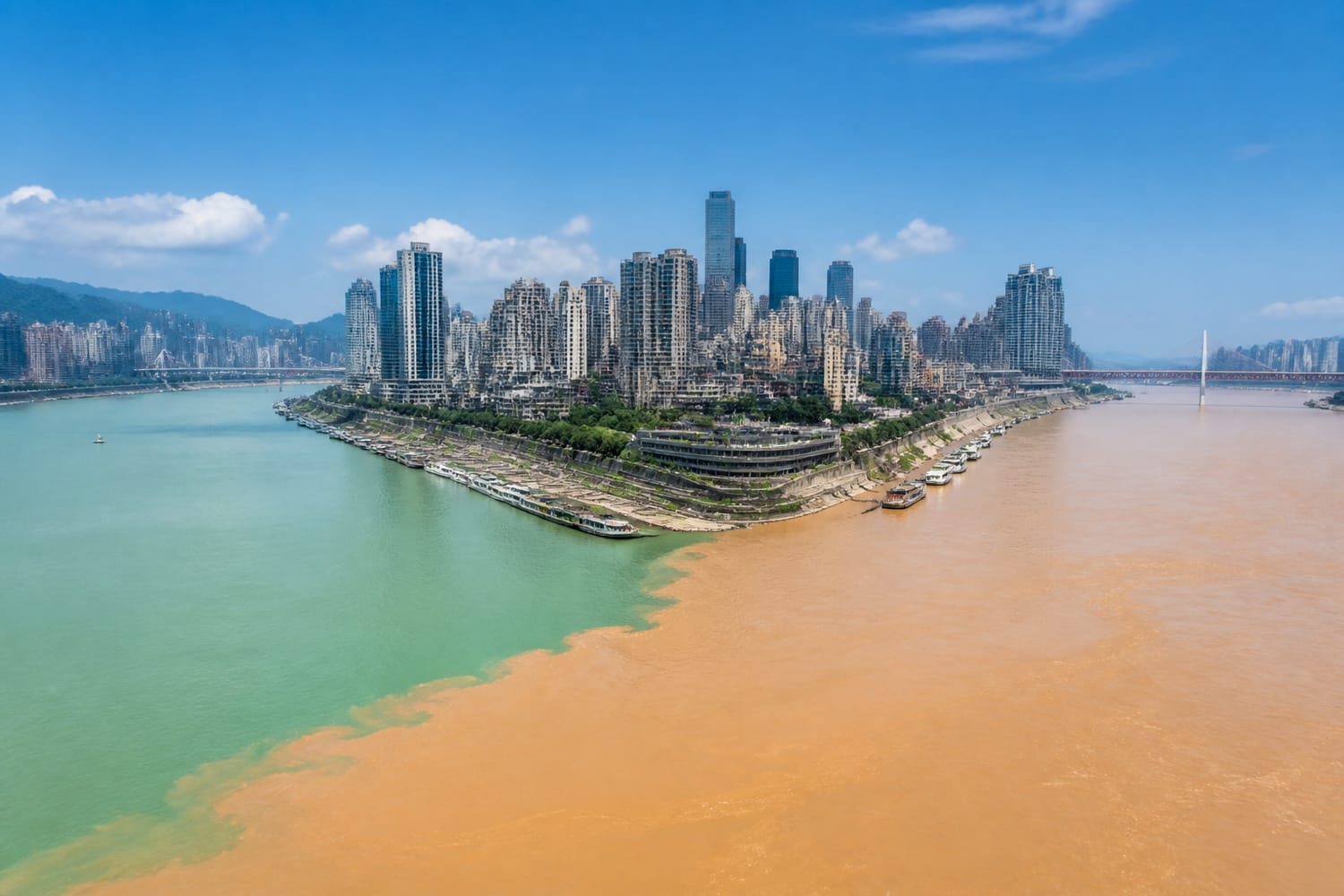
At Chaotianmen in Chongqing, the Jialing River meets the Yangtze beside a densely built peninsula. Their contrasting colors have inspired comparisons to a divided hot pot, with a clear “broth” on one side and a darker or orange-brown current on the other.
The pattern can reverse. In June 2023, heavy rain upstream increased the Jialing’s sediment content, making it orange-yellow while the Yangtze remained green. This striking change showed how recent weather—not merely a river’s identity—determines its appearance.
Sava and Danube Rivers, Serbia
Belgrade occupies a commanding position above the Sava-Danube confluence. From around Kalemegdan and Belgrade Fortress, observers may see the clearer, faster Sava meeting the slower and more turbid Danube.
The Sava can look blue or green while the Danube appears brown, particularly when lower summer water levels make the difference more noticeable. Islands, side channels, and shifting currents complicate the mixing zone, proving that a confluence is a three-dimensional system rather than a simple line on the surface.
Colorado and Little Colorado Rivers, United States
Inside Grand Canyon National Park, the Little Colorado joins the Colorado amid towering desert cliffs. Depending on runoff, the tributary may carry a dense load of tan or reddish sediment into clearer green water.
The Little Colorado’s appearance varies dramatically with storms and seasonal conditions. After heavy rain, suspended clay and silt can create a strong boundary at the confluence. At other times, mineral-rich water may give the tributary a vivid turquoise color. USGS observations confirm that differences in sediment load are clearly visible where the rivers meet.
Why Every Confluence Is Temporary
No invisible wall separates these rivers. Molecular diffusion, swirling eddies, bends, rapids, and friction eventually distribute heat, sediment, and dissolved substances across the combined channel. The visible boundary simply reveals that large natural currents require time and turbulence to blend completely.
Rainfall can intensify, weaken, or even reverse the colors, so photographs taken months apart may look surprisingly different. Like other natural landmarks visible from space, these confluences remind us that Earth’s grandest patterns are constantly changing. They may look like rivers refusing to mix, but what we are really seeing is fluid dynamics in progress.