
Nature’s Secret Rooms
Some ecosystems spread across continents; others fit inside a single geological formation. Caves, volcanic craters, and sinkholes can isolate life from surrounding landscapes, creating unusual combinations of climate, water, plants, microbes, and animals. These ten hidden worlds reveal a fascinating side of nature—and rank among the most bizarre natural wonders on Earth.
Sơn Đoòng Cave, Vietnam
Deep beneath Vietnam’s Phong Nha-Kẻ Bàng region, Sơn Đoòng is so enormous that sections of its collapsed ceiling function as skylights. Sunlight, rain, and seeds enter through these openings, sustaining dense vegetation hundreds of feet below the surface.
An underground river runs through the cave, while differences in temperature and humidity can produce mist and cloudlike formations. This extraordinary combination makes Sơn Đoòng feel less like an empty chamber and more like a valley enclosed within a mountain. The surrounding UNESCO World Heritage landscape also protects extensive subterranean environments and one of Asia’s oldest karst systems.
Movile Cave, Romania
Movile Cave proves that an ecosystem does not necessarily need sunlight. Its partially submerged environment is powered by chemosynthesis, in which microorganisms obtain energy from chemicals such as hydrogen sulfide and methane.
These microbes support a food web that includes cave-adapted spiders, leeches, crustaceans, snails, and other invertebrates. Many have evolved in isolation under conditions that would be dangerous to humans, including low oxygen and elevated levels of toxic gases. Movile resembles a miniature version of the ecosystems found around deep-sea hydrothermal vents, despite lying beneath dry land near the Black Sea.
Cueva de Villa Luz, Mexico
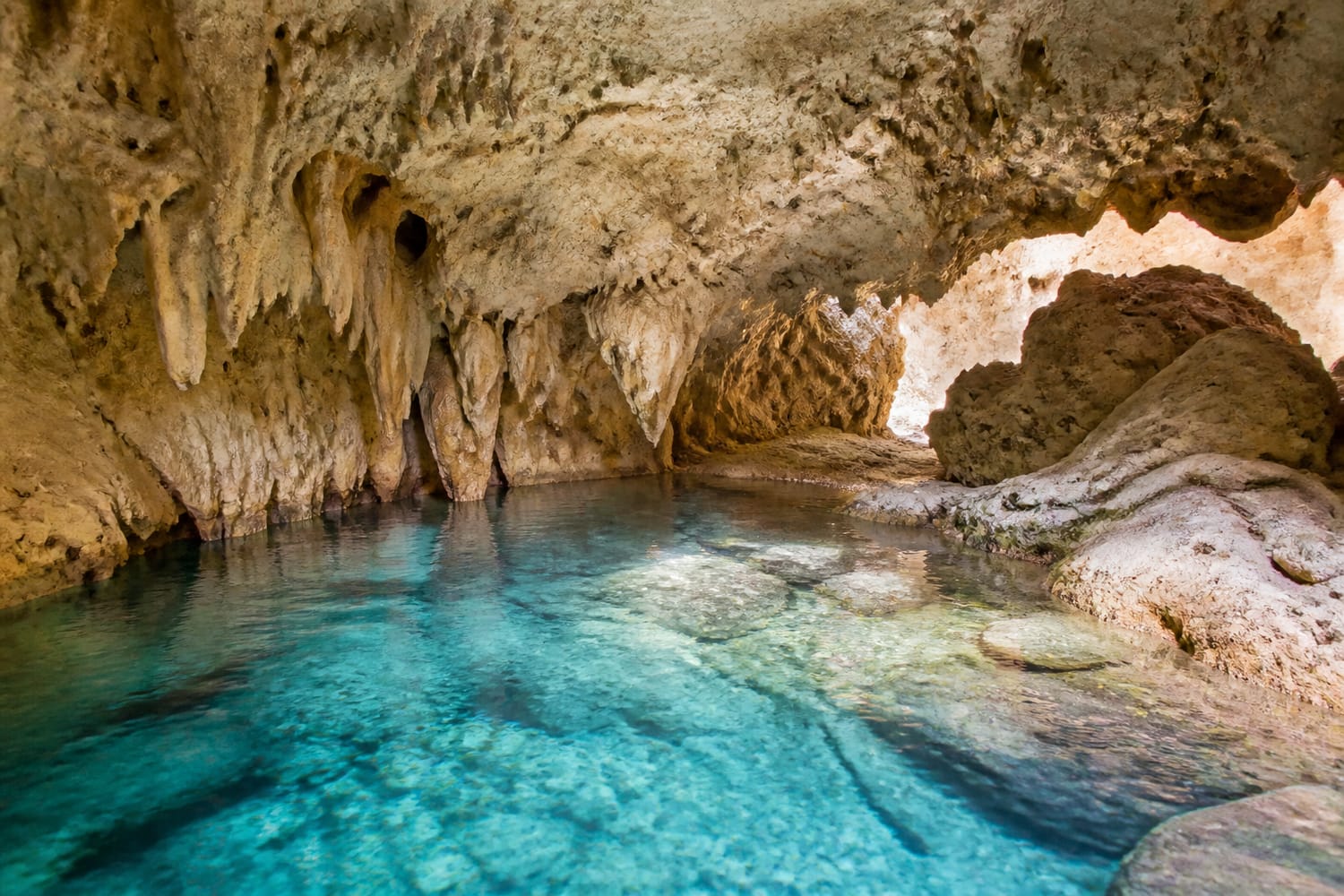
Cueva de Villa Luz in Tabasco is sometimes called the Cave of the Sardines, but its most remarkable inhabitants are microscopic. Hydrogen-sulfide-rich springs feed colonies of bacteria that coat parts of the cave in pale, mucus-like formations.
These bacteria convert sulfur compounds into usable energy, supporting insects, fish, and other organisms. The chemical reactions also produce sulfuric acid, which continues to dissolve and reshape the limestone. This means life is not merely occupying the cave—it is helping enlarge it. The air can contain hazardous concentrations of hydrogen sulfide, making scientific exploration challenging.
Waitomo Glowworm Caves, New Zealand
The darkness inside New Zealand’s Waitomo caves comes alive with thousands of blue-green lights. These “glowworms” are actually the larvae of a fungus gnat native to New Zealand.
Each larva produces light to attract tiny flying prey toward sticky silk threads hanging from the cave ceiling. Streams carry insects into the chambers, while high humidity prevents the larvae from drying out. The result is both a delicate food web and one of the world’s most memorable underground displays. Waitomo also appears among Tour Trivia’s underrated natural wonders.
Deer Cave, Malaysia
Deer Cave lies within Gunung Mulu National Park on the island of Borneo. Its ecological engine is a vast population of bats that leaves the cave to feed after sunset.
Inside, enormous guano deposits provide nutrients for cockroaches, beetles, fungi, and other decomposers. These organisms consume droppings and animal remains, recycling material that would otherwise accumulate on the cave floor. Predators then feed on the guano-dwelling invertebrates.
UNESCO reports that Deer Cave shelters more than three million wrinkle-lipped free-tailed bats, demonstrating how a single animal colony can sustain an entire subterranean community.
The Yucatán’s Flooded Cenotes, Mexico
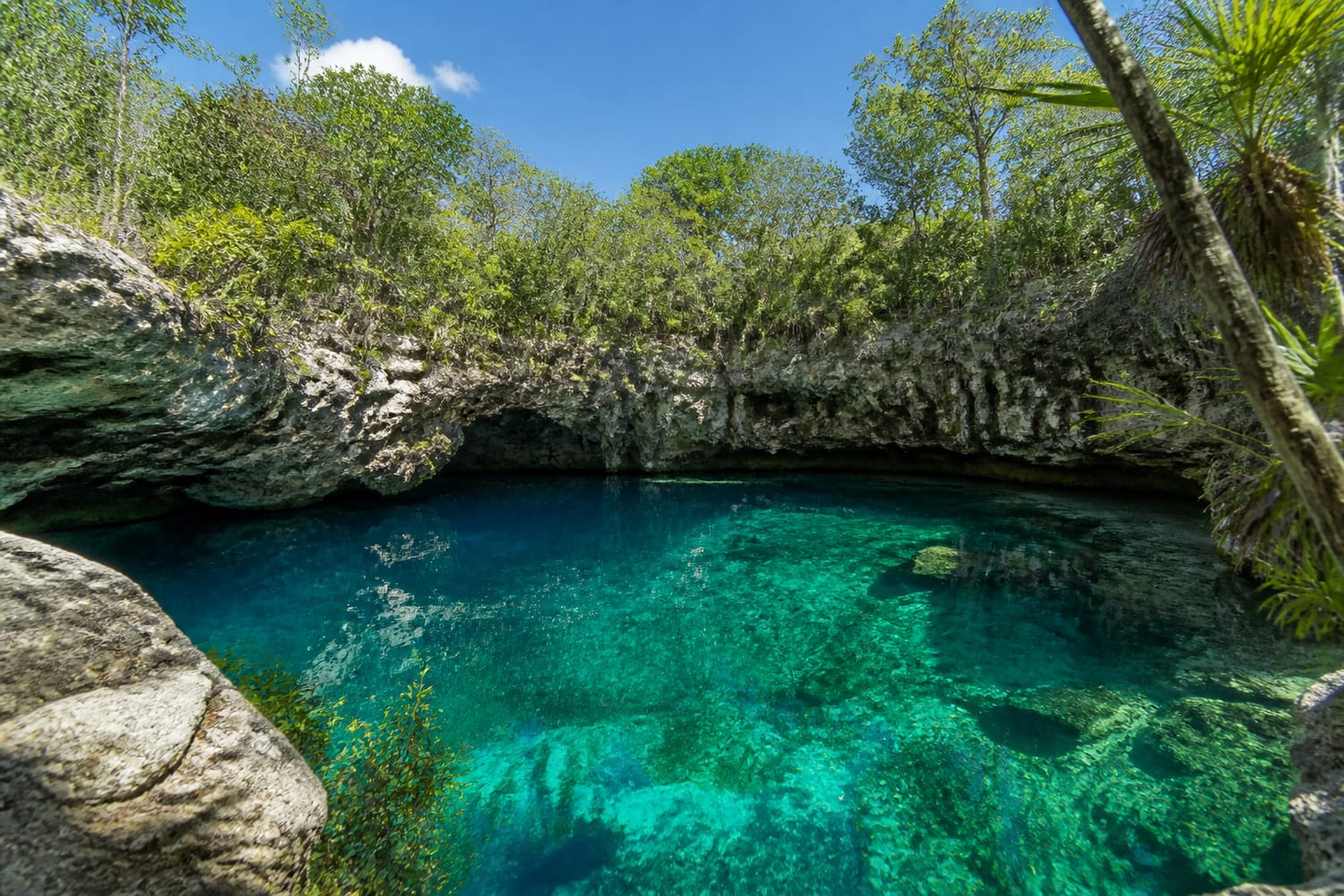
The cenotes of the Yucatán Peninsula are entrances to an immense network of flooded caves. Beneath the jungle, freshwater from rainfall meets salt water entering from the coast, producing distinct layers with different chemical conditions.
Research in the Ox Bel Ha cave system found a food web fueled partly by methane and dissolved organic carbon filtering down from the forest. Bacteria consume these substances before becoming food for cave-adapted crustaceans. The USGS describes this hidden environment as a subterranean estuary, linking life above the jungle floor to organisms living in darkness below it.
Dashiwei Tiankeng, China
In southern China, giant karst sinkholes known as tiankengs, or “heavenly pits,” descend into landscapes concealed by steep stone walls. Dashiwei Tiankeng contains a remarkably intact forest of towering trees, shade-loving plants, and moisture-dependent organisms.
The sinkhole’s depth creates a cooler, wetter microclimate than the surrounding surface. Its difficult access has also helped protect species from agriculture and development. According to UNESCO’s exploration of China’s heavenly pits, these formations can act as sanctuaries for rare plants, animals, and microbes—and perhaps species still unknown to science.
The Great Blue Hole, Belize
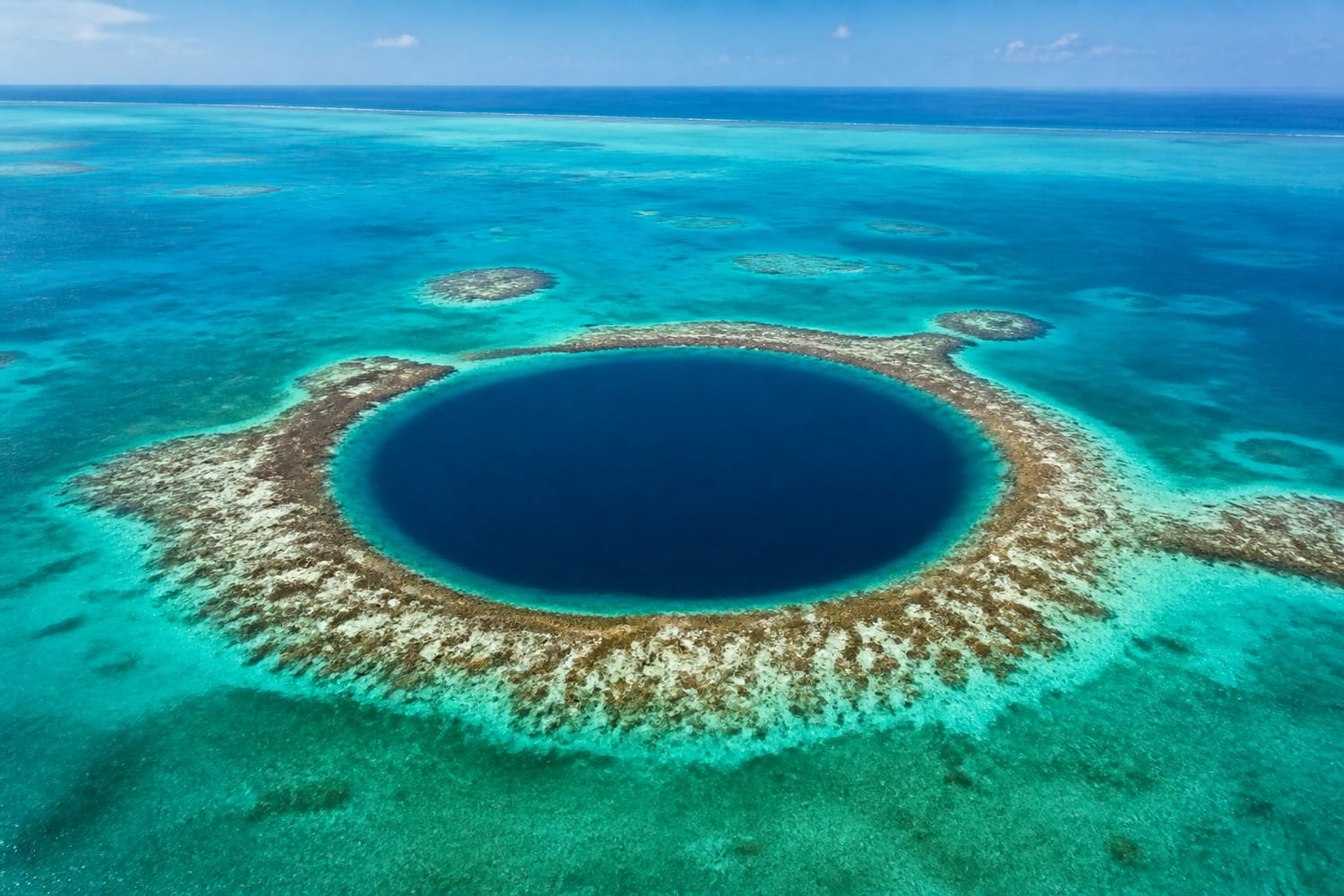
From above, the Great Blue Hole appears to be a dark circle cut into the turquoise Caribbean. It is actually a flooded vertical cave within Lighthouse Reef, formed when sea levels were much lower.
Sunlit surface waters support reef fish, sharks, and corals around the rim. Deeper inside, oxygen declines and conditions become increasingly hostile to familiar marine animals. Microbes dominate where darkness, salinity, and limited circulation create sharply separated habitats. Sediments at the bottom preserve evidence of ancient forests, changing sea levels, and powerful storms, turning this marine sinkhole into both an ecosystem and a natural archive.
Mount Bosavi, Papua New Guinea
Mount Bosavi is the collapsed cone of an extinct volcano surrounded by remote rainforest. Its steep crater walls have limited human access and reduced hunting pressure, allowing wildlife to persist with relatively little disturbance.
A scientific expedition documented numerous potentially new species in and around the crater, including frogs, insects, fish, a bat, and the Bosavi woolly rat. The crater’s isolation does not make it completely sealed, but it creates an ecological island where populations can follow distinctive evolutionary paths. It is a dramatic reminder that unexplored worlds can still exist on land.
Ngorongoro Crater, Tanzania
Ngorongoro shows what happens when a hidden world is large enough to hold lakes, grasslands, forests, predators, and vast herds. The volcanic caldera’s floor lies hundreds of meters beneath its rim, creating a natural amphitheater occupied by lions, hyenas, zebras, buffalo, gazelles, and endangered black rhinos.
Animals can move in and out, so the crater is not a closed ecosystem. Nevertheless, its walls, water sources, and varied habitats concentrate wildlife on an extraordinary scale. UNESCO recognizes Ngorongoro as the world’s largest unbroken caldera and one of the planet’s greatest wildlife spectacles.
Why Hidden Ecosystems Matter
These worlds within worlds are more than spectacular curiosities. They help researchers understand evolution, adaptation, geology, climate history, and even the possibility of life in extreme environments elsewhere in the universe.
Their isolation also makes them vulnerable. Pollution, careless tourism, groundwater extraction, and introduced organisms can disrupt ecological relationships that developed over thousands—or millions—of years. Protecting these places means preserving living laboratories whose greatest discoveries may still be hidden in the darkness.