
A Disaster That Looks Like Paradise
An exploding lake, or limnic eruption, occurs when enormous amounts of dissolved gas suddenly escape from deep water. The eruption may send water surging upward, but its deadliest product is often an invisible cloud of carbon dioxide that spreads across the surrounding landscape, displacing breathable air near the ground.
Unlike hurricanes or volcanic eruptions, these disasters provide few obvious visual warnings. A vulnerable lake may appear peaceful, reflecting green hills and blue skies while gas slowly accumulates hundreds of feet below. It is an unsettling example of how the world’s most beautiful places can conceal unexpected natural dangers.
How Can a Lake Explode?
Despite the dramatic name, an exploding lake does not necessarily detonate like a bomb. The process more closely resembles a bottle of soda being opened after it has been shaken.
Carbon dioxide can enter a lake through volcanic rock, underground springs, and magma-related geological processes. In a deep lake with stable water layers, the gas sinks or enters near the bottom and dissolves under immense pressure. Because the upper and lower layers rarely mix, that carbon dioxide may remain trapped for years or even centuries.
Three ingredients make a limnic eruption possible:
- A deep lake capable of holding strongly separated water layers
- A continuing underground source of carbon dioxide or another gas
- Enough pressure to keep that gas dissolved in the deepest water
If gas-rich water begins rising, the surrounding pressure decreases. Bubbles then form and expand, making the water more buoyant and pulling additional deep water upward. This creates a self-feeding chain reaction in which rapidly rising water releases progressively more gas.
Scientists do not always know what begins the process. A landslide, earthquake, volcanic disturbance, strong storm, or unusual temperature change could potentially disrupt the lake’s layers. A release might also begin without a dramatic external trigger if deep water becomes sufficiently saturated.
The Night Lake Nyos Turned Deadly
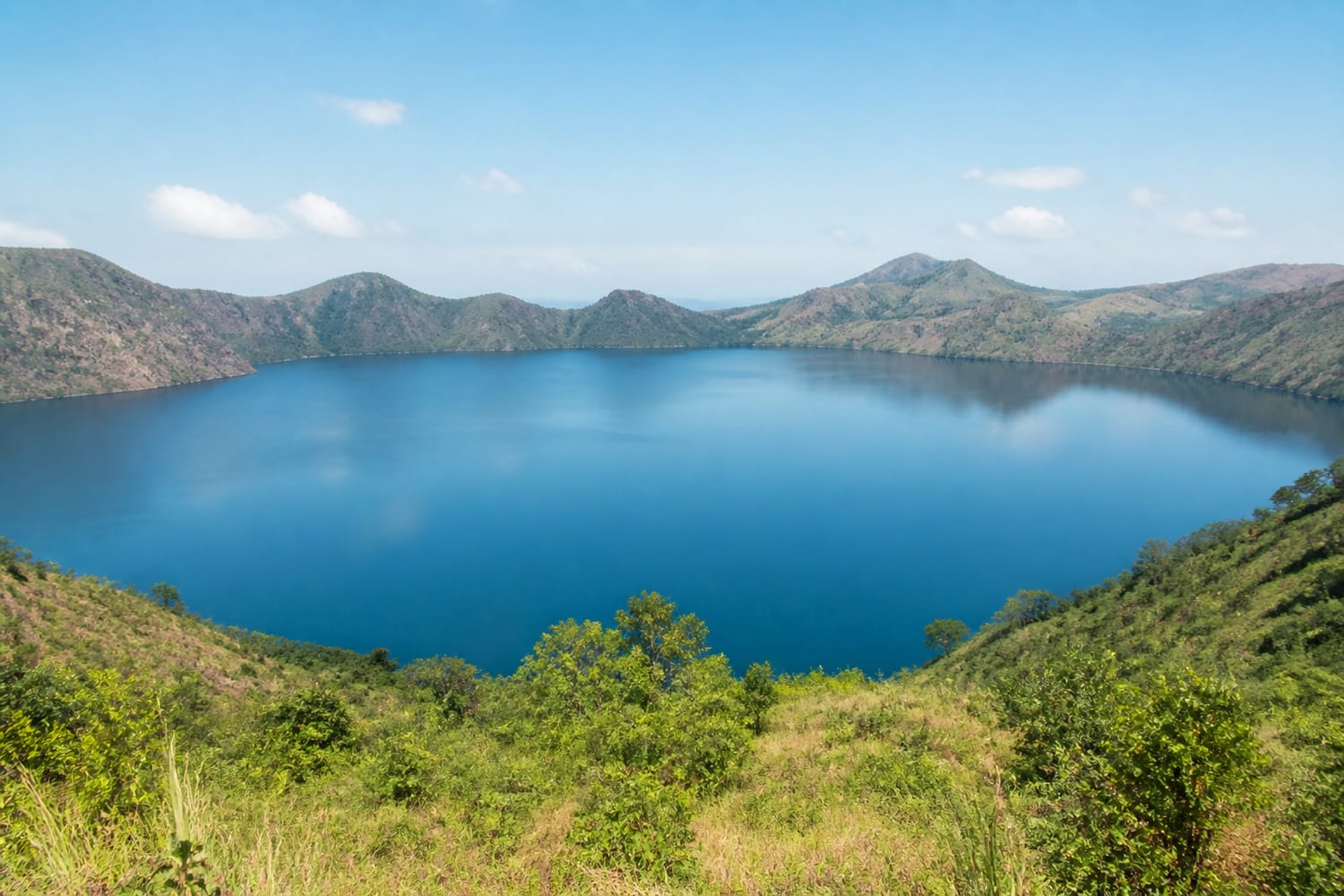
The best-known limnic eruption occurred at Lake Nyos in northwestern Cameroon on August 21, 1986. Residents reported hearing a rumbling sound before a strange cloud spread from the crater lake and entered nearby valleys.
The eruption released a vast quantity of carbon dioxide. Because the gas is colorless, nearly odorless, and denser than air, it remained close to the ground and flowed downhill into communities. It displaced oxygen as people slept, killing approximately 1,700 residents along with thousands of livestock.
Buildings were largely left standing, and many possessions remained undisturbed. There was no lava flow, widespread fire, or conventional ash cloud. Entire households simply lost consciousness as the oxygen around them disappeared.
Investigators found evidence that the lake itself had undergone a violent disturbance. Deep, iron-rich water reached the surface and oxidized, temporarily changing the lake’s color. Vegetation near the shore was damaged high above the normal waterline, indicating that the sudden gas release had also driven an enormous surge of water. The Smithsonian’s account of efforts to understand Lake Nyos describes how researchers eventually reconstructed this extraordinary disaster.
Lake Monoun’s Earlier Warning
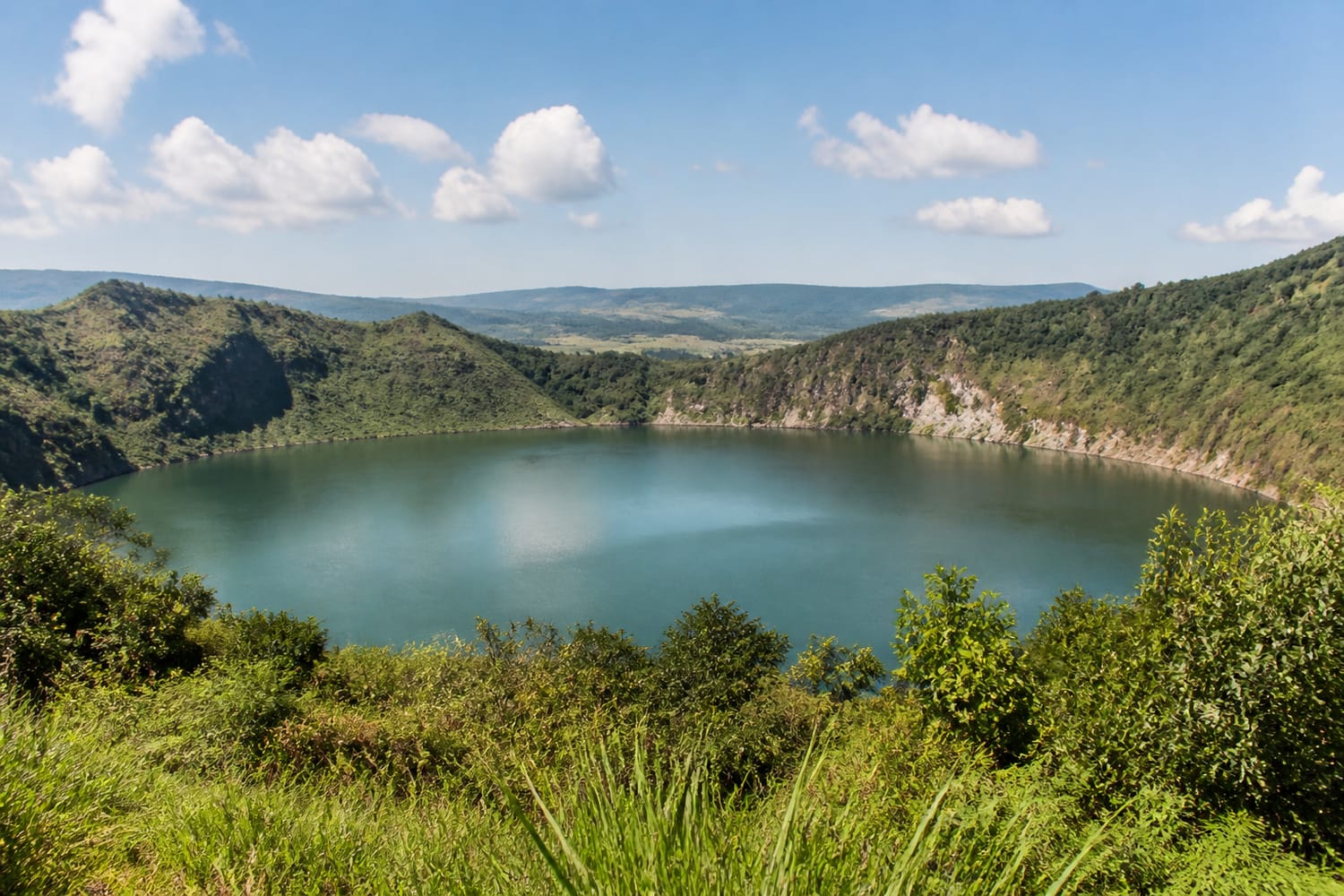
Lake Nyos was not the first deadly warning from Cameroon. On August 15, 1984, Lake Monoun released carbon dioxide in a smaller limnic eruption that killed 37 people.
Some victims were discovered along a road near the lake, initially creating confusion about what had happened. Researchers eventually concluded that carbon dioxide had accumulated in the deep water before escaping and settling over low ground. When Lake Nyos erupted two years later, the similarities helped scientists recognize that the world was facing a previously little-understood category of natural disaster.
These events remain extraordinarily rare. Most deep or volcanic lakes are not capable of producing limnic eruptions because their water circulates, their geology does not supply enough gas, or their physical structure prevents a dangerous buildup. For example, Oregon’s Crater Lake circulates sufficiently and shows no evidence of the trapped gas reservoir found at Nyos.
Lake Kivu and a Much Larger Question
Lake Kivu, located between Rwanda and the Democratic Republic of the Congo, is the most closely watched lake associated with this hazard. It is far larger than Nyos and contains dissolved carbon dioxide and methane within its deep, strongly stratified waters.
Millions of people live in the wider region, including residents of lakeside cities. Nearby volcanoes and earthquakes add to concerns about how a major geological disturbance might affect the lake’s stable layers. However, researchers do not consider a catastrophic eruption inevitable or necessarily imminent. Gas concentrations, water movement, volcanic activity, and changes between layers must be carefully measured rather than reduced to “ticking time bomb” headlines.
Lake Kivu also presents an unusual opportunity. Methane extracted from its depths can be used to generate electricity, potentially reducing part of the gas reservoir while providing energy. Any extraction must be precisely managed, since returning water to the wrong depth could disturb the lake’s natural structure. UNESCO offers a closer look at the scientific monitoring of Lake Kivu and its volcanic surroundings.
Defusing a Killer Lake
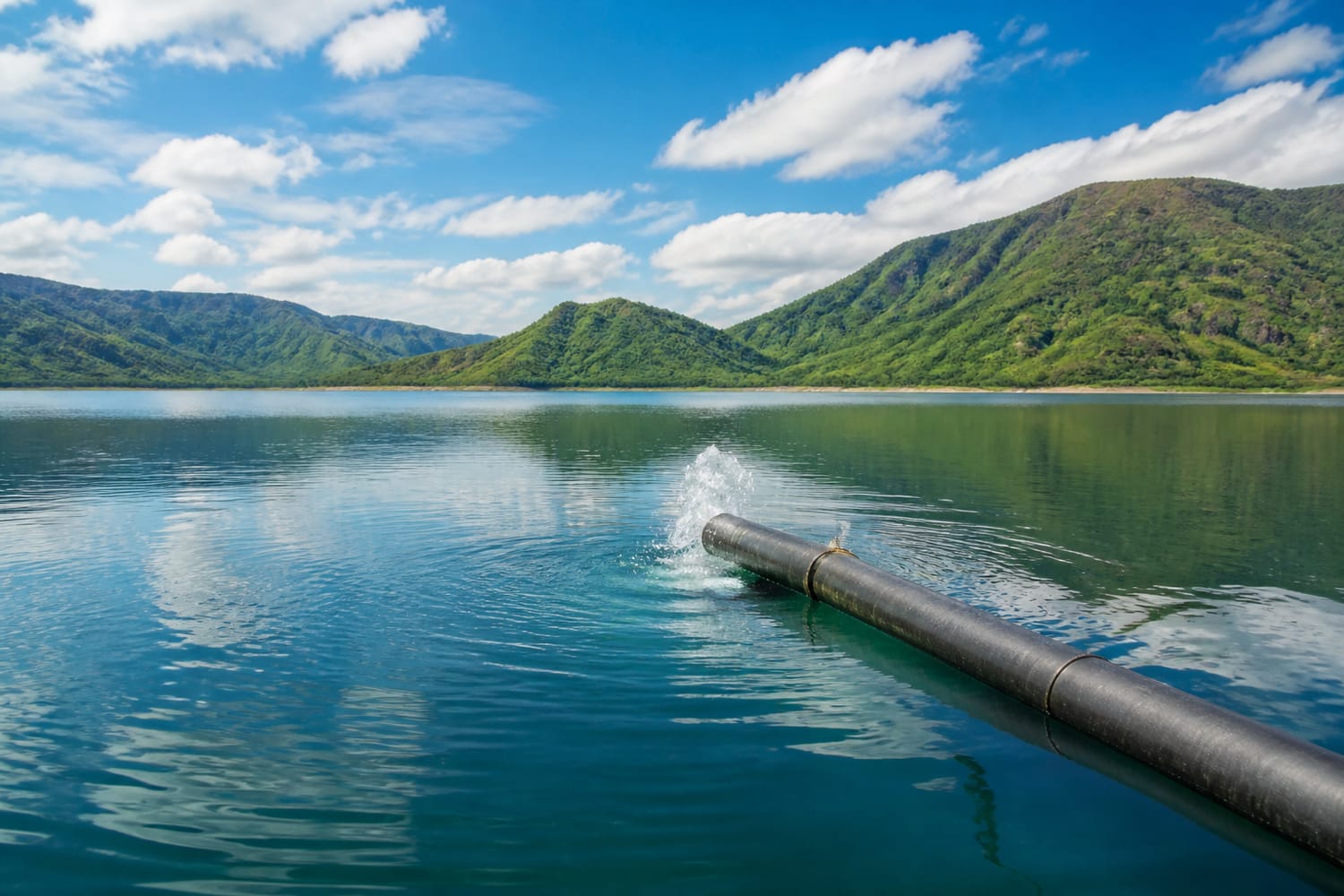
After the Cameroon disasters, engineers developed systems to remove carbon dioxide gradually. Pipes installed in Lakes Nyos and Monoun reach into gas-rich deep water and bring it toward the surface.
Once the water rises, falling pressure causes carbon dioxide to bubble out. Those bubbles provide enough lift to keep water flowing through the pipe after the process has been started. Instead of accumulating until a catastrophic release becomes possible, the gas escapes at a controlled rate and disperses into the atmosphere.
Degassing does not eliminate the need for observation. Carbon dioxide continues entering these lakes from below, so scientists must monitor gas concentrations, water temperatures, layer boundaries, equipment, and local geological activity. The solution is ongoing management rather than a one-time repair.
What Travelers Should Understand
Limnic eruptions are too rare to justify fearing every crater lake. Travelers can appreciate the planet’s stunning lakes and other waterscapes without assuming calm water is dangerous.
In regions where gas hazards are officially recognized, however, visitors should follow local instructions. Carbon dioxide moves toward valleys and depressions, so an emergency response generally involves reaching higher ground quickly. Ordinary masks cannot supply oxygen or protect someone from an oxygen-deficient atmosphere.
Exploding lakes reveal a natural world that is stranger than appearances suggest. Their surfaces may be silent, but beneath them, geology, chemistry, and pressure can combine with devastating force. Understanding that hidden system has allowed scientists to transform an almost unimaginable disaster into a hazard that can be monitored—and, with continued care, controlled.