
When Forests Become Water Collectors
Some forests receive water even when no rain is falling. By standing directly in the path of fog and low clouds, their leaves, needles, mosses, and branches capture microscopic droplets from the air. Those droplets merge, trickle downward, and eventually soak the soil—a natural process known as cloud-water interception or fog drip.
This phenomenon is especially important in cloud forests, where mountains push moist air upward until it cools and condenses. The result is a landscape that seems permanently suspended between earth and sky: wet leaves, drifting mist, and water quietly dripping from the canopy.
The Difference Between Fog and Rain
Rain begins when droplets inside a cloud become large and heavy enough to fall. Fog consists of much smaller droplets floating close to the ground. Although these droplets are too light to descend like rain, they can still collide with solid surfaces.
A tree standing in moving fog acts like an enormous living net. Wind carries droplets against its outer leaves, twigs, needles, and bark. The captured water gathers into larger beads before following one of several paths:
- It drips from leaves onto the forest floor.
- It runs down branches and trunks as stemflow.
- It remains on mosses, lichens, and other plants.
- It evaporates and returns to the atmosphere.
- It enters the soil, where it can support roots, streams, and groundwater.
This is not quite the same as pulling invisible water vapor directly from dry air. Forests are primarily catching liquid droplets that already exist in clouds or fog. Dew, by comparison, forms when water vapor condenses onto a cool surface.
Why Mountains Create Cloud Forests
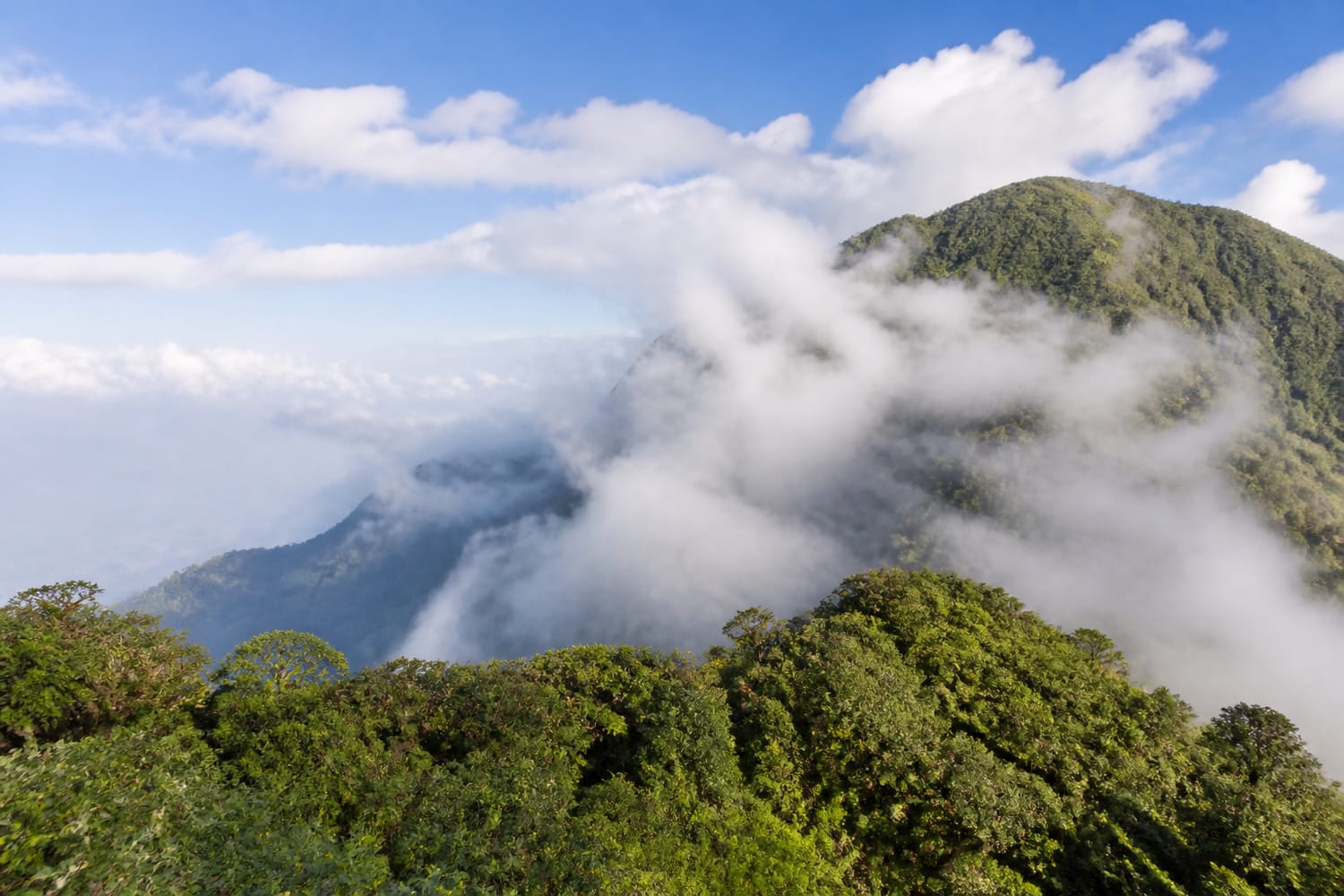
Cloud forests usually develop where moist air encounters elevated terrain. As wind pushes the air up a mountain slope, atmospheric pressure decreases and the air cools. Its water vapor then condenses, producing clouds at vegetation level.
The ideal elevation varies by location. Temperature, wind direction, distance from the ocean, and the shape of the mountains all influence where the cloud layer forms. On some peaks, the forest may be immersed in fog almost every day. Elsewhere, clouds arrive mainly during a particular season or time of day.
These conditions create forests that feel different from lowland rainforests. Trees are often shorter and twisted by wind, while branches carry thick gardens of ferns, orchids, lichens, and moss. The filtered light and constant moisture can make these places resemble the mist-covered settings in Tour Trivia’s collection of surreal natural landscapes.
The Canopy’s Ingenious Design
Not every tree captures fog equally well. A forest’s effectiveness depends partly on its architecture.
Fine needles, small leaves, rough bark, dense twigs, and irregular surfaces give droplets more opportunities to collide with vegetation. Trees exposed along ridges and forest edges may collect particularly large amounts because they meet the wind directly. Mosses and lichens add even more surface area, turning branches into absorbent aerial gardens.
Once enough droplets accumulate, gravity takes over. Water begins falling beneath the canopy even though no conventional rain is passing through the open sky. Someone walking under the trees might hear steady dripping while a nearby clearing remains almost dry.
Research in Hawai‘i found that annual cloud-water interception varied substantially between study sites according to factors such as fog availability, wind speed, and vegetation structure. At the monitored locations, intercepted cloud water represented between 3% and 34% of total water input, according to the U.S. Geological Survey’s cloud-water research.
Where Forests Drink the Clouds
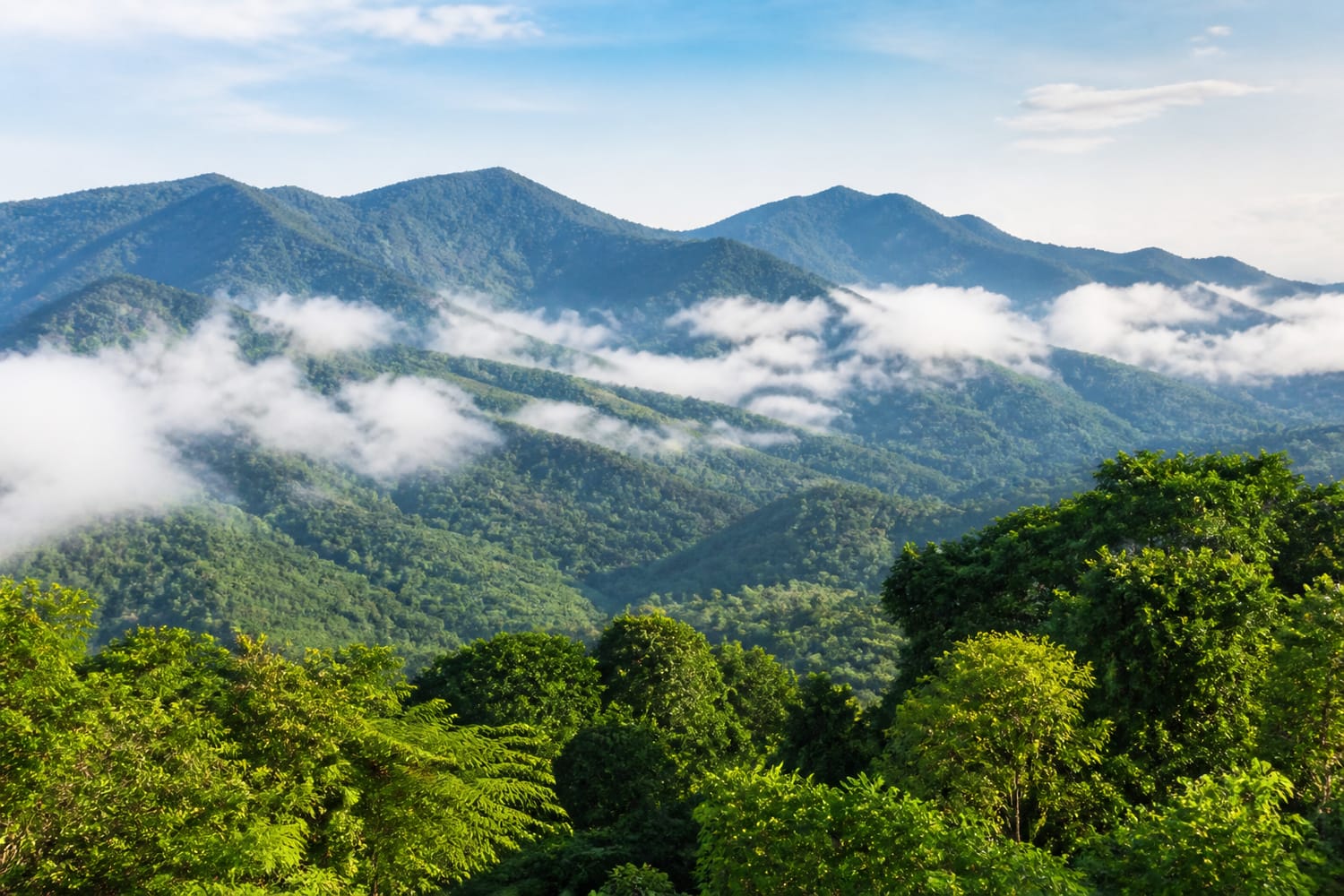
Cloud-catching forests appear in both tropical and temperate regions.
Costa Rica’s highlands are famous for misty forests filled with orchids, bromeliads, hummingbirds, and resplendent quetzals. Puerto Rico’s Luquillo Mountains receive frequent cloud immersion, while Hawai‘i’s volcanic slopes intercept moisture carried by Pacific winds.
Similar systems occur in the laurel forests of Madeira and the Canary Islands, the mountains of eastern Africa, Southeast Asia, and the northern Andes. Along California’s coast, redwood forests also benefit from summer fog when rainfall is scarce.
Some cloud-fed ecosystems survive surprisingly close to deserts. Chile’s Fray Jorge region, for example, contains forest sustained by moisture from coastal fog despite the surrounding dry landscape. The contrast recalls the life-giving pockets described in Tour Trivia’s guide to desert oases and water in arid places.
A Hidden Part of the Water Cycle
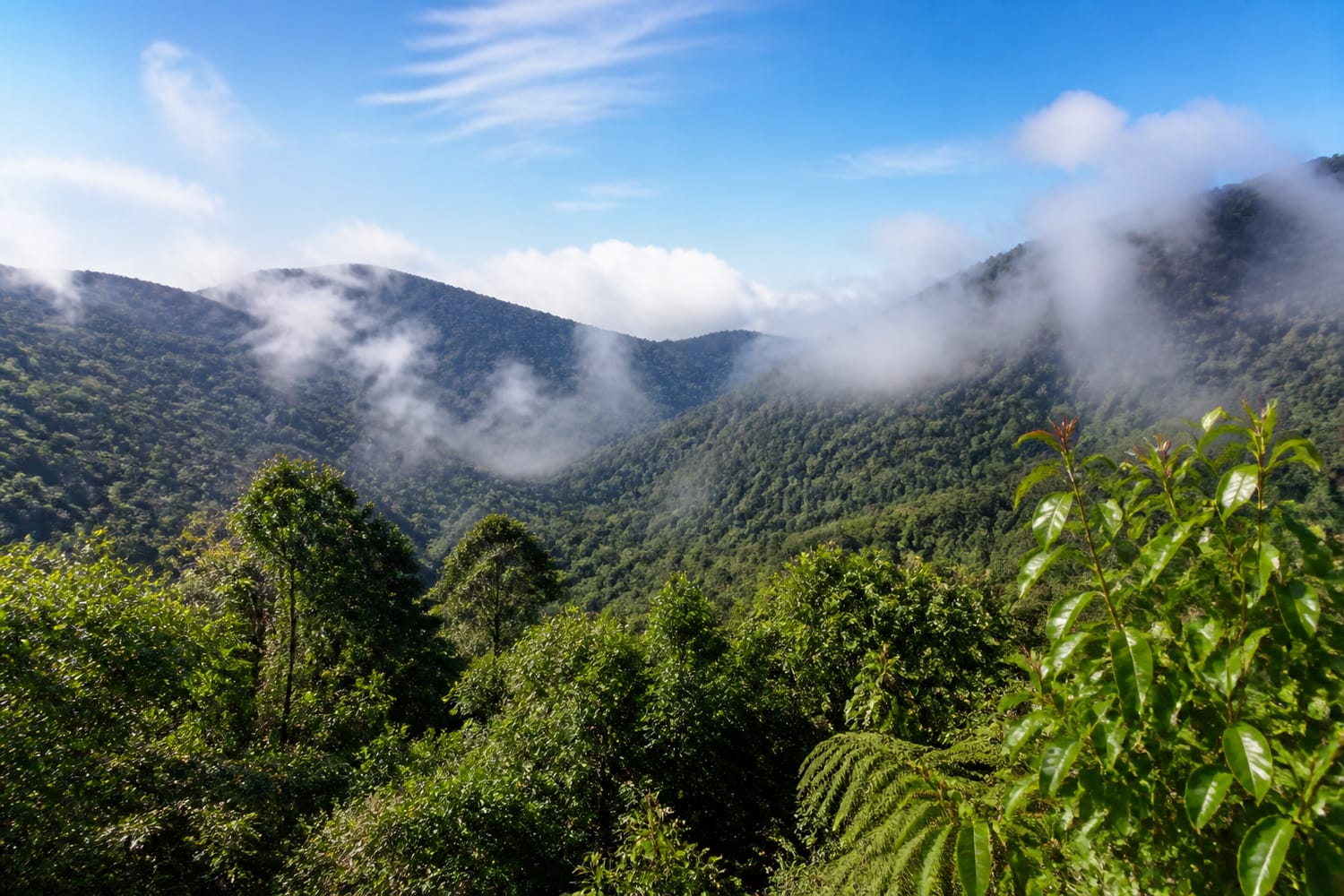
Fog capture does more than wet leaves. Water dripping from the canopy can enter soil, feed springs, support streamflow, and contribute to groundwater recharge. During periods with little rain, this additional moisture may help plants survive and keep aquatic habitats flowing.
Cloud cover also reduces water loss. Foggy conditions generally bring lower temperatures, weaker sunlight, and higher humidity, which can slow evaporation and plant transpiration. In other words, clouds may simultaneously add water and help the forest conserve what it already has.
This makes cloud forests valuable natural infrastructure for communities living downstream. The USGS overview of mountain clouds notes that cloud immersion can deposit water while suppressing evapotranspiration, producing a net benefit for sustainable water supplies.
Nature’s Design Inspires Fog Nets
Humans have borrowed the forest’s strategy to collect water in dry but foggy environments. Fog collectors commonly use upright mesh panels positioned across the prevailing wind. Droplets strike the mesh, combine, and run into channels connected to storage tanks.
The system requires no pumping energy for the initial capture, although collected water may need filtration or treatment depending on local conditions and its intended use. Its success also depends heavily on reliable fog, suitable wind, clean collection materials, and careful maintenance.
In Chile’s Cerro Grande Ecological Reserve, high-density meshes capture droplets from the coastal camanchaca fog. The water is directed into a pond and used as a resource for the community and surrounding environment, as described by the Food and Agriculture Organization.
Fog nets are not a universal answer to water scarcity. However, in the right landscape, they can provide supplementary water for tree planting, gardens, livestock, habitat restoration, or household needs.
What Happens When Cloud Forests Disappear?
Removing a cloud forest does not simply eliminate trees. It also removes millions of natural surfaces that intercept airborne droplets.
Pastures or bare slopes may capture less fog than a complex canopy. Forest loss can also increase erosion, reduce habitat, and change how quickly water moves through a watershed. Meanwhile, warming temperatures may raise cloud bases in some regions, leaving forests below the zone of frequent immersion.
Protecting these ecosystems therefore means preserving both biodiversity and an unusual water-harvesting system. Travelers can help by staying on marked trails, avoiding damage to moss-covered vegetation, supporting community-led conservation, and choosing responsible guides.
The world’s most remarkable forests do far more than provide scenery. They cool landscapes, shelter wildlife, store carbon, and regulate water. As Tour Trivia’s exploration of pristine wilderness areas reminds us, wild places are networks of interconnected processes rather than simple collections of beautiful views.
In a cloud forest, that connection becomes visible one droplet at a time. The mist touches a leaf, the leaf feeds the soil, and the mountain sends water onward—proof that nature can find abundance floating in the air.