
What Is a Brine Pool?
A brine pool is a body of exceptionally salty water resting on the seabed. “Brine” simply means water containing a high concentration of dissolved salts. In some pools, that concentration is several times greater than in the surrounding ocean.
Calling one a lake is a useful comparison rather than a claim that it contains freshwater. Its “surface” is actually the boundary between two water masses with different densities. Above lies ordinary seawater; below lies heavier brine.
The resemblance can be startling. As the Smithsonian’s guide to the deep sea explains, the boundary can be visible, and disturbances can send waves across it. There is no pocket of air separating the pool from the ocean—just water meeting much saltier water.
Where Does All That Salt Come From?
For many deep-sea brine pools, the story begins with salt deposits buried beneath the seabed. Water moving through these deposits dissolves salt, becoming increasingly concentrated before emerging onto the ocean floor.
In the Gulf of Mexico, thick underground salt layers provide the essential ingredient. Geological movement and fractures create pathways through which salty fluids can reach the seabed, sometimes carrying methane and other compounds along with them.
Once released, the dense fluid flows downhill and gathers in low places. Think of rainwater collecting in a hollow, except the surrounding environment is already underwater. Some pools measure only a few feet across, while larger brine-filled depressions stretch for miles.
Not every pool has precisely the same origin. In some settings, geothermal processes help produce salty fluids. The shared requirement is a supply of dense brine and somewhere for it to accumulate.
Why Doesn’t the Pool Simply Mix Away?
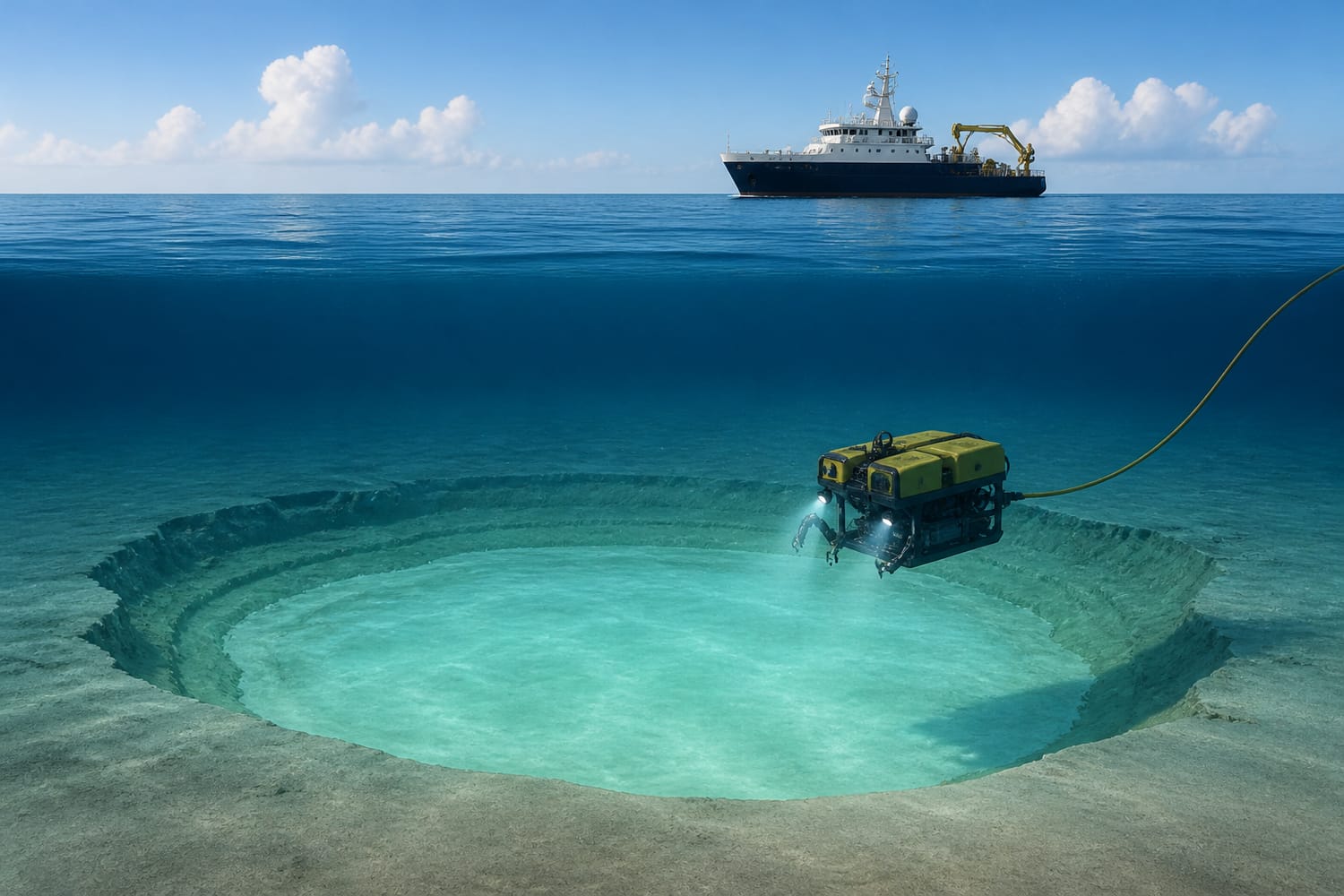
The key is density stratification: heavier water sits beneath lighter water. Stirring those layers together requires energy, and their density difference resists easy vertical mixing. That helps explain how a recognizable pool can persist within the ocean.
However, brine and seawater are not permanently incompatible like oil and water. Salt can diffuse across their boundary, and currents or other disturbances can mix them. Continued brine supply can help maintain a pool despite these losses.
The density contrast also produces an extraordinary exploration trick. At one Gulf pool studied by the Ocean Exploration Trust, the brine was about four times saltier than seawater—dense enough for the remotely operated vehicle Hercules to “float” at its surface while collecting samples.
Where Have Scientists Found Underwater Lakes?
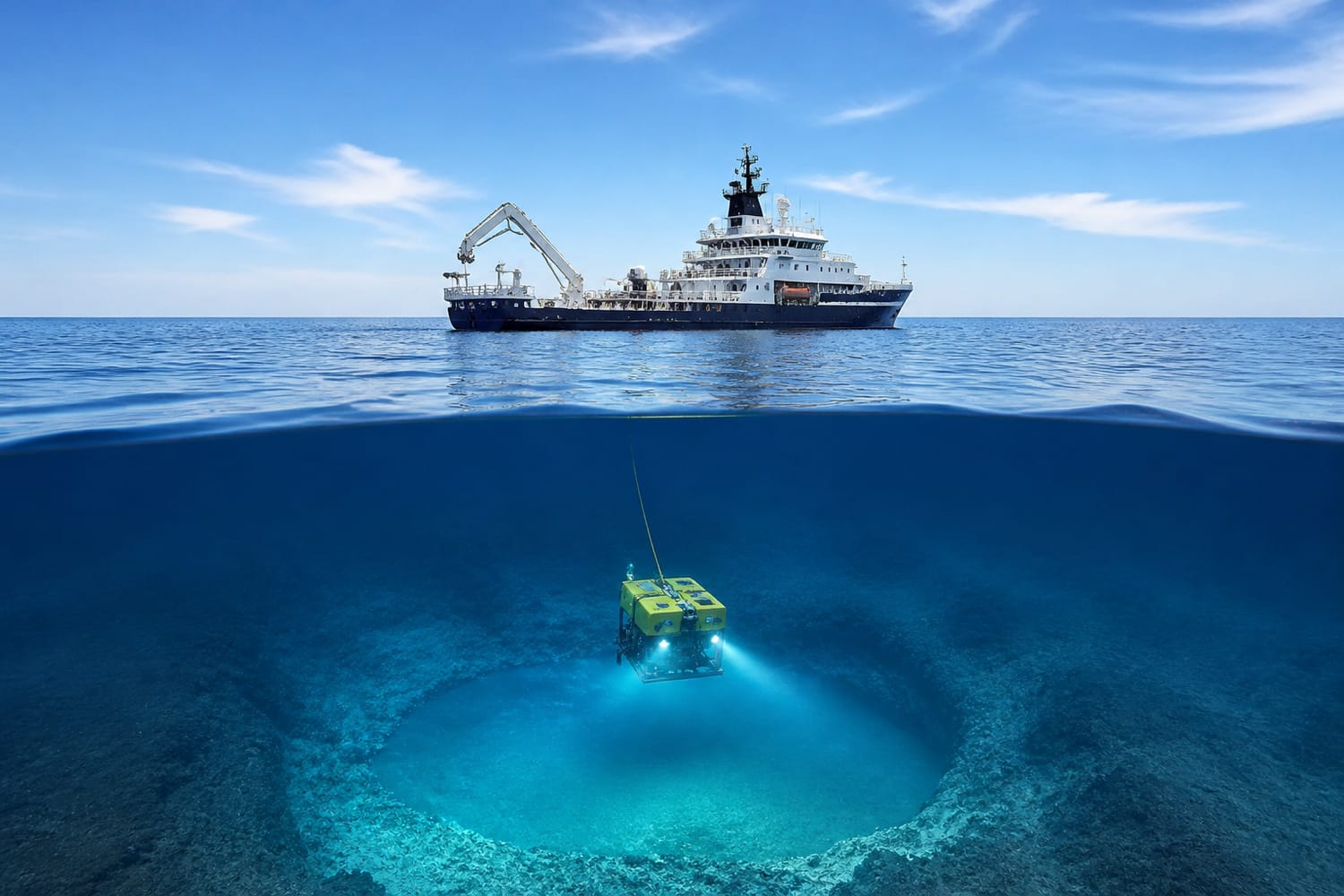
Documented deep-sea brine pools occur in the Gulf of Mexico, the Mediterranean Sea, and the Red Sea region. These locations have geological conditions capable of generating and concentrating exceptionally salty water.
One Gulf example described in the Ocean Exploration Trust’s brine-pool overview lies approximately 650 meters, or 2,135 feet, below the surface. It occupies a depression roughly 11 meters wide and 22 meters long, with mussels surrounding its edges.
Another remarkable example is the NEOM Brine Pools complex in the Gulf of Aqaba, a northern extension of the Red Sea. A study published in 2022 described one main pool covering approximately 10,000 square meters, accompanied by three much smaller pools. They lie around 1,770 meters below the surface.
These are not ordinary swimming holes hidden just offshore. Their depth places them firmly in the realm of specialized ocean exploration.
Why Brine Pools Can Be Deadly
A peaceful-looking surface disguises a difficult environment. Many deep-sea brine pools contain little or no dissolved oxygen, while their extreme salt concentrations make conditions unsuitable for most familiar marine animals. Some also contain hydrogen sulfide and other potentially harmful chemicals.
An animal entering such a pool may encounter several stresses at once. It cannot obtain enough oxygen, and the surrounding chemistry differs sharply from the seawater to which it is adapted. Entering the brine can therefore prove fatal.
Still, describing brine pools as completely lifeless would miss their greatest surprise. Conditions that exclude fish and crabs can support specialized microorganisms. “Uninhabitable” depends very much on which inhabitant you have in mind.
Life Flourishes Along the Shoreline
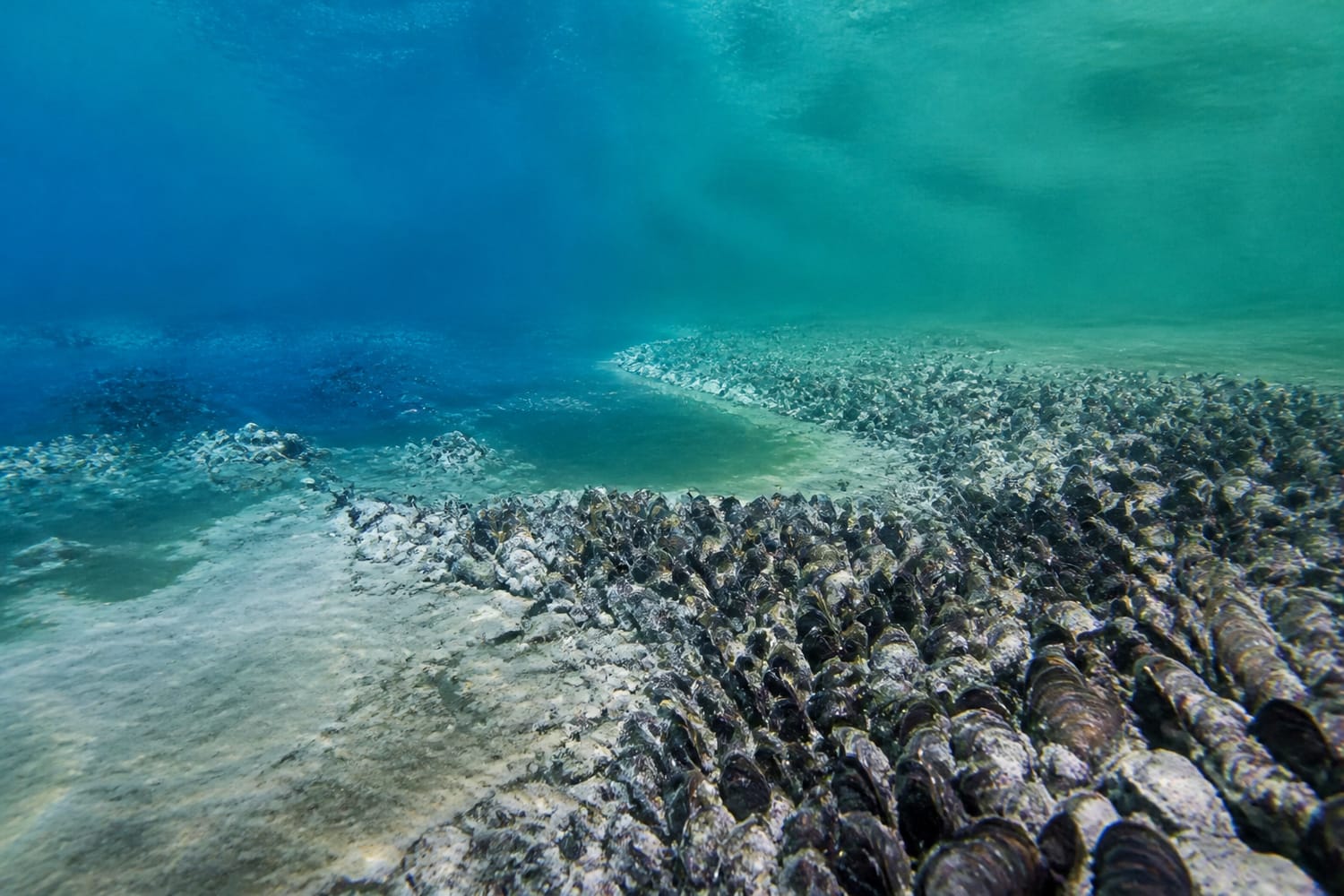
The boundary between brine and seawater can be a biological hotspot. At certain Gulf pools, dense beds of mussels occupy the margins, accessing resources associated with the brine while remaining beside oxygen-bearing seawater.
Their secret lies in partnerships with bacteria. Methane-using bacteria living in the mussels’ gills turn chemical energy into nourishment that supports their hosts. This is a chemosynthetic partnership, rather than a food supply dependent directly on sunlight.
The result is an underwater shoreline where danger and opportunity sit side by side. It is a fitting companion to Tour Trivia’s exploration of the strangest creatures found in the ocean’s deepest regions: survival here requires solutions far removed from everyday life.
Underwater Lakes Can Preserve Earth’s History
Brine pools offer more than an unusual view. Their oxygen-depleted interiors exclude many larger animals that would normally burrow through and disturb seabed sediment. As a result, delicate layers can remain unusually well preserved.
At the NEOM pools, researchers identified a sediment record spanning at least 1,200 years. The layers include evidence interpreted as deposits from flash floods, seismic activity, and tsunamis—making the pool a natural archive of events beyond its underwater shoreline.
That is the real wonder of brine pools: a seemingly impossible lake can also be a habitat, a chemical boundary, and a history book. Once the physics makes sense, the sight becomes no less extraordinary.