
A Cave’s Slow Stonework
Stalactites grow down from cave ceilings; stalagmites grow up from cave floors. Both are built, bit by bit, by mineral-rich water. A drop leaves a tiny deposit of stone behind, then the next drop adds another. Given enough water and enough time, those barely visible deposits become the formations that make a cave look like an underground sculpture gallery.
The trick is that the water does two seemingly opposite jobs. It helps dissolve rock on its way underground, then helps build new rock when it reaches an open cave passage. To understand how, follow a raindrop from the surface.
First, Water Borrows Stone
As rainwater moves through soil, it picks up carbon dioxide. That makes the water mildly acidic—enough to dissolve small amounts of limestone as it seeps through cracks. The dissolved material travels with the water toward the cave below. It does not look like a stream carrying sand; the ingredients for the new stone are in the water itself.
This is also why a cave can be carved out long before its most eye-catching decorations appear. Dissolving limestone helps create passages and chambers. Later, in an air-filled passage, mineral-bearing drips can decorate those spaces. For a look at what dissolving limestone can do above ground, Tour Trivia’s guide to bizarre natural wonders includes Madagascar’s jagged limestone Stone Forest.
Then, a Drop Gives Stone Back
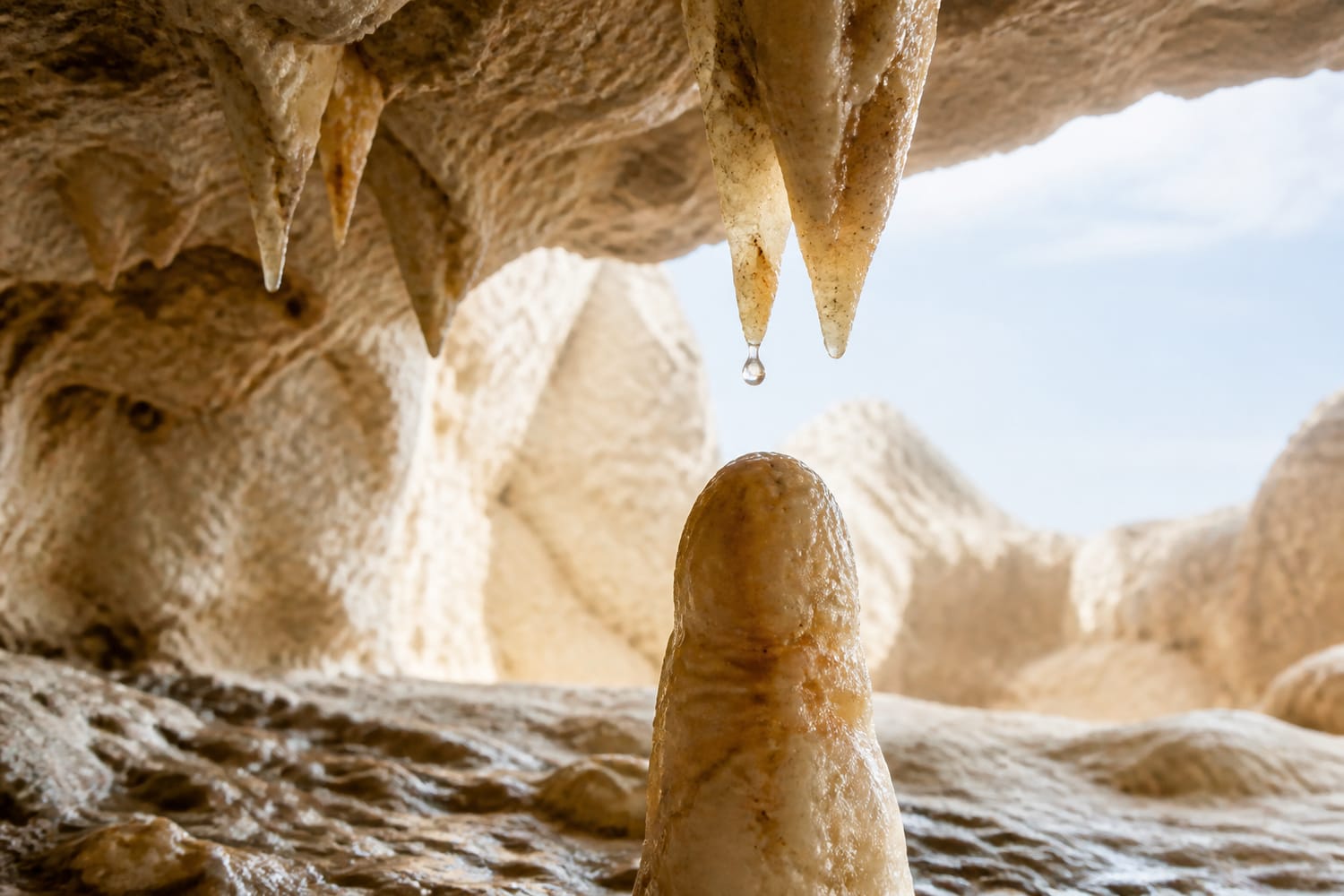
When the water reaches the cave and meets the air, some of its dissolved carbon dioxide escapes. The water can no longer hold as much dissolved calcium carbonate, so a little of that material crystallizes as calcite. This is called precipitation: solid mineral comes out of the water. Evaporation can contribute in some cave settings, but the loss of carbon dioxide is a major reason calcite dripstones form.
Imagine opening a fizzy drink. Gas that was dissolved in the liquid escapes as bubbles. Cave water changes more quietly, but that gas loss helps turn what it carried through the rock into a lasting deposit. The National Park Service’s explanation of cave formations shows how different paths taken by water produce different shapes.
How a Stalactite Grows Down
A stalactite begins where water collects on the ceiling, often at a crack. As a drop hangs there, a minute ring of calcite forms around it. The drop falls, another takes its place, and more rings accumulate. Over time, they create a thin, hollow tube called a soda straw. Water passes through its center and deposits calcite at its tip, extending the tube downward.
If the tube’s passage becomes blocked, or water begins running down its outside, calcite builds on the outer surface instead. The slender straw thickens into a more familiar, tapering stalactite. It may resemble an icicle, but it is stone, not frozen water. Its shape records where the drips arrived and how they flowed.
A handy memory trick is stalactites hold tight to the ceiling. The “c” in stalactite can remind you of “ceiling.”
How a Stalagmite Grows Up
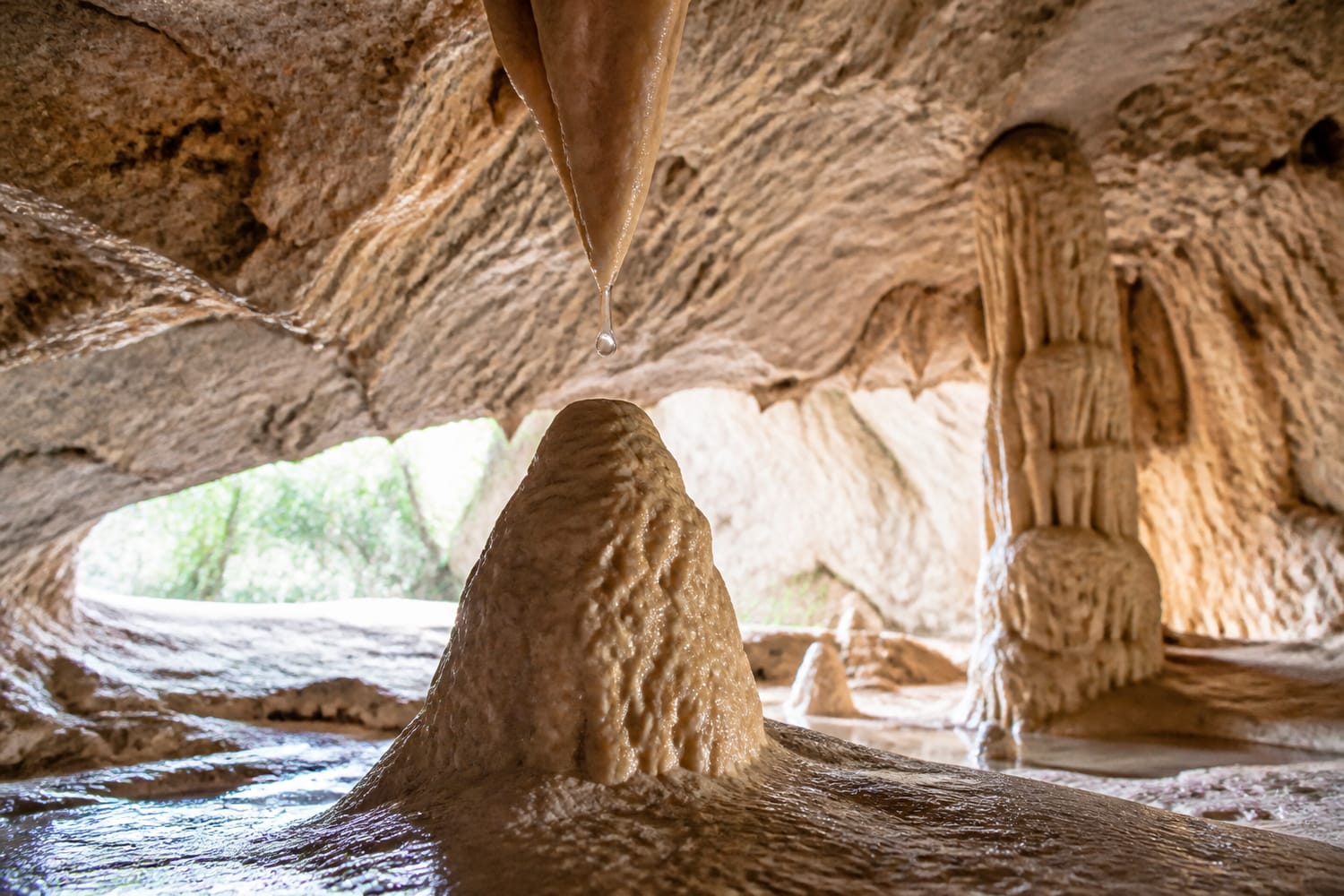
A drop that falls from the ceiling may still contain dissolved minerals. When it lands, it can lose more carbon dioxide and leave calcite on the floor. Repeated drops gradually build a mound beneath the drip point: a stalagmite. Because falling water splashes and spreads, stalagmites are often broader and rounder than the formations above them. They do not usually have the hollow center found in a soda straw.
For this one, remember that a stalagmite might reach the ceiling. Sometimes it does: if an upward-growing stalagmite joins a downward-growing stalactite, they form a column. Whether they meet depends on much more than time. The water must keep arriving in the right places, and it must keep carrying minerals to deposit.
Why One Cave Looks Different From Another
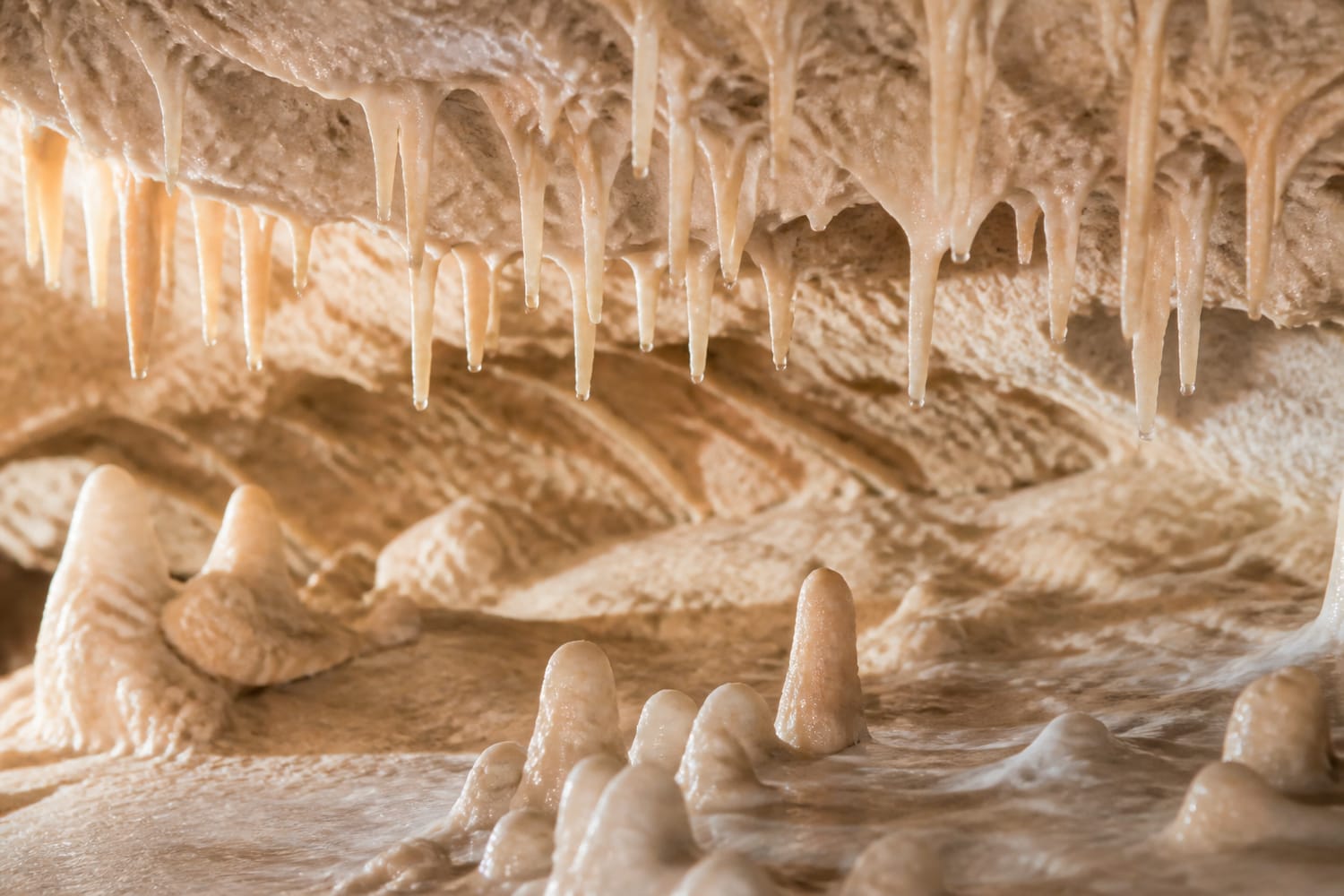
Drips do not follow a universal schedule. Rainfall, the route water takes through rock, its mineral content, and the rate at which it drips all affect growth. Even neighboring formations can have very different histories. A change in the water’s path can leave one formation dry while another continues growing. That is why a large stalagmite is not automatically older than a small soda straw.
Caves also make more than stalactites and stalagmites. Water running down a wall can leave sheets of flowstone; water moving along a sloping ceiling can make a thin drapery. These formations are collectively called speleothems. Tour Trivia’s journey through caves and other living Earth wonders offers another reason to look closely underground: cave passages can even seem to “breathe” as air moves through them.
How Long Does the Stonework Take?
There is no reliable “one inch per century” rule for every cave. At Lehman Caves in Nevada, the National Park Service has observed soda straws ranging from less than an inch to about four inches on formations broken roughly a century ago. But a thin hollow straw can lengthen more noticeably than a broad formation receiving a similar amount of calcite. Growth can slow, stop, or resume when conditions change.
Carlsbad Cavern offers a striking reminder that the conditions above ground matter below it. According to the park, relatively few formations in the area are wet and actively growing now; many were more active during a wetter period in the past. For visitors, a dry formation is not a failed one. It is part of a much longer story whose next chapter depends on where water goes.
A Record Worth Leaving Untouched
Stalagmites can preserve clues about past conditions as they grow. Scientists can date parts of a formation and analyze its calcite to investigate changes in the world above the cave. Research using stalagmites from Lehman Caves, for example, has helped study when the surrounding Great Basin became drier.
That makes the simplest cave-visit rule especially meaningful: admire formations without touching them. A soda straw is fragile, and a broken piece may take a very long time to regrow. Pause beneath the drips instead. What looks like still stone may be a work in progress, with the next tiny addition arriving one drop at a time.