
A Compass, a Clock, and More Than One Clue
Migrating birds cross oceans by combining several kinds of guidance. Depending on the species, they can orient by the sun, stars, and Earth’s magnetic field; some seabirds also use smell. Instinct supplies a starting direction, while experience can help birds refine their routes. No single cue works for every bird or every crossing.
Imagine leaving Alaska with nothing ahead but the Pacific. There are no road signs, and a storm could hide the sky. Yet some birds reach distant shores after days in flight. The answer is less like following a map and more like continually checking a collection of compasses—then adjusting when conditions change.
Knowing South Is Not the Same as Knowing Home
Finding a direction and finding a destination are different problems. A compass can tell a bird which way to fly; it cannot, by itself, tell the bird where it is. To reach a particular coast or breeding colony, a bird may also need information about its position and a way to correct for being blown off course.
Those abilities vary. A young bird making its first migration may begin with an inherited tendency to fly in a particular direction. An experienced bird has had opportunities to learn from previous journeys. Scientists study both kinds of traveler because an accurate first flight does not necessarily mean a bird possesses a detailed mental map.
Earth’s Magnetic Field: A Cue Without Landmarks
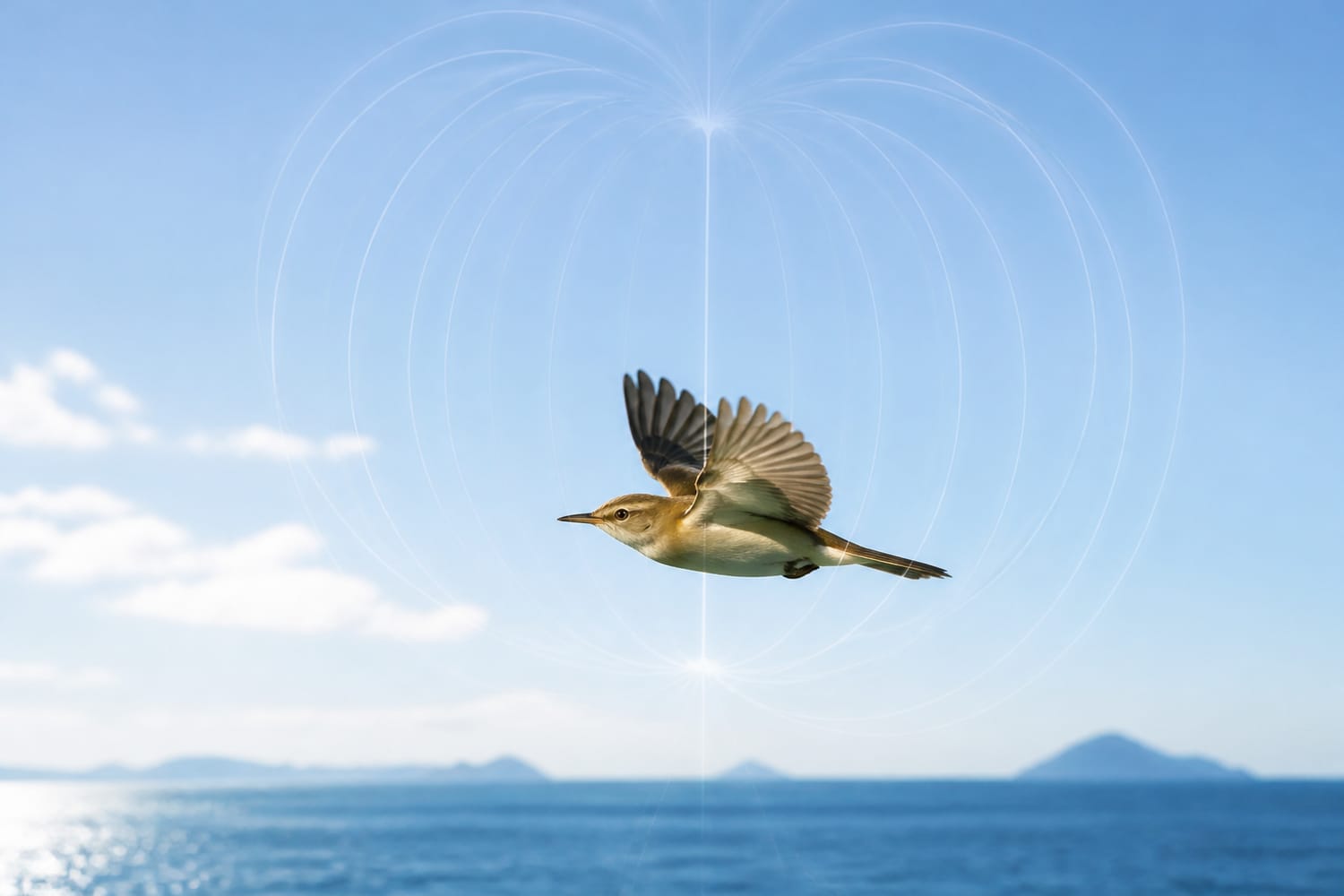
Earth’s magnetic field extends across land and sea, making it especially useful where visible landmarks disappear. Migratory birds can detect magnetic information and use it for orientation. In experiments with Eurasian reed warblers, changing the magnetic conditions around the birds caused them to respond as though they had been moved to another location—evidence that magnetic cues can provide more than a simple north–south heading.
That does not mean every bird sees an invisible grid drawn over the water. Researchers are still investigating how different birds detect magnetic information and how they combine it with other senses. It is safer to think of magnetism as one powerful source of clues, not a complete, built-in GPS.
Sun by Day, Stars by Night
The sky offers another set of reference points. A bird can use the sun’s position to orient, but the sun moves throughout the day. Its internal clock helps make sense of that movement, much as a traveler would need to know the time to use the sun reliably as a guide.
At night, some migrants use the apparent rotation of the stars to establish direction. Classic planetarium experiments with indigo buntings showed that young birds learn important information from celestial rotation rather than arriving with a memorized chart of constellations. The lesson is wonderfully counterintuitive: a bird need not recognize every star to use the night sky as a compass.
Light can help even when the sun itself is hard to see. Patterns of polarized light around sunrise and sunset provide directional information that birds may use as they set out. These cues are useful, but clouds, darkness, and changing conditions make it valuable to have alternatives.
Could a Bird Smell Its Way Across the Sea?
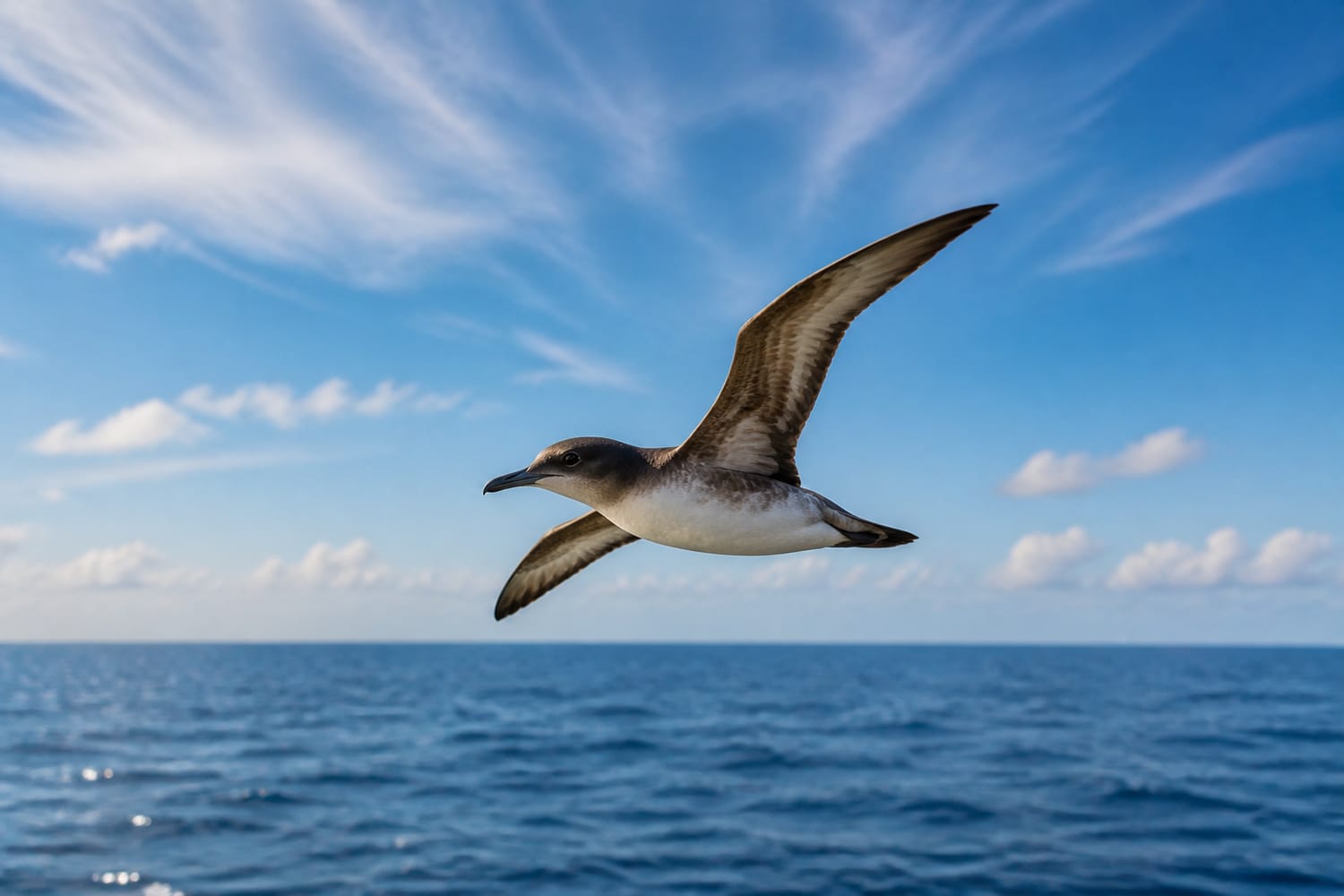
For some seabirds, the answer appears to be partly yes. Smells travel on the wind across ocean waters, and shearwaters have a keen sense of smell. In one experiment, researchers tracked Scopoli’s shearwaters returning from foraging trips in the Mediterranean. Birds whose sense of smell had been temporarily blocked struggled to orient toward their colony while over open water, although coastal navigation was unaffected.
That finding does not turn smell into a universal explanation for bird migration. A shearwater returning to a familiar nesting island faces a different task from a shorebird undertaking its first long-distance crossing. Still, it shows that the apparently featureless ocean contains information a bird may detect even when people cannot.
The Pacific Crossing That Puts It in Perspective
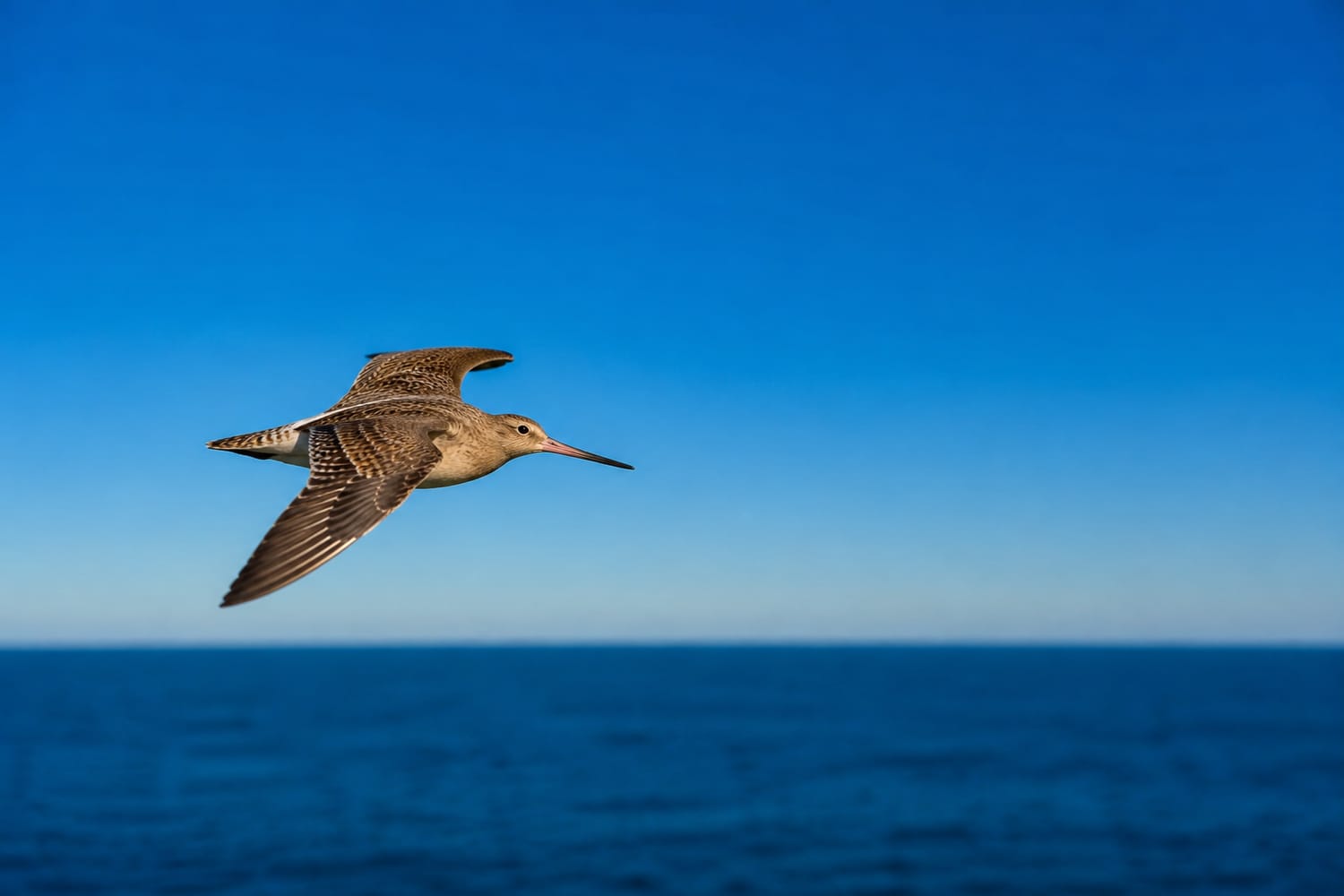
Consider a young bar-tailed godwit identified as B6. Tracked by researchers, it departed Alaska on October 13, 2022, and reached Tasmania, Australia, on October 24. The journey covered about 8,425 miles without a stop. Because B6 was only about four months old, its flight is a striking reminder that a bird need not have completed the route before to set off across an ocean.
Tracking reveals where a bird flew, but not exactly which cue it consulted at each moment. During a crossing like B6’s, maintaining direction matters enormously: even a small error can grow over thousands of miles. A successful arrival therefore invites more questions about instinct, sensory information, winds, and course correction than a satellite track alone can answer.
What About Wind, Weather, and the Last Miles?
A bird may aim one way while the wind pushes it another. Choosing when to depart and responding to conditions are part of the navigational challenge; a useful heading is not always a straight line on a map. Different species also face different options. A seabird can forage over water, while a shorebird on a nonstop crossing cannot simply pause to refuel halfway across the Pacific.
As land approaches, new clues become available. Coastlines and other familiar features can help birds complete a journey that began beyond sight of land. Those destinations matter as much as the crossing itself: coastal and wetland habitats provide places for birds to feed and recover. Tour Trivia’s look at the connections between water and wildlife offers a broader view of why these places are so valuable.
The Real Secret Is Having Options
There is no single trick shared by every ocean-crossing bird. The most compelling answer is a flexible one: inherited direction, learned experience, celestial and magnetic cues, and—in some seabirds—smell can all contribute. Which clue matters most depends on the bird and the journey.
For travelers watching birds along a coast, that makes an ordinary-looking arrival extraordinary. The bird settling onto a beach may have just completed a trip measured in thousands of miles. Giving it room to rest is one simple way to respect that effort; Tour Trivia’s guide to ethical wildlife encounters explores the same principle. The ocean may offer no map we can see, but for a migrating bird, it is far from empty of clues.