
A Forest Between Land and Sea
A mangrove forest grows where most trees cannot: in muddy coastal ground flooded by the tides. Its salt-tolerant trees and shrubs form a living barrier between land and sea. Tangled roots slow waves, hold sediment in place, and shelter marine life—making mangroves both a coastline defense and a remarkably busy habitat.
At low tide, a mangrove shoreline can look like a forest standing on stilts. At high tide, much of its root system disappears beneath the water. That daily transformation is the secret to how mangroves protect the coast: they occupy the shifting edge where waves would otherwise meet exposed soil.
How Can Trees Survive Saltwater?
Saltwater poses a problem for ordinary trees. Taking in too much salt makes it difficult for them to absorb the water they need. Mangroves solve this in different ways: some keep much of the salt out through their roots, while others release excess salt through their leaves. Their adaptations allow them to live in tidal water that may range from brackish to salty.
The mud presents another challenge. Waterlogged soil contains little oxygen, so some mangroves grow roots above the surface to take in air. In Florida, red mangroves are known for their arching prop roots; black mangroves have upright roots that poke through the mud. White mangroves often grow farther inland. Together, these trees can occupy different parts of the same shoreline.
Mangroves are not a single kind of tree. The name describes a group of salt-tolerant trees and shrubs suited to tropical and subtropical coasts. What unites them is not a shared appearance, but an ability to thrive where tides, soft sediment, and salt make life difficult for other woody plants.
Roots That Slow the Sea
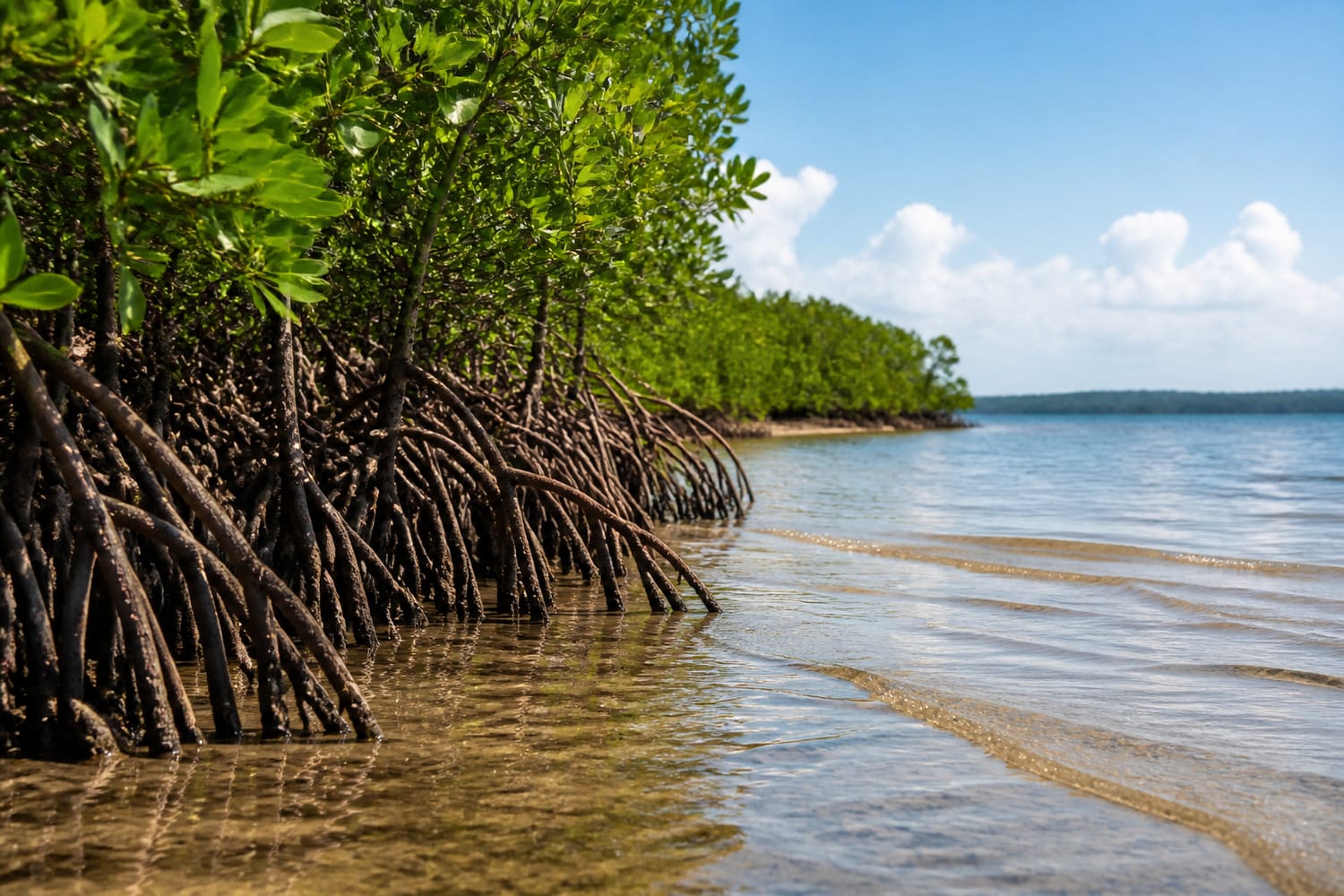
Imagine a wave moving toward an open, muddy bank. With little in its way, flowing water can loosen sediment and carry it off. Now put a dense network of mangrove roots in its path. The water must move around countless trunks and roots, losing energy as it goes.
That slowdown helps protect the shoreline in two ways. It reduces the force of waves and currents reaching the land, and it gives suspended sediment a chance to settle among the roots. Over time, trapped material helps maintain the muddy ground beneath the forest. The roots also bind that ground together, making it harder for everyday tides and currents to wash away. The National Oceanic and Atmospheric Administration’s mangrove overview explains how these root systems stabilize coastlines.
During storms, a mangrove forest can lessen the impact of waves and surge on areas behind it. It is a buffer, not a wall: protection depends on the forest’s condition and the strength of the storm, and flooding can still occur. That distinction matters. Mangroves make a coastline more resilient without making it invulnerable.
A Nursery Beneath the Branches
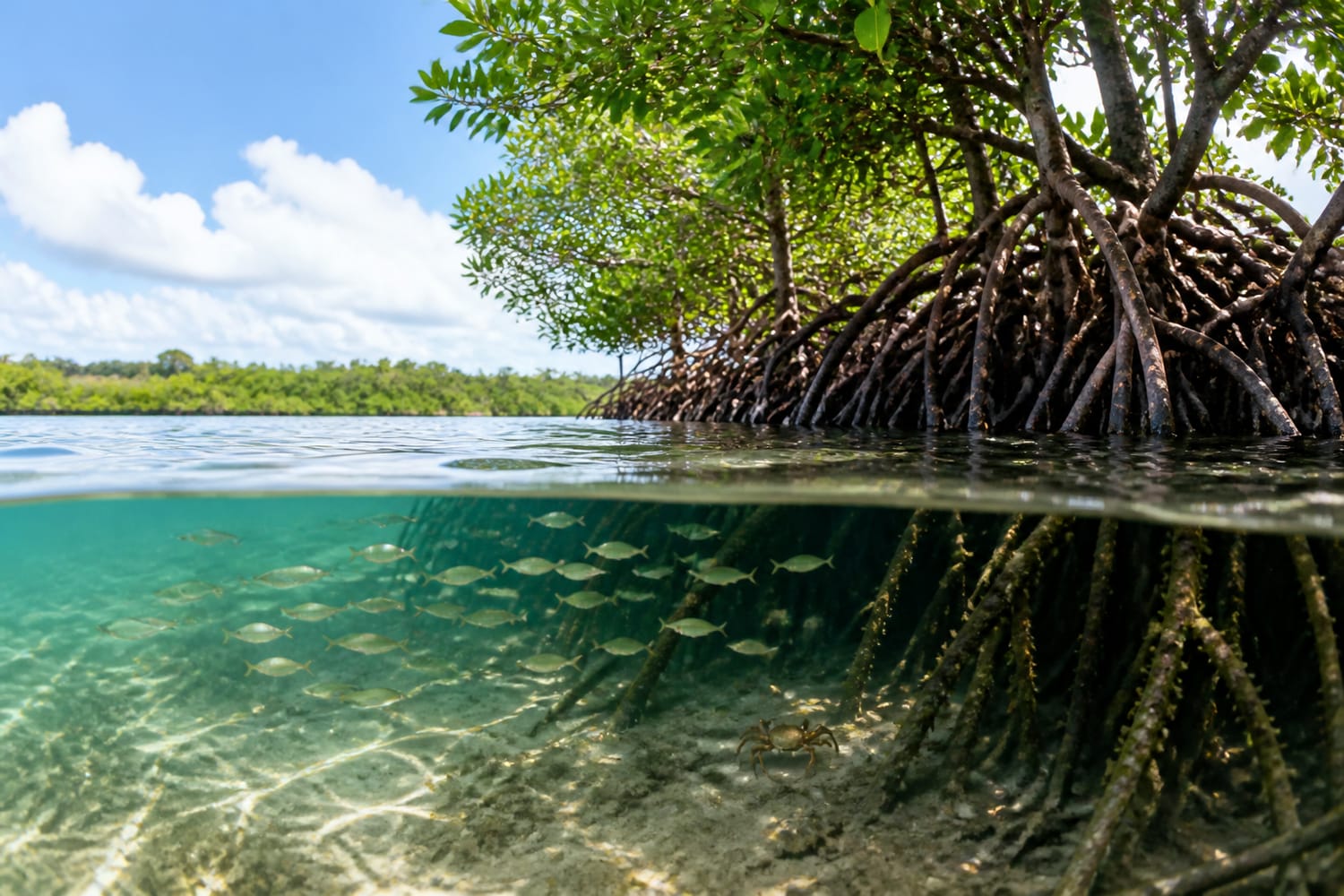
The same maze that slows water offers small animals places to hide. Young fish can move among submerged roots while larger predators have a harder time following. Crabs, shrimp, and other creatures use the sheltered shallows, while birds feed or nest above them. Mangroves are therefore more than a line of trees beside the sea; they connect life on land with life underwater.
Fallen mangrove leaves add to this activity. As they break down, they help support food webs in the surrounding water. A visitor looking down from a boardwalk might first notice still, brown water and exposed roots. A closer look may reveal tiny fish darting into shelter or crabs moving across the mud.
That relationship with marine life extends beyond the forest. Mangroves, seagrass beds, and coral reefs can be neighboring parts of a coastal ecosystem, each providing different habitat. For a look at another lively underwater environment, explore Tour Trivia’s guide to the world’s stunning coral reefs.
The Carbon Hidden in the Mud
Mangrove trees take in carbon dioxide as they grow, but much of the ecosystem’s carbon is stored below ground. Roots and fallen plant material become buried in wet sediment, where decomposition can be slow. This makes mangroves an important example of blue carbon: carbon held in coastal and marine ecosystems.
The mud, then, is doing more than anchoring trees. Keeping a mangrove forest intact helps preserve the habitat above the waterline and the carbon-rich soil beneath it. Clearing or disturbing that ground can undo benefits that took years to develop.
Where Can You See a Mangrove Forest?
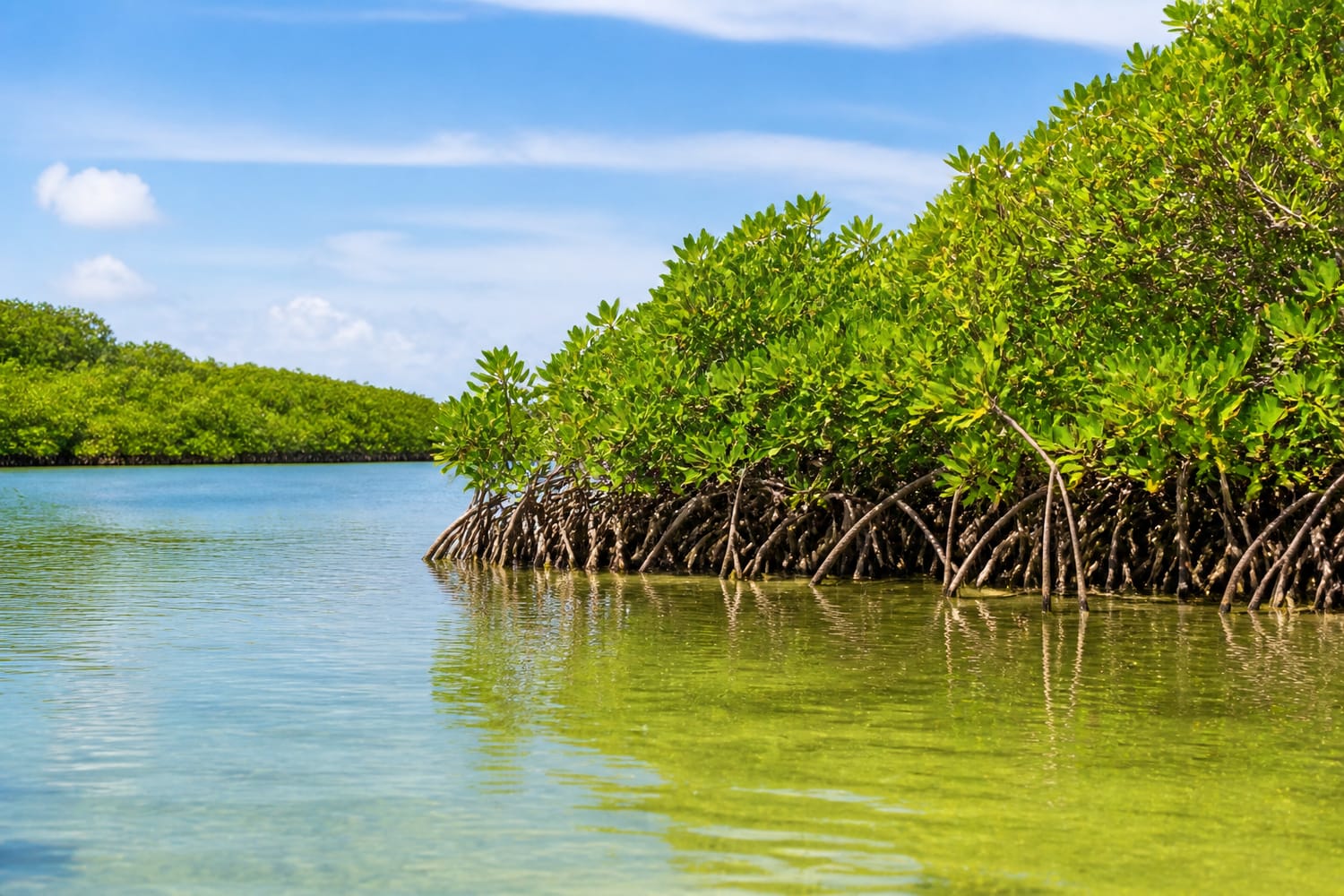
Mangroves line sheltered coasts in warm regions around the world. In the United States, one place to understand their scale is southern Florida. The coastal rivers and channels of Everglades National Park pass through mangrove forest where freshwater from inland meets saltwater from the sea. The National Park Service’s guide to Everglades mangroves describes the habitat’s roles as a wildlife nursery and a first line of defense during hurricanes.
A boardwalk or guided paddle offers a way to appreciate the forest without pushing through its fragile, muddy edge. Look for the difference between roots standing above the water and roots submerged by the tide. If that changing boundary catches your imagination, Tour Trivia also explores landmarks you can visit only at low tide. A mangrove forest is different: the tide changes what you can see, but the trees remain at work.
Why Protecting Mangroves Takes More Than Planting Trees
Coastal development and aquaculture have replaced mangrove habitat in many places. Even where trees remain, altered water flow can make a site difficult for them to survive. Rising seas add pressure where mangroves cannot shift inland. Protecting an existing forest means protecting the space and tidal conditions that sustain it, not just the trunks visible from shore.
Restoration can help, but planting seedlings is not always the first—or best—step. If tidal channels have been blocked, restoring the movement of water may allow mangroves to return naturally. Wetlands International’s account of restoration in the Philippines shows why healthy water flow and suitable sediment matter as much as new trees.
The next time a mangrove shoreline looks like an untidy tangle of roots, consider what that tangle is accomplishing. It slows the water, holds the coast together, gives young marine animals shelter, and stores carbon in the mud. These forests do not keep the sea out. They help land and sea meet on gentler terms.