
Some lakes look peaceful from the shore, but beneath their glassy surfaces are stories of vanished villages, strange creatures, deadly gases, glowing waters, and geological puzzles that have fascinated travelers and scientists for generations. Around the world, mysterious lakes have inspired legends, local folklore, and plenty of wild theories. Yet in many cases, science reveals that the truth is just as astonishing as the myth.
For curious travelers, these lakes offer more than beautiful views. They are natural laboratories where chemistry, geology, biology, and climate collide in dramatic ways. From Africa’s explosive crater lakes to Siberia’s ancient freshwater sea, here are some of the world’s most mysterious lakes and the science behind their strange reputations.
Lake Nyos: The Lake That Exploded
Lake Nyos in Cameroon is one of the most chilling examples of how a calm lake can suddenly become deadly. On August 21, 1986, the lake released a massive cloud of carbon dioxide gas, which rolled silently into nearby valleys. Because carbon dioxide is heavier than air, it stayed close to the ground, displacing oxygen and suffocating people and animals. More than 1,700 people died in one of the strangest natural disasters ever recorded.
The science behind Lake Nyos lies in its volcanic setting. The lake sits in a crater above a magma chamber that leaks carbon dioxide into the water. Under normal conditions, deep lake water can hold huge amounts of dissolved gas, especially when it is cold and under pressure. But if the water is disturbed by a landslide, storm, or temperature shift, the gas can suddenly bubble upward in a “limnic eruption.”
Today, scientists have installed degassing pipes in Lake Nyos to allow carbon dioxide to escape gradually rather than catastrophically. The lake remains a haunting reminder that some natural hazards are invisible until it is too late.
Lake Baikal: The Ancient Lake of Endless Mysteries
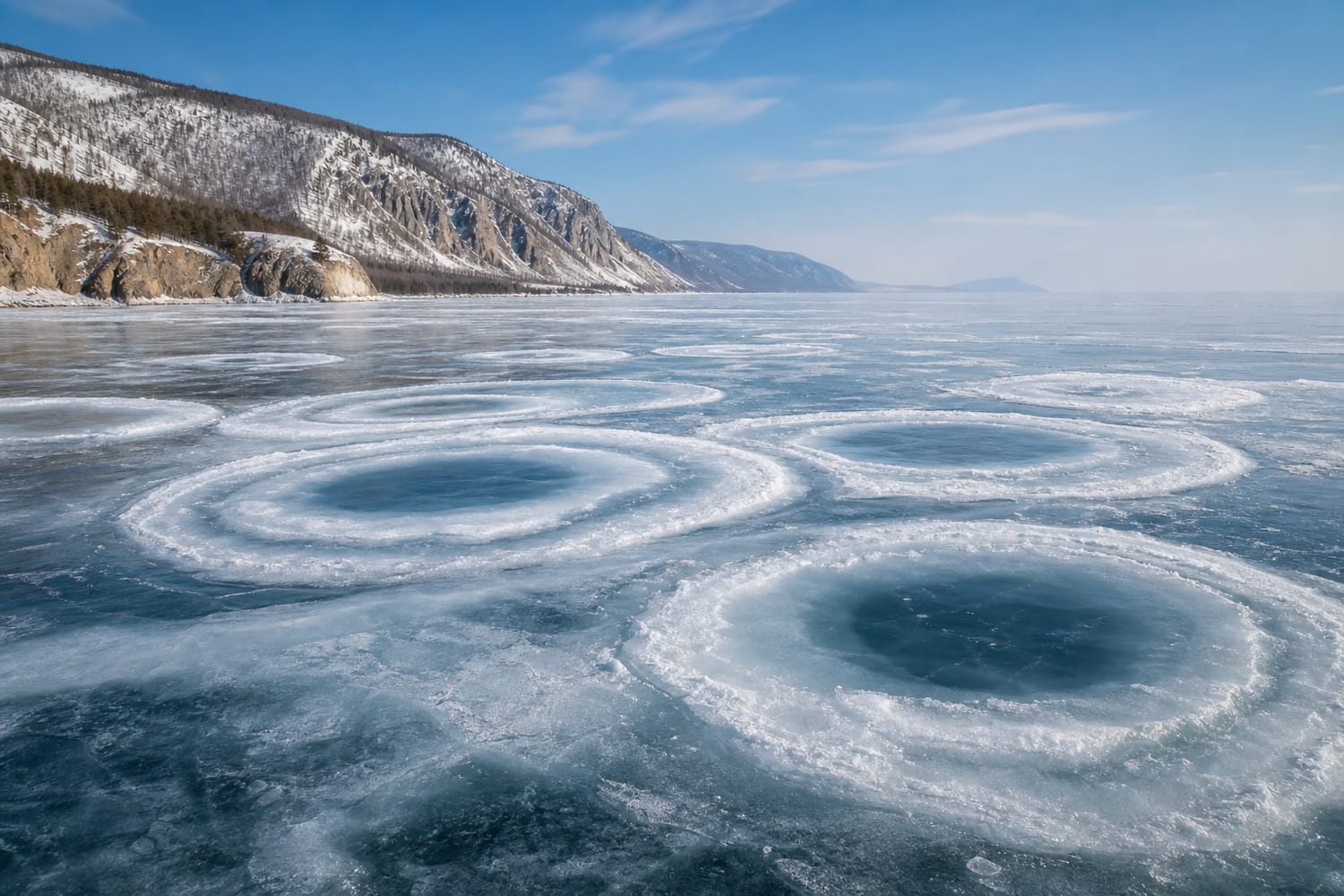
Lake Baikal in Siberia is often called the world’s deepest and oldest lake. Estimated to be around 25 million years old and reaching depths of more than 5,300 feet, it contains roughly 20% of the world’s unfrozen freshwater. Its size alone makes it extraordinary, but its mysteries go far beyond its depth.
One of Baikal’s strangest features is its biodiversity. Thousands of species live there, and many are found nowhere else on Earth, including the Baikal seal, the only freshwater seal species in the world. Scientists believe Baikal’s age and isolation allowed unique life forms to evolve over millions of years.
The lake is also known for mysterious ice circles that appear on its frozen surface. From above, these giant rings look almost artificial. Researchers have found that they are caused by warm underwater currents that swirl beneath the ice, thinning it in circular patterns. While the explanation is natural, the sight remains one of the most striking winter phenomena on Earth.
The Dead Sea: A Lake Where You Cannot Sink
Despite its name, the Dead Sea is not a sea at all. It is a salt lake bordered by Jordan, Israel, and the West Bank, famous for water so dense that swimmers float effortlessly. Its extreme salinity has made it a destination for wellness tourism, religious history, and scientific curiosity.
The Dead Sea is about ten times saltier than ordinary seawater. This high salt content makes it nearly impossible for most fish and aquatic plants to survive, which explains the “dead” reputation. However, it is not completely lifeless. Certain salt-loving microbes, known as halophiles, can survive in its harsh environment.
The lake’s mysterious landscape is also shaped by geology and climate. It lies in the Jordan Rift Valley, one of the lowest points on Earth’s surface. Because the climate is hot and dry, water evaporates quickly, leaving minerals behind. In recent decades, the Dead Sea has been shrinking at an alarming rate due to water diversion and mineral extraction, creating sinkholes along its shores. These sudden collapses are caused when freshwater dissolves underground salt layers, leaving cavities that eventually cave in.
Lake Hillier: The Bubblegum-Pink Lake
On Middle Island off the coast of Western Australia, Lake Hillier is famous for its vivid pink color. Unlike some colored lakes that change with the seasons, Lake Hillier often stays pink year-round, creating a surreal contrast with the surrounding green forest and deep blue ocean.
For a long time, the cause of the lake’s color was a mystery. Scientists now believe it comes from microorganisms that thrive in salty environments. One major contributor is thought to be Dunaliella salina, a type of algae that produces reddish pigments called carotenoids. Certain halophilic bacteria may also play a role, adding to the lake’s rosy hue.
What makes Lake Hillier especially fascinating is that its water can remain pink even when placed in a container. That suggests the color is not just a trick of light or reflection, but something suspended in the water itself. Though it looks like a fantasy landscape, its color is a biological survival strategy in an extreme environment.
Lake Natron: The Lake That Turns Animals to Stone
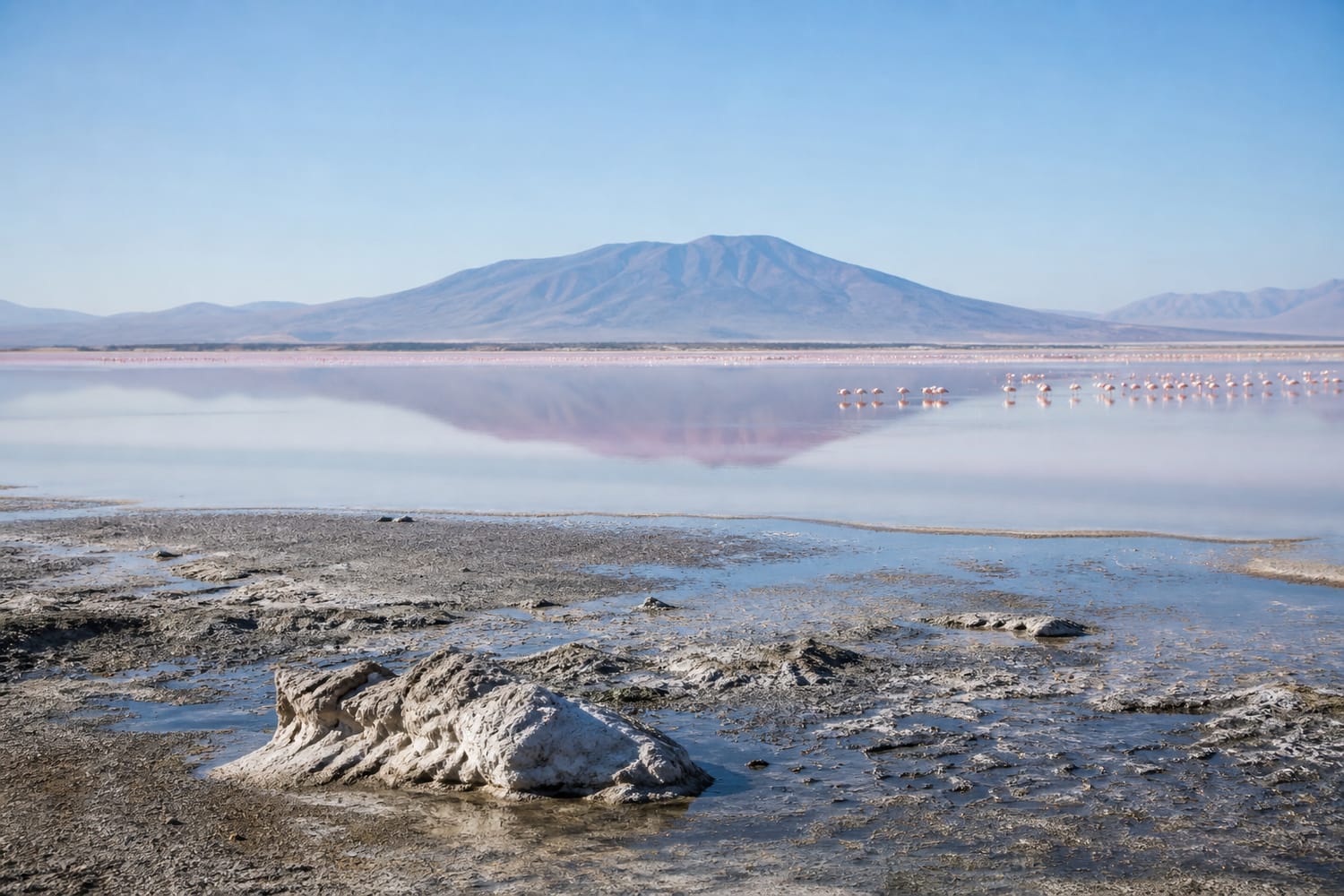
Lake Natron in Tanzania has earned a dramatic reputation as a lake that “turns animals to stone.” Photographs of calcified birds and bats found along its shores have fueled its eerie image. While the lake does not instantly petrify creatures, its chemistry is extreme enough to preserve dead animals in a statue-like state.
The lake is highly alkaline, with a pH that can rise above 10.5, making it caustic like ammonia. This harsh chemistry comes from sodium carbonate and other minerals washed down from surrounding volcanic rocks, especially from nearby Ol Doinyo Lengai, an active volcano with unusual carbonatite lava.
Despite its deadly reputation, Lake Natron is vital for wildlife. It is one of the most important breeding grounds for lesser flamingos. These birds feed on algae that flourish in the alkaline water and nest on isolated islands where predators struggle to reach them. The same chemistry that makes the lake dangerous to many animals creates a safe haven for one of the world’s most beautiful bird spectacles.
Loch Ness: The Science Behind the Monster Legend
No list of mysterious lakes would be complete without Loch Ness in Scotland. Famous for the legendary Loch Ness Monster, or “Nessie,” the lake has inspired eyewitness reports, blurry photographs, sonar scans, and endless debates.
Loch Ness is long, deep, and dark, holding more water than all the lakes in England and Wales combined. Its murky appearance comes from peat washed into the water from surrounding hills, which limits visibility. This makes it easy for waves, logs, birds, or optical illusions to be mistaken for something larger and stranger.
Scientists have searched for evidence of a large unknown animal in Loch Ness using sonar and environmental DNA, or eDNA. This technique detects genetic material shed by organisms into the water. So far, no evidence of a giant reptile or unknown monster has been found. However, studies have detected plenty of eel DNA, leading some researchers to suggest that unusually large eels could explain some sightings.
Even if Nessie remains unproven, Loch Ness shows how geography, imagination, and limited visibility can turn a natural lake into a global legend.
Lake Maracaibo: The Lightning Capital of the World
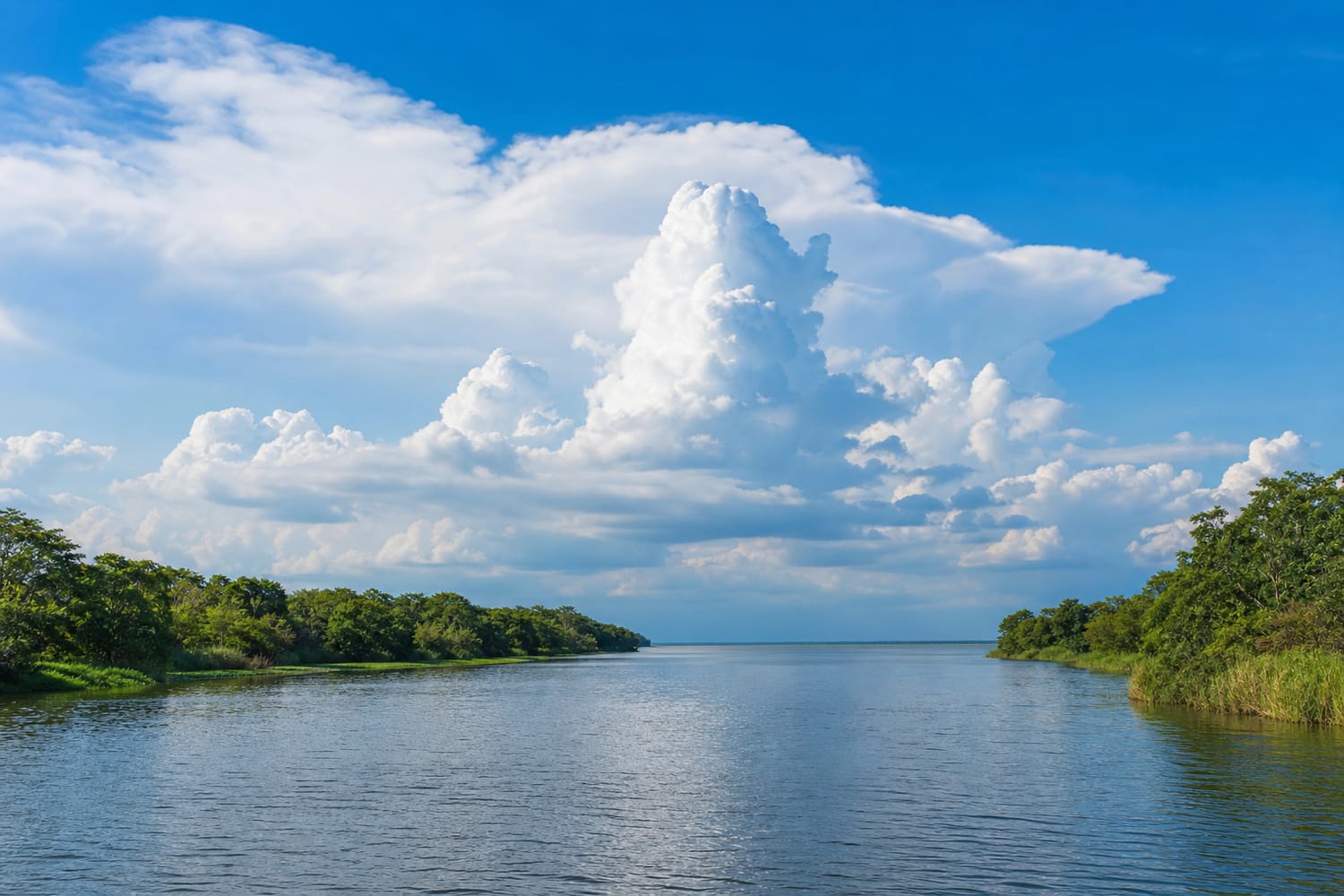
Lake Maracaibo in Venezuela is famous for a phenomenon known as Catatumbo lightning. Near the mouth of the Catatumbo River, lightning storms occur with remarkable frequency, sometimes appearing on more than 200 nights per year. The flashes can continue for hours, lighting up the sky in a display so reliable it was once used by sailors for navigation.
The science behind this natural light show involves geography and weather. Warm, moist air from Lake Maracaibo rises and collides with cooler air descending from the surrounding Andes Mountains. This creates powerful atmospheric instability, producing frequent thunderstorms.
Methane from nearby wetlands may also help increase electrical activity, though the main driver is the region’s unique combination of heat, moisture, and mountain winds. For travelers, it is one of the planet’s most spectacular examples of weather behaving with almost supernatural consistency.
Spotted Lake: Nature’s Polka-Dot Puzzle
Spotted Lake in British Columbia, Canada, looks like something designed by an artist. During the summer, much of its water evaporates, leaving behind colorful mineral pools that form circular “spots” across the lakebed. These spots can appear yellow, green, blue, or brown depending on their mineral composition.
The lake contains high concentrations of magnesium sulfate, calcium, sodium, and other minerals. As evaporation increases in warm months, the minerals crystallize and separate into patterned pools. The result is a natural mosaic that changes with the season.
Spotted Lake is also culturally significant to the Syilx/Okanagan people, who have long regarded it as a sacred healing place. Visitors should respect that the lake is not simply a tourist curiosity, but a landscape with deep Indigenous importance.
Why Mysterious Lakes Fascinate Us
Mysterious lakes capture the imagination because they exist at the border between beauty and danger. A lake can be a mirror for the sky, a source of life, a sacred place, or a hidden threat. What seems supernatural at first often has a scientific explanation, but that does not make it any less magical.
For Tour Trivia readers, these lakes are reminders that travel is not only about seeing new places. It is also about asking better questions. Why is that water pink? How can a lake explode? What lives in the deepest freshwater on Earth? The answers reveal a planet far stranger, more dynamic, and more fascinating than any legend could invent.