
A Shoreline Adventure in Miniature
At low tide, the ocean briefly pulls back its curtain and reveals one of the most fascinating places on the coast: the tidal pool. These shallow pockets of seawater, left behind in rocky hollows, are tiny ocean worlds packed with life, drama, and discovery. To the casual beachgoer, a tide pool may look like a simple puddle. Look closer, though, and you may find crabs scuttling under seaweed, anemones opening like flowers, limpets clinging to stone, and small fish darting through clear water.
Tidal pools are perfect for curious travelers, families, nature lovers, and anyone who enjoys slowing down to notice the details. They are also wonderfully accessible. You do not need scuba gear, a boat, or even deep water. All you need is a safe rocky shoreline, a low tide, and a little patience.
For Tour Trivia readers who love places where nature tells a story, tide pools offer an unforgettable lesson in survival, adaptation, and coastal beauty.
What Exactly Is a Tidal Pool?
A tidal pool forms when seawater becomes trapped in rocky depressions as the tide goes out. These pools can be as small as a soup bowl or large enough to wade through, though it is usually best not to step inside them. Because they sit between land and sea, tidal pools are part of the intertidal zone: the area of shoreline that is covered at high tide and exposed at low tide.
This environment changes constantly. At high tide, waves refresh the pools with cool, oxygen-rich seawater and bring in drifting food. At low tide, the pools may warm in the sun, grow saltier as water evaporates, or become vulnerable to rainwater that lowers salinity. The creatures living here must be incredibly tough. They endure pounding surf, bright sunlight, hungry predators, and changing temperatures every single day.
That is what makes tidal pools so exciting. Every pool is a snapshot of ocean life under pressure. The animals and plants you see are not simply floating around; they are expertly adapted to one of the most challenging habitats on Earth.
Creatures You Might Spot
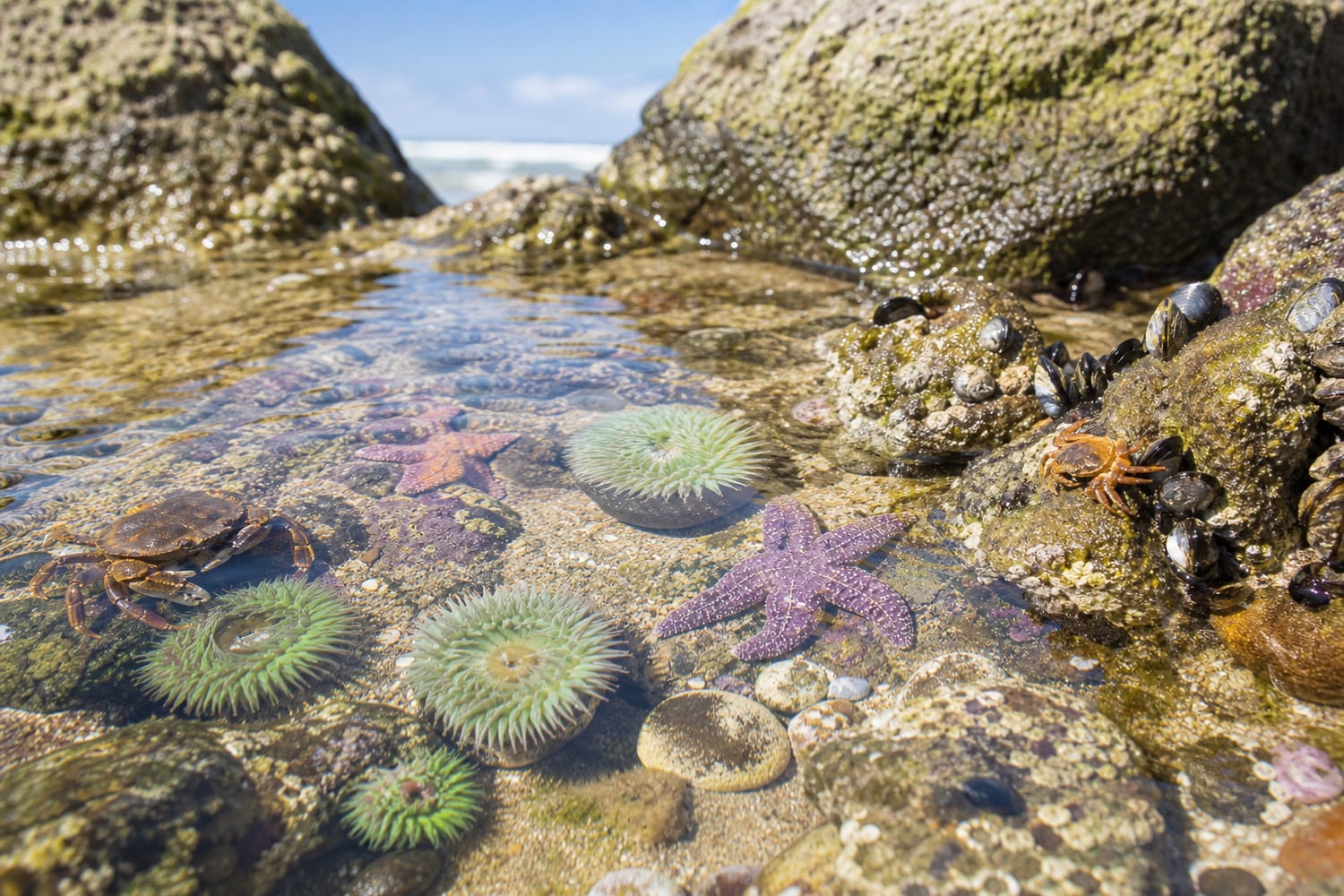
One of the best parts of exploring tidal pools is that you never know exactly what you will find. Sea anemones are common favorites. These soft-bodied animals look like underwater blossoms, but they are actually predators. Their tentacles contain stinging cells that help them catch tiny passing prey. When exposed to air, many anemones close into squishy blobs to conserve moisture.
Crabs are another tide pool highlight. Shore crabs, hermit crabs, and porcelain crabs may be hiding beneath rocks or seaweed. Hermit crabs are especially fun to watch because they carry borrowed shells as mobile homes. As they grow, they must search for larger shells, sometimes leading to fierce competition.
You may also see sea stars gripping rocks with hundreds of tiny tube feet. Mussels and barnacles often crowd the edges of pools, forming dense clusters that can handle crashing waves. Limpets, chitons, and snails graze slowly across rock surfaces, scraping algae with specialized mouthparts.
Small fish sometimes become temporarily trapped until the tide returns. Sculpins, blennies, and gobies are especially well suited to these shallow habitats. They hide in crevices, blend into rock colors, and move quickly when shadows pass overhead.
The Hidden Gardens of the Rocks
Tidal pools are not only home to animals. They are also filled with marine plants and algae that create shelter, food, and oxygen. Seaweeds come in many forms, from bright green sheets of sea lettuce to brown ribbons of kelp and delicate red algae.
These underwater gardens may look still, but they are busy ecosystems. Algae provide food for grazing snails, limpets, and sea urchins. Seaweed fronds offer hiding places for tiny shrimp, juvenile fish, and crabs. Some seaweeds help shade pools from intense sunlight, keeping temperatures more stable for the animals below.
If you gently observe a clump of seaweed in a tide pool, you may notice movement inside it. Tiny amphipods, isopods, and other miniature crustaceans often live among the blades. These creatures are part of the food web, feeding larger animals and helping break down organic material.
The colors can be stunning: emerald greens, rusty browns, deep burgundy reds, and shimmering pink crusts on rock. A tidal pool is like a living garden, but one planted by waves.
Why Low Tide Is the Best Time to Visit
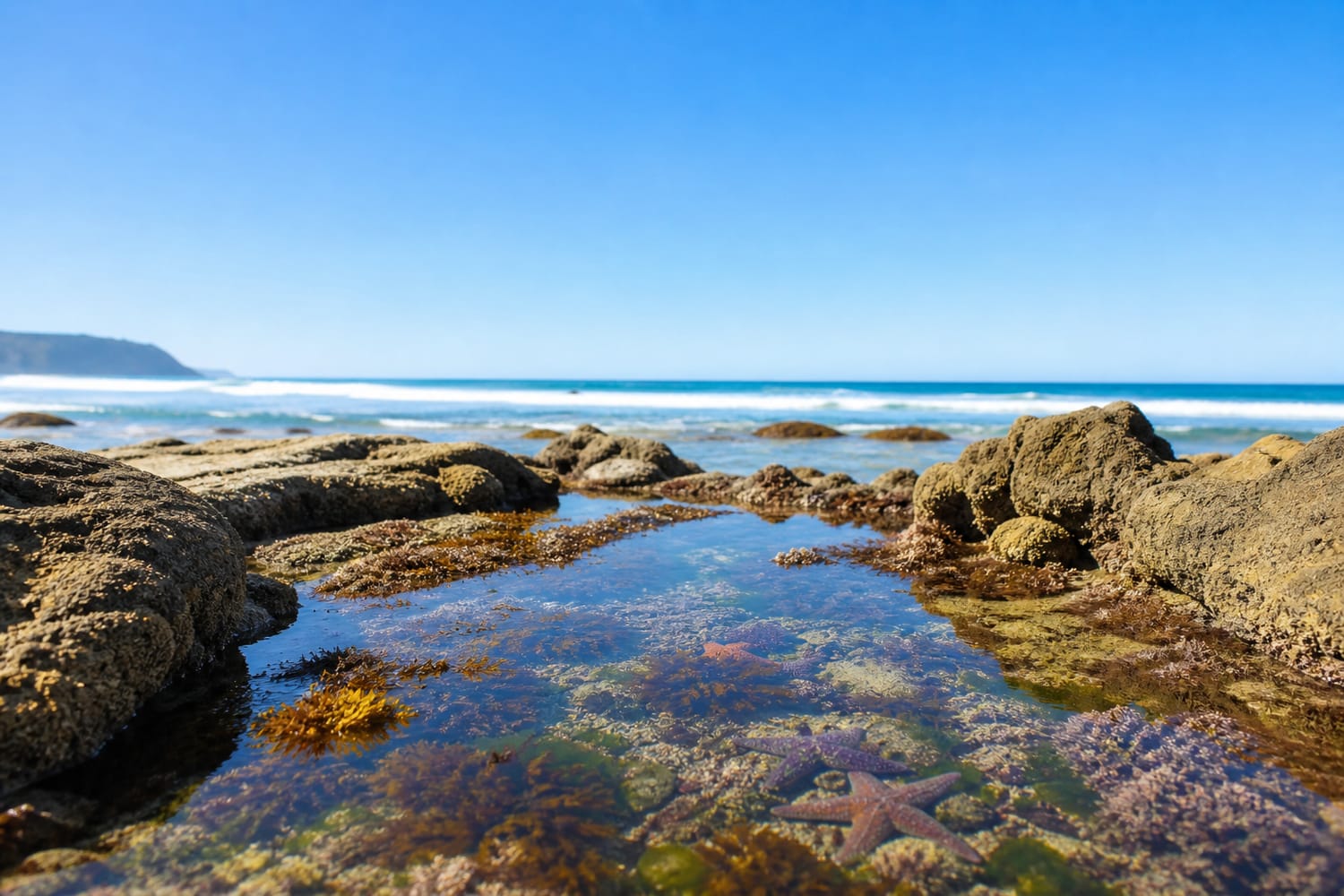
Timing is everything when it comes to tide pool exploration. The best time to visit is during low tide, especially a particularly low tide sometimes called a “minus tide.” At this point, more of the intertidal zone is exposed, revealing pools that are normally underwater.
Before heading out, check a local tide chart. Many weather websites, marine stations, parks, and coastal visitor centers provide tide tables. Aim to arrive about an hour before low tide so you can explore as the water recedes, then leave as it begins to return.
Never underestimate the ocean. The same tide that reveals tide pools will eventually cover them again. In some places, water rises quickly and can cut off paths back to shore. Pay attention to waves, posted warnings, and local conditions. If you are visiting an unfamiliar coast, ask park staff or local guides where it is safe to explore.
A calm day with clear weather is ideal. Rough surf can make rocks slippery and dangerous, and large waves may surge unexpectedly into exposed areas.
How to Explore Without Harming the Habitat
Tidal pools may seem sturdy, but they are delicate ecosystems. A careless step or a lifted rock can damage animals that took years to establish themselves. The golden rule is simple: look closely, touch lightly if allowed, and leave everything where you found it.
Walk only on bare rock or sand when possible. Avoid stepping on seaweed, mussel beds, barnacles, or anything that looks alive. Even organisms that appear tough can be crushed easily. If you move slowly and deliberately, you will also see more wildlife.
Do not remove animals, shells, rocks, or seaweed. Empty shells may become future homes for hermit crabs, and rocks often shelter fragile creatures underneath. If local rules allow you to gently lift a small rock, place it back exactly as you found it. Animals living on the underside may die if exposed to sun and air.
Keep fingers away from unfamiliar creatures. Some animals may sting, pinch, or be injured by handling. It is better to observe behavior naturally. A magnifying glass, phone camera, or small field guide can help you appreciate details without disturbing the pool.
Great Places Around the World to Find Tide Pools
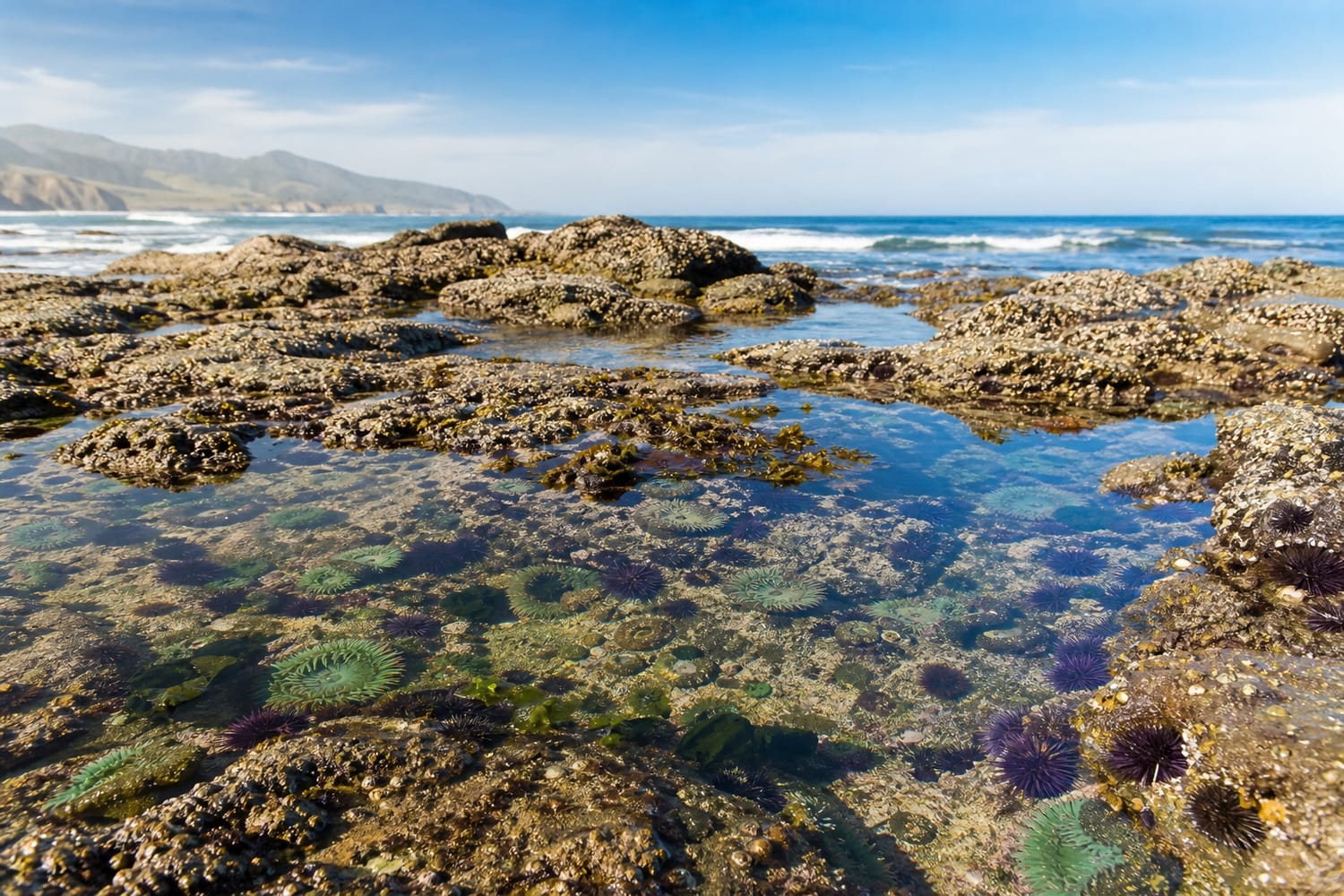
Rocky coastlines around the world offer excellent tide pooling. On the Pacific Coast of North America, places in California, Oregon, Washington, British Columbia, and Alaska are famous for colorful intertidal life. You may see giant green anemones, purple sea urchins, ochre sea stars, and forests of kelp nearby.
In the United Kingdom, rocky shores in Cornwall, Wales, Scotland, and Northern Ireland offer classic rock pooling experiences. Families often search for crabs, beadlet anemones, periwinkles, and small fish in shallow pools.
Australia and New Zealand also have remarkable intertidal zones, with unique marine species shaped by isolated coastlines. In parts of South Africa, tide pools may contain vivid anemones, urchins, and small reef fish. Volcanic islands, such as those in Hawaii or the Canary Islands, can have dramatic black-rock pools filled with tropical life.
Wherever you go, remember that local regulations vary. Some protected areas prohibit touching, collecting, or entering certain zones. These rules help preserve the habitat for both wildlife and future visitors.
What to Bring for a Better Visit
You do not need much equipment, but a few simple items can make your tide pool adventure safer and more enjoyable. Wear sturdy shoes with good grip, because wet rocks can be extremely slippery. Sandals without traction are not ideal. Dress in layers, since coastal weather can shift quickly.
Bring a tide chart or have one saved on your phone. A field guide or identification app can help you learn the names of what you see. A small magnifying glass is excellent for children and adults alike, revealing patterns on shells, tiny legs on crustaceans, and the delicate structure of algae.
A waterproof bag is useful for protecting keys and electronics. Sunscreen, water, and a hat are wise on exposed shores. If you plan to take photos, use your camera respectfully and avoid blocking other visitors from narrow paths or fragile viewing areas.
Most importantly, bring curiosity. Tide pooling rewards people who pause, crouch, and watch.
Tiny Worlds Worth Protecting
Tidal pools remind us that the ocean is not only vast and mysterious; it is also intimate and close enough to explore by kneeling beside a rock. Within a few square feet, you can witness competition, camouflage, cooperation, and survival. Every shell, tentacle, and ripple belongs to a larger coastal story.
These tiny ocean worlds are also vulnerable. Pollution, warming seas, trampling, over-collecting, and habitat damage can all affect intertidal life. Responsible visitors play an important role in keeping tide pools healthy. By observing carefully and leaving no trace, we help protect these remarkable places.
The next time you visit a rocky beach, check the tide schedule before you go. When the sea draws back, step carefully toward the pools and take a closer look. You may discover that some of the ocean’s greatest wonders are waiting in the smallest places.