
The Short Answer
A lake looks crystal clear when sunlight can travel through its water without encountering much algae, suspended sediment, or other material. Murky lakes contain more particles or microscopic organisms that scatter light. The difference depends on what flows into the lake, what grows in it, and how easily wind and waves stir up its bottom.
What Does “Clear” Actually Mean?
Clarity describes how far you can see into a lake, not simply whether it looks blue. Scientists often measure it with a black-and-white Secchi disk lowered into the water. The depth at which the disk disappears gives them a way to compare visibility between lakes—or track changes in one lake over time.
That distinction matters on a sightseeing trip. A deep lake may appear dark blue from a viewpoint, while a shallow lake may look green because you can see plants on its bottom. Neither color alone tells you exactly how transparent the water is.
Clear Lakes Receive Less Sediment
Picture a lake after a heavy rain. Water running downhill can carry soil, clay, and silt from roads, fields, bare ground, and stream banks. Once those tiny particles enter the lake, they can remain suspended and make the water look cloudy or brown. Rainfall can therefore change a lake’s appearance quickly, even if it looked clear the day before.
A lake’s surroundings—its watershed—are a big part of the story. Where less sediment washes in, a lake has a better chance of staying transparent. But clear water is not guaranteed: conditions inside the lake matter, too.
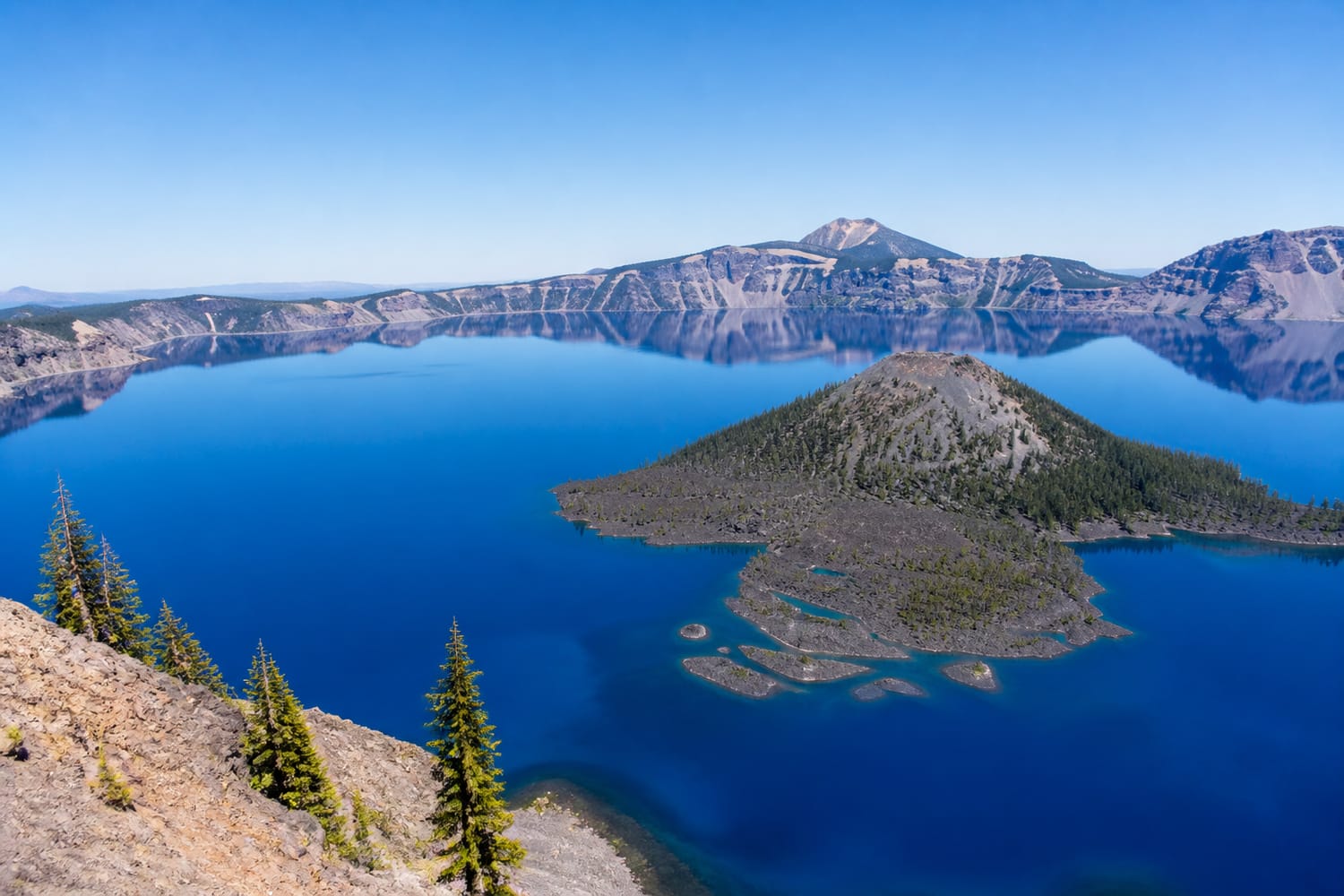
Oregon’s Crater Lake offers a striking example. No rivers or streams feed it, so it does not receive the steady stream-borne sediment that enters many other lakes. Its great depth and relatively low levels of material in the water help produce its famous clarity and deep-blue appearance. The National Park Service’s explanation of Crater Lake puts the emphasis on how little sediment and algae are present.
Algae Can Turn a Lake Cloudy
Not all murk comes from dirt. Lakes naturally contain algae—tiny organisms that use sunlight and nutrients to grow. When large amounts are suspended in the water, they can reduce visibility and give a lake a greenish cast.
Nitrogen and phosphorus are important nutrients for that growth. Rain can wash them into lakes from sources such as fertilized land and developed areas; wastewater can also contribute. Extra nutrients can encourage excessive algal growth, although temperature, sunlight, and other conditions influence whether a bloom develops. The U.S. Geological Survey’s guide to lakes and reservoirs explains how both land use and nutrient inputs can affect clarity.
This is one reason a lake can look different across the seasons. In some lakes, warmer, brighter months support more algae, while clarity can change again as conditions shift. Even Crater Lake’s clarity varies from year to year partly because deep-water mixing affects how many nutrients reach its sunlit surface.
Depth and Wind Make a Difference
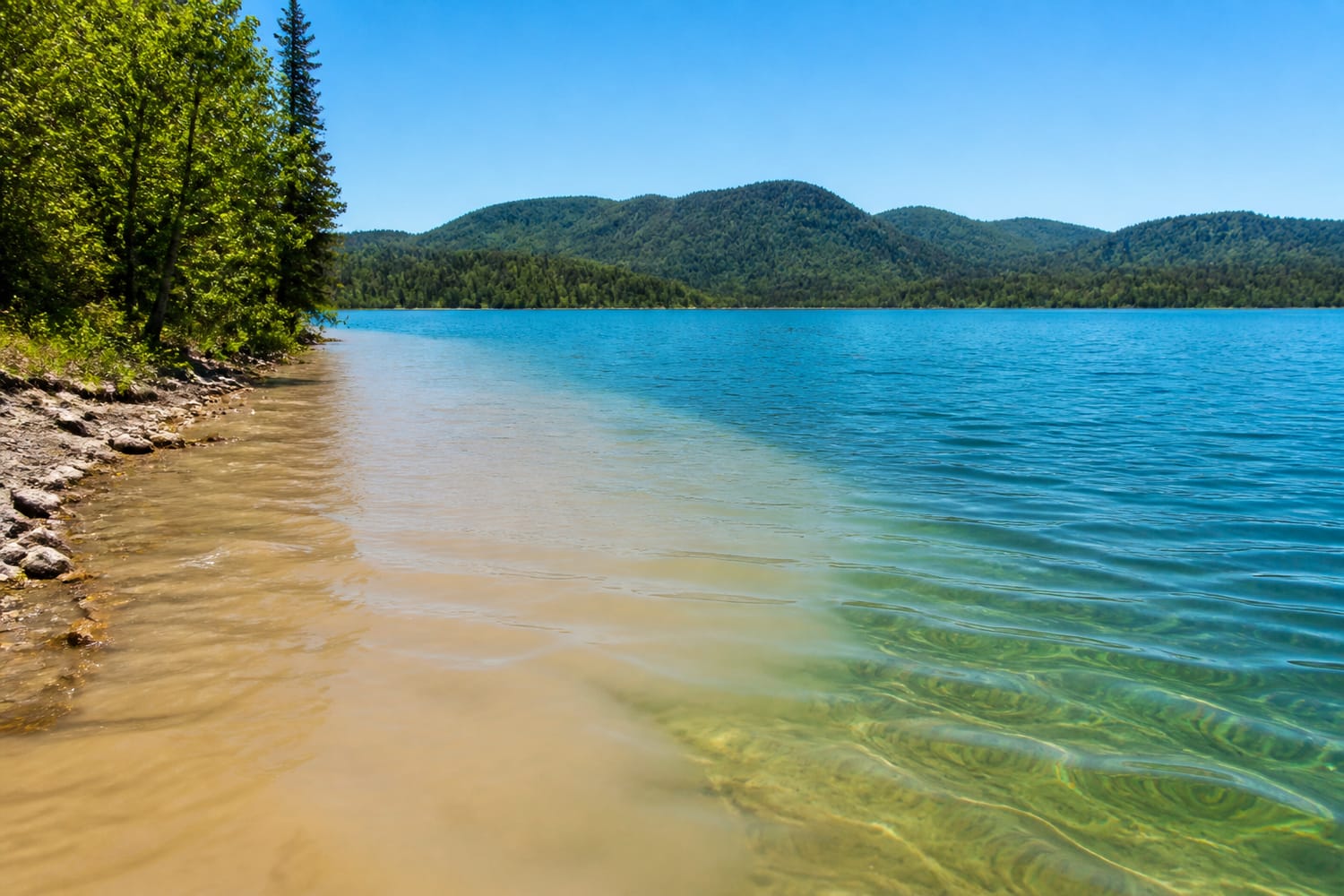
A shallow lake has a particular challenge: its bottom is close enough to the surface for wind-driven waves to stir up settled sediment. The water may look cloudy on a breezy afternoon without any new soil entering it. If that bottom material also contains nutrients, stirring it up can influence what grows in the lake.
Deep water is less vulnerable to this kind of whole-lake disturbance, but depth is not a magic clarity switch. A deep lake can still receive sediment or support plenty of algae. The useful question is not just “How deep is it?” but “What is floating in it, and how did it get there?”
Color Isn’t the Same as Murkiness
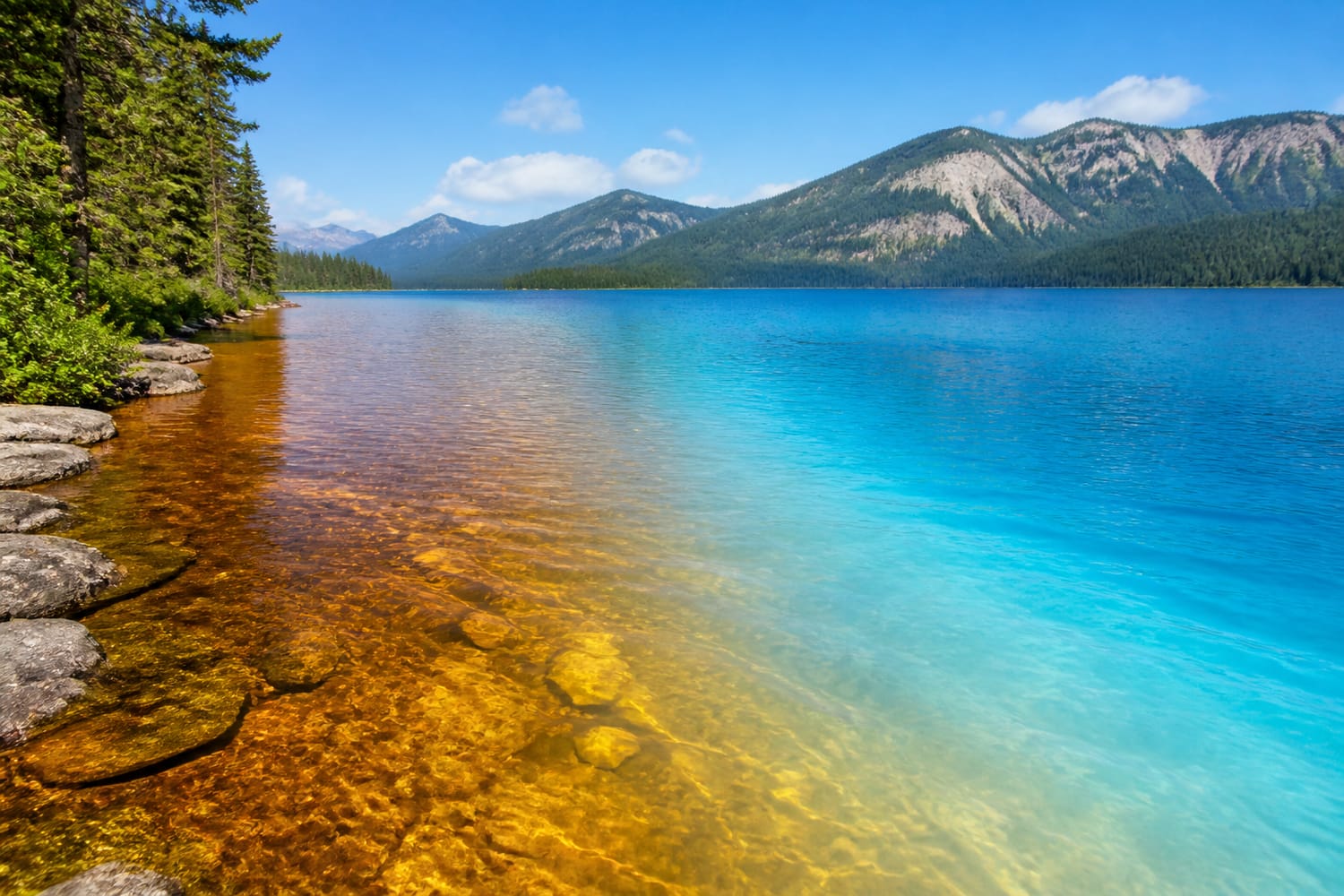
A brown lake is not necessarily muddy. Leaves and other plant material can release dissolved substances that tint water amber or tea-brown. Because the color comes from dissolved material rather than a cloud of visible particles, the lake may look dark while still allowing you to see into it.
Blue can be misleading, too. Fine sediment ground up by glaciers—sometimes called glacial flour—can give water a brilliant blue appearance even though particles are suspended in it. The next time a startlingly colorful lake catches your eye, remember that vivid color does not automatically mean exceptional clarity. Tour Trivia’s look at the world’s most colorful places is a reminder of how varied natural waters can appear.
Does Clear Water Mean Safe Water?
No. Clarity is something you can observe; safety depends on things you may not be able to see. A clear appearance alone cannot establish that lake water is safe to drink or swim in. Likewise, ordinary sediment can make water cloudy without meaning that it contains a harmful algal bloom.
If the surface has scum, foam, mats, or paint-like streaks, take particular care. Some blooms can harm people and animals, and appearance alone cannot confirm whether toxins are present. Before swimming—or letting a dog enter the water—check local advisories and stay out if a bloom is suspected. The EPA’s guidance for protecting pets describes warning signs to watch for.
Read the Landscape Around the Lake
On your next lake visit, look beyond the water’s color. Has it rained recently? Do streams enter nearby? Is the shoreline steep and wooded, or is there exposed soil? Are waves churning across a shallow bay? Those clues can help explain why the view differs from a photograph—or why one side of a lake looks clearer than another.
The same habit of looking closely can make any natural stop more rewarding, from a clear mountain lake to the blue-green lagoons featured in Tour Trivia’s underrated natural wonders. Lakes are not simply clear or murky by nature. Their appearance is a changing record of the land around them, the life within them, and the light passing through.