
A Desert’s Hidden Life
Deserts burst into bloom when dormant seeds receive the right sequence of rain, temperature, and sunlight. A single storm is rarely enough. Rare “super blooms” usually require well-timed soaking rains, continued moisture, mild growing conditions, and limited destructive wind—all aligning before intense heat returns.
The transformation can seem impossible. A landscape that looked empty for years suddenly glows with yellow, purple, orange, pink, and white flowers. Yet the plants did not appear from nowhere. Their seeds were waiting beneath the surface, sometimes for years or even decades.
This hidden potential is one reason deserts are far more biologically active than their barren appearance suggests. Like desert oases that concentrate life around scarce water, super blooms demonstrate how quickly arid ecosystems can respond when precious moisture becomes available.
What Counts as a Super Bloom?
“Super bloom” is a popular rather than strictly scientific term. It generally describes an unusually widespread and dense display of wildflowers, especially in desert or dry grassland environments.
A normal spring may bring scattered clusters of flowers along roads, washes, and hillsides. During a super bloom, millions of plants can flower within a relatively short period, producing broad bands of color that may even be detectable in satellite images. NASA documented this effect during Southern California’s 2019 wildflower bloom.
There is no universal measurement that separates a good wildflower year from a super bloom. The label depends partly on local conditions and how dramatically the display exceeds an ordinary season. A spectacular bloom in one valley may occur while nearby areas remain comparatively bare.
The Underground Seed Bank
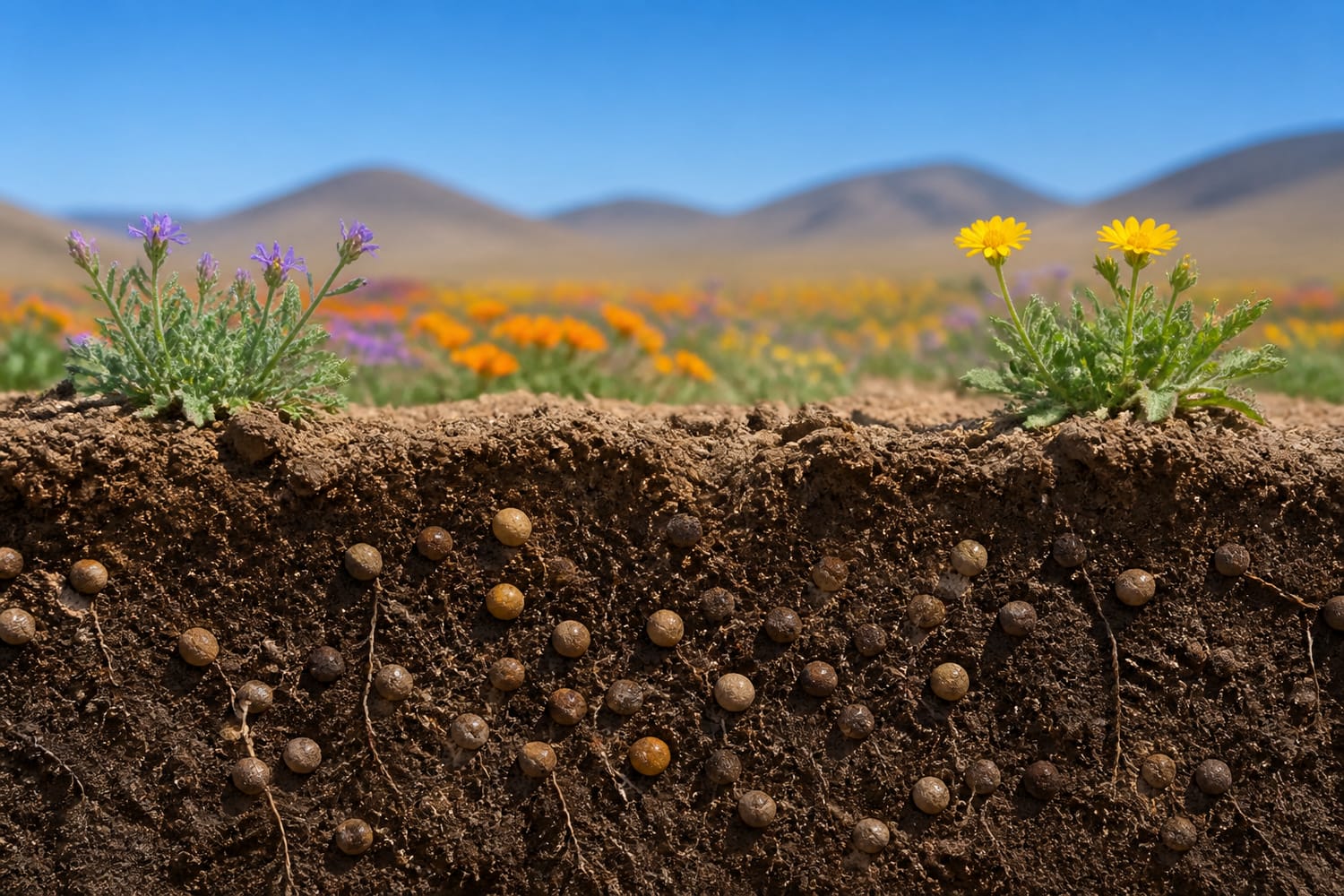
The real engine of a super bloom is the soil seed bank: a reserve of viable seeds buried in or scattered across the ground.
Many desert wildflowers are annuals, meaning they germinate, grow, flower, produce seeds, and die within a single season. Instead of attempting to survive year-round as mature plants, they endure the harshest conditions as seeds.
Dormancy prevents all the seeds of a species from germinating after the first shower. If every seed sprouted during a brief rain followed by months of drought, the entire generation could fail. By remaining dormant for different lengths of time, seeds spread that risk across multiple seasons.
Several dry years can therefore allow large numbers of seeds to accumulate. When exceptionally favorable conditions finally arrive, a significant portion of that stored population may germinate together. UC Davis offers a helpful explanation of this annual wildflower strategy.
Why Rainfall Timing Matters
It is tempting to assume that heavy rain automatically produces endless flowers. In reality, timing and distribution can be more important than the season’s total rainfall.
A successful bloom often begins with a substantial soaking rain during the appropriate germination window. That moisture must penetrate deeply enough to keep the upper soil from drying immediately. It may also soften or remove substances surrounding certain seeds, helping initiate germination.
Follow-up rain is equally important. Young seedlings have limited roots and can die if the soil dries before they become established. The ideal pattern generally includes:
- An early soaking rain after extreme summer heat has eased
- Additional storms spaced across the growing season
- Enough dry weather between storms to prevent flooding or rot
- Continued soil moisture as roots and leaves develop
- Mild conditions during the flowering period
The Arizona-Sonora Desert Museum notes that predicting major displays is difficult because rainfall, temperature, plant species, and local conditions interact in complex ways. Its guide to predicting desert wildflower blooms explains why both an early start and continued winter moisture can be crucial.
Temperature Sets the Clock
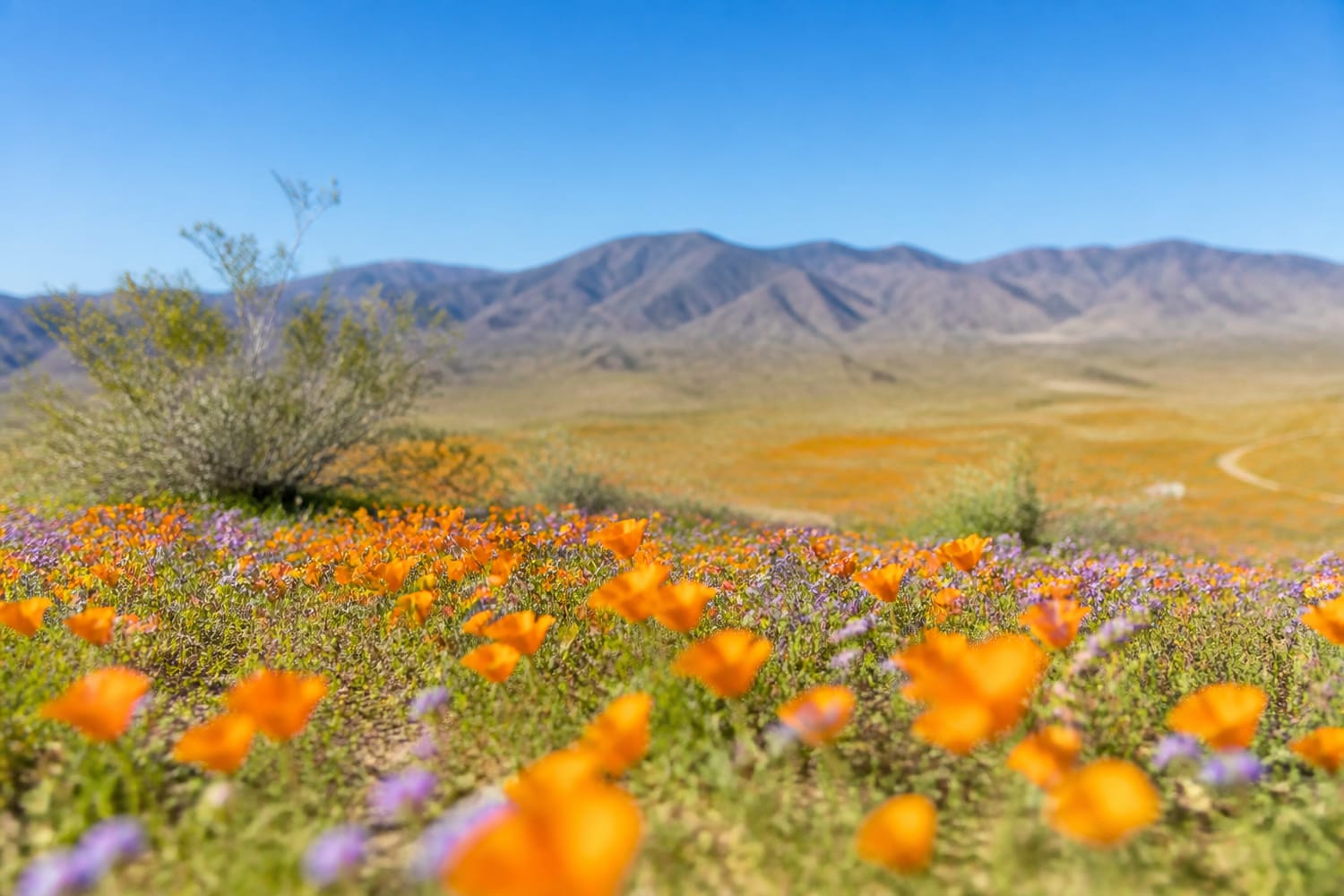
Water wakes the seeds, but temperature tells them whether the season is right.
If rain falls while the ground is still extremely hot, many cool-season annuals may remain dormant. If germination happens too late, seedlings may not have enough time to mature before spring heat arrives. Different species also respond to different combinations of moisture and temperature, which helps determine the colors and flowers that dominate a particular year.
Once seedlings emerge, cool weather can extend the growing period. Plants invest energy in roots and leaves before warmer days trigger rapid growth and flowering. A sudden heat wave, however, can shorten the display by drying the soil and pushing flowers through their life cycles more quickly.
Elevation further complicates the calendar. Low desert valleys warm first, while higher slopes remain cooler. As a result, blooming may appear to travel uphill over several weeks, allowing observant visitors to follow the season across the landscape.
Why One Wet Year Can Still Disappoint
Even generous rainfall does not guarantee a super bloom. A downpour may cause erosion or flash flooding instead of providing slow, deep moisture. Strong, dry winds can dehydrate seedlings, while an early heat wave may end flowering almost as soon as it begins.
Invasive grasses can also benefit from wet conditions. Fast-growing grasses may crowd native seedlings, block sunlight, consume water, and make flowers harder for pollinators to locate. Soil disturbance from vehicles, construction, livestock, or heavy foot traffic can damage the seed bank before plants have an opportunity to emerge.
Small differences in slope, drainage, soil texture, and storm tracks help explain why one hillside becomes a floral carpet while another nearby remains brown. Desert landscapes may look uniform from a distance, but they contain countless microhabitats.
An Ecological Race Against Time
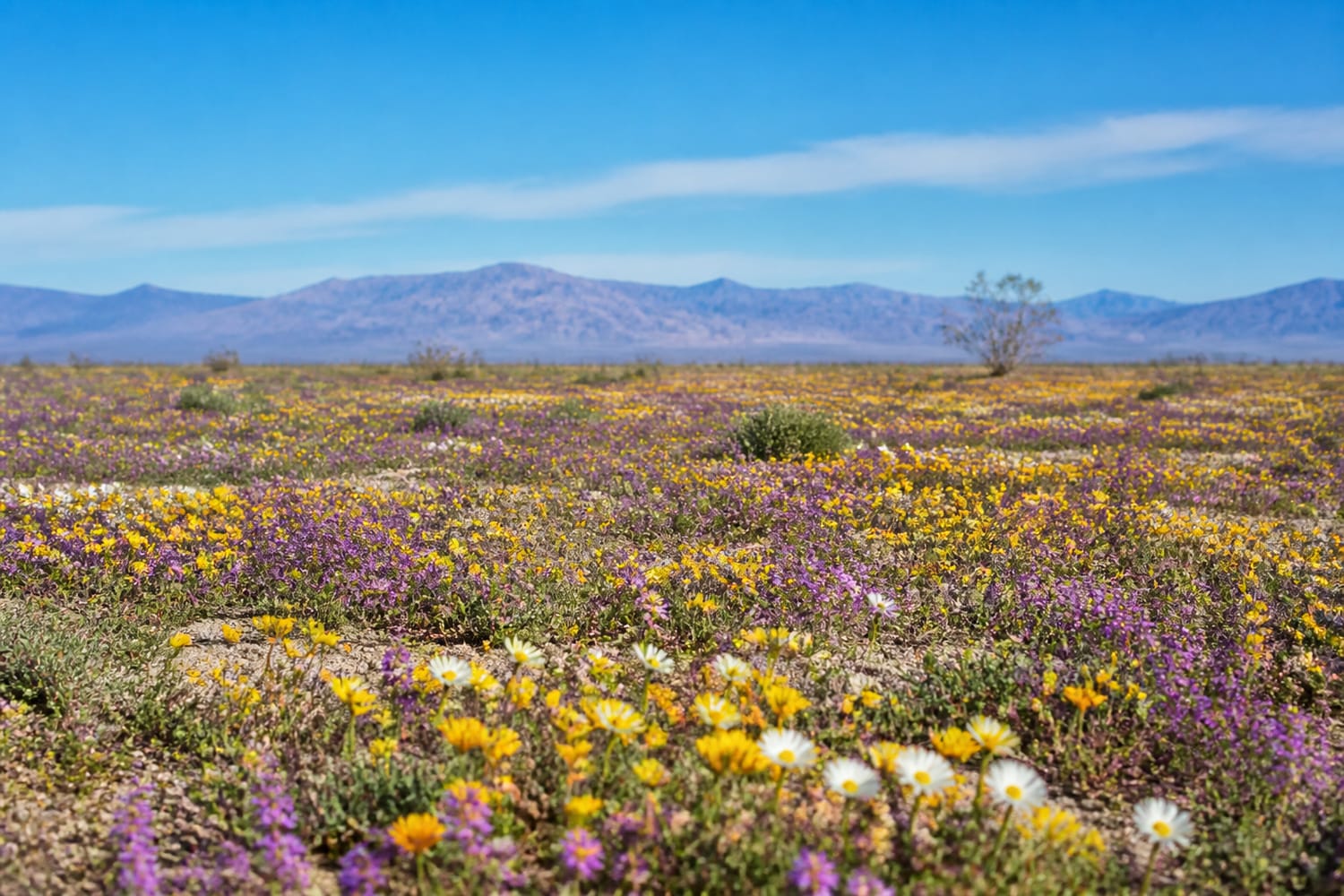
Desert annuals must complete their entire aboveground lives before moisture disappears. Once conditions become favorable, they grow quickly, flower, attract pollinators, and produce the next generation of seeds.
The flowers provide nectar and pollen for bees, butterflies, moths, beetles, hummingbirds, and other animals. Seeds and new vegetation supply food for rodents, birds, and larger herbivores. A major bloom can therefore send a temporary pulse of energy through the food web.
The spectacle is brief because it is built around urgency. In places such as Death Valley, plants may have only weeks to reproduce before rising temperatures and drying winds restore the familiar desert appearance. The National Park Service’s Death Valley wildflower guide describes how these short-lived annuals sprout, flower, and return to seed before punishing heat takes over.
Where Super Blooms Happen
California locations such as Death Valley, Anza-Borrego Desert State Park, the Mojave Desert, and Carrizo Plain are famous for dramatic displays. Similar mass flowering events occur in Arizona’s Sonoran Desert and other arid regions worldwide.
Chile’s Atacama Desert occasionally produces a striking “flowering desert” after unusual rainfall. Western Australia is also celebrated for expansive wildflower seasons supported by its enormous diversity of native plants.
Each region responds to its own climate rhythm. Winter storms drive many North American desert blooms, while monsoon rain or shifting ocean-atmosphere patterns may influence flowering elsewhere. These events add unexpected color to the world’s most striking arid landscapes.
How to Visit Without Damaging the Bloom
Super blooms attract enormous crowds, and careless visitation can destroy the very conditions that created them. Trampled plants may lose their flowers before setting seed, while compacted soil can reduce future germination.
Visitors can protect these rare displays by staying on established trails, keeping vehicles on legal roads, leaving flowers unpicked, and avoiding sensitive areas even when other people are walking there. Drones and pets should only be brought where regulations permit them.
A super bloom is more than a colorful backdrop. It is a brief reproductive event built from years of stored seeds and an exceptionally precise combination of weather conditions. Respecting the landscape helps ensure that when the desert’s hidden garden awakens again, it will still have millions of flowers ready to rise.