
A Forest That Finds Its Rhythm
Fireflies flash in unison because they respond to one another’s light, gradually aligning their timing. The display is part of a mating conversation: coordinated flashes can help females recognize males of their own species amid a crowded forest. No single firefly conducts the show, and scientists are still investigating why synchrony evolved.
At first, the scene can look like an ordinary summer evening, with scattered points of light among the trees. Then clusters begin flashing together. A hillside brightens, goes dark, and brightens again—as though the forest has found a pulse.
The Chemistry Behind Each Flash
Fireflies, also called lightning bugs, are beetles rather than flies. Their light comes from a chemical reaction inside a specialized part of the abdomen called a lantern. There, a substance called luciferin reacts with oxygen with help from the enzyme luciferase, producing light with very little heat. This process is called bioluminescence.
The glow is not merely decorative. In many species, an adult’s flashes are courtship signals. A flying male advertises his presence, and a female resting in vegetation or near the ground may answer. Timing, color, and pattern help the two recognize a suitable mate. Other living things glow, too, but a firefly’s blinking lantern is particularly well suited to sending a message through the dark. For more examples of nature making its own light, explore Tour Trivia’s guide to unusual natural events you can witness.
Why Flash Together?
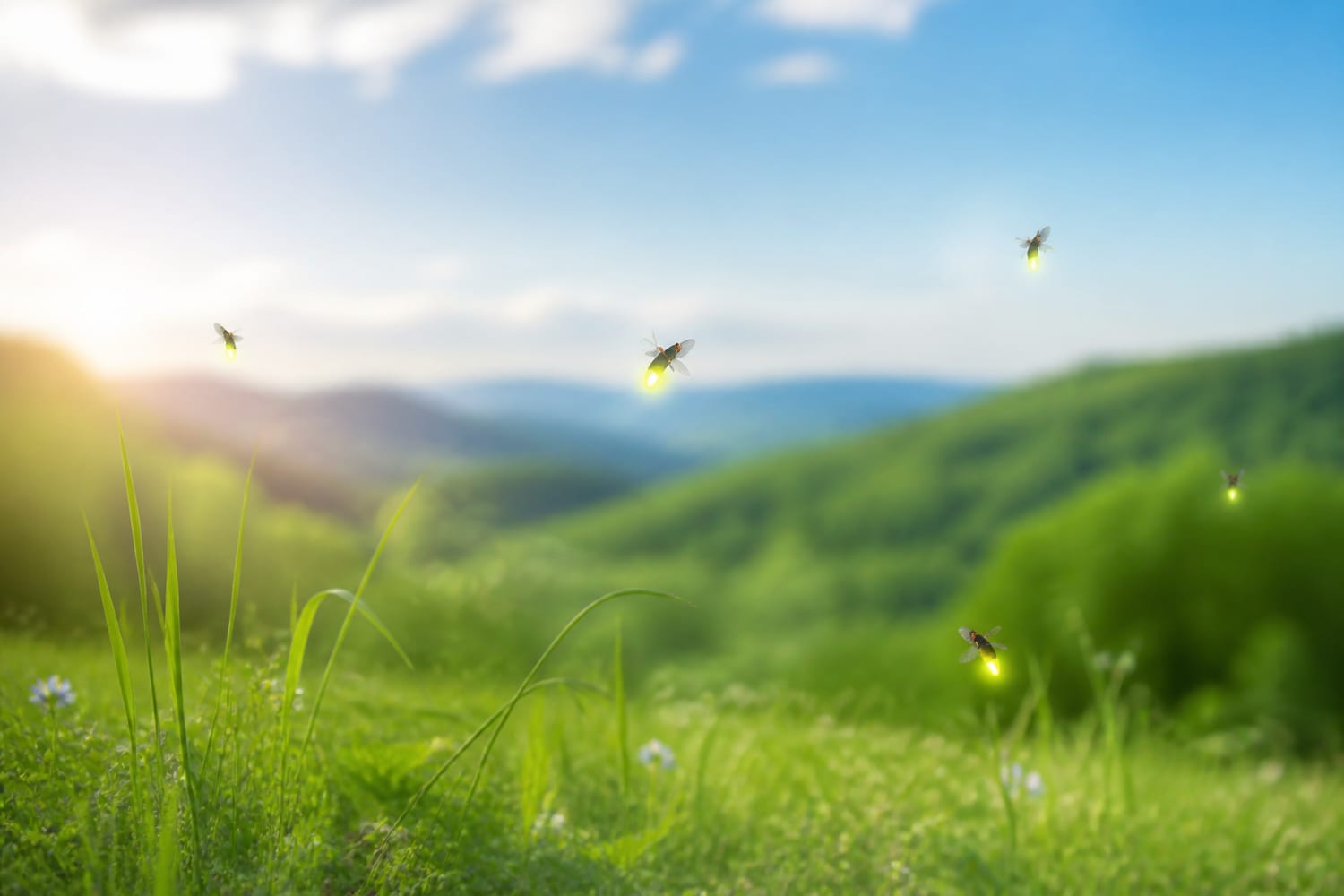
Imagine trying to pick out one person’s flashlight signal while hundreds of people wave flashlights around them. A female firefly faces a similar problem when many males are flashing nearby. In a study of Photinus carolinus, researchers found evidence that synchronized signals help females recognize males of their own species by reducing this visual clutter.
In the Great Smoky Mountains, P. carolinus males produce a short series of flashes followed by a conspicuous pause. A female’s much dimmer reply can appear during the interval when the males go dark. The result is less like a performance for human spectators and more like a conversation with room for an answer. Synchrony’s precise evolutionary advantages remain a subject of study, however, and findings about one species should not automatically be applied to every synchronous firefly.
How Do They Get in Sync Without a Leader?
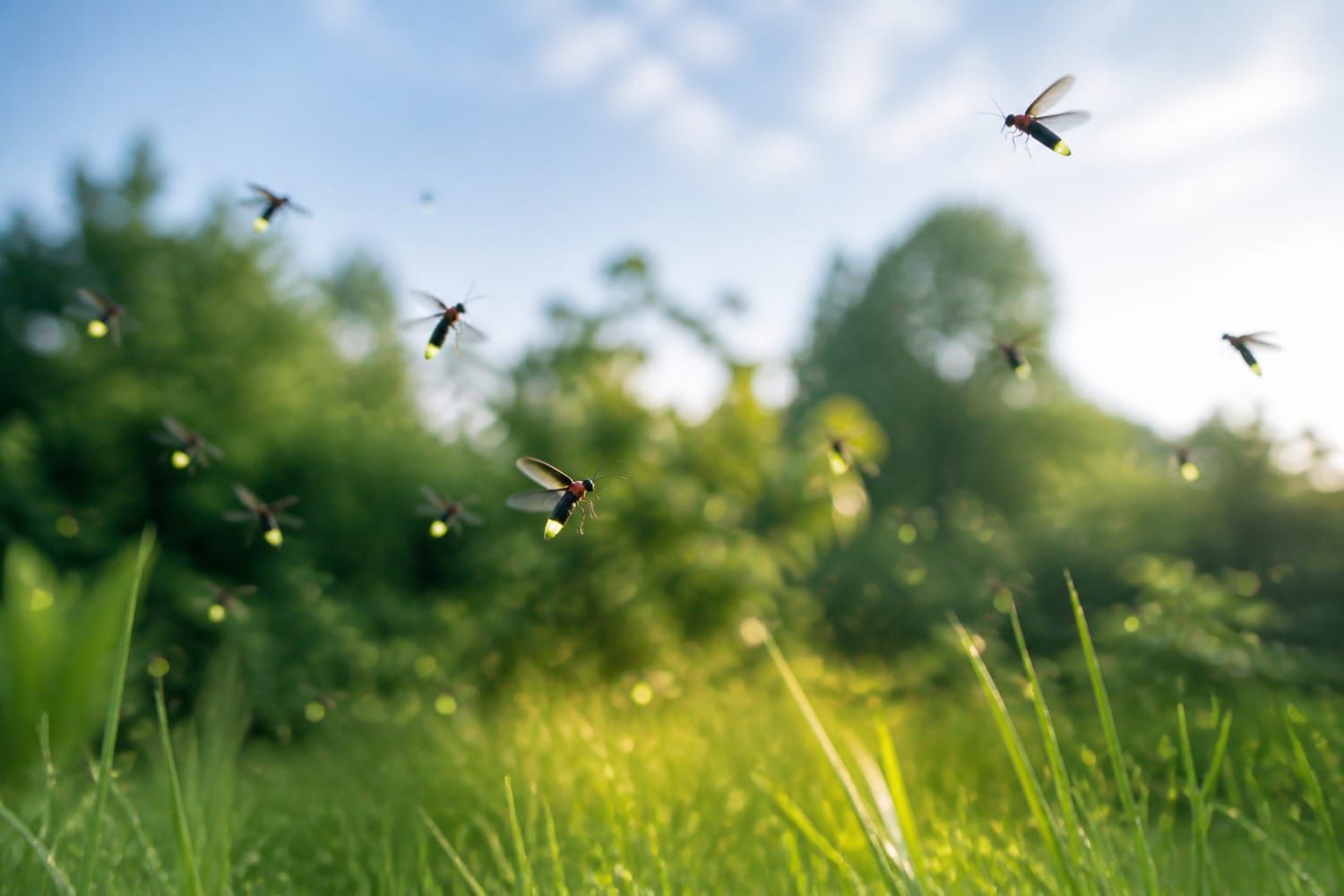
There is no signal from a distant conductor telling every firefly when to flash. Instead, individuals can respond to light around them. Each has its own flashing rhythm, but nearby flashes influence its timing. Across a group, those local adjustments can produce a shared pattern—a form of self-organization.
Think of people clapping at slightly different speeds, then listening and adjusting until their claps begin to coincide. Fireflies are not making a conscious agreement, and their displays need not be perfectly uniform. Field research on P. carolinus has tracked how synchronization emerges through a swarm, while research at Congaree National Park has found that groups of another species can flash at slightly different tempos. From a distance, the effect can look like one coordinated canopy of light.
Do All Fireflies Perform the Same Show?
Not at all. Many fireflies flash without forming a large synchronized display; some glow steadily, and some do not produce light as adults. Even among synchronous species, the patterns differ. Photinus carolinus creates bursts separated by darkness, while Photuris frontalis, the species associated with Congaree in South Carolina, produces quick, repeating flashes. The National Park Service identifies only a few synchronous species in North America.
These differences matter if you are watching closely. A scattered flicker in your backyard is not a failed version of the Smokies’ spectacle—it may be a different species sending its own distinctive signal. Rather than looking only for a whole forest to blink at once, watch one firefly long enough to notice whether another answers. You may catch a much smaller exchange unfolding in the grass.
Where Can You See Synchronous Fireflies?
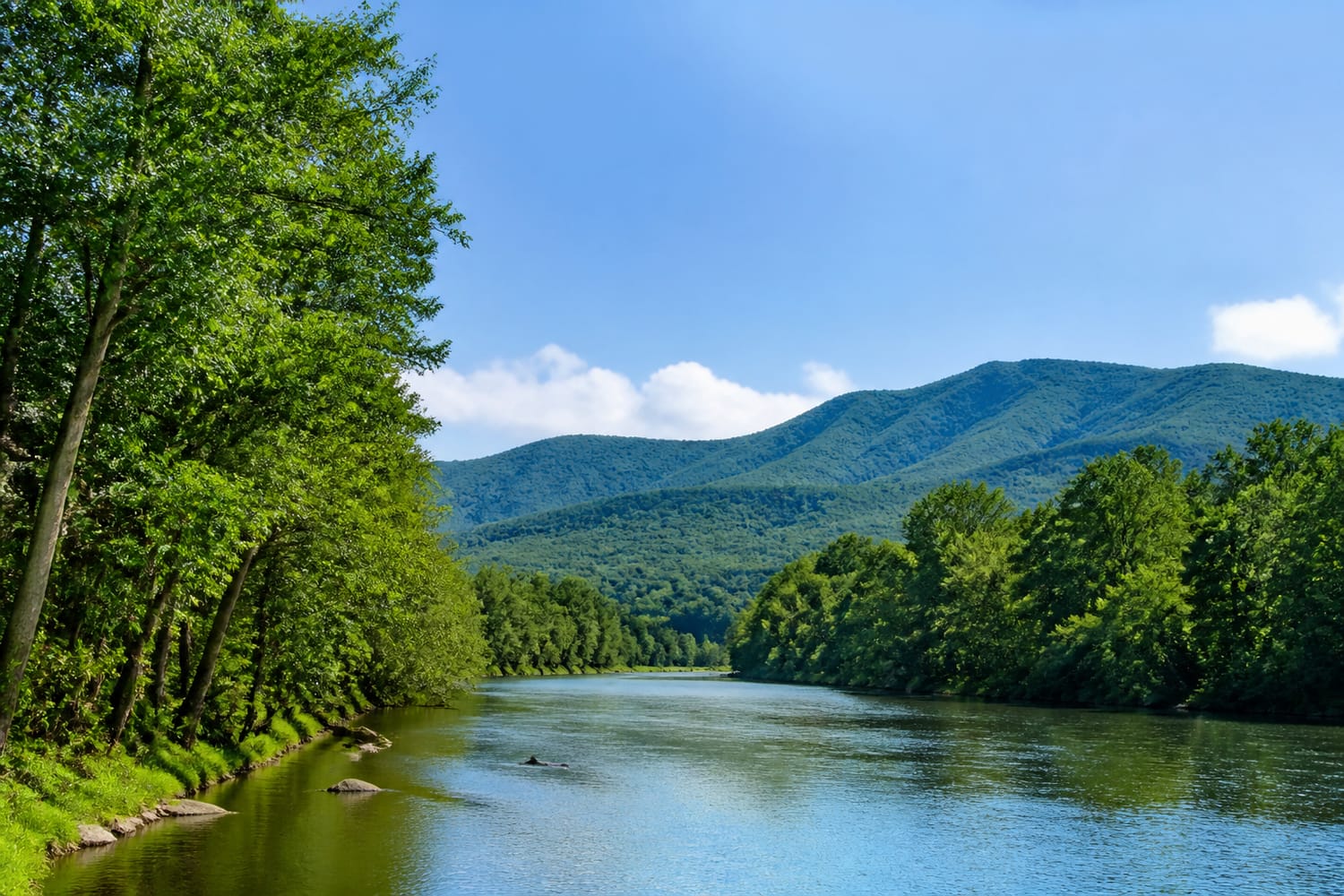
Great Smoky Mountains National Park is a well-known place to see P. carolinus. Its Elkmont viewing area draws considerable interest, and the park manages access through a reservation lottery to protect the insects and their habitat. If the fireflies bring you to the region, Tour Trivia also has ideas for exploring the Great Smoky Mountains beyond the evening display.
Congaree National Park offers a different synchronous display. At either park, timing takes more planning than simply choosing a summer weekend. The Smokies’ mating display lasts roughly two to three weeks, and its peak shifts with conditions such as temperature and soil moisture. Heavy rain or cool weather can also reduce activity on a particular night. Check the park’s current guidance before making plans, and treat a peak prediction as a possibility, not a promise.
How to Watch Without Interrupting
Darkness is part of the experience—and part of the fireflies’ communication system. Bright flashlights can interfere with their signals and spoil other visitors’ night vision. The National Park Service’s firefly viewing guidance recommends using a dim red-filtered light only when needed to reach your spot, pointing it toward the ground, and turning it off once you settle in. Stay on designated trails: females may be near the forest floor, where an off-trail footstep can harm them.
You can help fireflies closer to home as well. The Xerces Society’s firefly conservation advice recommends reducing outdoor lighting, avoiding pesticides, and leaving some natural habitat—such as leaf litter and unmowed vegetation—in place. These choices protect more than a future light show; they support the insects through the less-visible stages of their lives.
The striking thing about synchronous fireflies is not that thousands somehow know the same schedule. It is that each responds to its neighbors, and together they create something no individual could produce alone. Watch patiently through a stretch of darkness. The next flash may be one beetle’s signal—or the beginning of a forest answering back.