
The Short Answer
Glaciers look blue because dense ice absorbs more red light than blue light. Sunlight enters the ice, travels through it, and emerges with less red in the mix. The effect is easiest to see where the ice is thick and relatively free of air bubbles. A snow-covered glacier, by contrast, can look almost entirely white.
That flash of turquoise in a crevasse or deep blue at a glacier’s edge might seem too vivid to be natural. But it comes from ordinary ingredients—snow, pressure, and sunlight—working together on an extraordinary scale.
From Snowflakes to Glacier Ice
A glacier begins with snow that survives from one year to the next. As more snow accumulates, its weight presses on the layers below. Fluffy snow becomes compacted snow called firn and, with further compression, glacier ice. The ice can then deform and flow under its own weight, slowly reshaping the landscape around it.
Fresh snow contains countless spaces between its crystals. As the snow is buried and compressed, many of those spaces shrink or disappear, leaving denser ice with fewer air pockets. That change matters to color: light can travel farther into dense ice before it returns to your eyes. For more on how these slow-moving masses shape mountains and valleys, explore Tour Trivia’s look at Earth’s extremes, from deserts to glaciers.
How Sunlight Turns Ice Blue
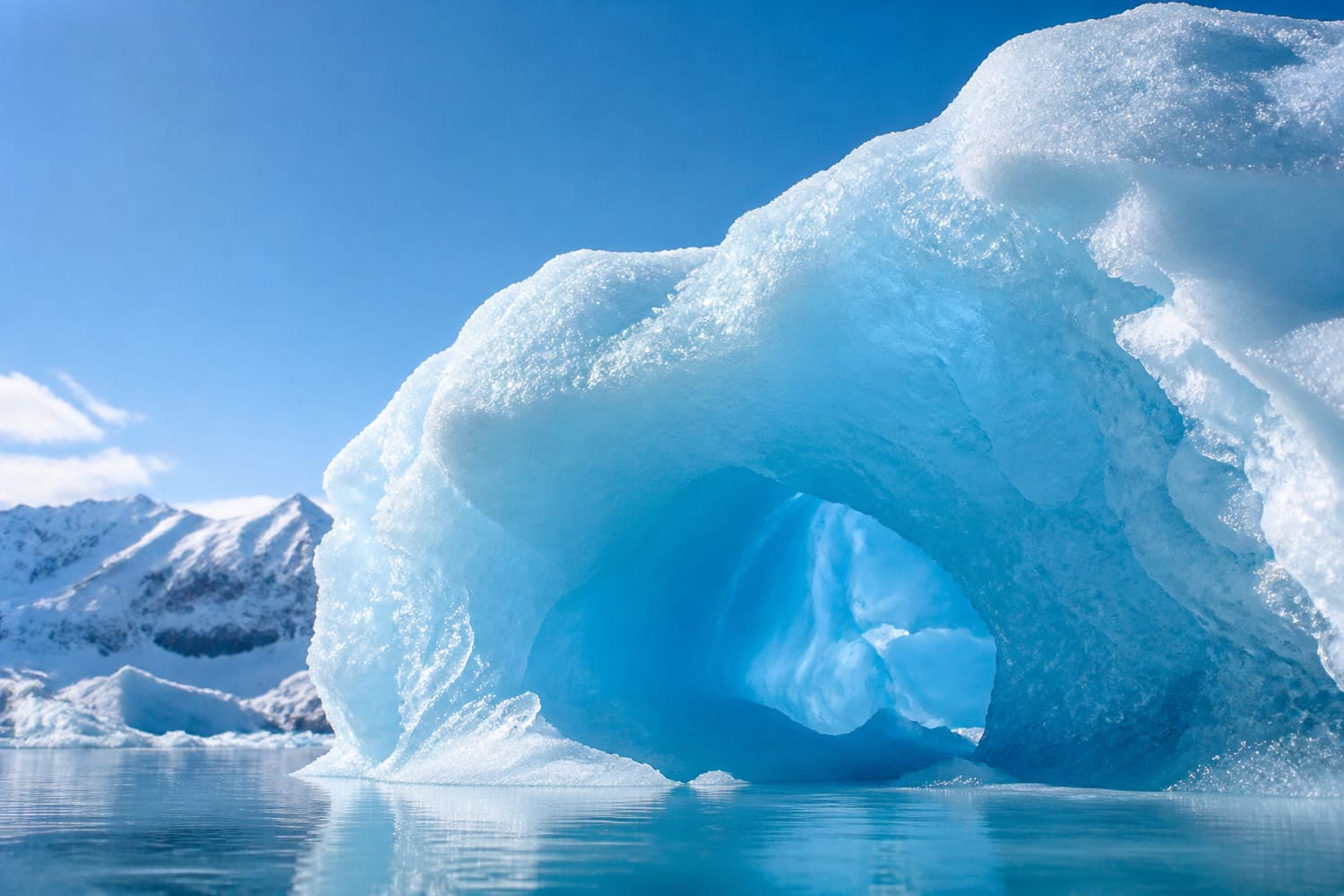
White sunlight contains a range of visible colors. When it enters glacier ice, those colors do not all behave the same way. Ice absorbs some of the longer-wavelength light, especially red, while more blue light survives the journey through the ice. Some of that remaining light is scattered back toward an observer.
Think of the ice as a subtle color filter. A short trip through a thin piece may make little visible difference. Over a longer path through thick ice, more red light is lost, so the light reaching your eyes looks distinctly blue. As the U.S. Geological Survey explains, the farther light travels through glacier ice, the bluer the ice can appear.
The blue is not a dye trapped in the glacier. Nor is it simply a reflection of the sky: blue ice can stand out beside white ice under the same sky. The glacier’s color comes primarily from what happens to light inside the ice.
Why Snow and Some Glaciers Look White
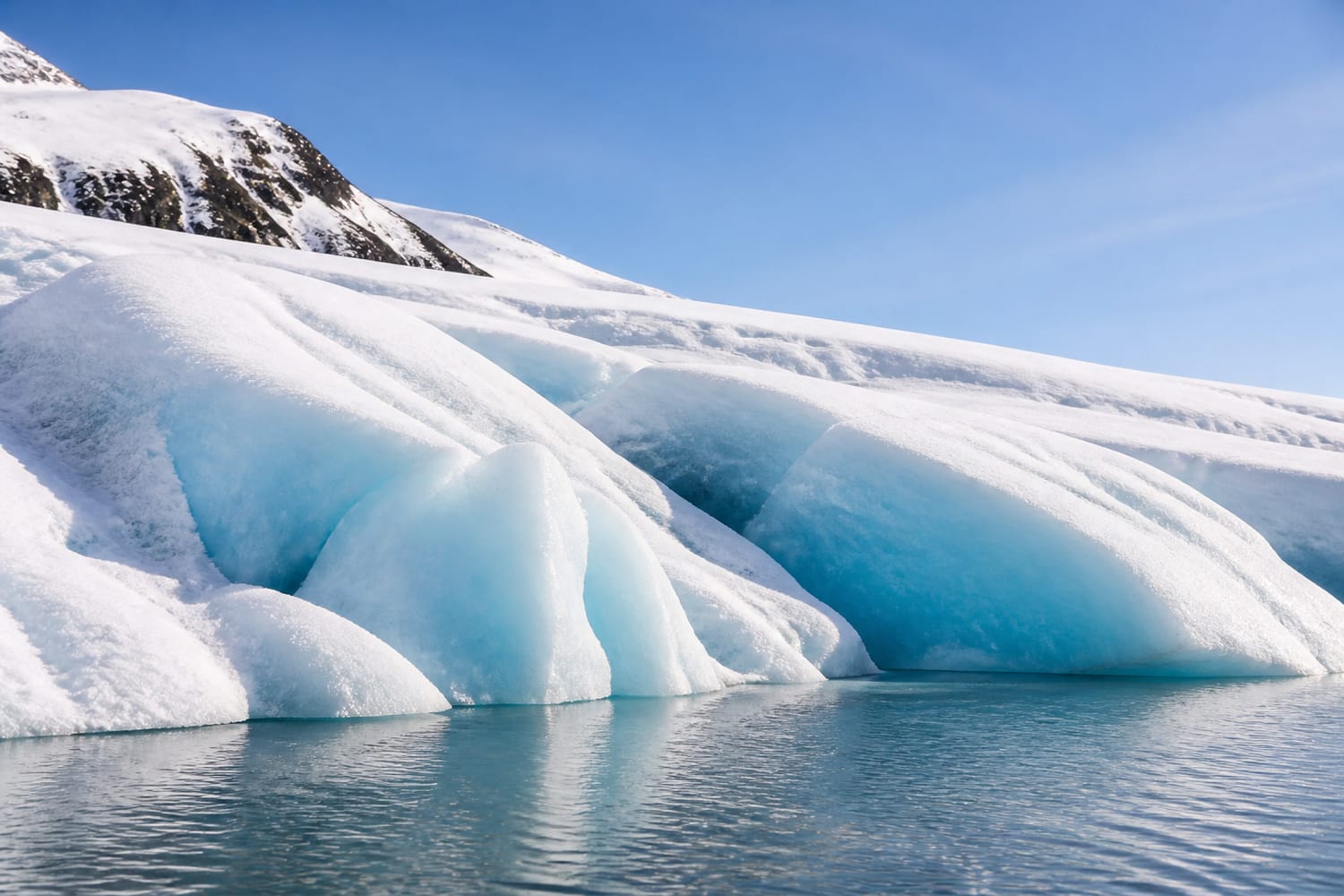
If ice is naturally blue, why does a snowy mountainside look white? Snow’s many crystal surfaces and air spaces send sunlight back in different directions. Light escapes before it has traveled far enough through solid ice for much red to be absorbed. With the visible colors still mixed together, the snow looks white.
The same principle explains the patchwork appearance of a glacier. Fresh snow may cover dense blue ice underneath. Parts of the ice may still contain many tiny bubbles, producing a pale or white appearance; rough, fractured surfaces can also scatter light. Where cleaner, denser ice is exposed—perhaps in a crack or at a freshly broken face—the blue becomes easier to see. The National Snow and Ice Data Center’s glacier quick facts describe the contrast between bubble-rich white ice and denser blue ice.
Where the Blue Looks Most Dramatic
A glacier rarely displays one uniform shade. From a distance, a broad surface may look snowy white, while a crevasse reveals saturated blue below. The key difference is the route light takes: light seen from within a deep opening may have passed through substantially more ice than light reflected from snow at the surface.
Icebergs can offer a striking version of the same contrast. Many appear mostly white, yet sections of dense ice may look blue or blue-green. Their color depends on the ice’s bubbles, crystal structure, and the path light takes through it. NOAA notes that some icebergs also show green coloration associated with algae on formerly submerged surfaces—a reminder that not every unusual icy hue has exactly the same explanation.
These details make glacier watching a little more interesting. Instead of asking whether a glacier is blue or white, look for where each color appears. Is the blue in an exposed wall? Is a white layer sitting on top? Those contrasts offer clues about the ice and the light reaching it, even when you are observing from a safe distance.
Is Blue Ice Older—or Safer?
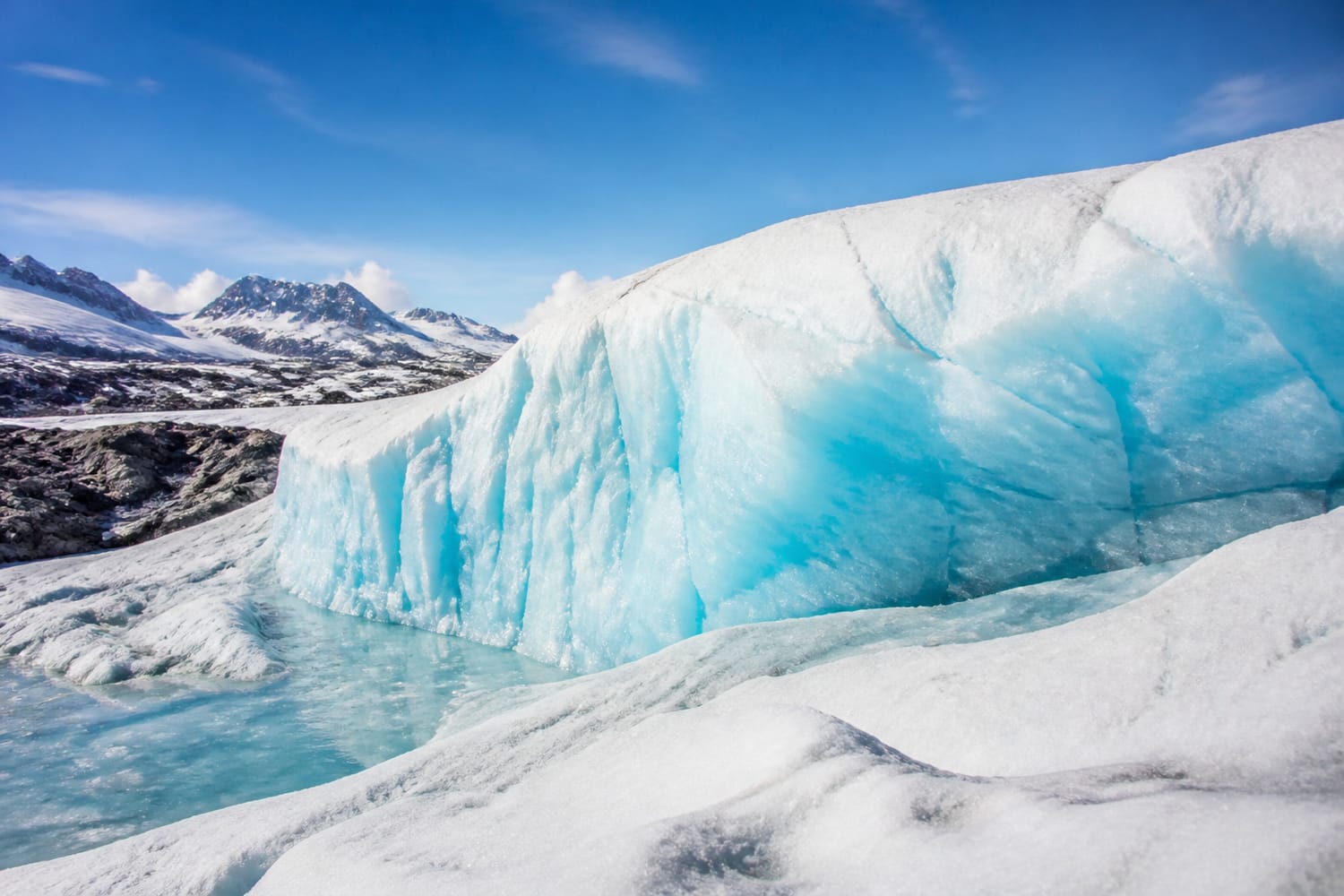
Blue ice often developed under prolonged compression, but color alone cannot tell you its exact age. Nor does a brilliant blue patch guarantee safe footing. Glaciers move, fracture, and form crevasses, some of which may be hidden by snow. The safest way to appreciate the color is from an appropriate viewpoint, not by approaching a tempting crack or entering an ice cave.
Color can also come from something other than the ice itself. Rock debris carried by a glacier can make sections look dark or brown. At Antarctica’s Taylor Glacier, iron-rich brine creates the startling red of Blood Falls—an entirely different story from blue ice. Tour Trivia explores that spectacle among natural phenomena that look fake but are real.
A Color Made by Time and Light
The answer to “Why do glaciers look blue?” is both simple and satisfying: dense ice gives sunlight room to travel, and the ice removes more red light along the way. Fewer bubbles let that blue become more apparent. White snow, dark debris, and changing light can alter the view, so even one glacier can display several colors at once.
The next time you spot a blue streak against a field of white, you will be seeing more than a beautiful color. You will be seeing the result of snowfall compressed into ice—and sunlight revealing what is inside.