
Meet the Tree Behind the Rainbow
The rainbow eucalyptus, Eucalyptus deglupta, is also known as Mindanao gum. Its native range includes tropical rainforests in the Philippines, Indonesia, and New Guinea. Although eucalyptus trees are strongly associated with Australia, this species comes from a different tropical setting.
Its colorful trunk understandably attracts attention, but this is no small ornamental curiosity. Port St. Lucie Botanical Gardens lists heights of approximately 100 to 125 feet in the continental United States. The tree also produces small white flowers, a comparatively understated feature beside its spectacular bark.
For travelers, it belongs alongside other natural phenomena that look fake but are completely real. Understanding the explanation does not make the spectacle less impressive; it gives you more to notice.
The Rainbow Begins With Peeling Bark
The first ingredient is exfoliation: the natural shedding of outer bark. Instead of retaining an increasingly thick, rough exterior, rainbow eucalyptus trees shed thin layers throughout their lives. Older bark loosens and drops away, revealing a fresh green surface underneath.
Crucially, this does not happen across the entire trunk at once. One narrow strip may peel while a neighboring patch remains intact. Elsewhere, another exposed area may already have been changing color for some time. That staggered timing produces the irregular bands and patches that resemble overlapping brushstrokes.
Think of the trunk as a patchwork of surfaces with different exposure histories. You are not looking at one uniform coating, but many areas at different stages of renewal. The pattern therefore changes as older surfaces give way to younger ones.
Why Freshly Exposed Bark Looks Green
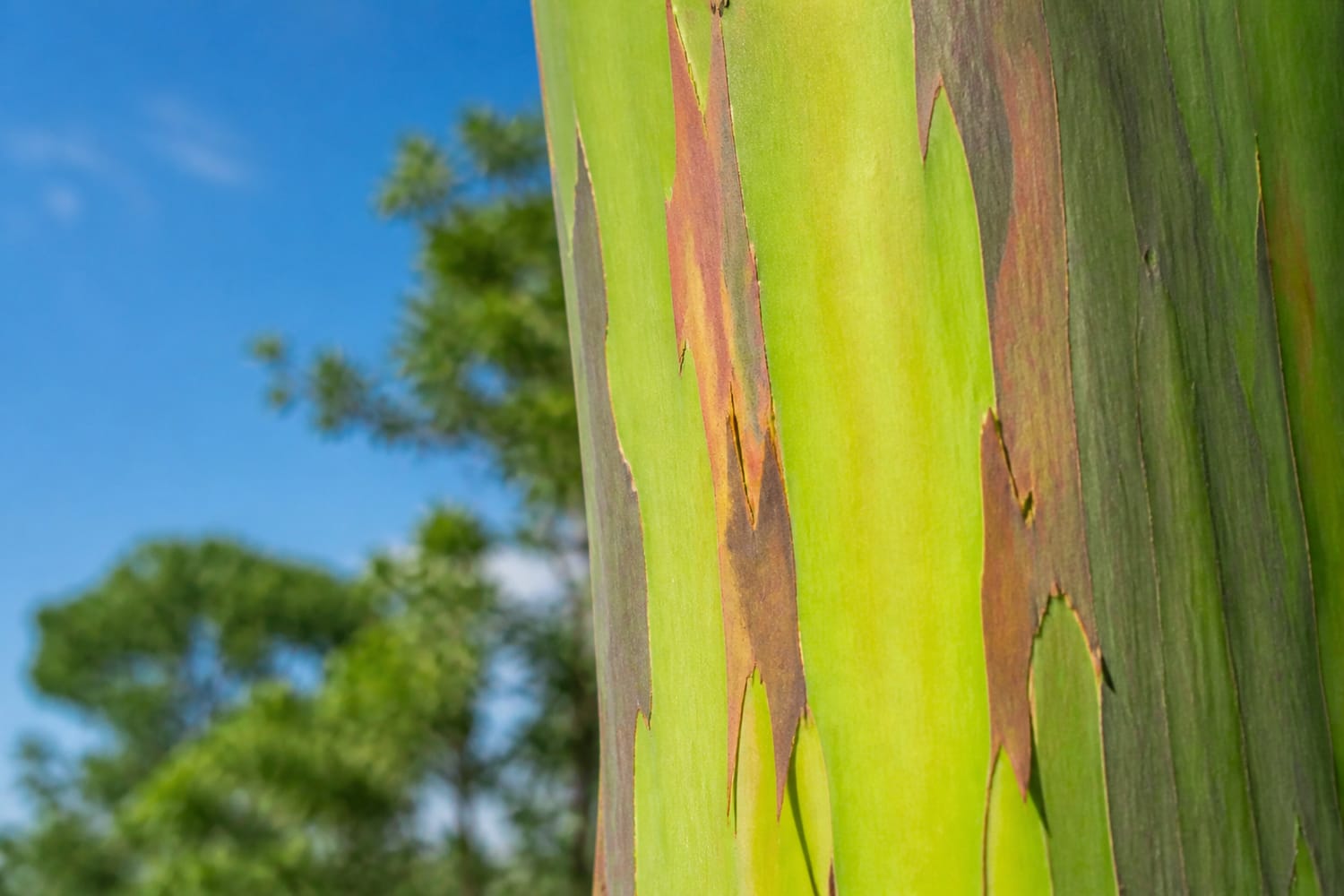
The vivid green comes from chlorophyll, the pigment plants use to capture light energy for photosynthesis. Although we usually associate chlorophyll with leaves, the newly revealed tissue of rainbow eucalyptus contains it too.
In an investigation described by Science Friday’s explanation of rainbow eucalyptus bark, botanist David Lee found a thin, transparent surface layer over chlorophyll-rich tissue. That arrangement allows the green beneath to show through.
This distinction matters: peeling does not reveal green paint hidden inside the tree. It exposes tissue whose appearance reflects its biological makeup. The brilliant green is the beginning of a changing surface, not a permanent color underneath every other shade.
How Green Becomes Purple, Orange, and Red
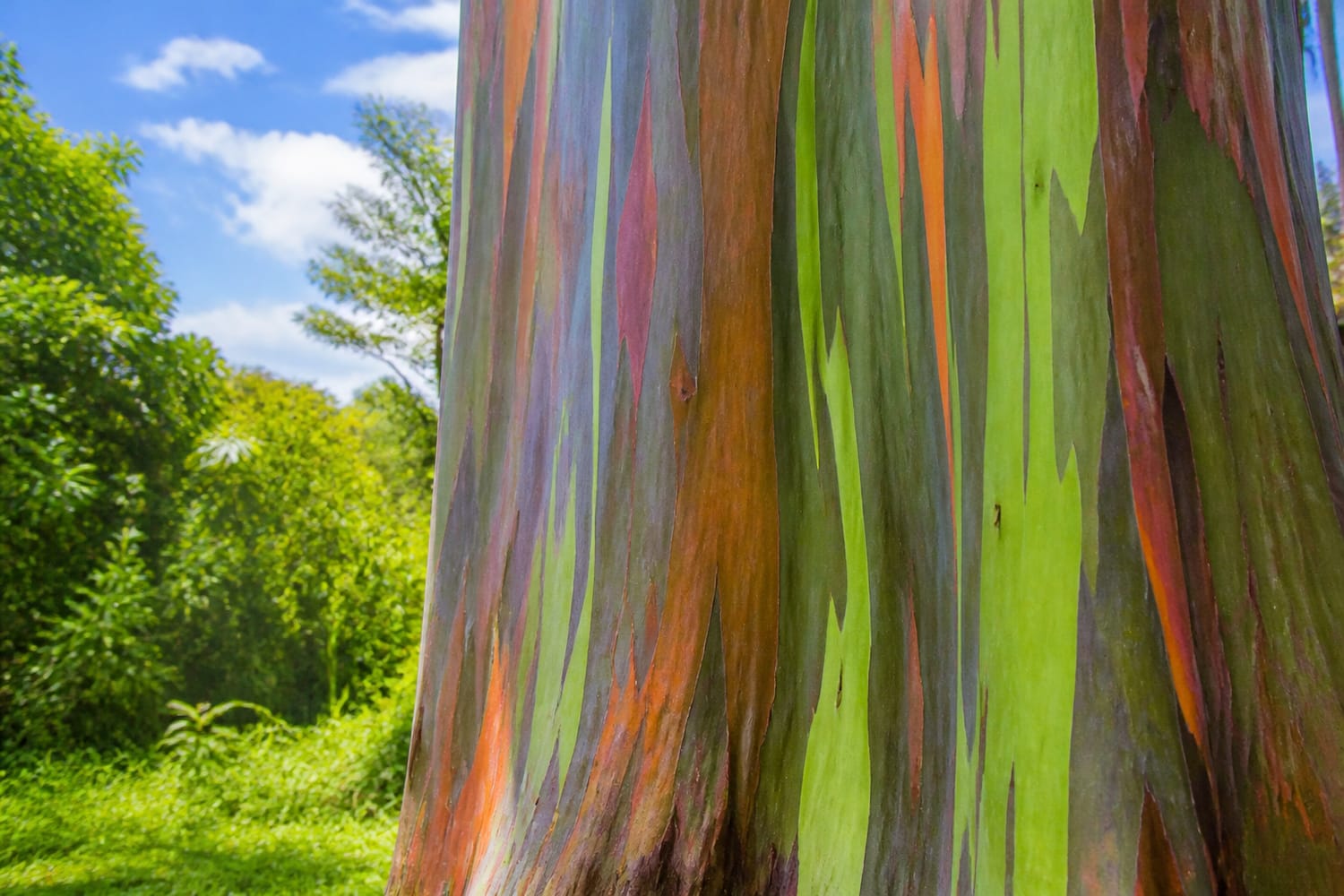
As exposed tissue ages, chlorophyll diminishes, reducing the dominance of green. Meanwhile, reddish-brown compounds called tannins accumulate in surface cells. Lee proposed that these changes together help explain the bark’s shifting appearance.
Tannins are not simply decorative ingredients. Scholastic’s account notes that these bitter compounds help discourage harmful pests. Their presence also contributes to the darker, warmer colors that develop as the exposed surface matures.
A useful way to interpret the trunk is:
- Bright green areas: relatively newly exposed tissue.
- Blue, purple, or darker green areas: surfaces undergoing intermediate changes.
- Orange, rusty red, and brown areas: older exposed surfaces approaching later stages.
Treat this as a general guide, not a precise color calendar. Science Friday’s reporting emphasizes that detailed research into the dramatic transitions has been limited. The broad explanation is stronger than claims assigning every shade an exact chemical recipe or timetable.
Why Some Trees Look More Colorful Than Others
Not every rainbow eucalyptus displays the same intensity. Growing conditions matter: these trees favor warmth and abundant moisture, and their bark is generally less colorful outside tropical settings. A healthy specimen in one location may look noticeably subtler than another photographed elsewhere.
Lighting and moisture also affect what visitors see. In Science Friday’s account, photographer Christopher Martin found that rain and soft, diffused light brought out richly saturated bark colors. That is a useful reminder that a photograph records both the tree and the conditions surrounding it.
If you encounter one, try comparing the shaded and illuminated sides rather than expecting every inch to resemble a postcard. Look for contrasts between adjacent patches; those boundaries often make the changing surface easiest to appreciate.
Is the Wood Rainbow-Colored Too?
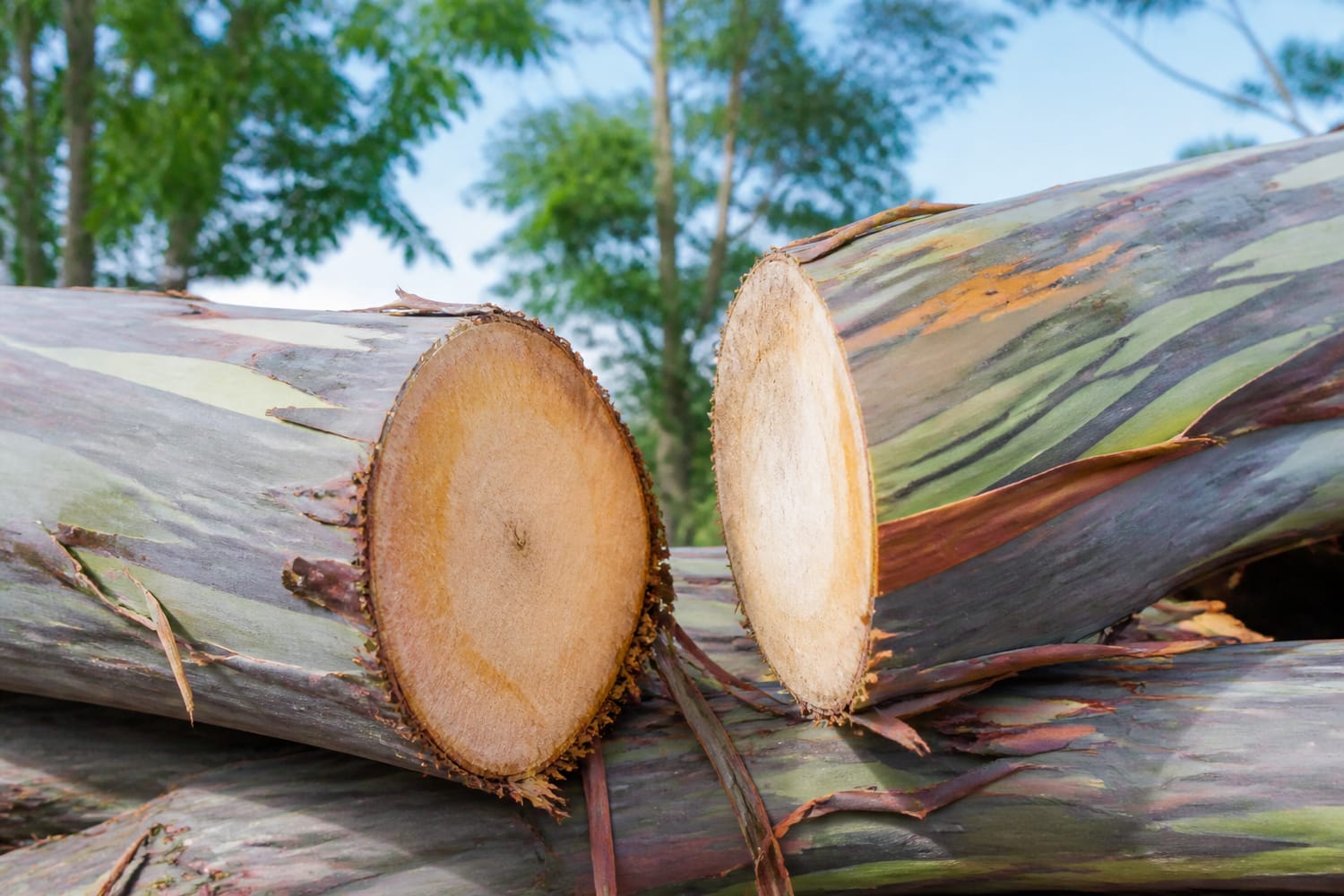
Surprisingly, no. The spectacular display belongs to the bark, not the timber throughout the trunk. According to plant physiologist LariAnn Garner, interviewed by WOOD magazine, the colorful effect is confined to the smooth, layered, exfoliating exterior.
Inside, the wood is comparatively conventional: light-colored when fresh and capable of aging toward reddish brown. Cutting into the trunk would not reveal concentric rings of purple, green, and orange. The tree’s nickname describes its outward appearance, not a hidden rainbow running through its center.
That makes the living tree the real attraction. Its beauty depends on an ongoing process, rather than a permanent pattern preserved in a piece of wood.
Where to Appreciate the Living Display
You do not have to visit its native rainforest range to see rainbow eucalyptus. It has been planted ornamentally in places including Hawaii and South Florida. Port St. Lucie Botanical Gardens’ rainbow eucalyptus profile identifies it among the garden’s trees, making botanical collections a useful starting point for curious travelers.
When visiting, leave peeling strips attached and follow the garden’s rules. For more ideas on minimizing your impact, explore Tour Trivia’s guide to eco-friendly travel.
Most importantly, slow down. Rather than treating the trunk as a single colorful object, study its neighboring patches. The pleasure lies in recognizing what the “brushstrokes” reveal: not paint, but a tree continually replacing its own extraordinary exterior.