
Why Bogs Put Plants on an Unusual Diet
A bog can be soaking wet yet nutritionally stingy. True bogs receive most or all of their water from precipitation rather than mineral-rich groundwater or streams. Their acidic conditions and peat deposits create a challenging environment for plant growth.
Peat is partially decomposed plant material. In waterlogged, oxygen-poor conditions, dead vegetation breaks down slowly, so a thick layer of organic matter does not necessarily mean abundant available nutrients. Sphagnum moss helps maintain the acidic environment, further shaping which plants can survive there.
Carnivory offers a workaround. An insect carries nutrients that the surrounding soil may supply only sparingly. Capturing that insect gives a plant another route to the materials it needs to grow. The bog is not making plants hungry for meat; it favors adaptations that improve nutrient access.
Insects Are Supplements, Not Solar Panels
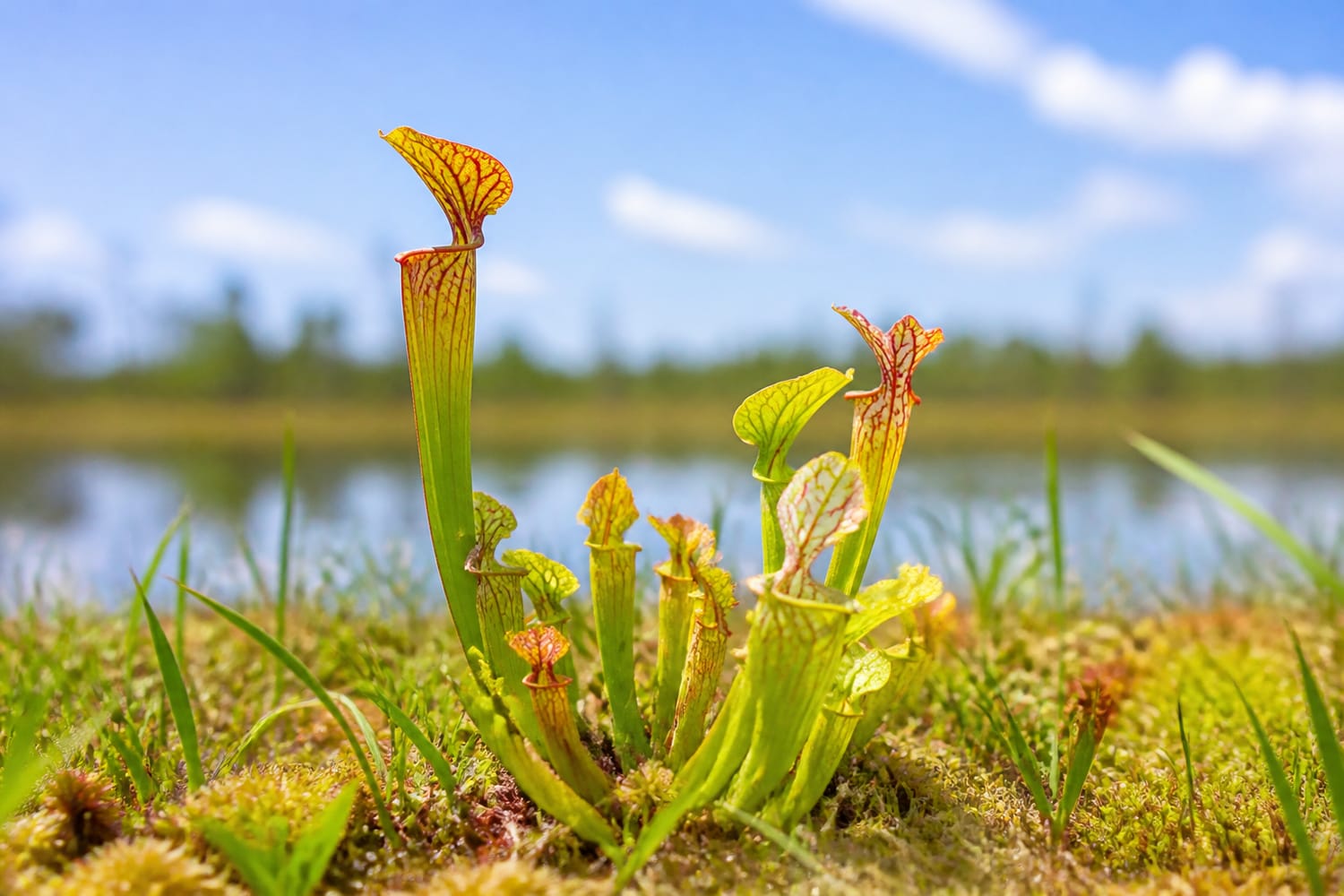
The word “carnivorous” can make these plants sound like tiny animals rooted in place. But they remain photosynthetic organisms, using light to build sugars. Their prey supplies valuable nutrients rather than replacing their main energy source.
Nitrogen and phosphorus are particularly important parts of the bargain. Obtaining more of these nutrients can support growth and improve the machinery of photosynthesis. Think of a captured gnat as a nutrient delivery, not the botanical equivalent of a sandwich.
Traps also require resources to build and maintain. Carnivory is therefore especially useful where the benefits of extra nutrients outweigh those costs, often in wet, sunny, nutrient-poor places. In fertile soil, that elaborate hunting equipment may offer much less advantage.
A Bog’s Arsenal of Leaf Traps
Carnivorous plants do not share one hunting technique. Their modified leaves solve the same nutritional problem in remarkably different ways. Kew’s guide to carnivorous plants introduces several of these ingenious designs.
Venus Flytraps: A Carefully Triggered Snap
Venus flytraps have hinged leaves lined with sensitive trigger hairs. Typically, two touches in quick succession prompt closure, while further stimulation helps initiate digestion. This system reduces the chance of spending resources digesting something that is not worthwhile prey.
Despite their worldwide fame, their native range is remarkably small: wetlands in North and South Carolina. And their name is misleadingly narrow—they can capture spiders and other small animals as well as insects.
Pitcher Plants: The Slippery Approach
Pitcher plants turn leaves into tubes or cups. Nectar, scent, or color can attract visitors toward the opening, where slippery surfaces and downward-pointing hairs make escape difficult. Prey falls into liquid below and is broken down, releasing nutrients the plant can absorb.
Not every pitcher handles digestion identically. Some use plant-produced enzymes, while others depend heavily on microorganisms living inside the trap. A pitcher can be both a hunting device and a miniature biological community.
Sundews and Butterworts: Living Flypaper
Sundews carry glistening droplets on gland-tipped tentacles. Those attractive beads are sticky secretions, not harmless morning dew. When prey becomes stuck, tentacles—and, in some species, the leaf itself—move around it before digestion and absorption proceed.
Butterworts use a related flypaper strategy, catching small insects on sticky, glandular leaves. No snapping jaws are required; a seemingly ordinary leaf surface does the trapping.
Bladderworts: Suction Beneath the Surface
Aquatic bladderworts possess tiny bladder-shaped traps. When a passing organism stimulates sensitive structures near the entrance, a trapdoor opens and water rushes inward, carrying the prey along. These plants capture minute aquatic creatures, including water fleas—not simply flying insects.
Evolution Found More Than One Route
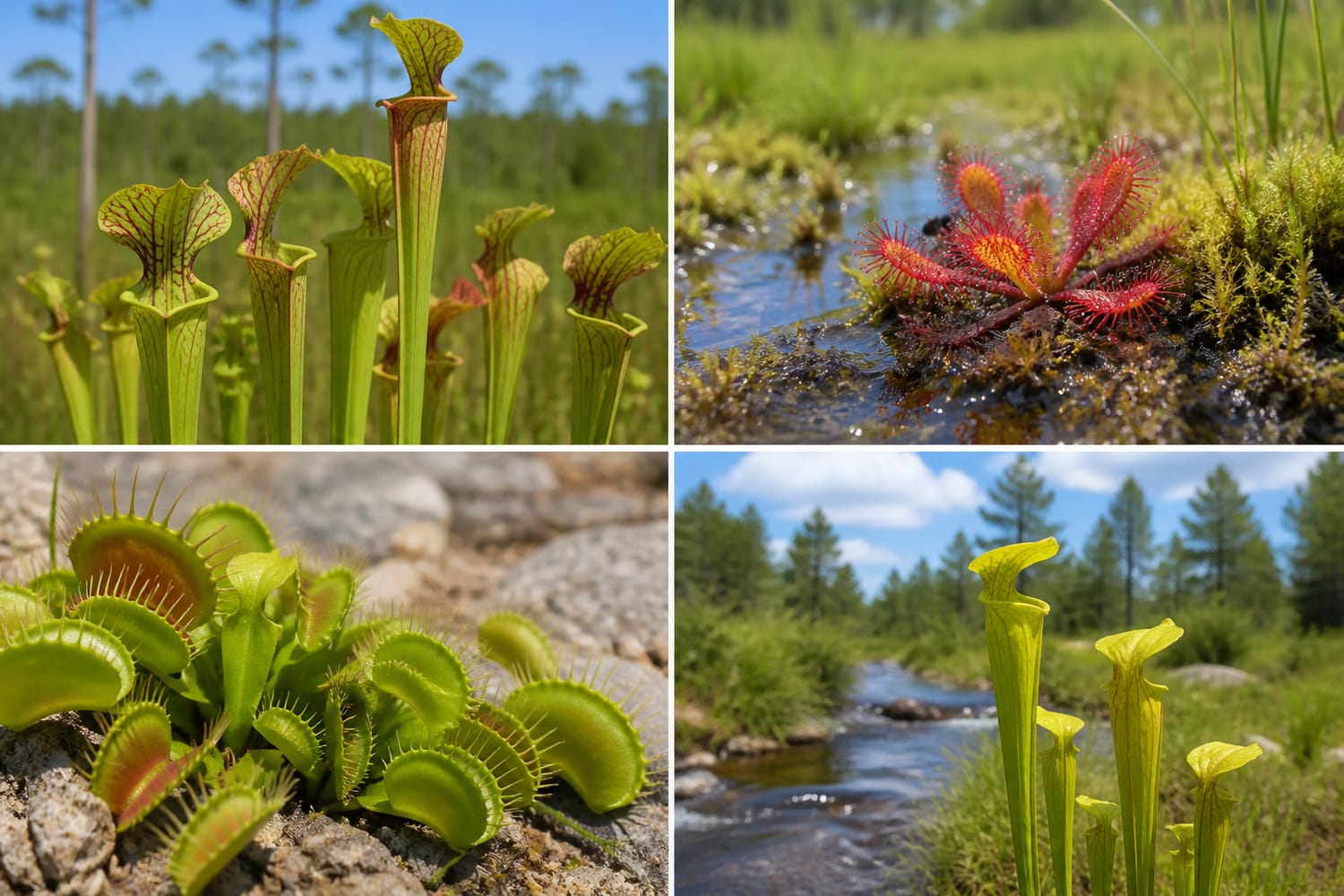
Carnivorous plants are not one close-knit family with a single hungry ancestor. Carnivory evolved independently in multiple plant lineages, producing similar solutions to comparable environmental pressures. Scientists call this convergent evolution.
Nor does every carnivorous plant inhabit a classic mossy bog. Different species occupy wet savannas, tropical forests, streams, and sandy or rocky sites. Bogs are an especially memorable setting, but nutrient scarcity—not one particular landscape—is the recurring theme.
That variety makes “carnivorous bog” a useful invitation to explore, rather than a precise label for every insect-eating plant habitat.
Where to Look Without Disturbing the Hunt
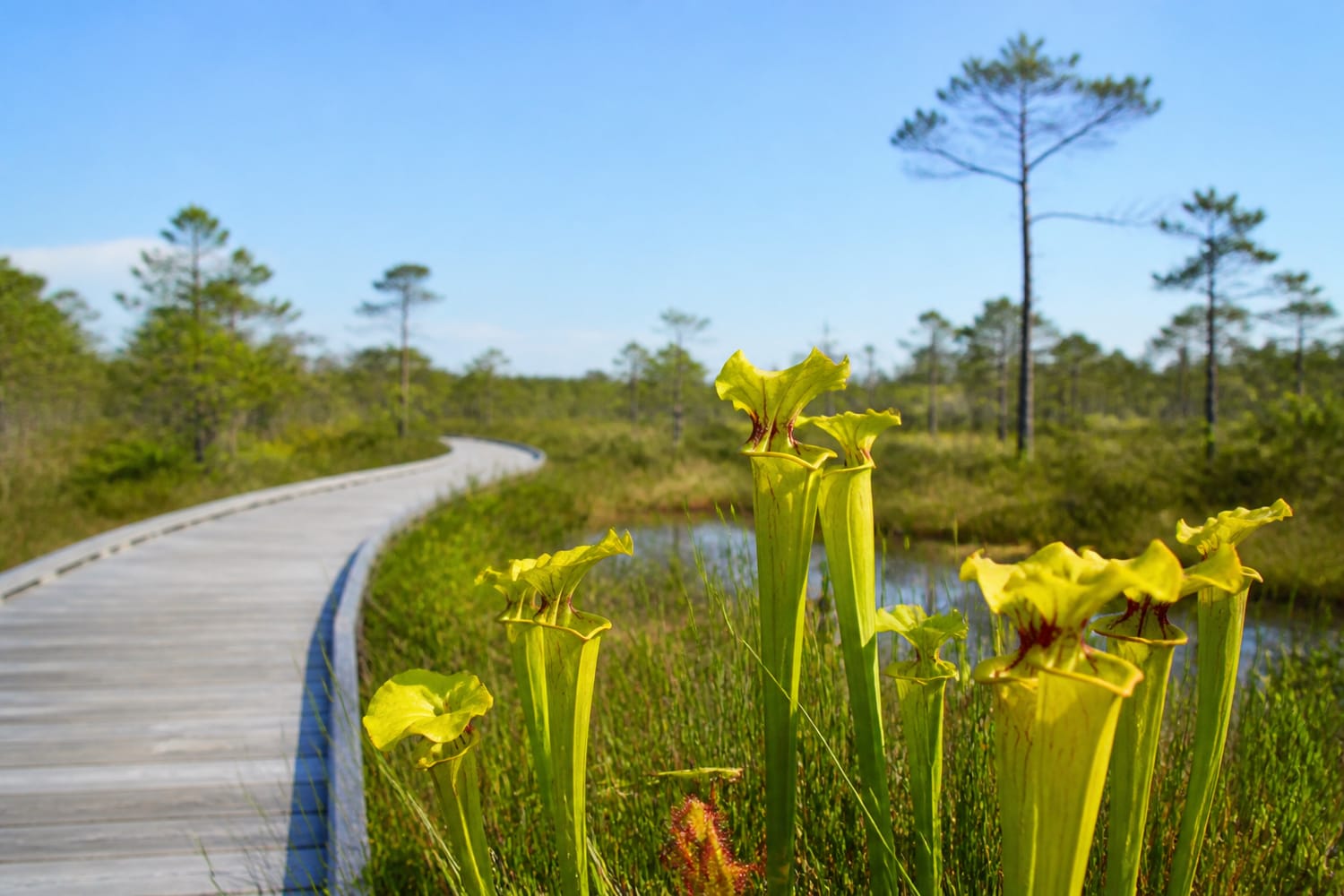
For an American example, Big Thicket National Preserve’s carnivorous plant guide describes pitcher plants, sundews, butterworts, and bladderworts in East Texas. Its habitat is wetland pine savanna, a reminder that places commonly called pitcher-plant bogs are not always true peat bogs.
Farther north, New York’s Silver Lake Bog Preserve offers a boardwalk through habitat containing pitcher plants. Check the managing organization’s visitor information before setting out, and use designated routes rather than stepping onto the vegetation.
Bring curiosity rather than bait. Pause beside the trail, look closely at leaf shapes, and let a guide or field guide help identify what you see. The same principle behind Tour Trivia’s guide to ethical wildlife encounters and habitat protection applies here: observation should not disrupt the subject.
Protect the Habitat, Not Just the Plant
Draining bogs and extracting peat can destroy the conditions these specialists depend on. Protecting a spectacular pitcher plant means protecting its water supply, surrounding vegetation, and entire habitat—not simply leaving one leaf untouched.
As a visitor, stay on established paths, leave plants where they grow, and resist collecting a living souvenir. Small choices help preserve the habitat for the next curious walker.
The real wonder is not that these plants seem monstrous. It is that an ordinary leaf, reshaped by evolution, can become an extraordinary answer to a difficult place to live.