
A Rainbow Without Rain
A waterfall doesn’t need a rainstorm to make a rainbow. It makes its own airborne droplets when falling water crashes into a pool or strikes rocks. If sunlight reaches that spray from behind you, some droplets send different colors of light toward your eyes. The trick is finding the right place to stand.
That’s why two people looking at the same waterfall may have different views: one sees a bright arc across the mist, while the other sees only white spray. The waterfall supplies the water, but sunlight and your position complete the picture.
The Waterfall’s Part: Making Mist
As water tumbles over an edge, it breaks apart and churns against whatever lies below. The result can be a cloud of droplets suspended in the air. Unlike a passing rain shower, that spray may keep appearing in roughly the same place as long as the waterfall is flowing.
A broad patch of sunlit spray gives you more chances to spot color than a few scattered drops. But a huge waterfall is not required. A smaller cascade can produce a striking rainbow if its spray catches direct sunlight and you view it from the right angle. The Bureau of Meteorology’s guide to rainbows notes that waterfall mist, sprinklers, and hose spray can all provide the droplets needed for the effect.
For a waterfall worth imagining while you read, picture Iceland’s Gullfoss: Tour Trivia’s guide to Iceland’s waterfalls describes rainbows appearing in its spray on sunny days.
What Sunlight Does Inside a Droplet
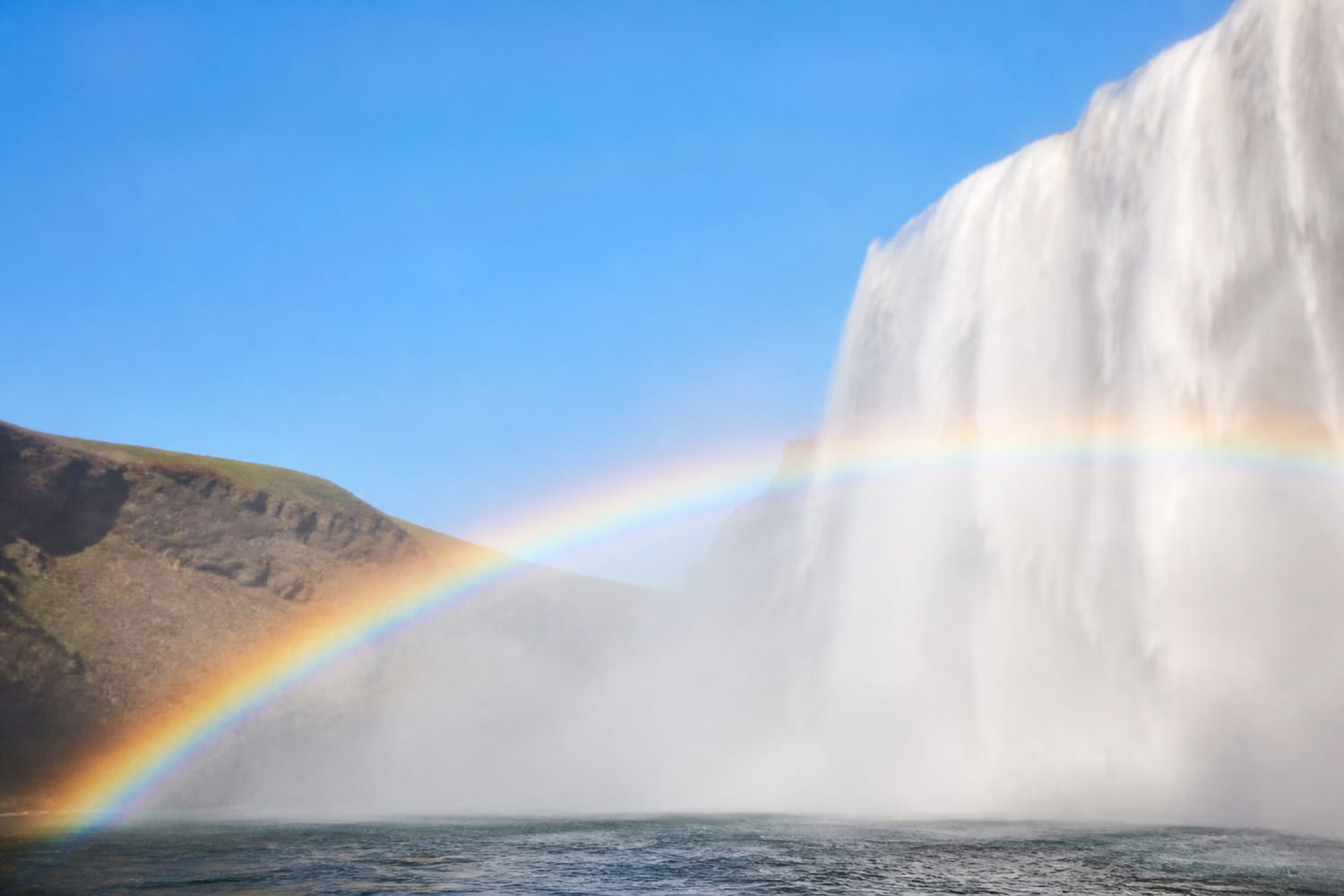
Sunlight looks white, but it contains many colors. When a ray enters a water droplet, it slows and bends—a process called refraction. Different colors bend by slightly different amounts. Some of the light then reflects off the droplet’s inner surface before bending again as it leaves.
Those small differences matter. Light emerging from the droplet sends its colors in slightly different directions. When the geometry lines up, red light from one group of droplets reaches your eyes from the outer part of the bow, while violet light reaches them from farther inside. Orange, yellow, green, and blue fall between them. The familiar “seven colors” are a handy way to describe a spectrum that actually blends continuously.
The mist isn’t painted with permanent stripes. Each color you see depends on which droplets are sending light toward your eyes at that moment.
Why the Rainbow Curves
Stand with the Sun behind you and face the spray. For a primary rainbow, the brightest red light reaches your eyes from droplets at an angle of about 42 degrees around a point directly opposite the Sun. Other colors arrive from slightly smaller angles. Together, droplets in the right positions outline a circle; the ground, the shape of the spray, or your viewpoint usually leaves only an arc visible.
This also explains why a waterfall rainbow can seem to shift as you walk. You haven’t moved an object hanging over the falls. You’ve changed which droplets are positioned to send colored light to you. Someone beside you is looking at a slightly different rainbow, even if the two arcs appear to occupy the same patch of mist.
From a high viewpoint, with illuminated droplets below you, more of the circle may become visible. At ground level, a low Sun generally makes a taller arc easier to see; when the Sun is high, the visible portion may shrink or disappear from the view ahead.
How to Find the Perfect View
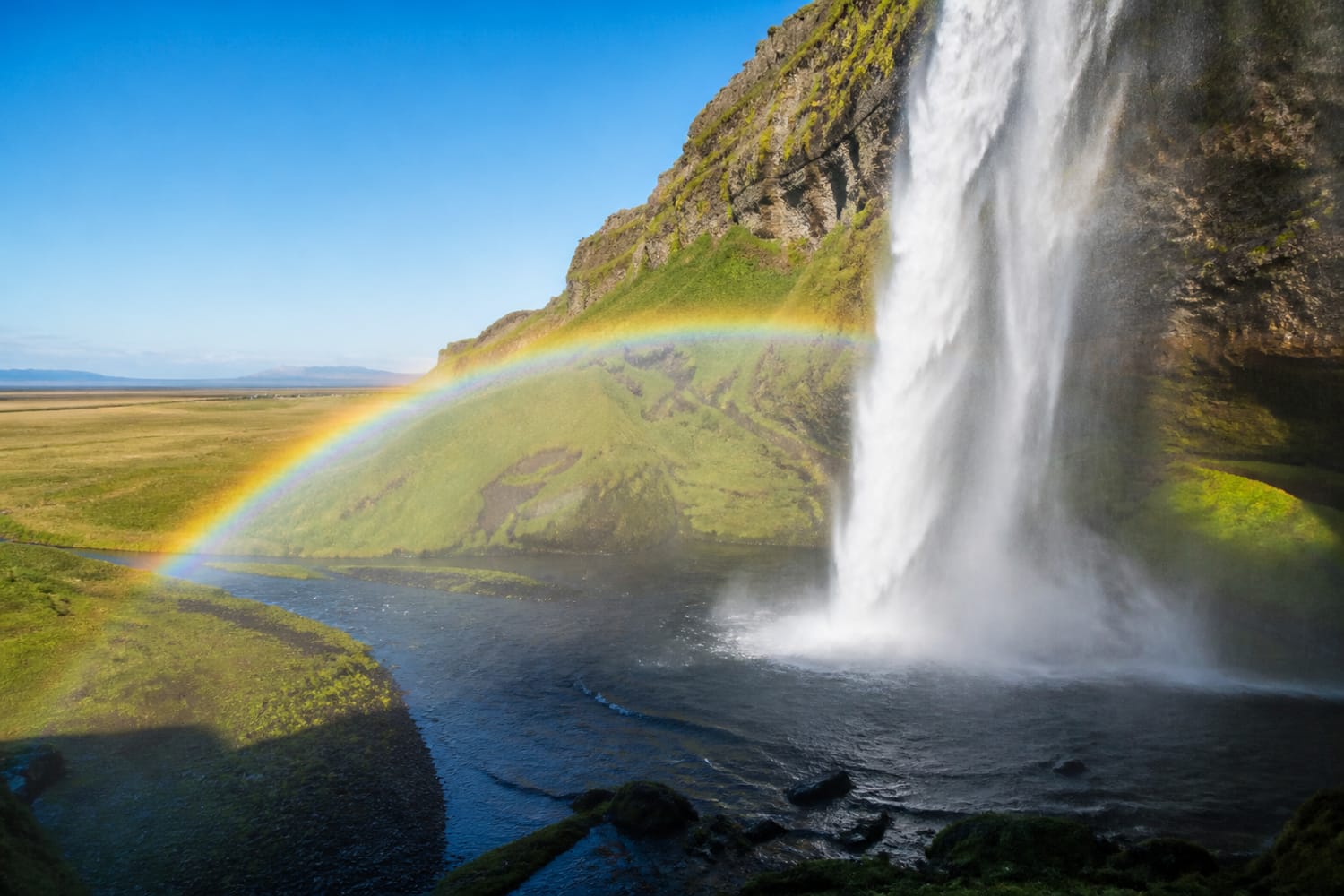
You don’t need a compass or a calculation. Use the Sun and the spray as your guide:
- Keep the Sun behind you. Look away from it toward mist that sunlight can reach.
- Try morning or late afternoon. A lower Sun often makes the bow easier to see above the landscape.
- Move along the viewpoint. A few steps sideways or a change in elevation can bring the arc into view.
- Look across the spray, not only at the falling water. The color may hover over the plunge pool or appear beside the cascade.
- Give your eyes a moment. A faint arc can be easier to notice against a darker cliff or shaded background.
These are ways to improve your chances, not a promise: clouds, the direction the waterfall faces, nearby cliffs, and changing spray can all alter the view. Stay on marked paths and designated viewpoints rather than stepping closer to a slippery edge for a photograph. The essential ingredients remain direct light, airborne droplets, and the right viewing angle.
For a real-world example, the National Park Service says sunny-day spray creates rainbows at Rainbow Falls in the North Cascades. Tour Trivia’s look at waterfalls, lakes, and oceans offers more places to let your curiosity wander after you’ve learned what to look for.
Can a Waterfall Make Two Rainbows?
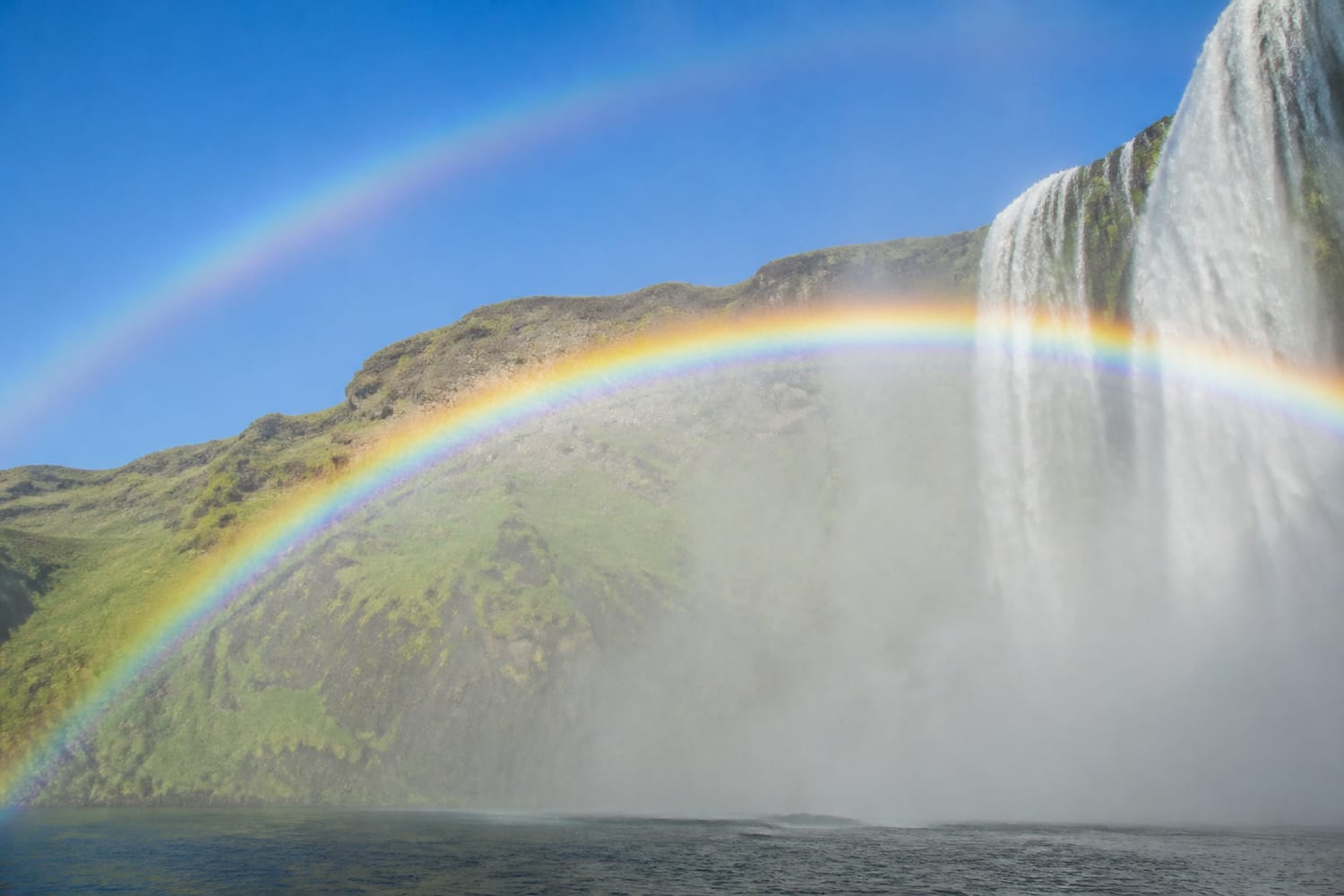
Yes. A bright primary rainbow sometimes has a fainter companion outside it. In the droplets responsible for this secondary rainbow, sunlight reflects twice inside each droplet rather than once. That extra reflection sends the light toward your eyes at a different angle and reverses the color order: red sits on the inner side of the secondary bow.
You might also notice that the space between the two arcs looks darker than the area inside the primary bow. Known as Alexander’s band, it’s another consequence of how light travels through the droplets—not a shadow cast by the rainbow.
What About White Rainbows and Moonbows?
Not every bow in waterfall spray looks vividly colored. When droplets are especially tiny, a fogbow or mistbow can look broad and pale because its colors overlap and blur. A dim bow is not necessarily a rainbow that has “run out” of color; the size of the droplets can change what you see.
Sunlight isn’t the only possible light source, either. Bright moonlight can create a moonbow in waterfall mist. Yosemite National Park notes that on some full-moon nights during its peak waterfall season, moonlight illuminates bows in the spray of Upper and Lower Yosemite Falls. They can appear nearly white to our eyes in the low light.
The Best Part of the View
A waterfall rainbow is both predictable and personal. The physics tells you what to seek—light behind you, droplets ahead, and the right angle—but the exact arc depends on where you stand and how the spray moves. Next time a waterfall throws mist into the sunshine, take a moment to change your viewpoint. The color might have been waiting there all along.