
A Different Kind of Bouquet
Flowers do more than decorate dinner plates. Around the world, cooks tuck blossoms into tortillas, simmer buds in soup, and turn petals into sweets. Some bring fragrance or color; others add a peppery bite or become the substance of a dish. Here are ten flowers worth looking for on a menu—and what they’re doing there.
Squash Blossoms in Mexico
In Mexico, flor de calabaza—the flower of a squash plant—often ends up inside a quesadilla. The blossoms soften quickly as they cook, bringing a mild, vegetable-like flavor that works with cheese, onion, and herbs. They can also be folded into soups or stews.
It’s an ingredient that rewards curiosity: the vivid yellow flower looks delicate, but it has a place in everyday cooking. If you enjoy discovering what else grows into a memorable meal, Tour Trivia’s guide to traditional dishes around the world offers more places to start.
Banana Flowers in India and Southeast Asia
A banana flower is hardly a dainty garnish. Beneath its purple outer layers are tightly packed florets that cooks clean, chop, and prepare as a vegetable. Its texture gives it enough presence to stand alongside spices, rather than disappear into them.
In the Indian state of Assam, banana flower appears in savory dishes, including a spiced preparation with pigeon or chicken. Elsewhere in South and Southeast Asia, it can be cooked into curries or sliced for salads. The surprise is how different it is from the sweet fruit growing above it.
Rose Petals in India
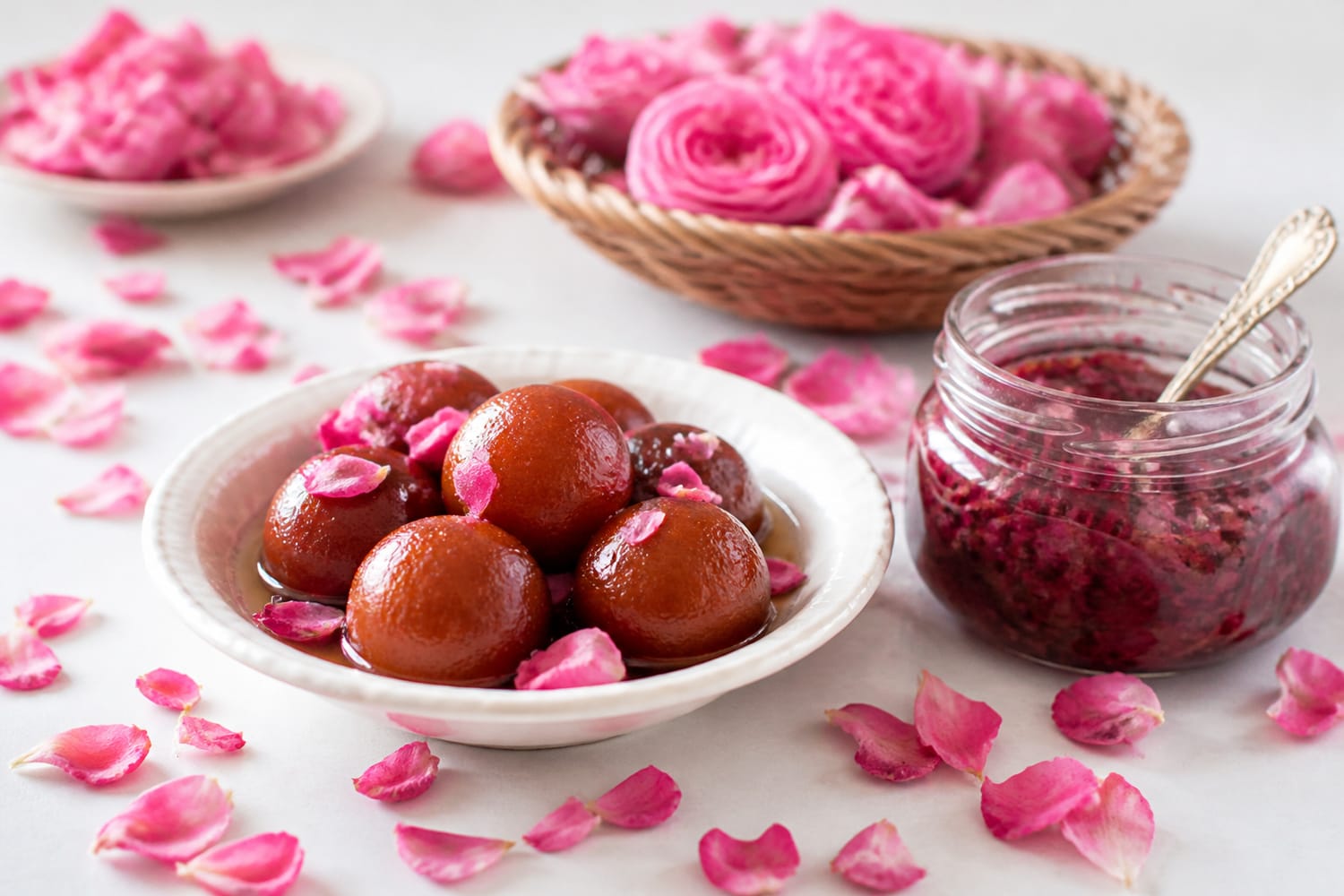
Roses bring their unmistakable scent to food as well as perfume. In India, petals can be made into gulkand, a sweet rose preserve. They also turn up in desserts: dried rose petals, for example, can finish a bowl of syrup-soaked gulab jamun.
Rose is best used with a light hand. Too much floral flavor can overwhelm a sweet; just enough makes the aroma part of the pleasure of eating it. And unlike a rose from a florist’s bouquet, petals destined for a kitchen must be grown and sold for consumption.
Butterfly Pea Flowers in Malaysia
The blue in a Malaysian rice dish might come from a flower. Butterfly pea blossoms, known as bunga telang, release a striking color when steeped, making them useful for tinting rice without contributing a strong flavor.
In some Malaysian-style bak zhang—sticky rice dumplings wrapped in leaves—a blue corner of rice gets its color from butterfly pea flowers. It’s a small detail with a big visual payoff: unwrap the dumpling, and an ingredient that once bloomed in a garden announces itself at the table.
Chrysanthemums in Japan
A chrysanthemum beside a plate of food may look purely decorative, but edible varieties have a culinary role in Japan. In Yamagata Prefecture, cooks pluck the petals, briefly boil them, and serve them as ohitashi, a simple dish seasoned with soy sauce.
The petals offer more than color: their gently bitter, floral taste makes them a vegetable-like component of the meal. The important distinction is edible chrysanthemums. An ornamental bunch isn’t a substitute for flowers specifically grown as food.
Daylily Buds in China
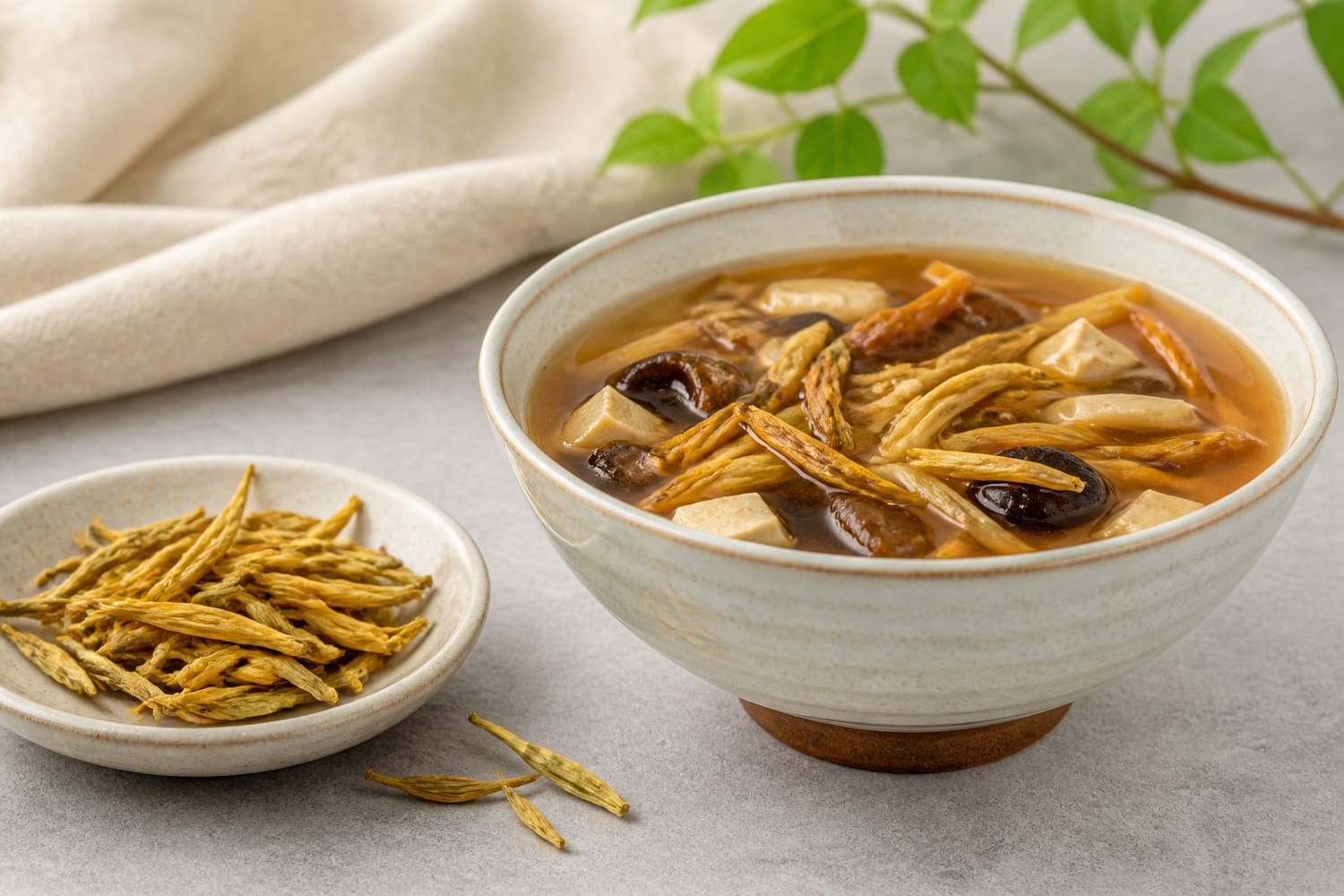
Those slender “lily flowers” in a bowl of Chinese hot-and-sour soup are often dried, unopened daylily buds, sometimes called golden needles. Once rehydrated, they add a slightly earthy, floral note and a pleasant chew beside mushrooms, tofu, and bamboo shoots.
The naming is a useful bit of menu trivia: they aren’t the same ingredient as lily bulbs. Look for dried buds sold for cooking rather than trying to identify flowers in a garden. The latter is no place for guesswork when plants may have similar common names.
Violets in France
In Toulouse, violets are a local symbol you can taste. Sugared violet petals are eaten as sweets or used to top cakes, giving a small dessert an unmistakably floral finish. Their appeal lies partly in the contrast: a blossom that looks too fragile to handle becomes a crisp little confection.
They make a particularly memorable edible souvenir. Rather than simply adding purple color, a real candied petal gives you the shape of the flower itself—a tiny reminder of the city after the last bite of cake.
Elderflowers in Central Europe
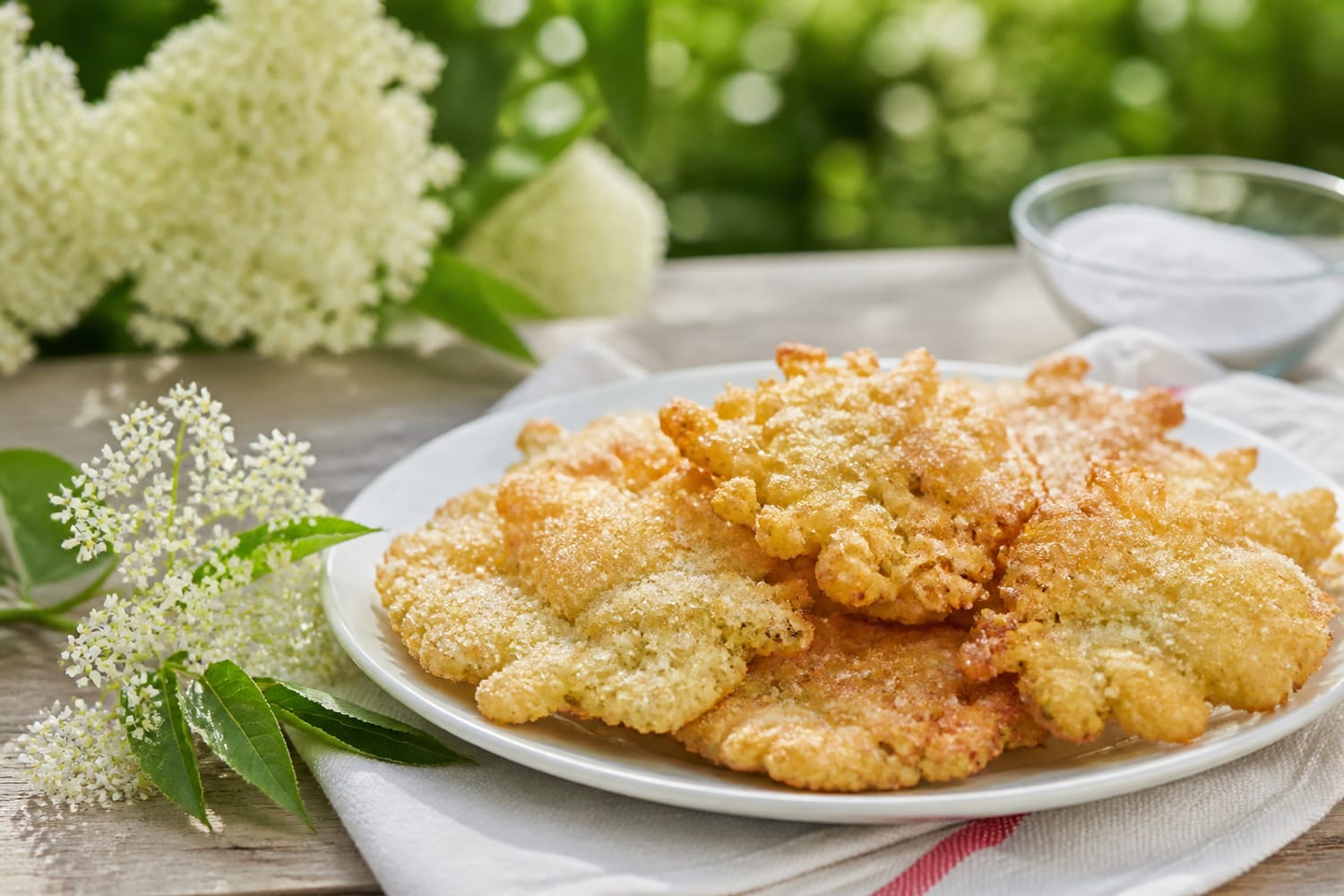
Elderflower is familiar in cordials, but it can also arrive on a plate. In parts of Austria and southern Germany, whole clusters are dipped in batter and fried into fritters. A dusting of sugar turns the fragrant blossoms into a seasonal sweet.
It’s a clever way to serve the flower without pulling apart every tiny bloom. The cluster gives the fritter its distinctive shape, while the batter provides the crunch. As with any flower gathered outdoors, though, confident identification and a clean, food-safe source matter more than an appealing recipe.
Nasturtiums in Savory Dishes
Not every edible flower tastes sweet. Nasturtiums have a peppery bite, making their yellow, orange, and red blooms a lively addition to salads. Chopped petals can also be worked into soft cheese or herb butter, where their flavor has room to stand out.
That makes them a good match for rich or creamy foods rather than just a splash of color. Think of the flower as a seasoning you can see. Tour Trivia’s look at sauces from around the world explores more ways a small addition can change a whole plate.
Saffron Crocuses in Spain
Saffron is the flower on this list that many diners have eaten without recognizing it as one. The spice consists of dried stigmas—the fine red parts—from the saffron crocus. Just a few threads can lend color and aroma to a pan of rice.
Spain’s best-known example is paella, though saffron appears in other dishes, too. Unlike a blossom served whole, this flower reaches dinner as a carefully harvested spice. For a closer look at its place in the dish, Spain’s tourism site shares a Valencian paella recipe using saffron threads.
Before You Taste the Garden
These ten flowers show how much a meal can gain from a bloom: color in rice, texture in soup, fragrance in dessert, or a blossom substantial enough to fill a tortilla. They aren’t, however, an invitation to sample any attractive flower you spot.
If you want to try cooking with them, buy flowers or prepared ingredients intended for food and identify them precisely. Colorado State University Extension’s edible-flower guidance warns against eating florist or nursery flowers, which may have been treated with chemicals unsuitable for food. Start with a small taste of any unfamiliar edible flower. Then let the next menu surprise you.